Owners of $80,000 electric trucks are lining up on camera to vent — but the loudest complaints aren’t about batteries dying or motors failing. They’re about a $20 charging session that bought 64 miles, a tow rating that quietly cuts range in half, and a resale market that has already passed judgment.
A new compilation from the Lemon Lenny channel stitches together a parade of furious owners: a driver paying $1,500 a month for a truck he says he “can’t drive” because chargers are always occupied or broken, a Hummer EV owner shocked that 41 minutes at a public station cost $19.80 for 64 added miles, and a road-tripper whose “full charge by 9 a.m.” turned out to mean 9 a.m. the day after tomorrow. One owner sums up public fast charging as “modern day Hunger Games.”
It’s easy to dismiss this as rage-bait. It isn’t. Every complaint in the video maps onto a measurable problem in the data — and the pattern that emerges is more interesting than “EVs bad.” The anger isn’t really aimed at the trucks. It’s aimed at the gap between an $80,000 sticker price and the life it promised.

Complaint #1: Charging math that doesn’t survive contact with reality
The video’s most repeatable grievance is cost. One truck owner watches a DC fast-charging session tick past $23 at 27% state of charge and projects “damn near $75 to fill this thing up.” He ends at $77 total — and the truck’s range estimate of 340 added miles turned out to be 249 in practice. That works out to roughly 31 cents per mile, which is worse than a 20-mpg gas truck burning $5.50-per-gallon premium.
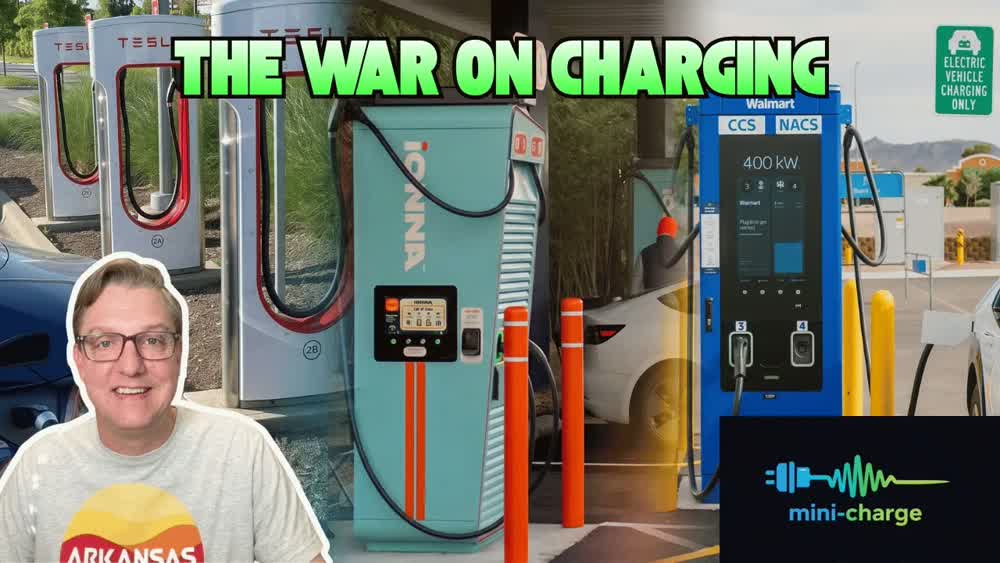
This is the core misunderstanding of EV truck economics: the savings live at home, on a Level 2 charger, at 12–18 cents per kilowatt-hour. Public DC fast charging at 45–60 cents per kilowatt-hour on a truck that consumes 2 miles per kilowatt-hour (or 1.2 mi/kWh towing) erases the fuel advantage entirely. The owners in this video are disproportionately people without home charging — one admits she bought her EV with no home charger and found a queue at her nearest station on day two of ownership.
An electric truck without home charging isn’t a cheaper truck. It’s a more expensive truck with homework.
The infrastructure picture is genuinely improving — that’s not spin. The US added roughly 18,000 new DC fast-charging ports in 2025, a 30% expansion, according to data firm Paren, and J.D. Power’s 2026 EV Experience Ownership Study recorded the largest year-over-year jump in public-charging satisfaction it has ever measured: up 101 points (to 652 on a 1,000-point scale) for premium EV owners and up 115 points (to 511) for mass-market owners. But 511 out of 1,000 is still a failing grade — and a full-size truck with a 130–250 kWh pack feels every weakness in the network twice as hard as a compact crossover does.
Complaint #2: Towing cuts range in half — and nobody warned them
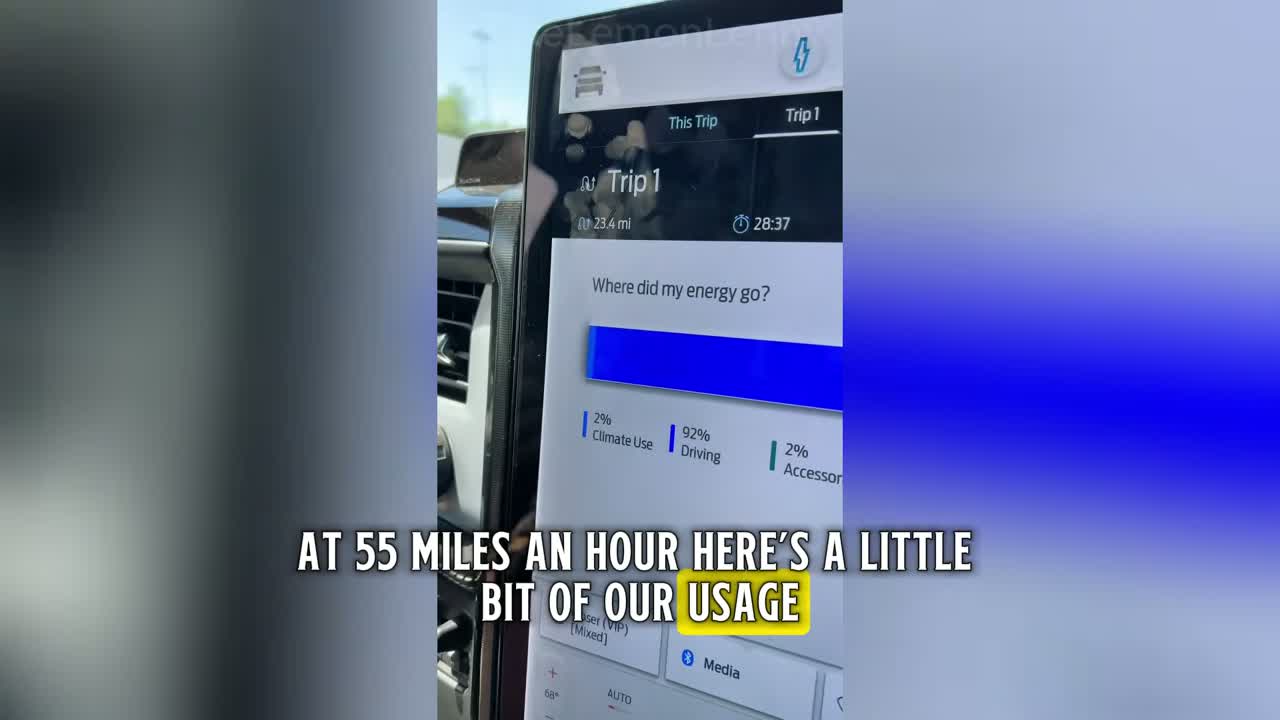
The most technically damning segment is also the calmest: a Ford F-150 Lightning towing a 30-foot Airstream trailer at a steady 55 mph returns 1.2 miles per kilowatt-hour — roughly 150 miles of real range, about half the truck’s 300–320 mile EPA rating. The tester notes a Rivian R1T does about the same. That’s physics, not a defect: aerodynamic drag from a trailer punishes any powertrain, but a gas F-150 losing 40% of a 600-mile tank still goes 360 miles and refuels in five minutes. An electric truck losing 50% of 320 miles goes 150 — and then needs 40 minutes at a charger that may not have a pull-through stall for a trailer.
Here’s the twist the outrage compilations never mention: J.D. Power’s ownership research found that electric-truck owners who actually tow are more satisfied than those who don’t — because they went in with realistic expectations. The anger comes almost entirely from buyers who discovered the towing penalty after the purchase, not before. That’s a marketing failure more than an engineering one.
Towing range penalty vs. EPA rating
Charging-cost surprise (public DC vs. home)
Complaints about the actual electric powertrain
Complaint #3: $85,000 trucks with $30,000 details
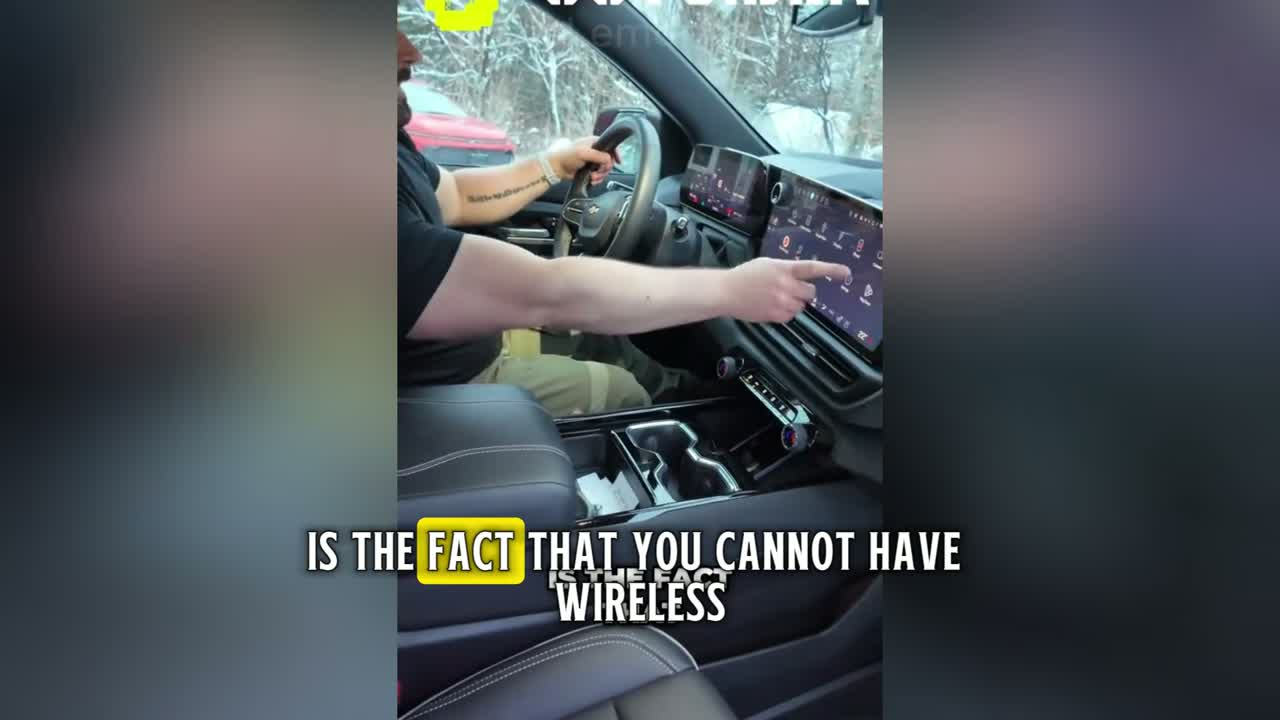
A Canadian reviewer’s list of Silverado EV gripes is revealing precisely because it’s so petty: a wireless phone charger that a water bottle blocks, no wireless Apple CarPlay, an onboard range estimate he calls flatly dishonest in cold weather, and a giant column shifter “straight out of 2005.” His fifth complaint is the one that ties the rest together: the truck he tested stickered at $97,000 Canadian (from a base of $85,000 CAD). At that price, he argues, a fussy phone tray isn’t a quirk — it’s an insult.
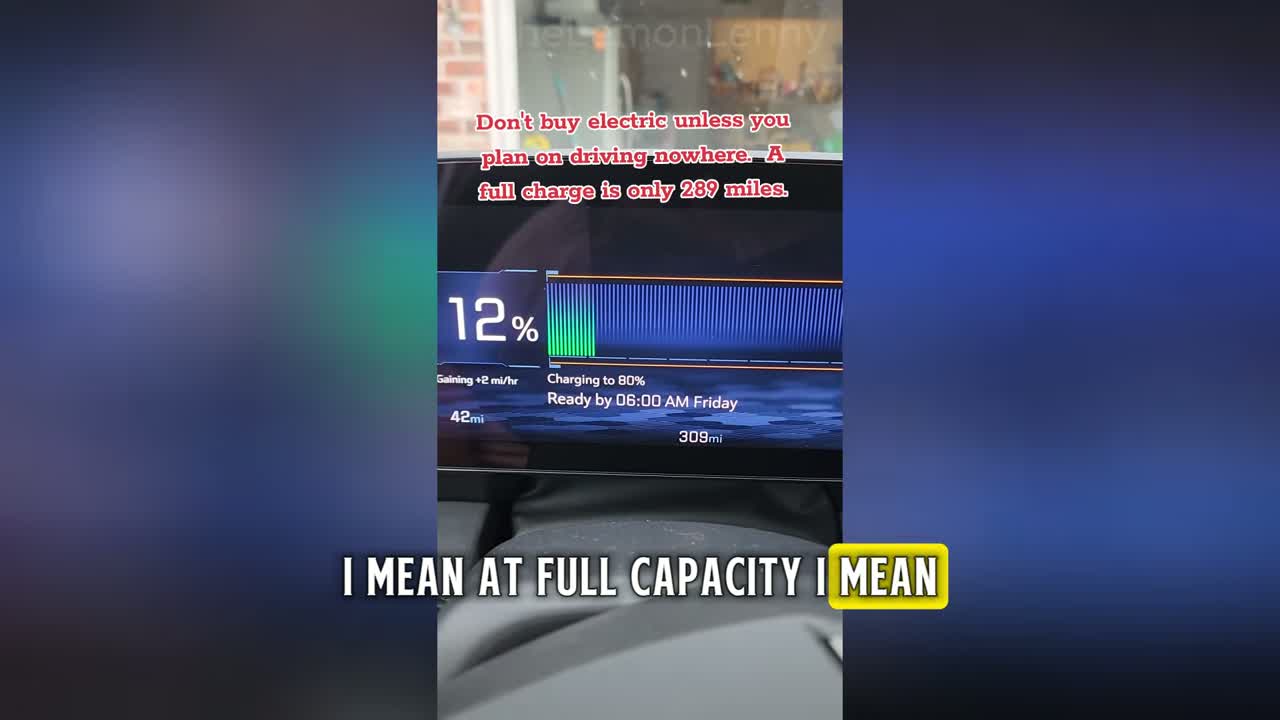
This is the pattern across the whole genre of angry-owner videos. When you pay $50,000, you forgive; when you pay $80,000-plus, you audit. The GMC Hummer EV makes the point in extreme form: it carries the largest battery you can buy in a pickup — 250 kWh — and when its owner plugged into a standard 120-volt wall outlet, the truck estimated 1 mile of range added per hour, with a full charge landing the following Friday. Nothing is broken there. It’s just a 9,000-pound truck sold into households that were never told a Level 2 home circuit is effectively mandatory.
What the market has already decided
If the complaints were just noise, sales wouldn’t care. Sales care. Cox Automotive’s data shows the electric pickup segment shrinking dramatically through the first half of 2026, even as the owners who kept their trucks report record-high satisfaction to J.D. Power. Both things are true at once — and the table below shows how brutal the repricing has been.
| Electric truck | H1 2026 US sales | Year-over-year | 5-yr value retention (iSeeCars) |
|---|
| Tesla Cybertruck | 7,263 | -32.2% | ~43% (segment low tier) |
| Ford F-150 Lightning | 4,481 | -65.6% | 47.6% (best in segment) |
| Chevrolet Silverado EV | 3,672 | -32.5% | 43.8% |
| GMC Sierra EV | 3,044 | +9.8% | 45.9% |
| GMC Hummer EV (incl. SUV) | 3,601 | -54.9% | 45.9% |
| Rivian R1T | 2,877 | -17.3% | competitive, below Lightning |
Electric trucks have fallen to about 4.6% of the US EV market, down from 6.4% a year earlier, per Cox Automotive. Ford has ended production of the all-electric Lightning — the replacement will be an extended-range hybrid — after sinking nearly $20 billion into an EV strategy reset. Ram killed its REV pickup outright. And dealers are moving metal the old-fashioned way: Carscoops documented Silverado EV discounts as deep as $21,396 on lingering inventory, the kind of markdown that would be unthinkable on a gas Silverado.
Depreciation completes the circle. iSeeCars’ 2026 analysis puts the average electric full-size truck at 45.3% value retention after five years — meaning an $80,000 truck is a ~$36,000 truck by year five, a paper loss of roughly $44,000. The best performer, the F-150 Lightning at 47.6%, only leads because its post-price-cut baseline reset the math; early buyers who paid 2022 pre-cut MSRPs saw more than $20,000 evaporate in their first 36 months, per Recharged’s market analysis. One video contributor’s lament about his truck — “it’s actually worth less than what I owe on it, so I’m stuck with it” — is the segment’s quiet epidemic. (Notably, that particular truck was a gas GMC Sierra with a failed transmission, a reminder that six-figure pickup regret is not an EV monopoly.)
The paradox: the angriest segment has the happiest owners
Here’s what the rage compilations leave out. J.D. Power’s 2026 EVX Ownership Study — 5,741 owners of 2025–2026 model-year EVs surveyed — found overall satisfaction at the highest level in the study’s six-year history: 786 out of 1,000 for premium EVs (up 30 points) and 727 for mass market. Quality complaints among premium EVs fell to 75 problems per 100 vehicles, down from 90.9. And 96% of current EV owners say they’d consider another EV next time — the highest figure ever recorded, even with the $7,500 federal tax credit dead since September 30, 2025.
Back in 2023, the same study crowned the Rivian R1T the highest-satisfaction EV in America. Electric trucks aren’t a failed product; they’re a mis-sold one. The buyers who understood the deal — home charger installed, towing expectations calibrated, road trips planned around 150-mile legs — report some of the highest satisfaction in the industry. The buyers who were promised a gas truck with free fuel got neither, and they bought a camera to tell you about it.
Who should actually buy one in 2026
- Buy one if: you have (or will install) a Level 2 home charger, your daily use is under 150 miles, you tow rarely or over short distances, and you’re buying used — where someone else has already eaten the 50%+ depreciation and a 2022–2023 Lightning runs $32,000–$47,000.
- Skip it if: you rely on public charging, tow long distances regularly, or need to sell within three years. A gas or hybrid full-size truck — or the coming wave of cheaper EVs like the sub-$25,000 Slate and Ford’s planned ~$30,000 electric pickup — fits those lives better.
- Either way: ignore the sticker fantasy and the rage videos equally. Price the electricity you’ll actually buy, at the rates you’ll actually pay, for the miles you actually drive.
Does towing really cut an electric truck’s range in half?
With a large travel trailer, yes. Independent tests of the F-150 Lightning towing a 30-foot Airstream at 55 mph measured 1.2 mi/kWh — about 150 miles from a truck EPA-rated at 300–320. Smaller, lighter, or more aerodynamic trailers do less damage, but planning on 50–60% of rated range for serious towing is realistic for every electric truck on sale, including the Cybertruck and R1T.
Is public fast charging really more expensive than gas?
It can be. At 45–60 cents/kWh and 2 mi/kWh truck efficiency, you’re paying 22–30 cents per mile — comparable to or worse than a 20-mpg gas truck. Home charging flips the math: at a typical 15 cents/kWh, the same truck costs about 7.5 cents per mile. The economics of an electric truck are decided by where you plug in, not what you drive.
Are electric trucks bad investments now?
New ones depreciate hard — the segment averages 45.3% value retention over five years per iSeeCars, and early Lightning buyers lost $20,000+ in three years. But that same depreciation makes used electric trucks one of 2026’s genuine bargains, provided you verify battery health, recall completion, and software/charging perks that may not transfer.
The people in this video aren’t wrong about their experiences. They’re wrong about the villain. The truck did exactly what a 9,000-pound battery on wheels does; the failure was everyone — automakers, dealers, and yes, YouTubers on the hype side — who let buyers believe $80,000 bought them a gas truck that never needs gas. Have you priced what your driving would actually cost on home power versus public chargers? That one calculation predicts whether you’ll love or loathe an electric truck better than any review.
Related reading on EVCUBE