The cheapest new truck in America is electric, has crank windows, and seats exactly two people. The best-selling compact truck in America costs $3,195 more, seats five, and can go 500 miles on a tank. Which one is actually the bargain says a lot about what you think a truck is for.
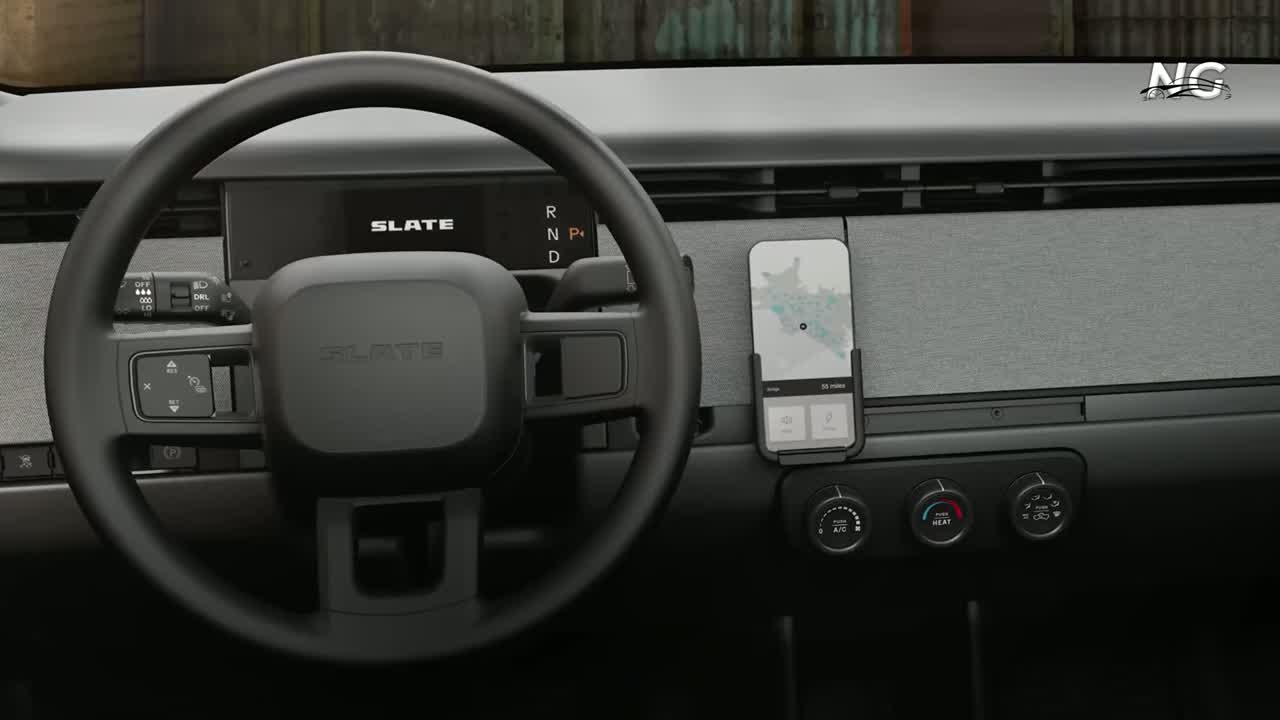
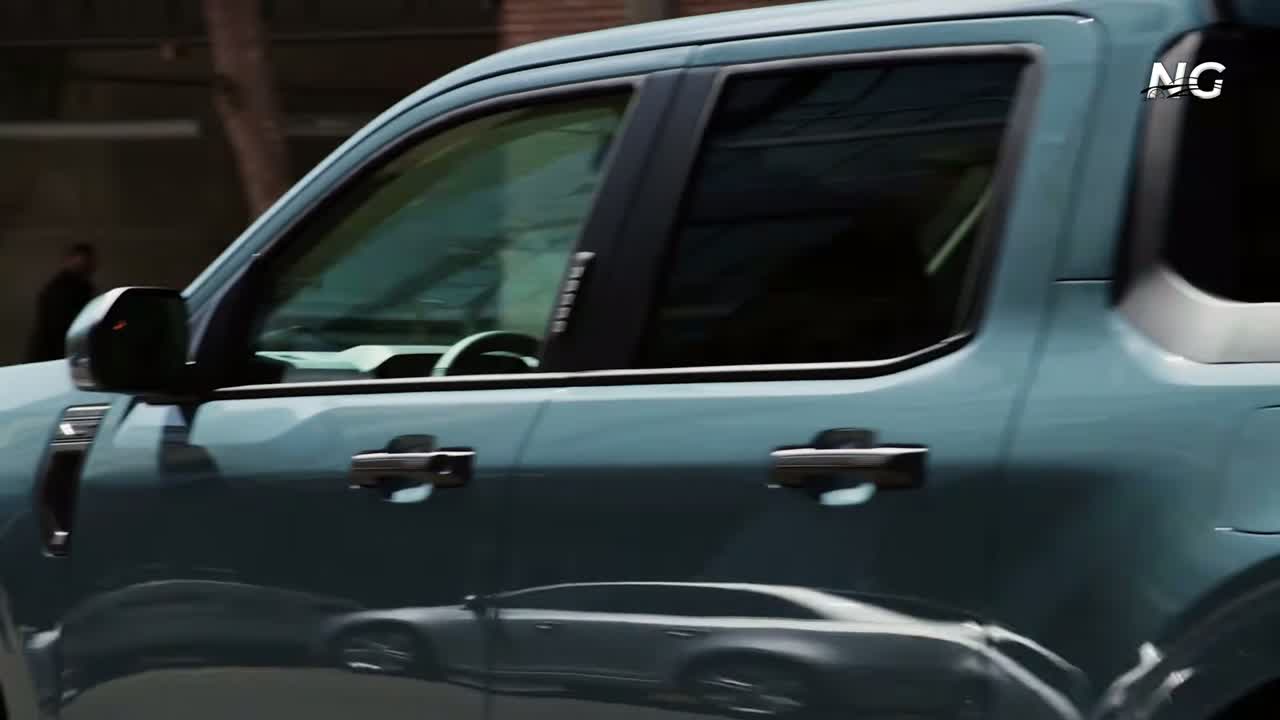
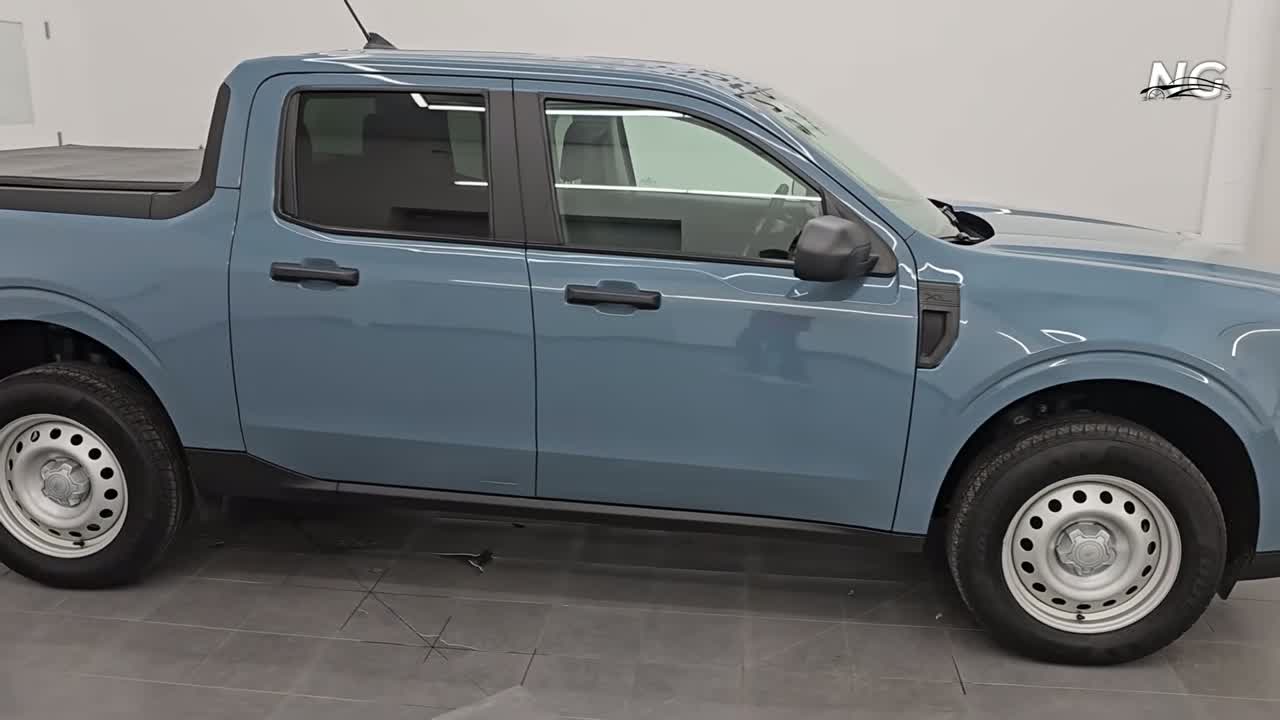
On paper this should be a blowout. The Slate Truck starts at $24,950 — $26,400 with its confirmed $1,450 destination charge — while the 2026 Ford Maverick XL Hybrid opens at $28,145 before destination. Cheaper, electric, newer: case closed, right? Then you read the spec sheets side by side, as NextGear does in the video above, and the story gets a lot more interesting. The Maverick gives you four doors, five seats, a 13.2-inch SYNC 4 touchscreen with wireless CarPlay, power windows, and 500-plus miles between fill-ups. The Slate gives you two seats, hand-crank windows, no factory infotainment at all, and a projected 205 miles of range.
This is not really an EV-versus-hybrid fight. It is a fight between two definitions of affordability: the truck that removes almost everything, and the truck that includes what most American buyers already expect.
The numbers, side by side
Strip away the marketing and here is what each truck actually is, using Slate’s published pre-production specs and Ford’s official 2026 figures.
| Spec | Slate Truck | 2026 Maverick XL Hybrid (FWD) |
|---|
| Base MSRP | $24,950 (+$1,450 destination = $26,400) | $28,145 (before destination) |
| Seats / doors | 2 / 2 | 5 / 4 |
| Power | 135 kW rear motor, 181 hp / 195 lb-ft | 2.5L Atkinson hybrid, 184 hp combined |
| Range | ~205 mi projected (65 kWh LFP, 63 kWh usable) | 500+ mi; EPA 42 city / 35 hwy / 38 combined |
| Length / turning circle | 174.6 in / 37 ft | 199.8 in / 40 ft |
| Bed | 5.0 ft, 35.1 cu ft + 7 cu ft frunk | 54.4 in, 33.3 cu ft, FLEXBED system |
| Payload | ~1,550 lb projected | 1,500 lb (1,400 lb AWD) |
| Max towing | 2,000 lb | 2,000 lb; 4,000 lb with 4K Tow Package (AWD) |
| 0–60 mph / top speed | ~8.0 s / 90 mph | Comparable 0–60; no 90-mph ceiling |
| Warranty | 4 yr/50,000 mi vehicle; 10 yr/110,000 mi battery & powertrain | 3 yr/36,000 mi; 5 yr/60,000 mi powertrain; 8 yr/100,000 mi hybrid parts |
Two surprises hide in that table. Despite being more than two feet shorter than the Maverick, the Slate carries the longer bed — a full five feet versus Ford’s 54.4 inches — plus a lockable 7-cubic-foot frunk the Maverick simply cannot answer. And the Slate’s projected 1,550-pound payload actually edges out the front-wheel-drive Maverick Hybrid’s 1,500 pounds. The little startup truck out-trucks the Ford in two of the metrics truck people claim to care about most.

Where the Maverick pulls away
Then the Maverick starts stacking wins. Towing: both trucks pull 2,000 pounds in standard form, but an all-wheel-drive Maverick Hybrid with Ford’s 4K Tow Package doubles that to 4,000 pounds. Slate offers no equivalent, and towing a boxy trailer will carve a painful chunk out of a 205-mile projected range that is not yet an official EPA number.
Efficiency-per-stop is not close either. The front-drive Maverick Hybrid is EPA-rated at 42 mpg city / 35 highway / 38 combined, which means 500-plus miles of theoretical range followed by a five-minute refill anywhere in the country. The Slate counters with a respectable charging package — an 11 kW onboard charger, a native NACS port with Tesla Supercharger access, a roughly 30-minute 20–80% DC fast charge — but the math only works if you have dependable home charging. Cold weather, highway speed, payload, and trailers all shrink an EV’s range, and 205 miles leaves less margin than a long-range EV when the vehicle is being used as an actual truck.
Slate — urban maneuverability
Slate — bed & payload value
Maverick — road-trip flexibility
Maverick — family usability
And then there is the cab, which NextGear correctly calls the most important difference. The Slate pickup has two seats, period. The Maverick seats five, with 35.9 inches of rear legroom and storage under the bench. Yes, Slate sells a five-seat SUV conversion — but that squareback starts at $29,950, which is $1,805 more than the Maverick XL Hybrid. The moment you need a back seat, the Slate’s price advantage does not shrink; it inverts.
The $25K reality check: what your money buys in 2026
Here is the context that makes this matchup matter. The average new-vehicle transaction price in America now hovers around $50,000, and new EV sales fell roughly 27% year-over-year in Q1 2026 to about 216,400 units, according to Cox Automotive’s Kelley Blue Book data, after the $7,500 federal EV tax credit expired on September 30, 2025. Slate itself is a casualty of that policy change: the truck was originally pitched as “under $20,000” after the credit. That promise is dead. $24,950 is the new reality — still roughly half the average new-car price, and still cheaper than a Chevy Bolt (~$29,000) or Nissan Leaf (~$32,000).
Slate gets there through genuinely radical cost engineering. No paint shop — the gray composite panels are colored all the way through, saving a capital expense CEO Peter Faricy pegs at roughly $350 million. An LFP battery running $80–100 per kWh instead of $120–150 for NMC chemistry. Around 600 parts instead of thousands. More than 200 accessories and 100-plus wrap colors, most under $500, sold separately so the base buyer pays for none of it. The company has raised about $1.4 billion, including a $650 million Series C led by TWG Global, and plans to build 150,000 trucks a year in Warsaw, Indiana by the end of 2027. More than 180,000 people put down reservations.
The Maverick costs more because it includes more. The Slate costs less because it asks you to decide what “enough” means.
But the à-la-carte model cuts both ways. Add power windows, audio, a wrap, and a few storage accessories, and the Slate’s gap to the Maverick narrows fast — while the Ford arrives with a 13.2-inch touchscreen, wireless CarPlay and Android Auto, and Ford’s dealer, parts, and service network already included in the price. Slate’s answer is a direct-sales model, a RepairPal partnership covering 4,000-plus independent shops, and a warranty that embarrasses Ford on paper: 10 years/110,000 miles on the battery and powertrain versus Ford’s 8 years/100,000 miles on hybrid components. A long warranty matters. So does 100 years of proven parts supply. Early adopters will be betting on the former.
The verdict: two right answers to different questions
For most private buyers, the Maverick Hybrid is the smarter truck, and it is not especially close. It seats five, travels far beyond 500 miles of realistic road-trip capability per tank, needs no charging plan, offers AWD and 4,000 pounds of towing when properly equipped, and comes from a manufacturer whose 2026 Maverick just collected Kelley Blue Book’s Best Buy award among compact trucks and MotorTrend’s Truck of the Year.
But the Slate is not a worse Maverick — it is a different tool. A contractor, courier, or commuter who drives 30–40 miles a day, charges at home overnight, needs only two seats, and values a full five-foot bed over a rear cabin gets a quiet, simple electric work truck for less money than anything else new in America. Keep it simple and it could be one of the cleverest vehicles in years. Try to dress it up into a family truck, and the Maverick becomes the real bargain before you finish the configurator.
The $25K reality check isn’t about which truck is better. It’s about being honest with yourself about which truck matches your actual life — and after decades of trucks growing bigger, pricier, and more loaded, the fact that Americans finally get to make that choice at all is the best news in this comparison. Which side would you land on — the radically simple Slate or the proven Maverick Hybrid? Tell us in the comments.
Is the Slate Truck’s 205-mile range an official EPA rating?
No. The 205-mile figure is Slate’s own projection from the 65 kWh LFP pack (63 kWh usable) and has not yet been certified by the EPA. Real-world range will drop with cold weather, highway speeds, payload, and towing. The Maverick Hybrid’s 42/35/38 mpg figures are official EPA ratings.
Can the Slate tow as much as a Maverick?
Only in base form. Both trucks are rated at 2,000 pounds standard, but the AWD Maverick Hybrid can be optioned with Ford’s 4K Tow Package for 4,000 pounds. Slate offers no towing upgrade, and trailer aerodynamics will meaningfully cut its electric range.
Does the Slate qualify for the $7,500 federal EV tax credit?
No — the federal credit expired on September 30, 2025. Slate’s original “under $20,000” price depended on it. Some state-level incentives ranging from roughly $3,500 to $12,000 still exist depending on where you live, but Indiana, where the truck is built, currently offers none.
Related reading on EVCUBE