Tesla’s 2026.26 Summer Update started landing on real cars over the weekend, and the most valuable thing in it isn’t any single feature — it’s the reminder that a Tesla you bought three years ago just got newer again, for free, while most of Detroit is still charging you a dealer visit for a map refresh.
Ryan Shaw’s latest rundown catches the Summer Update in the interesting phase: not the press-release stage, but the moment it actually hits customer cars — including a few things Tesla never bothered to put in the announcement. We went through what’s confirmed on delivered vehicles, cross-checked it against Tesla’s release notes and independent reporting, and stacked it against what the rest of the industry ships over the air. Here’s what actually matters for US owners, and what’s mostly karaoke.
The sleeper feature: your Tesla is now a webcam
The headline capability nobody saw coming is buried in the browser. With 2026.26, Tesla’s in-car browser gets direct hardware access to the cabin camera and microphone for the first time. That single permission change turns the center screen into a general-purpose video-call machine: Google Meet, Microsoft Teams, Discord, and X Spaces all work, because anything with a web interface can now request the camera the same way Chrome does on your laptop.

The old Zoom “app” Tesla shipped in 2022 was really a stripped-down browser pointed at Zoom’s website. This is the opposite approach — open the pipe once, and every platform rides through it. When a site asks for the camera, you get a normal three-option permission dialog: deny, allow for the session, or allow permanently. The feed automatically crops and zooms to center the driver, though as Shaw notes, the current crop is aggressive enough to slice off parts of people. Expect tuning; something like Apple’s Center Stage face-tracking is the obvious next step.
Two catches. First, this is AMD Ryzen cars only — the older Intel-based Model 3, Model Y, S, and X are excluded, same as the original Zoom app. Second, you’ll want Premium Connectivity ($9.99/month) unless you’re on Wi-Fi. But for anyone who has ever sat at a Supercharger for 20 minutes during a workday, taking a Teams call from the driver’s seat without touching a phone is a genuinely practical feature dressed up as a toy.
Caraoke gets a scoring engine — and Tesla quietly built a recording studio
The rebuilt Caraoke app swaps scrolling lyrics for a rhythm-game interface: pitch lines, timing bars, a live score in the corner, and a post-song breakdown showing your longest note streak and what percentage of notes landed on pitch. Scores save to your driver profile, and scoring only runs in Park — the correct call.
Tesla sells an official wireless microphone for this, and it’s currently out of stock — which tells you something about demand. More interesting is what’s in the code but not the release notes: references to a “Recording Studio” feature that would capture cabin-camera video while you sing and export it to the phone app. Tesla is building social-media output into the car, one feature drop at a time.
The quality-of-life list is longer than the release notes
Beyond the two showpieces, 2026.26 lands a stack of smaller changes that owners will feel daily:
- Grok vehicle commands — the voice assistant can now place calls, play music, adjust climate, open the glovebox, and change drive settings like steering weight through natural conversation.
- Preferred Routes — navigation learns which streets you actually take to frequent destinations and favors them, whether you’re driving or FSD is.
- Expanded automatic navigation — beyond Home and Work, the car now pre-loads routes to learned recurring stops, like a school drop-off or gym.
- Arrival charge setting from the phone — set how much battery you want remaining at your destination, and the car plans charging around it.
- Supercharger search by name — type “Tesla Diner” instead of an address and see live stall availability.
- Rear Display Lock — the rear screen keeps playing content but ignores touch, ending the era of toddlers cranking the climate to 82°F mid-drive.
- Custom wraps from the app — with app version 4.59.0, digital vehicle skins upload straight from your phone, no USB drive required.
Then there’s the new welcome animation: open the door and the TESLA wordmark glows across the center screen in your ambient-lighting color before flowing into the dash light strip and rear display. Performance trims get a Ludicrous warp effect. It’s limited to 2024-and-newer Model 3 and the refreshed Model Y — and yes, you can turn it off under Settings → Display → Appearance.
The cadence is the moat: Tesla vs. everyone else’s OTA reality
A feature list is easy to shrug at. The context isn’t. Tesla has now held a strict two-major-drops-per-year rhythm — a summer release and a holiday release, roughly every six months, with the summer build always numbered “year.26” (2024.26, 2025.26, now 2026.26) — layered on top of roughly monthly incremental updates across the whole fleet, free, forever. Compare that to how the rest of the US market handles software:
| Automaker | OTA scope | Typical cadence | Major feature drops |
|---|
| Tesla | Whole car: drivetrain, ADAS, infotainment, battery mgmt | ~12+ updates/year | 2 big drops/year (Summer + Holiday), free |
| Ford | SYNC infotainment + BlueCruise on select EVs | Roughly quarterly | Irregular; biggest gains tied to dealer-assisted campaigns |
| GM | Infotainment-first via its software platform, expanding slowly | Sporadic by model line | No fixed public cadence |
| Mercedes-Benz | Navigation + infotainment primarily | ~Every 3 months | Feature drops rare; drivetrain changes need service visits |
And the gap is widening for a structural reason: the competition is retreating. Ford’s Model E division lost $919 million in Q2 2026 alone, with revenue down 58% year-over-year to $1.0 billion, and the company now guides to roughly a $4 billion full-year EV loss. A company cutting EV volume is not a company about to out-invest Tesla in vehicle software. Tesla’s update cadence isn’t just a perk anymore — it’s a moat that gets deeper every time a legacy rival “rightsizes” its electric program.
Update cadence advantage
Feature depth vs. 2025.26
Older-car (Intel) benefit
The software story bigger than karaoke: FSD’s European numbers
The Summer Update landed the same week Tesla published its second European safety report for FSD Supervised, and the two stories are really one story: software as the product. Tesla’s data covers April 10 through July 26 — 65 million km (about 40 million miles) across the five EU countries that have approved the system: the Netherlands, Belgium, Denmark, Estonia, and Lithuania.
The claims: 5.2x fewer collisions than manual driving overall, and on highways, zero collisions across 41.9 million km versus 88 collisions over 429.3 million km for manual driving with active safety on — an 8.5x margin. Off-highway the edge narrows to 2.8x (6 collisions in 23.8 million km). Tesla also reports 13.4x fewer automatic emergency braking events, 9.2x less harsh acceleration, 7.1x less harsh braking, and 7.6x fewer hard swerves.
The honest caveats, which Shaw raises and independent researchers have hammered: this is Tesla’s own unaudited data, and drivers historically toggle FSD on for the easy miles and take over for the hard ones — which flatters the numbers, since the strongest ratio shows up exactly where the driving is easiest. When Tesla pitched regulators earlier claims about FSD safety, 10 of 11 independent traffic-safety researchers who reviewed the methodology called it closer to marketing than science. Still, the trendline is real: the first EU report in June covered only the Netherlands at 3.5x over roughly 23.6 million km. Seven weeks later, both the safety multiple and the sample nearly tripled. With over 1.48 million FSD subscribers globally as of Q2, every one of those data points feeds the same fleet-learning loop that produces updates like 2026.26.
Who actually wins with this update
If you own a 2024+ Model 3 or a Juniper Model Y with the AMD chip, the Summer Update is the full package: video calls, scored Caraoke, welcome animations, smarter navigation. If you’re in an Intel-era car, you get the navigation and app-side improvements and none of the camera party tricks — and Tesla has signaled no plans to backport them. That’s the quiet two-tier fleet Tesla doesn’t advertise: the software updates are forever, but the newest hardware gets the headlines.
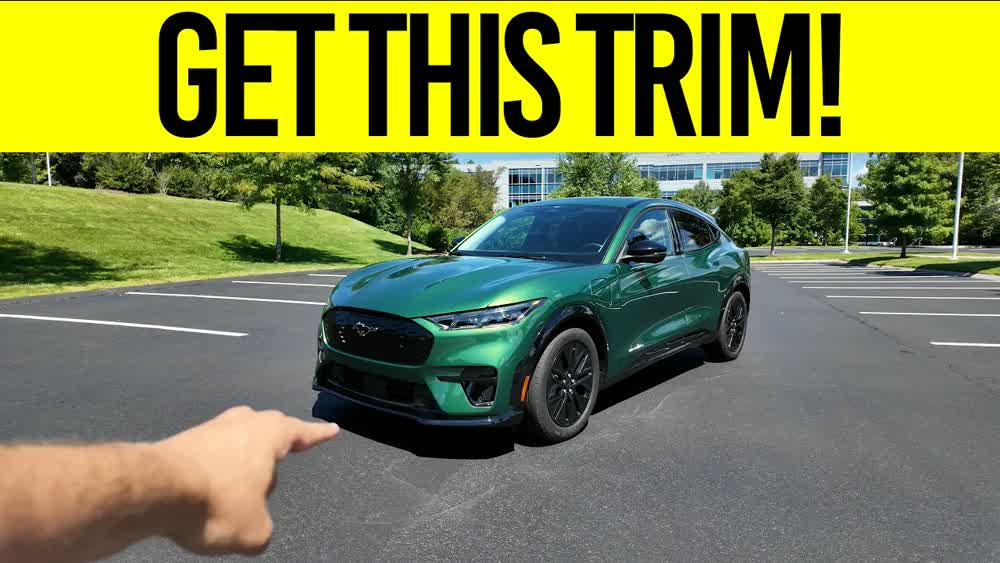
The bigger takeaway for anyone cross-shopping an EV in 2026: feature lists depreciate, cadences don’t. A Mustang Mach-E and a Model Y might look comparable on a dealer lot today. Six months from now, one of them will have gained a dozen features it wasn’t sold with. That compounding is the thing legacy automakers still haven’t matched — and with Ford narrowing its EV ambitions by the quarter, the window to match it is closing, not opening.
The most important feature in the Summer Update isn’t in the release notes. It’s the fact that there will be another one in six months, and another six months after that — on a schedule you can set a calendar by.
Which Teslas get the video-calling and Caraoke features?
Only vehicles with the AMD Ryzen infotainment computer — generally cars built from mid-2022 onward — plus Premium Connectivity or a Wi-Fi connection. Older Intel-based cars are excluded from the camera and Caraoke features, though they still receive the navigation and app-level improvements in 2026.26.
Is the new welcome animation on every Tesla?
No. The TESLA wordmark door animation is limited to 2024-and-newer Model 3 and the refreshed (Juniper) Model Y. Performance trims get a unique Ludicrous warp variant. It can be disabled under Settings → Display → Appearance.
Can I trust Tesla’s 5.2x FSD safety claim?
Treat it as directional, not definitive. The data is self-reported, unaudited, and subject to selection bias — drivers tend to engage FSD on easier roads. That said, the sample grew from 23.6 million km to 65 million km between the June and July reports while the safety multiple improved from 3.5x to 5.2x, so the trend is moving the right way even if the absolute numbers deserve skepticism.
Related reading on EVCUBE