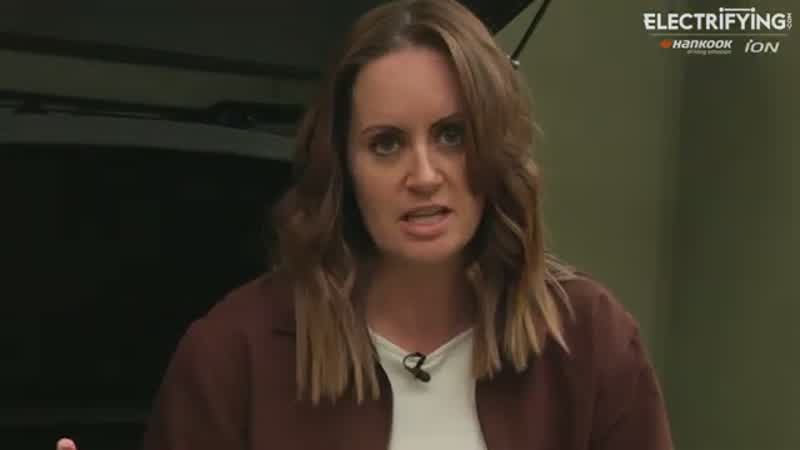
If you’ve been following Volkswagen’s electric adventure, you know the story so far has been… complicated. The ID.4 arrived with promise, then spent a couple of years catching up on software and buttons. But the car VW just showed in near-production form is the one that could change the conversation. It’s called the ID. Cross, and after four separate “dates” with it — a studio walkaround, a drive in the concept, a masked test mule, and now the fully revealed production car — Nicola at Electrifying finally got to see it “fully naked.” Her verdict? “This is the guy you’d marry.”
That’s high praise for a small SUV, but it tells you everything about where Volkswagen’s heart is now. The ID. Cross is the electric version of the T-Cross, the brand’s popular little crossover in Europe. Think of it as the EV the masses can actually afford — not the one that needs a tax credit and a compromise.

What Exactly Is the ID. Cross?
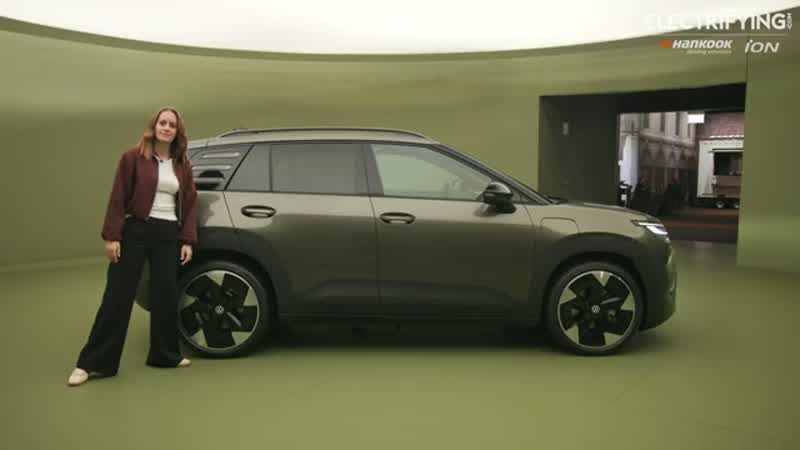
The ID. Cross is a B-segment (subcompact) electric SUV built on VW’s MEB+ platform — the latest evolution of the Modular Electric Drive toolkit that underpins the whole ID. family. At 4,153 mm long, 1,794 mm wide, and 1,581 mm tall, with a 2,601 mm wheelbase, it’s a touch larger than the gas T-Cross but uses that extra length and the flat EV floor to feel roomier inside.
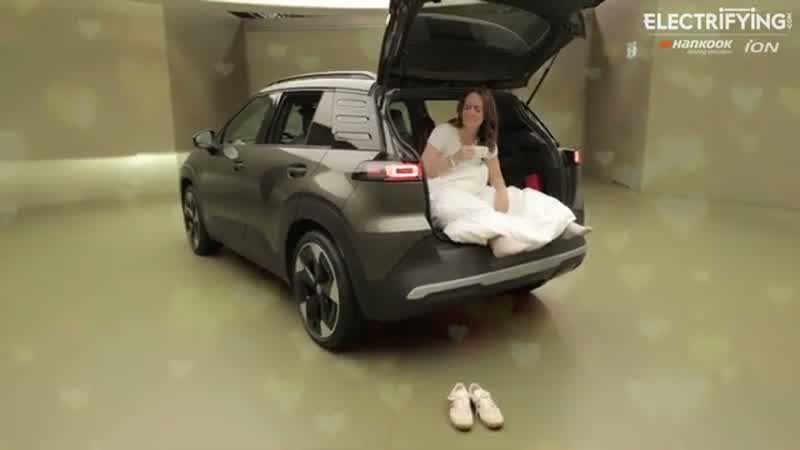
It’s front-wheel drive, which is the pragmatic choice for a budget crossover. That keeps the frunk small (22 liters, just big enough for your charging cable) but frees up space in the boot. Speaking of which, the cargo area grew from 450 liters in the concept to a genuinely useful 475 liters in production. For context, that’s a bigger trunk than you’ll find in a lot of cars a class up.
Design: Safe, Familiar, and Unmistakably VW
There’s a reason Nicola called it “very safe.” The ID. Cross looks almost exactly like the concept that previewed it, and that’s a good thing. Up front you get the long light bar and a glowing VW badge — part of VW’s new “Pure Positive” design language that’s rolling across the lineup. The charge port sits front-right (annoying if you back into your driveway, great if you pull in nose-first).
Around the back, the ID. Cross borrows cues from the adorable ID. Buzz, with a full-width light bar, a lit badge, and what VW itself describes as “whiskey glass” taillights. It’s a clean, confident face — not trying to be a spaceship, just a really nice small SUV. The top-spec Style trim rolls on 20-inch wheels, while the mid Life trim drops to 18s, and roof bars are an option up top.
Inside: VW Actually Listened
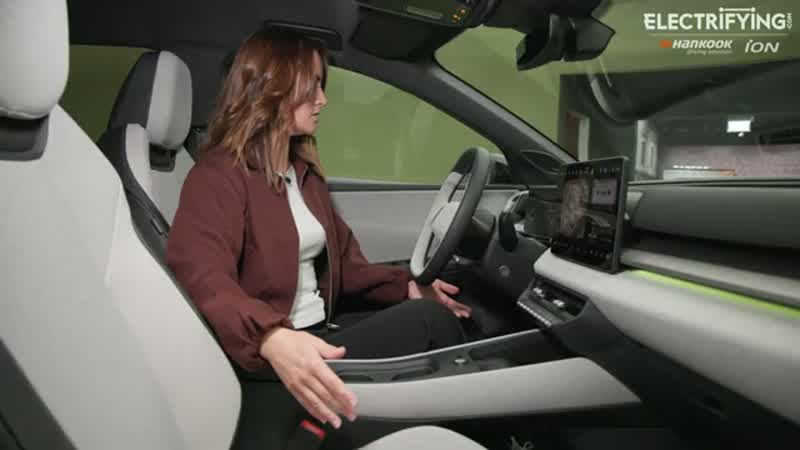
Here’s the part that matters most to anyone who’s complained about modern Volkswagen interiors. The ID. Cross brings back real, physical buttons. Window switches are actual switches again (no more infuriating touch-sensitive strips). Climate controls have proper knobs and buttons. There’s a volume dial. After years of “we’ll fix it in a software update” nonsense, VW finally admitted the touch-everything experiment failed — and the ID. Cross is proof.
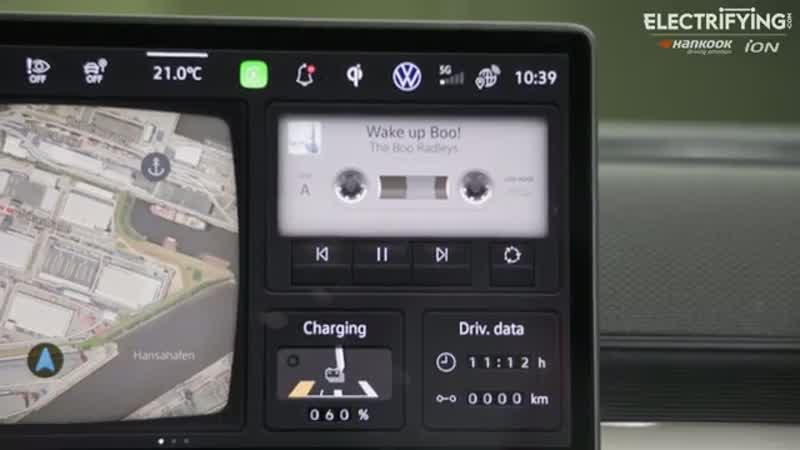
The screens themselves are sharp: a digital gauge cluster and a central infotainment display running Apple CarPlay and Android Auto. But the detail that has EV nerds grinning is the retro mode. Switch the cluster to “retro” and it mimics an old tube TV, complete with a cassette player graphic and even a little strip of red tape — the kind you’d see on a real cassette. It’s the sort of silly, delightful touch that makes a $32,000 car feel special.
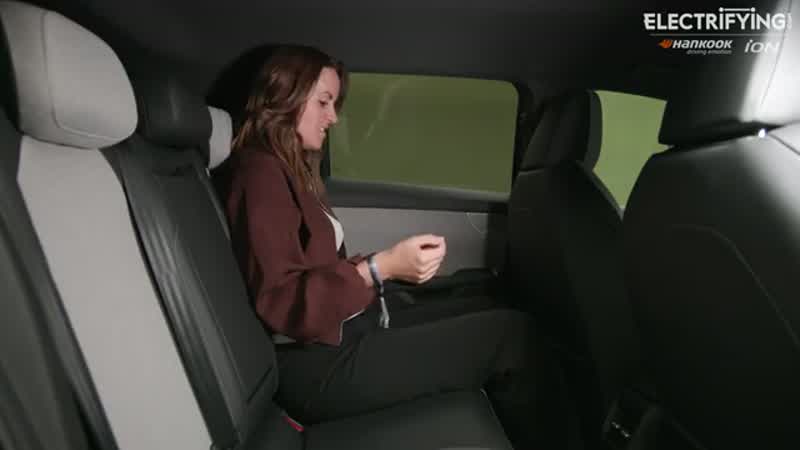
Materials are sustainable (partly recycled fishing nets, which sounds gimmicky until you sit in it and it feels genuinely nice), though Nicola rightly wondered how wipe-clean they’ll be with messy kids aboard. The steering wheel is comfortable, the door handles fold up flush, and the rear seats offer a flat floor with decent knee room. An optional panoramic roof on Life trim and above opens the cabin up, and you can even spec massaging front seats — a first for this class.
Specs and Range: Honest, Not Headline-Grabbing
Volkswagen offers two battery sizes and three power levels:
- 37 kWh battery with 85 kW (114 hp) or 99 kW (133 hp) — good for around 194 miles (312 km) WLTP
- 52 kWh battery with 155 kW (208 hp) — up to 271 miles (436 km) WLTP
Those are European WLTP figures, so U.S. EPA numbers would land a bit lower, but the picture is clear: this is a 200-mile-plus everyday car in its better trims, and a solid 190-miler in the entry version. Efficiency is a claimed 5.2 miles per kWh, which is genuinely good.
Charging tops out at 90 kW on the small battery and 105 kW on the larger one, with a 10–80% charge in about 24 minutes. That’s not neck-and-neck with the fastest 800-volt Koreans, but VW deliberately tuned the charging curve rather than chasing a big peak number — so real-world stops should feel consistent. Top-spec versions can tow up to 1,200 kg (about 2,650 lbs), a bonus for a small SUV.
Price: The Whole Point
This is where the ID. Cross stops being a “nice Europe thing” and starts feeling like a missed opportunity for America. VW says it launches in Europe in autumn 2026 from around €28,000 — roughly $32,000 at today’s exchange rates. That undercuts the ID.4 by a wide margin and lands squarely in the sweet spot where normal people actually buy cars.
Why It Belongs in the U.S.
The American EV market has a hole right where the ID. Cross lives. Sure, we have the Chevy Equinox EV, but a genuine subcompact, affordable, well-built crossover is still rare. The Hyundai Kona EV and Kia Niro EV cover part of this ground, but VW’s pricing and packaging could undercut both while offering more polished interior tech and that glorious retro cluster.
Against the ID.4, the case is even simpler: the ID.4 starts around $45,000 and is a larger, heavier family SUV. The ID. Cross would sit beneath it as the approachable entry point — the car a first-time EV buyer or a downsizing empty-nester actually reaches for. With American buyers increasingly nervous about EV price and range, a $32K VW with 200+ miles of real-world range is exactly the antidote.
The Catch: Don’t Hold Your Breath
Here’s the uncomfortable truth. Volkswagen has confirmed the ID. Cross is a Europe-and-other-global-markets model. There are no U.S. plans, and the brand hasn’t even hinted at a North American version. Part of that is sizing — Americans like their crossovers a bit bigger, and VW’s U.S. focus is clearly on the compact-and-up segment, where the ID.4 is getting a 2027 facelift and may even be renamed ID. Tiguan.
That said, “no plans” isn’t “never.” If the ID. Cross becomes the volume hit VW desperately needs in Europe, pressure to send it across the Atlantic will build fast — especially if a U.S.-built version could dodge tariffs and qualify for incentives.
Verdict: Yes, America Should Get It
The ID. Cross is the Volkswagen EV a lot of us have wanted for years: affordable, practical, genuinely good-looking, and — finally — with buttons that work. Nicola’s “marry this one” line is tongue-in-cheek, but it captures something real. This is the car that proves VW listened.
Will it come here? Probably not soon. Should it? Absolutely. If VW wants to be a mainstream EV brand in America rather than a premium-ish niche player, a $32,000 crossover with 200+ miles of range is the single best weapon it has. Until then, American buyers can compare the latest affordable EVs we cover at EVCube while we wait and hope VW changes its mind.