Buying the wrong electric vehicle in 2026 is one of the fastest ways to watch your hard-earned money evaporate. Massive manufacturer price cuts, aging battery tech, and a flood of off-lease EVs hitting the used market have sent resale values into a nosedive. At the bottom of the sales charts, a familiar pattern has emerged: a cluster of EVs that simply aren’t finding buyers. The slow sellers tell a bigger story than any single disappointing model. They reveal exactly how the American market has shifted in the months since the federal tax credit disappeared.
Here are the electric vehicles struggling the most in the US right now, why they’re stalling, and what their struggles say about where the American EV market is actually heading.

The $7,500 Tax Credit Vanished — and Everything Changed
You can’t talk about slow-selling EVs in July 2026 without talking about September 30, 2025. That’s the day the federal $7,500 EV purchase tax credit officially expired, killed by the “One Big Beautiful Bill” signed earlier that year. It didn’t just trim a discount — it removed the single biggest financial prop underneath expensive electric cars.
The effect was dramatic and immediate. EV sales spiked in the third quarter of 2025 as buyers rushed to beat the deadline, then cratered in the fourth. Cox Automotive data shows the US EV market share sliding as the incentive-driven urgency disappeared. Automakers that had leaned on the credit to make $60,000-and-up EVs feel attainable were suddenly exposed. Many of the vehicles on this list were propped up almost entirely by that $7,500 — and when it vanished, so did the buyers.
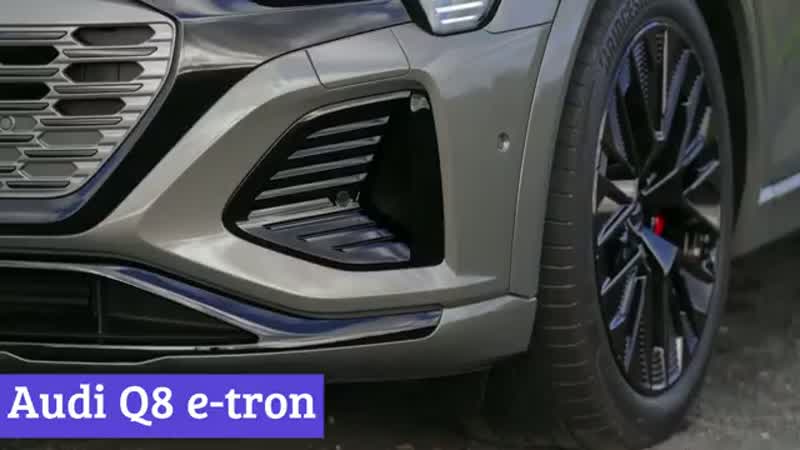
Audi’s e-tron Family: A Near-Total US Collapse
If there’s one brand that symbolizes the 2026 EV slowdown, it’s Audi. Across the entire first half of 2026, Audi sold fewer than 2,000 EVs in the United States — just 1,730, according to InsideEVs’ analysis of company filings. For a major luxury automaker, that’s not a slow quarter; it’s a near-exit from the segment.
The breakdown is brutal:
- Audi Q8 e-tron: Essentially finished. Production of the original e-tron has ended, and US sales sat at zero through the first half of 2026. Once the brand’s flagship electric SUV, it’s now a ghost.
- Audi Q6 e-tron: Audi’s best-selling EV in America — and still only about 936 units in six months, down roughly 87% from the prior year. A strong product, hammered by the loss of incentives.
- Audi Q4 e-tron: Just 150 units in H1 2026, off more than 90%. Older tech and glitchy software left it stranded between cheaper mainstream EVs and sharper rivals.
The Q6 e-tron’s story is the clearest warning in the industry: a premium EV can go from best-seller to afterthought in a single quarter once the incentive that made its price tolerable goes away. Audi’s problem isn’t just policy, though. The Q8 e-tron was already aging on a dated architecture, and the brand’s software reputation took hits that turned off exactly the buyers who pay luxury prices for a flawless experience.
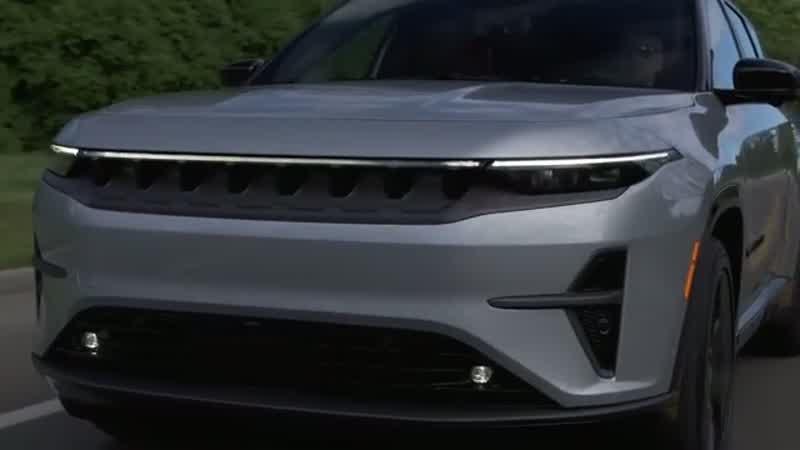
Jeep Wagoneer S: The 2026 Model That Isn’t
Jeep’s first American EV looked like a statement when it launched in January 2025 — a 600-horsepower, $67,195 electric flagship. It even sold over 10,000 units in its first nine months. Then the tax credit expired, and the bottom fell out.
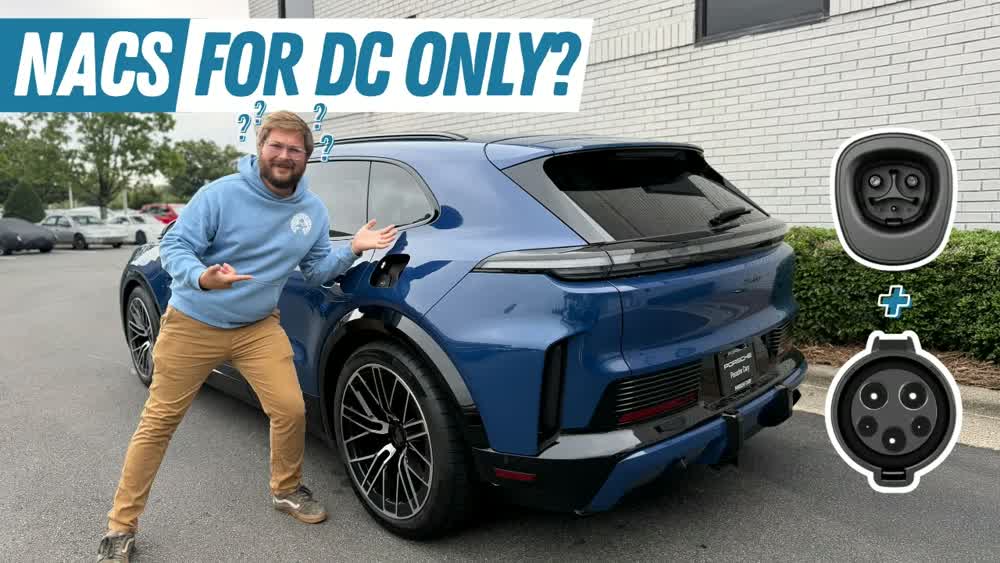
Jeep sold just 613 Wagoneer S units between October 2025 and March 2026, including only 175 in the first quarter of 2026. The response? Skip the 2026 model year entirely. Stellantis is “pacing production” ahead of a 2027 relaunch with a Tesla-style NACS charge port. In the meantime, Jeep is dangling a $7,750 manufacturer incentive to clear roughly 350 leftover 2025s off dealer lots.
The Wagoneer S is a cautionary tale of ambition undone by timing. Built in Toluca, Mexico, it’s exposed to tariffs on top of losing the credit — a double hit to a price that was already a stretch for most American households.
Volvo EX30: Gone From America After One Year
The EX30 was supposed to be Volvo’s affordable EV breakthrough, initially pitched below $35,000. Instead, tariffs forced production from China to Belgium, pushing the US price above $40,000. By the time it arrived, the math didn’t work — and then the federal credit disappeared.
Volvo sold just 5,409 EX30s in the US for all of 2025, and by early 2026 it confirmed the model would be pulled from the American market after the 2026 model year. Dealer orders closed on March 20, 2026. Volvo’s US EV entry point now becomes the far more expensive EX40, starting around $56,000. For a brand that built its reputation on safety and pragmatism, the EX30’s exit is a blunt signal: an imported small EV can’t survive in America without both affordable sourcing and a subsidy.
Chevrolet Blazer EV: Discounted to Move
The Blazer EV is a genuinely good-looking, capable electric SUV with up to 334 miles of range. It’s also one of the slowest-moving EVs on dealer lots in 2026. Edmunds has described it as carrying big discounts and very slow stock, with buyers routinely paying around $3,000 under sticker just to get them off the lot.
The numbers tell the story: Blazer EV sales fell roughly 83% year-over-year in Q1 2026, to about 1,077 units, while its cheaper sibling, the Equinox EV, held steady near 9,600. Chevrolet is effectively cannibalizing itself — value shoppers gravitate to the Equinox that offers similar practicality for thousands less. The Blazer EV also irritated buyers by dropping Apple CarPlay and Android Auto in favor of Google-based software, and its motorized charging door drew complaints. Priced above the Equinox while occupying an awkward middle ground, it struggles to make a case for itself.
Fiat 500e: Less Than One a Day
The Fiat 500e is charming, stylish, and genuinely fun in a city. It’s also one of the worst-selling vehicles in all of America. Through the first quarter of 2026, Fiat moved just 68 units — less than one per day. Dealers have slapped discounts as steep as $15,000 on remaining 2024 and 2025 models just to coax anyone into buying.
The 500e’s problem is a mismatch with American needs. Its roughly 149-mile range is too short for a country built around long drives, limiting it to a narrow urban niche. And in ahead-scratcher, Fiat actually raised the 2026 starting price to around $35,700–$37,700 — the opposite of what a slow seller should do. Between a too-small battery and a too-high price, the 500e sits ignored by the broader market.
Genesis GV60: The Hidden Gem Too Few Encounter
The GV60 is a beautifully crafted luxury electric SUV that, by almost every review, satisfies the few who buy it. The problem is how few that is. Genesis sold only around 117 units in the early part of 2026, and under 340 through June — a drop of more than two-thirds from the prior year.
Part of the issue is distribution: Genesis confirmed the GV60 is offered at only select retailers in certain states, capping volume no matter how good the product. It also competes in a brutally crowded luxury EV segment where buyers default to more familiar nameplates. A great car, stranded by limited availability and intense competition.
The Toyota C-HR BEV: A Confusing Outlier
Some early 2026 sales snapshots tagged Toyota’s revived C-HR BEV as a worst-seller with tiny volume — a reflection of its just-launched status at the start of the year. But Toyota’s own reported figures tell a different story: the C-HR BEV found its footing fast, moving nearly 3,750 units in the first half of 2026, and Toyota’s bZ family has surged to become one of America’s top-five EV brands. The lesson isn’t that Toyota’s EV failed — it’s that a rocky launch quarter can look like a flop before a model finds its buyers. Toyota’s hybrid-first loyalists still lean toward hybrids, but its EVs are climbing where others are collapsing.
What the Slow Sellers Reveal About the US Market
Step back from the individual models and a clear picture emerges for July 2026:
- Incentives were doing heavy lifting. The expired $7,500 credit didn’t just trim demand — for premium EVs, it was the difference between “aspirational” and “unaffordable.” Audi, Jeep, and Volvo all prove how dependent expensive EVs were on that subsidy.
- Affordability wins. The Equinox EV and Toyota bZ outsell their pricier siblings because they hit the right price. TheBlazer EV and Wagoneer S show what happens when the price is a stretch and the discount is the only hook.
- Buyers are shifting to trucks, SUVs, and hybrids. America’s best-selling EVs are still crossovers (Model Y, Equinox, bZ), while sedans and small hatchbacks like the 500e struggle. And across the industry, hybrids are taking share from pure EVs as the incentives fade.
- Charging access and software matter more than ever. The Wagoneer S’ glitchy software, Audi’s dated architecture, and the race to add NACS ports all show that buyers now expect a polished, Tesla-compatible experience — not a beta test.
None of this means the US EV market is dead. EV sales are still in the second-best territory on record, and brands that price aggressively and build compelling crossovers are gaining. But the era of selling expensive EVs on the back of a federal check is over. The slow sellers of July 2026 are the casualties of that reset — and a preview of the discipline the rest of the industry now has to show.
For more on how the American electric shift is playing out, explore the latest EV analysis and buyer guides at evcube.net.