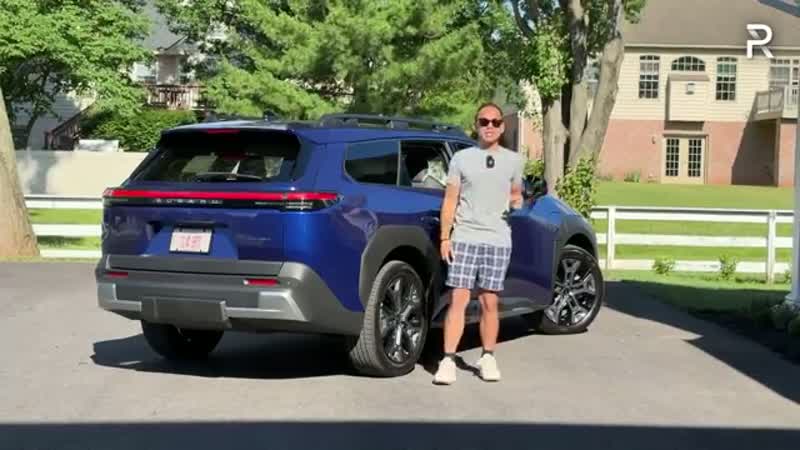
For the better part of 30 years, if you wanted a practical, capable, go-anywhere family hauler that refused to look like every other crossover on the block, you bought a Subaru Outback. It was the original anti-SUV. But when Subaru revealed the all-new sixth-generation Outback late last year, it showed up with a boxier, more upright SUV silhouette — and a lot of faithful Outback buyers were left cold. For 2026, though, there’s a second option sitting in Subaru showrooms, and it might be the one those buyers were actually waiting for. This is the first-ever Subaru Trailseeker.
The Trailseeker is a midsize, lifted station wagon — about the same size and the same money as the current Outback, but with up to 375 horsepower and a 0–60 time under 4.5 seconds. That makes it, on paper, the quickest and most powerful production Subaru ever sold in the U.S. (at least until the three-row Getaway lands later this year). We spent a week in the fully loaded Touring trim to answer the big question: is the all-new Trailseeker a better Outback than the Outback itself?
What exactly is the Trailseeker?
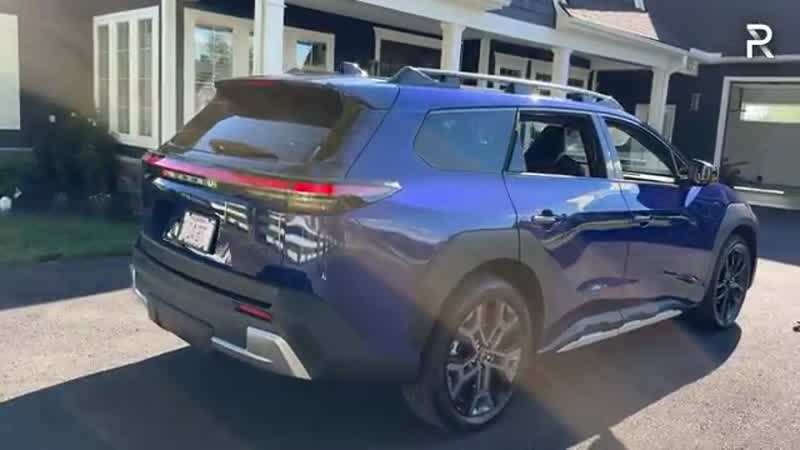
Think of it as the electric reincarnation of the Outback. It rides on a 112.2-inch wheelbase, stretches 190.8 inches long, and stands 73 inches wide — within an inch or two of the gas Outback in every dimension — but it wears that classic quirky lifted-wagon look that Outback fans love, and it does it better than the more SUV-ified new Outback.

Underneath, the Trailseeker shares its bones with the Toyota bZ Woodland, and it’s built in Japan at a Subaru factory. Subaru is quick to point out that this isn’t a simple rebadge — the company says its engineers had a real hand in the tuning, and the result feels more Subaru than the bZ does. There’s just one powertrain and one battery on offer: a dual-motor, all-wheel-drive setup making 375 hp and 396 lb-ft of torque, fed by a 74.7-kWh lithium-ion pack. There’s no front-wheel-drive version, no detuned version, no “XT” — everyone gets the full 375 hp. Top speed is a governed 115 mph, and Subaru says it tows up to 3,500 lb.
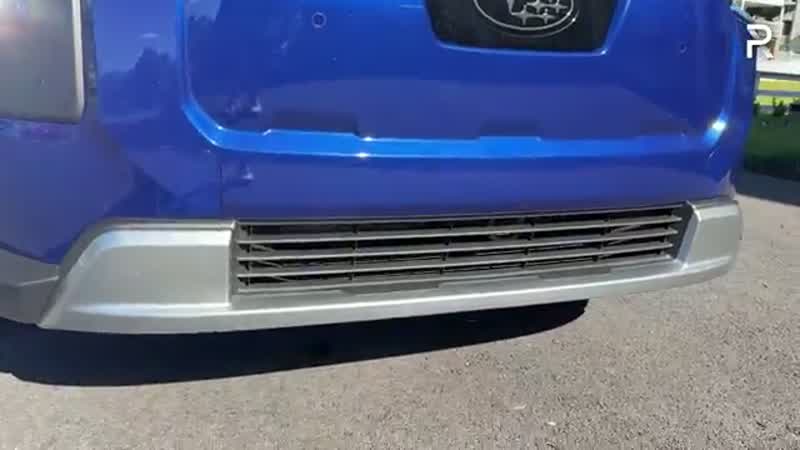
One caveat worth noting for the gear-hauling crowd: like its Toyota platform-mate, the Trailseeker does not get a front trunk. That space is taken up by the motors and components. Subaru compensates with a generous underfloor cargo area, but if you were hoping for a frunk, this isn’t your car.
Range for real American roads
Subaru estimates up to 281 miles of range on the smaller 18-inch wheels, dropping to 274 miles on the 20-inch wheels that come on Limited and Touring. In warm-weather, real-world testing, independent reviewers saw right around 250 miles — perfectly acceptable, if not class-leading. The new benchmark in buyers’ minds is 300 miles, and the Trailseeker doesn’t quite get there.
Context helps, though. A base rear-wheel-drive Tesla Model Y is rated in the same ballpark, and a premium all-wheel-drive Model Y only beats the Trailseeker by roughly 30 miles. Add 3,500 lb of trailer behind the hitch and, like any EV, the Trailseeker’s range will shrink — but for daily commuting and weekend trips to the trailhead, 250–280 miles is genuinely usable.
Charging: NACS is the headline
The single biggest win for American buyers is the standard NACS (J3400) charge port. That unlocks access to more than 25,000 Tesla Superchargers nationwide, which takes a huge amount of the guesswork out of road-tripping an electric Subaru. Peak DC speed is a modest 150 kW, and Subaru says a 10–80% top-up takes about 28 minutes. That’s not Hyundai/Kia fast (those hit 235–350 kW), but a half-hour coffee stop is enough to get back on the road.
At home, the 11 kW onboard charger fills the battery from empty in roughly 7.5 hours — an overnight plug-in for most owners. Subaru also includes battery preconditioning (triggered by navigating to a charger or via the screen) to keep cold-weather charging speeds reasonable, plus a CCS/J1772 adapter and a 1,500-watt cargo-area power outlet that’s perfect for camp setups.
Subaru’s outdoorsy EV formula
This is where the Trailseeker earns its name. It rides 8.5 inches off the ground — more clearance than most crossovers — and carries Subaru’s X-MODE dual-mode system (Snow/Dirt and Deep Snow/Mud), Grip Control, and Downhill Assist Control. The revised Symmetrical AWD uses acceleration sensors to shuffle torque front-to-rear and side-to-side as conditions change. Raised roof rails are standard and rated for a 700-pound static load, so a roof tent is fair game.
Two honest misses on the adventure front: Subaru doesn’t offer all-terrain tires (only Bridgestone all-seasons), while the Toyota bZ Woodland does, and there’s no true one-pedal driving — four regen levels, but no full hold. A Wilderness version with all-terrains and even more capability would be the obvious next move.
Interior and tech
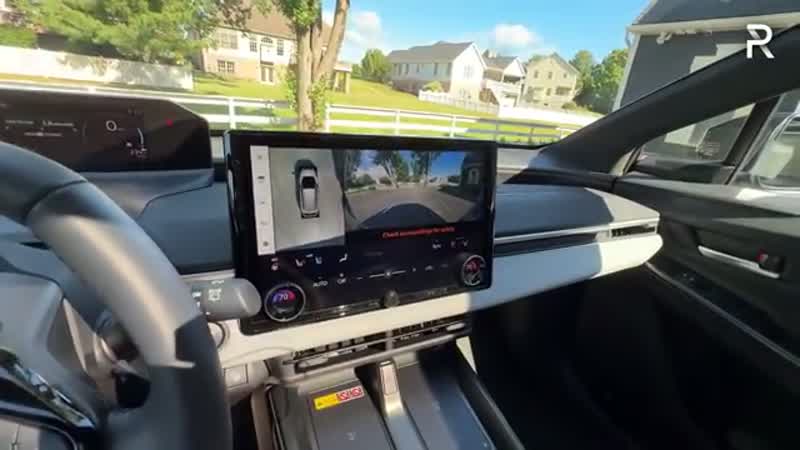
Inside, the Trailseeker gets the largest screen ever fitted to a Subaru: a 14-inch central touchscreen paired with a 7-inch iMid display. The software underneath is Toyota’s multimedia system, which means the cabin feels a little more Toyota than Subaru — though the Subaru start-up chime and graphics are nice touches. You get wireless Apple CarPlay and Android Auto, dual wireless charging pads, 64-color ambient lighting, and an 11-speaker Harman Kardon stereo (two more speakers than the bZ’s JBL).
Upholstery is water-resistant StarTex (gray or black), with leather available on the Touring for $300 extra. The Touring adds heated and ventilated front seats, heated rear seats (Limited and up), radiant leg warmers, a panoramic glass roof with a power shade, and a frameless digital camera rearview mirror. The seats are genuinely comfortable for long trips — a highlight of the week.
Rear legroom is 35.3 inches, about four inches less than the gas Outback on paper, but still roomy for adults. Cargo runs 32.2 cubic feet behind the seats and just under 72 cubic feet with them folded — a bit less than the Outback, but roughly 15 cubic feet more than the smaller Solterra.
Pricing and trims for the U.S.
The Trailseeker is on sale now at U.S. Subaru dealers for the 2026 model year, in three trims:
| Trim | MSRP (excl. dest.) | Key highlights |
|---|
| Premium | $39,995 | Dual-motor AWD, 375 hp, 18-in wheels, 281-mi range, 14-in screen, EyeSight, heated seats, roof rails |
| Limited | $43,995 | 20-in wheels, Harman Kardon, 360 camera, heated rear seats, heated wheel, hands-free liftgate |
| Touring | $46,555 | Panoramic glass roof, ventilated front seats, radiant leg warmers, digital mirror |
Factoring in the $1,450 destination charge, a Touring lands around $48,005 delivered — roughly $1,500 less than a comparable Outback XT Touring. Against the Tesla Model Y, the Trailseeker starts at the same price as the rear-drive Model Y but adds AWD and more power; versus an all-wheel-drive Model Y Long Range, a fully loaded Trailseeker undercuts it by about $7,500. Next to its platform twin, the Toyota bZ Woodland, the Subaru is also a few thousand dollars cheaper. In other words, the value case is strong.
How it stacks up against rivals
Versus the Solterra: The Trailseeker is more than six inches longer, carries more cargo, looks more like a “real” Subaru, and shares the same 375-hp powertrain — an easy step up for Solterra shoppers wanting more space.
Versus the Toyota bZ Woodland: They’re platform twins. The Trailseeker is cheaper and, to many eyes, better looking, though the bZ offers all-terrain tires.
Versus the Tesla Model Y: The Model Y counters with more range and slicker tech, but the Trailseeker fights back with a lower AWD price, quicker acceleration in some trims, physical climate controls, and a more traditional wagon shape.
Versus the VW ID.4, Honda Prologue, and Chevy Blazer EV: The Subaru’s 375 hp is class-leading for the money, and its off-road chops are unmatched in this group.
The verdict for American adventure buyers
After a full week, the Trailseeker is our favorite Subaru EV yet. It nails a rare balance: silly-quick acceleration (we saw 3.8-second 0–60 runs, half a second quicker than Subaru’s claim), a quiet and compliant ride, genuine soft-road ability, and a practical wagon body that fits gear and dogs alike. It’s the electric Outback for buyers who don’t love the new Outback’s SUV-ified looks.
The downsides are real but manageable — range that’s good rather than great, no one-pedal driving, no all-terrain tires, and an interior that leans Toyota. But if you want a comfortable, capable, adventure-ready electric wagon with Subaru DNA, and you don’t absolutely need 300-plus miles between charges, the Trailseeker might just be the biggest surprise in the showroom. For more EV buying guides and reviews, browse our latest electric-vehicle coverage.