BYD DM-i Deep Dive: How the World’s Most Efficient Plug-In Hybrid Actually Works in 2026
June 18th, 2026
By EVCUBE .NET
No Comments
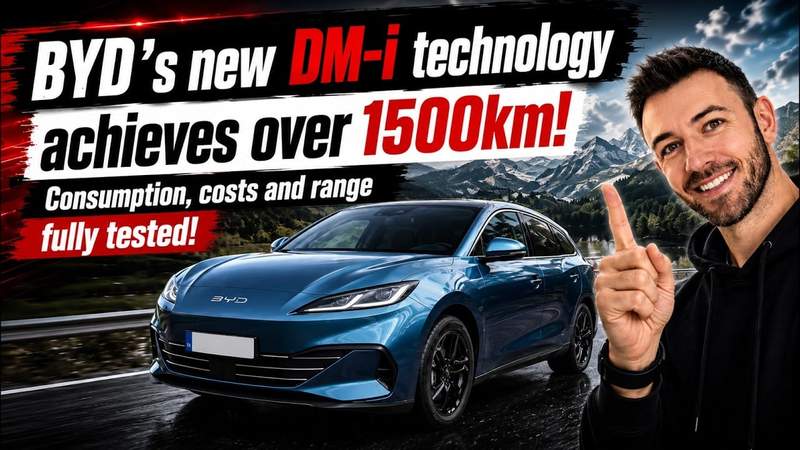
BYD’s DM-i system is not a conventional plug-in hybrid. It is fundamentally an electric car with a small gasoline generator tucked under the hood. The 1.5L four-cylinder engine produces just 98 horsepower and has no traditional gearbox. It acts primarily as a battery charger, only connecting to the wheels at highway speeds. The result is a car that drives like an EV for daily commuting while offering 1,300 km of total range for road trips ? and it holds the world record for thermal efficiency at 46%. Here is our deep analysis of how it actually works and what the real-world consumption numbers look like.
The Architecture: EV First, Engine Second
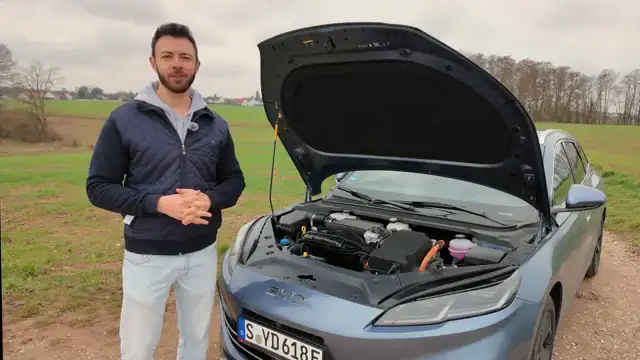
The 1.5L 4-cylinder engine under the hood is almost an afterthought ? it produces 98 hp and primarily charges the battery rather than driving the wheels.
The fundamental difference between DM-i and a conventional PHEV comes down to design philosophy. A traditional plug-in hybrid starts with a combustion powertrain and adds electric capability. BYD’s DM-i starts with an EV powertrain and adds a combustion engine as a support system.
Key architectural facts:
1.5L engine, 98 hp ? the smallest, least powerful component in the system
No traditional gearbox ? no dual-clutch transmission, no automatic, no manual
Single clutch ? only engages when the engine needs to mechanically assist the wheels at high speeds
19 kWh Blade Battery (LFP) ? enough for ~100 km of pure electric range
65L fuel tank ? combined range of 1,300 km
46% World record thermal efficiency ? the most efficient production combustion engine ever built
BYD’s engine achieves this remarkable 46% thermal efficiency precisely because it does not need to operate across a wide power band. It runs at a fixed optimal speed when acting as a generator, unlike conventional engines that must handle idle, acceleration, cruising, and everything in between.
Dual Motor Intelligence: How DM-i Works
BYD’s DM-i flips the conventional PHEV architecture: the battery and electric motor are primary, the engine provides backup charging and highway assist.
The DM-i system operates in three distinct modes:
EV Mode (Pure Electric) ? The car runs exclusively on the 19 kWh Blade Battery, powering an electric motor directly connected to the drivetrain. No engine involvement at all. Up to 100 km of range, sufficient for most daily commutes.
HEV Mode (Series Hybrid) ? The engine runs as a generator, charging the battery while the electric motor continues to drive the wheels. There is no mechanical connection between the engine and the wheels. The transition is seamless ? the engine spins up and down so smoothly that you barely notice it.
HEV Mode with Engine Assist (Parallel Hybrid) ? At higher speeds or under hard acceleration, the clutch engages and the engine mechanically assists the electric motor in driving the wheels. Both power sources work together, delivering a combined 212 hp.
Throughout all of this, the driver perceives the experience as smooth, quiet electric driving. The engine is described as a “background extra” ? always there but barely noticeable.
Real-World Consumption Test
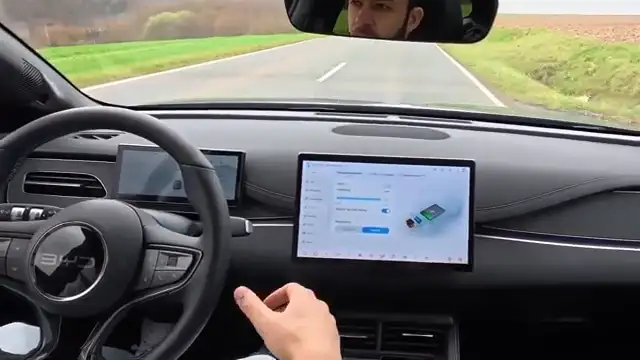
Real-world test over 17.3 km in mixed city and country road driving: 9.2 kWh electricity + 2.6 L fuel in HEV mode.
The video’s real-world test over a 17.3 km mixed route (city streets, country roads, no highway) produced the following results:
Metric
HEV Mode (Hybrid)
EV Mode (Electric)
Engine-Only Mode
Electricity Consumption
9.2 kWh
TBD (full test)
0 kWh
Fuel Consumption
2.6 L
0 L
TBD
Total Distance
17.3 km
17.3 km
17.3 km
Average Speed
53 km/h
53 km/h
53 km/h
Battery Used
~9% (from 46% to 37%)
Full discharge
Minimal
Driving Feel
Smooth, EV-like
Silent EV
Still smooth, slight engine presence
The HEV test demonstrated that even with the engine actively involved (charging battery and occasionally assisting the wheels), the experience remained overwhelmingly EV-like. The tester, a 4-year EV veteran, noted he could barely feel the engine through the pedals.
Energy Flow in Action
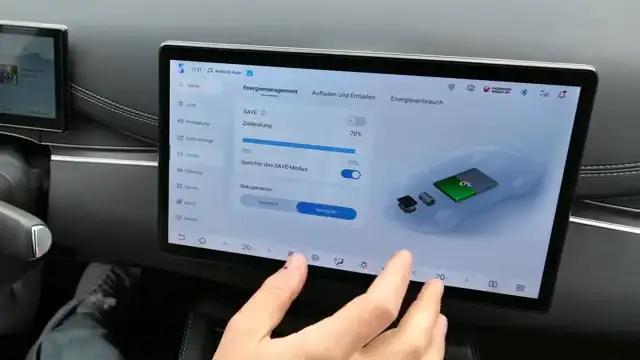
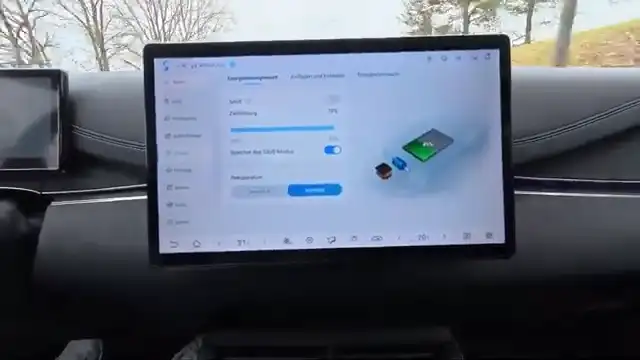
The in-car energy flow display shows real-time power routing: battery to motor, engine charging battery, or both driving the wheels together.
The in-car display provides a real-time visualization of energy flow. During the test, the system demonstrated:
Battery-to-motor flow during gentle acceleration (pure EV)
Engine-to-battery charging during steady cruising
Regenerative braking sending power back to the battery during deceleration
Combined engine+motor power during uphill or rapid acceleration
Engine winding down gracefully rather than cutting abruptly ? a deliberate design choice for smoothness
DM-i vs Conventional PHEV Comparison
Characteristic
BYD DM-i (Super Hybrid)
Conventional PHEV (P2 Layout)
Design Base
EV architecture + generator
Combustion architecture + electric
Primary Driver
Electric motor always
Engine (electric assists)
Gearbox
No traditional gearbox
DCT, automatic, or CVT
Engine Role
Generator, occasional assist
Primary power source
Electric Range
~100 km
30-80 km
Engine Efficiency
46% (world record)
30-40%
EV Driving Feel
Full time (engine background)
Only when battery is charged
This comparison reinforces our earlier analysis in Every Hybrid Powertrain Explained ? the super hybrid category represents a fundamentally different approach that is converging toward pure EV driving.
Why DM-i Matters for the Industry
Strategic Impact
Bridge to Full EVs
EV experience with zero range anxiety
Battery Efficiency
Smaller battery, less lithium required
Cost Advantage
Lower entry price than pure EV
Global Reach
Works where charging infrastructure is sparse
BYD’s DM-i technology has been a key driver of the company’s explosive global growth, which we analyzed in China’s EV Offensive. The system solves a real problem: it provides an EV driving experience for the 90% of daily driving that happens locally, while offering unlimited range for the 10% that involves road trips ? all without requiring ubiquitous charging infrastructure.
As LFP battery costs continue to fall (our battery war analysis covers this in detail), the DM-i formula becomes even more compelling: cheaper batteries mean cheaper cars, and removing range anxiety removes the primary barrier to EV adoption.
Frequently Asked Questions
What is BYD DM-i and how is it different from a regular plug-in hybrid?
DM-i (Dual Motor Intelligence) starts from an EV architecture and adds a gasoline engine as a generator. Unlike conventional PHEVs where the engine is primary, DM-i drives as an EV almost all the time. The engine primarily charges the battery, only connecting to the wheels at highway speeds.
How far can a BYD DM-i car go on electricity alone?
Approximately 100 km on the 19 kWh Blade Battery. The combined range with the 65L fuel tank is 1,300 km according to BYD.
Does the BYD DM-i have a gearbox?
No. The DM-i system has no traditional gearbox, dual-clutch transmission, or automatic transmission. The electric motor has a direct connection to the drivetrain, and the engine connects via a single clutch only when needed at high speeds.
How efficient is the BYD DM-i engine?
The 1.5L engine achieves 46% thermal efficiency ? a world record for a production combustion engine. It achieves this by operating at a fixed optimal speed as a generator, unlike conventional engines that must handle varying loads.
Does the DM-i system feel like driving an electric car?
Yes. The tester (a 4-year EV owner) confirmed that the DM-i system feels overwhelmingly EV-like. The engine is barely noticeable through the pedals or cabin, and the throttle response is smooth and immediate like a pure EV.
What size battery does the BYD DM-i use?
A 19 kWh LFP Blade Battery ? the same chemistry used in BYD’s full EVs. The LFP chemistry provides excellent safety and long cycle life, as covered in our LFP battery analysis.
Discover the most attractive leasing and financing options for electric vehicles (EVs) this November 2024. Whether you’re looking to lease or finance, there are some excellent deals available that cater…