GM’s Sodium-Ion Battery Strategy: Where It Will Be Used, Why It Matters for EV Owners
June 18th, 2026
By EVCUBE .NET
No Comments
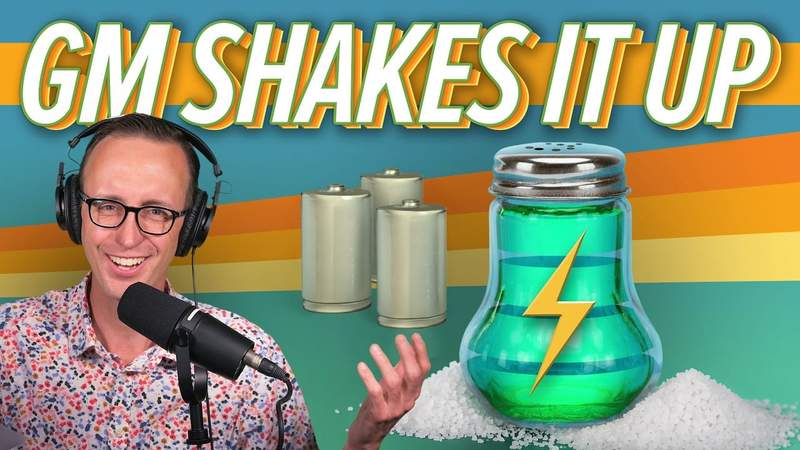
General Motors is preparing to deploy sodium-ion batteries ? not in its next electric vehicle, but in stationary energy storage systems. In a candid interview on the GreenCars podcast, GM’s VP of Battery and Sustainability Kurt Kelty laid out the company’s three-pronged battery chemistry strategy: NMC for high-range EVs, LFP for affordable EVs, and sodium-ion for grid-scale storage where energy density doesn’t matter but cost and supply chain do. Here is our analysis of what this means for the EV industry and for GM owners.
The Three Chemistry Strategy
GM’s Kurt Kelty outlined three battery chemistries for three different applications: NMC for vehicles, LFP for affordable EVs, and sodium-ion for stationary storage.
Kelty broke down GM’s current battery strategy into three distinct chemistries, each optimized for a different role:
NMC (Nickel Manganese Cobalt) ? Currently powering every GM Ultium-based EV including the Cadillac Lyriq. High energy density delivers maximum range, produced domestically at Ultium Cells LLC. This remains GM’s primary chemistry for passenger vehicles demanding competitive range figures.
LFP (Lithium Iron Phosphate) ? The affordable chemistry that has dominated the Chinese market. GM is evaluating LFP for more affordable EV models where range expectations are lower. However, Kelty noted a critical constraint: the LFP supply chain is designed around China, where raw materials for the cathode precursor are byproducts of other industrial processes. Building a domestic LFP supply base in the US faces structural disadvantages.
Sodium-Ion ? The newcomer. Lower energy density than LFP, which makes it unsuitable for vehicles today. But sodium-ion offers compelling advantages for stationary energy storage: long cycle life, excellent high-temperature operation, and ? most critically ? a supply chain that the United States can build domestically.
World’s Largest US sodium reserves ? giving America a structural advantage for domestic sodium-ion battery production
Why Sodium-Ion for Storage, Not Cars
The US has more sodium reserves than any other country, making domestic sodium-ion battery production economically viable for stationary storage.
Sodium-ion batteries have approximately 30-40% lower energy density than LFP at the pack level. In a vehicle, that means either dramatically reduced range or a much larger, heavier battery pack. For stationary energy storage, however, energy density is irrelevant ? the system does not need to move.
What does matter for storage:
Cost per kWh ? Sodium-ion targets lower cost than LFP
Cycle life ? Long cycle life reduces total cost of ownership
High-temperature operation ? Better thermal stability than lithium-based chemistries
Supply chain independence ? Sodium is abundant in the US; lithium, cobalt, and nickel supply chains are concentrated elsewhere
Cheaper than LFP Target sodium-ion pack cost for stationary storage applications
Second-Life Batteries: GM’s Existing Storage Program
GM has been repurposing Volt and other EV battery packs into stationary energy storage since the early 2010s ? a program that predates most of the current industry interest.
GM’s second-life battery program is not new. The company has been repurposing Volt battery packs into energy storage systems since the early 2010s, starting with a system at the Milford Proving Grounds that used packs from Volt development vehicles. Today, GM is refurbishing battery packs from the Bolt EV recall program for use in energy storage, giving those cells a second life before recycling.
This dual approach ? sodium-ion for new stationary storage and second-life EV packs for additional capacity ? positions GM to build a significant energy storage business without competing with its own vehicle battery supply.
Battery Chemistry Comparison
Property
NMC
LFP
Sodium-Ion
Energy Density
High (250-300 Wh/kg)
Medium (160-180 Wh/kg)
Lower (100-140 Wh/kg)
Cost
Highest
Low (mature China supply)
Target: below LFP
Cycle Life
Good (1,000-2,000)
Excellent (3,000-5,000)
Excellent (5,000+)
Thermal Stability
Moderate
Good
Excellent
US Supply Chain
Yes (Ultium domestic)
China-dominant
Yes (abundant US sodium)
Best Application
Long-range EVs
Affordable EVs
Stationary storage
In GM Products?
Yes (Lyriq, all current)
Evaluating
In development (storage)
What This Means for EV Owners
Impact Assessment
Lower Future EV Prices
LFP adoption will reduce entry-level EV costs
Domestic Supply Chain
Sodium-ion reduces reliance on imports
Better Grid Storage
More storage supports EV charging infrastructure
Second-Life Value
Your old EV battery has residual value
For current and prospective GM EV owners, the takeaway is positive. GM’s three-chemistry strategy means the company is not betting on a single battery technology. NMC continues to power high-end EVs with competitive range. LFP will enable more affordable models. And the sodium-ion storage business creates a natural home for second-life batteries, potentially improving EV resale values as the battery retains value beyond the vehicle.
Will GM put sodium-ion batteries in electric cars?
Not initially. GM’s Kurt Kelty stated that sodium-ion’s lower energy density makes it unsuitable for vehicles today. The first applications will be stationary energy storage systems where size and weight do not matter.
What is the advantage of sodium-ion over LFP batteries?
Sodium-ion offers excellent cycle life (5,000+ cycles), better high-temperature operation, and a domestic US supply chain ? sodium is abundant in America. The trade-off is approximately 30-40% lower energy density than LFP.
What battery chemistry does GM use in current EVs?
All current GM Ultium-based EVs (Cadillac Lyriq, GMC Hummer EV, Chevrolet Silverado EV) use NMC chemistry produced domestically at Ultium Cells LLC. GM is evaluating LFP for future affordable models.
Does GM recycle old EV batteries?
Yes. GM has a second-life program that repurposes old EV battery packs (including Volt and Bolt packs) into stationary energy storage systems, extending their useful life before recycling.
Why can’t the US build its own LFP supply chain?
LFP precursor materials in China are byproducts of other industrial processes, making them extremely cheap. The US lacks this industrial ecosystem, making domestic LFP production structurally more expensive. Sodium-ion offers a more viable path to domestic battery supply chain independence.
When will GM’s sodium-ion batteries be available?
GM is still in the development stage for sodium-ion cells and does not need to make production decisions for approximately another year. Commercial availability is likely 2-3 years away.
Discover the most attractive leasing and financing options for electric vehicles (EVs) this November 2024. Whether you’re looking to lease or finance, there are some excellent deals available that cater…