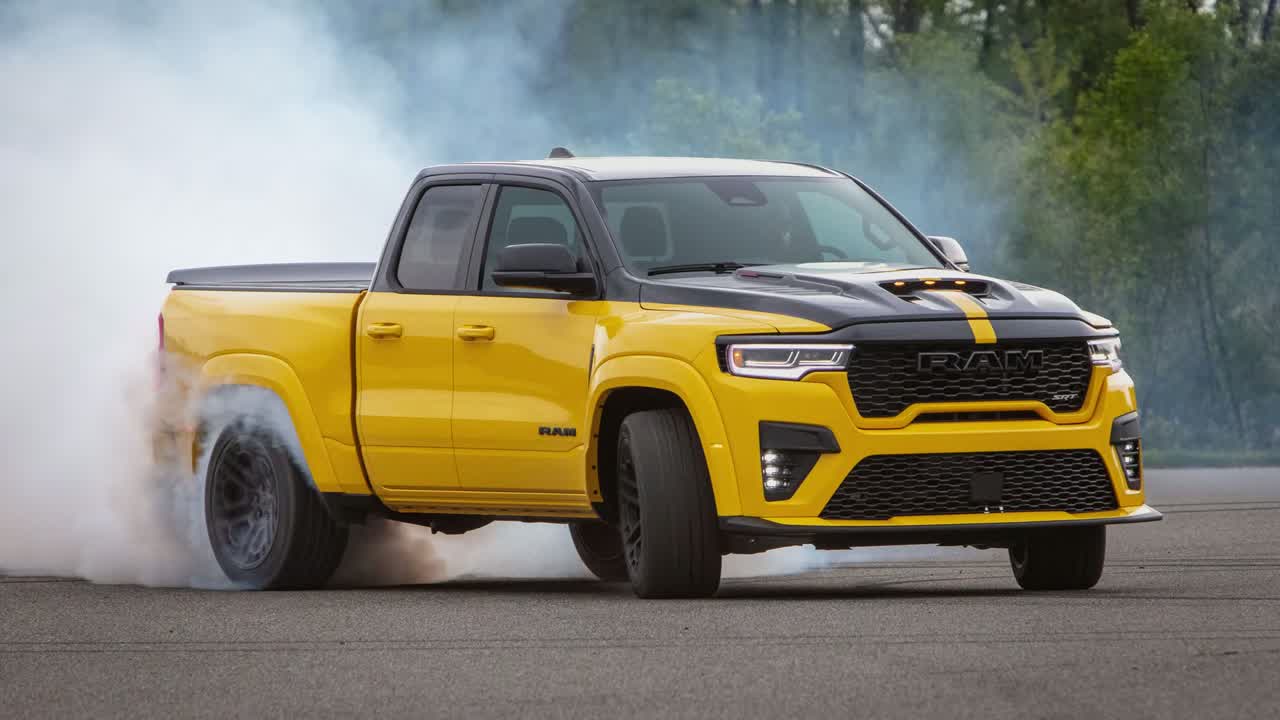
Ram says its new Rumble Bee muscle truck starts under $60,000. Add the fees you cannot decline, and you are really looking at almost $63,000. Meanwhile, a growing slice of American buyers is walking the other way entirely — toward cars with knobs, buttons, and less software watching them drive. Both stories are about the same thing: trust in the sticker is breaking down.
The $2,795 line item nobody advertises
Autoline Daily flagged something this week that deserves more attention than it gets: destination charges on full-size pickups have quietly converged at $2,795 across Ford, Chevy, and GMC, with Ram sitting just under that at roughly $2,800 on its new Rumble Bee lineup. These are not options. You cannot order the truck without them. Yet they sit outside the headline price in every press release and most ads.
The pace of the increase is the real story. Ford raised the F-150’s destination fee by $200 in a single year. GM went further, jumping its full-size truck fees by $800 — a 40% increase year over year. For context, Cox Automotive data puts the industry-wide average destination charge at $1,551 last year, itself up nearly 9% from the year before. Detroit’s full-size trucks now carry fees running about 80% above that industry average.

Seven years of fee inflation, truck by truck
Zoom out from one model year and the trend is impossible to dismiss. CarBuzz compared delivery-and-handling charges on major pickups between 2019 and 2026, and every Detroit truck posted a bigger percentage jump than comparable cars — including German luxury sedans that cross an ocean to get here.
| Vehicle | 2019 destination fee | 2026 destination fee | Change |
|---|
| Ford F-150 | $1,595 | $2,795 | +75% |
| Chevy Silverado | $1,495 | $2,700 | +81% |
| Ram 1500 | $1,645 | $2,595 | +58% |
| Chevy Colorado | $1,095 | $2,095 | +91% |
| Toyota Tundra | $1,595 | $2,095 | +31% |
| Honda Civic | $930 | $1,195 | +28% |
| BMW 3-Series (built in Mexico) | $995 | $1,350 | +36% |
| Mercedes C-Class (built in Germany) | $995 | $1,350 | +36% |
Sit with that last comparison for a second. Shipping a Mercedes C-Class from a German factory to an American dealership costs the buyer $1,350. Shipping an F-150 from Dearborn, Michigan — sometimes to a dealer a few hundred miles away — costs $2,795. Whatever these fees are covering, it is not just freight.
Why fees, not sticker prices? Follow the tariffs
Autoline’s read is blunt: tariffs are the biggest factor. Automakers are absorbing billions in new tariff costs, but they fear public criticism from the Trump administration if MSRPs visibly climb. Destination charges are the perfect pressure valve — poorly understood, rarely advertised, and legally required only on the window sticker, not in marketing.
Cox Automotive’s executive analyst Erin Keating told Kelley Blue Book the same thing in two words: “Tariffs. Full stop.” Fees let automakers create margin, she explained, without drawing attention to the suggested retail price.
The math shows why this lever is so tempting. Ford sold more than 828,000 full-size pickups in 2025, so a $200 destination bump extrapolates to roughly $165.6 million in added revenue. GM moved over 936,000 Silverados and Sierras; its $800 increase works out to as much as $748.8 million a year — without touching a single MSRP. And it is industry-wide: Cars.com finds the average annual destination-fee increase across all brands has accelerated from $45 in 2024 to $119 in 2025 to $144 so far in 2026, with domestic brands now averaging nearly $2,200 per vehicle.
The sticker price is becoming a work of fiction. The fine print is where the truck market actually lives now.
The other rebellion: buyers who want their cars dumber
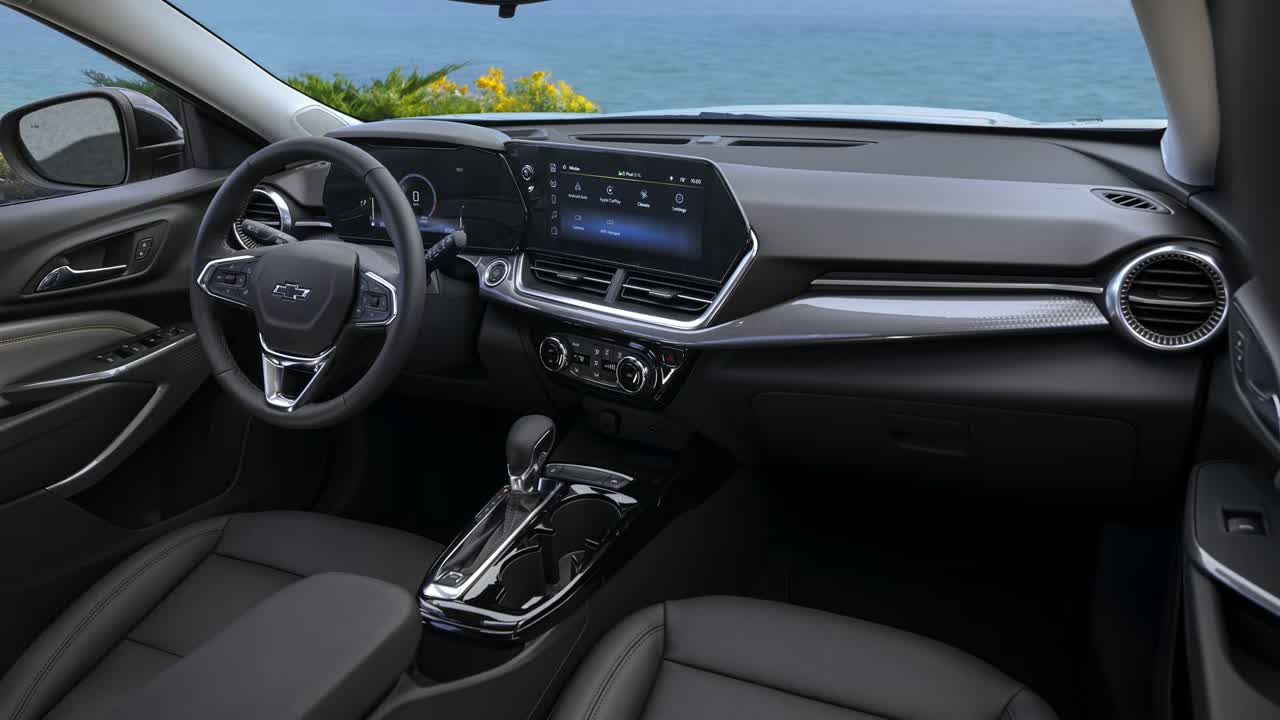
The same episode covered a Wall Street Journal report that lands like the flip side of the fee story. A visible cohort of buyers has had it with modern car tech — the beeping driver aids, the menus buried three screens deep, the sense that the car is monitoring them. They are actively shopping for vehicles like the Chevy Trax and Mazda 3 that still use physical buttons and knobs and skip the heavier ADAS suites. When they cannot find simple new cars, they buy used ones instead.
This is not a fringe mood. The Trax — a $20,000 crossover with honest switchgear — saw US sales jump nearly 89% through November, per Motor Intelligence. In Europe, regulators effectively took the buyers’ side: starting in 2026, Euro NCAP penalizes cars that bury essential controls like wipers and hazard lights inside touchscreens, making physical controls a prerequisite for a five-star safety rating. And the bare-bones Slate pickup — crank windows, no touchscreen — has become one of the most-watched launches of the year precisely because it promises less.
Full-size truck fee vs. industry average
Trax sales growth through November
Why both trends point at the same squeeze
Connect the dots and a single picture emerges: affordability stress is reshaping behavior on both sides of the transaction. Kelley Blue Book puts the average new-vehicle transaction price near $49,814 — effectively $50,000 — and notes nearly half of new-car buyers are now over 55, because younger households have been priced out.
Leasing, the traditional escape hatch for payment-sensitive buyers, has shrunk from about 30% of all sales before COVID to 23% today, as automakers learned during the pandemic that tight inventory beats generous lease deals. Fewer leases mean fewer off-lease used cars, which is why the average 3-year-old used vehicle now costs 43% more than it did in 2020. Buyers fleeing new-car tech and new-car fees are running into a used market that has its own inflation problem.
Automakers see the opening — Autoline’s take is that there is genuine room for a model that just sticks to the basics. The question is whether Detroit can resist loading even a “simple” vehicle with the software subscriptions and hidden fees that pushed these buyers away in the first place.
What smart shoppers should do now
- Compare out-the-door prices, not MSRPs. A truck advertised $1,000 cheaper can cost more once destination and doc fees land.
- Check the destination fee line before you fall in love. On a $40,000 truck, $2,795 is a 7% surcharge you cannot negotiate away.
- If you want low-tech, act deliberately. The Trax, Mazda 3, and upcoming Slate pickup are the rare new options; the used-car route now carries a 43% premium over 2020 pricing.
What exactly is a destination charge?
It is a fee automakers add to every new vehicle to cover shipping from the factory to the dealer, averaged nationally so it is identical whether you live 30 or 3,000 miles away. By law it must appear on the window sticker, but it does not have to appear in ads or press-release pricing — which is why a “under $60,000” truck can really start at $63,000.
Can you negotiate or avoid the destination fee?
No. It is non-negotiable and applied to every unit, even if you pick the truck up near the factory. Your only leverage is negotiating the rest of the deal harder — or choosing a model whose fee is lower, like a Toyota Tundra at $2,095 versus $2,795 for the Detroit trucks.
Are low-tech cars actually safer?
The evidence cuts both ways. Physical controls reduce eyes-off-road time for routine tasks, which is why Euro NCAP now requires them for top safety ratings. But modern ADAS features like automatic emergency braking demonstrably prevent crashes. The buyers in the WSJ report are not rejecting safety — they are rejecting distraction, nagging, and complexity.
Related reading on EVCUBE