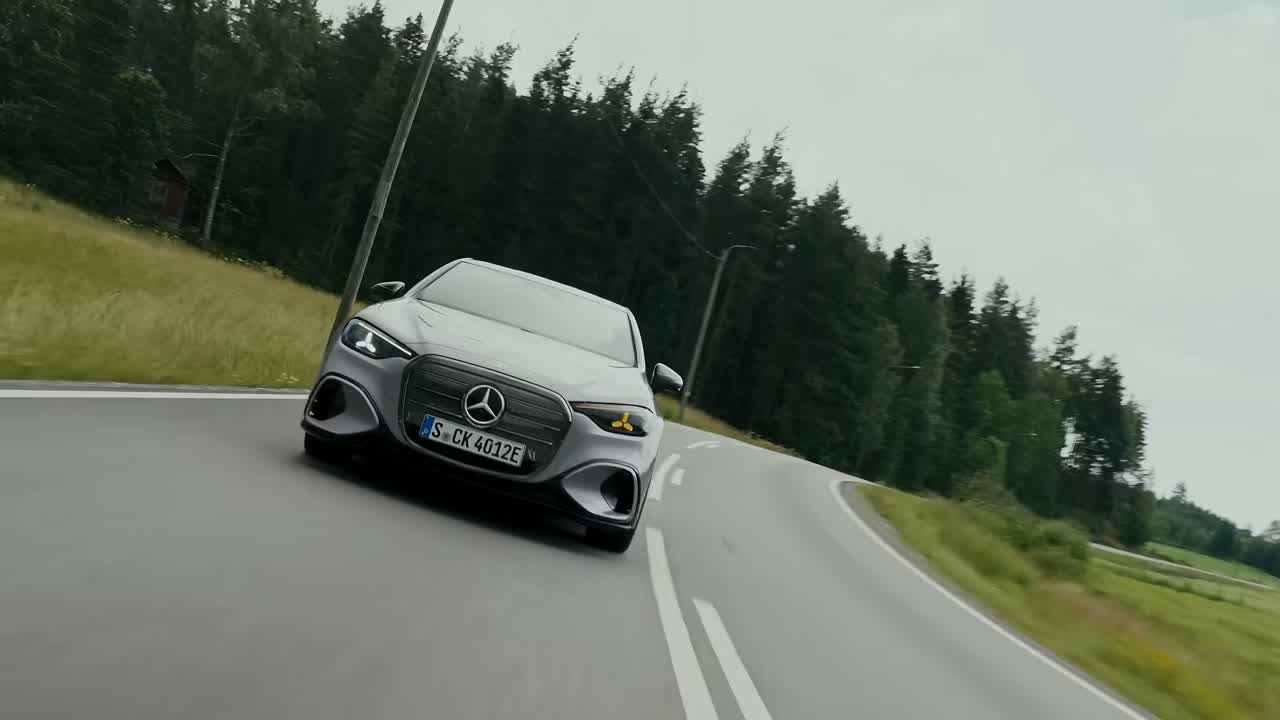
For the past few years, BMW and Tesla have been eating Mercedes’ lunch in the electric game. The new all-electric C-Class is Stuttgart’s attempt to grab that lunch right back — and the early numbers suggest it just might land a punch.
Why Mercedes finally hit the panic button
You only have to look at the numbers. In 2025, BMW sold 442,072 fully electric vehicles — a 3.6% increase — while Mercedes managed just 168,800, a 9% drop. That gap widened to roughly 273,000 cars, the kind of deficit that turns a cautious product plan into a corporate panic button. The bulkier, pricier EQE and EQS simply were not a match for the Tesla Model 3 or the BMW i4, and buyers said so with their wallets.

The EQE was the telling failure. In the US it carried an EPA range of about 220 miles and a 400-volt architecture, and it moved fewer than 300 units a month through mid-2025 even after discounts approaching 50%. Mercedes has now ditched the confusing EQ sub-brand and is bringing back the trusty C-Class name — historically one of its biggest hits — in both petrol and electric form. The bet: a familiar badge plus a clean-sheet 800-volt platform can do what the EQ cars could not.
The numbers that actually matter
On paper, the electric C-Class lands squarely in the crosshairs of the Model 3 and i4. Here is how the launch dual-motor C400 4MATIC stacks up against the mainstream US trims of its two rivals.
| Spec | Mercedes electric C-Class (C400 4MATIC) | Tesla Model 3 (LR AWD) | BMW i4 (eDrive40) |
|---|
| Launch / starting price | £57,995 (~$74k; cheaper single-motor model due 2027) | $46,000 | $57,000 |
| Battery | 94 kWh | ~82 kWh | 84.3 kWh |
| Architecture | 800V | 400V | 400V |
| Peak DC charge | 330 kW | 250 kW | ~200 kW |
| 10–80% charge | 22 min | 20–25 min | ~30 min |
| Range | 473 mi WLTP (~380 mi EPA est.) | 341 mi EPA | 301 mi EPA |
| Power | 489 hp | up to 510 hp (Performance) | 335 hp |
| 0–100 km/h | 4.0 s | ~4.4 s | ~5.5 s |
| Frunk | 101 L | small frunk | none |
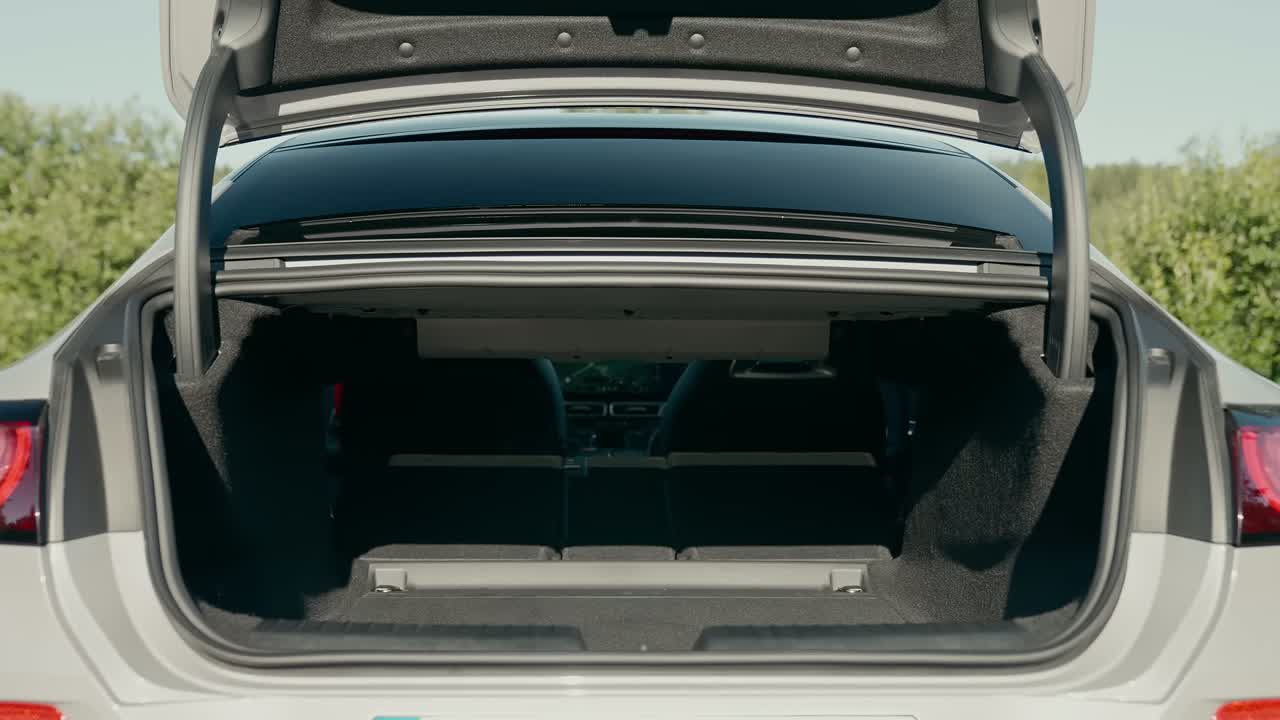
| Boot | 470 L | ~22.9 cu ft | 45.6 cu ft |
The headline is range and charging. A 94 kWh pack and 800-volt architecture let the C-Class claim a 10–80% fill in 22 minutes and about 200 miles of range added in just 10 minutes — meaningfully quicker on paper than the 400-volt i4 and comfortably ahead of the old EQE’s 170 kW ceiling.
Charging is where it gets interesting
This is the single biggest leap over the EQ cars. The EQE used a 400-volt system capped at 170 kW; the new C-Class doubles that to 330 kW on an 800-volt bus. In Autotrader’s test the car confirmed a 10–80% session in 22 minutes and a 200-mile top-up in 10 minutes. Mercedes even added a 400-volt converter so it can still charge efficiently at slower 50 kW stations.
Charging speed vs EQE (170 kW)
Range vs BMW i4 eDrive40 (301 mi EPA)
Frunk practicality (101 L)
What it does better — and where it doesn’t
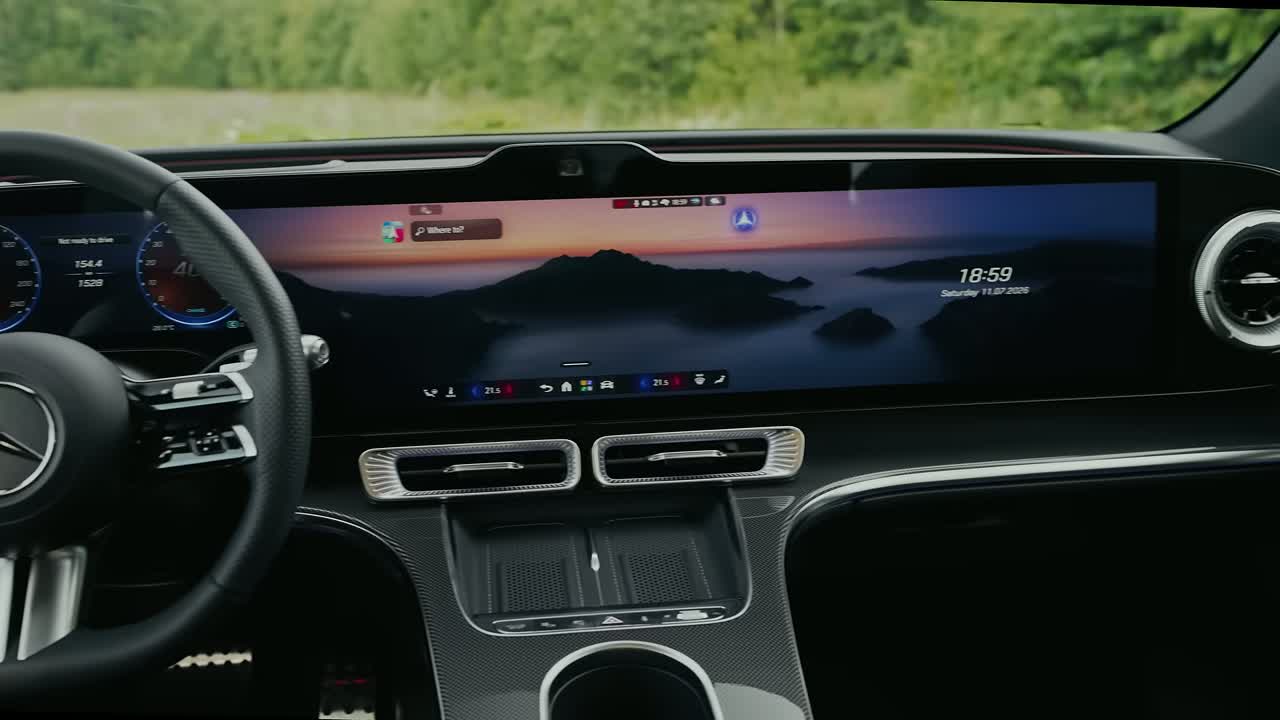
Autotrader is clear: the C-Class electric feels like a more premium product than the Model 3 or i4. The cabin is a sea of screens — one enormous 39-inch Hyperscreen split into driver, entertainment, and passenger zones — and with optional air suspension the car glides and soaks up bumps with real finesse. It is quiet “like a library,” and the longer EV wheelbase adds 10 cm of rear legroom over the petrol version. The 489-hp C400 is quick but, by the reviewer’s own read, prioritizes comfort over thrills; the ultimate performance wait is the AMG version.
But there is a catch US buyers cannot ignore. The C-Class electric is a global model launching in the US in early 2027 with an expected base price around $55,000 — yet it is built in Germany, so current US tariffs on EU-assembled cars could push the effective delivered price closer to $65,000–$68,000 until any US assembly is confirmed. And the federal $7,500 EV tax credit expired on September 30, 2025, so there is no subsidy to soften that landing. Against a Model 3 that starts at $38,630, the value argument is not automatic.
“The EQ cars were good, but the C-Class electric is just better. It’s better looking, has better tech, better build quality, faster charging, and it has that C-Class badge.”
The verdict: can it finally beat Tesla and BMW?
Autotrader’s conclusion is that Mercedes has learned from the now-defunct EQE and EQS, and that the C-Class electric is the more polished, more premium car of the three. On charging, range, and cabin quality it beats the i4 and out-classes the Model 3 on materials and comfort. The honest caveat: “beat” depends on the yardstick. Tesla still wins on price and the Supercharger network’s road-trip reliability; BMW still wins on driving dynamics for enthusiasts. Mercedes wins the argument it most needed to win — that it can build an EV a buyer would actually choose over a Tesla or a BMW.
Premium feel & build quality
Charging & range leadership
US price / value
Fun-to-drive (vs BMW i4)
So is this the car that finally puts Mercedes back on track? The review leans yes — for now. The real test comes when US configurators open and buyers see the tariff-inflated price next to a $38,630 Model 3.
When does the electric Mercedes C-Class go on sale in the US?
Mercedes has indicated an early-2027 on-sale date in the US, about nine months after the April 2026 world premiere. Dealer allocations and the configurator are expected to open in late 2026.
How much will it cost, and is the $7,500 tax credit available?
Expected US starting MSRP is around $55,000 before options and tariffs. Because it is German-built, the effective delivered price could land closer to $65,000–$68,000. The federal $7,500 EV tax credit expired September 30, 2025, so it does not apply to this car.
Is the electric C-Class faster to charge than the i4 and Model 3?
Yes on architecture: its 800-volt, 330 kW system fills 10–80% in 22 minutes and adds ~200 miles in 10 minutes, beating the ~200 kW / ~30-minute BMW i4 and roughly matching the 250 kW Tesla Model 3.
Does it replace the EQE?
Effectively. The slow-selling EQE sedan and SUV are being dropped, and the electric C-Class (on the new 800-volt MB.EA platform) takes its place in Mercedes’ core sedan lineup.
Related reading on EVCUBE