A melted charging adapter is the kind of headline that makes any EV owner nervous. And when it happens to one of the most anticipated American electric vehicles of the year, people pay attention. That’s exactly what unfolded during State of Charge‘s independent first look at the Rivian R2: while recording a DC fast-charging session, reviewer Tom Moloughney noticed that one of the adapter’s DC pins had literally melted. No fire, no injury — but a clear warning shot about what happens when a brand-new EV pulls more current than an adapter was built to handle.
The good news for everyday drivers: this was an edge-case stress test, not a sign that your EV is a fire risk. The lesson, though, is real and worth understanding as the United States rapidly standardizes on Tesla’s NACS charging plug. Here’s what actually happened, why adapters overheat, and how to keep your own charging routine boringly safe.
What Actually Happened to the Rivian R2’s Adapter
Moloughney was the first journalist to put a customer-spec Rivian R2 through independent range and charge testing. In his fast-charging runs, the R2 performed well — it hit a peak of around 226 kW and went from 10% to 80% in roughly 27 minutes, slightly quicker than Rivian’s own 29-minute claim. The problem showed up during a separate 0–100% session.

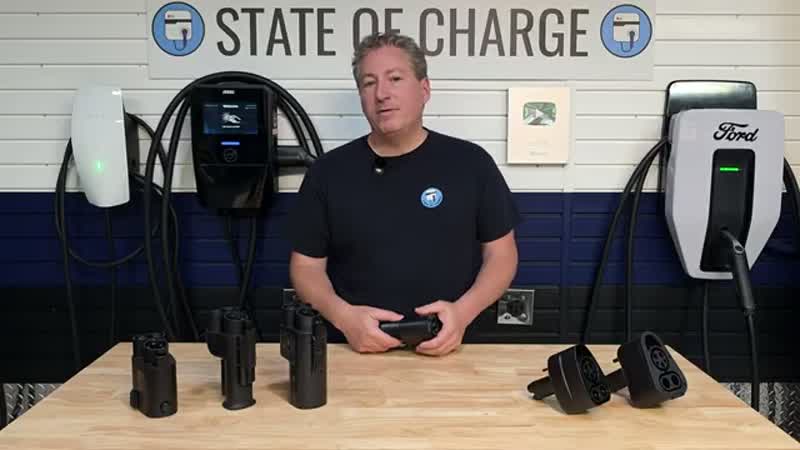
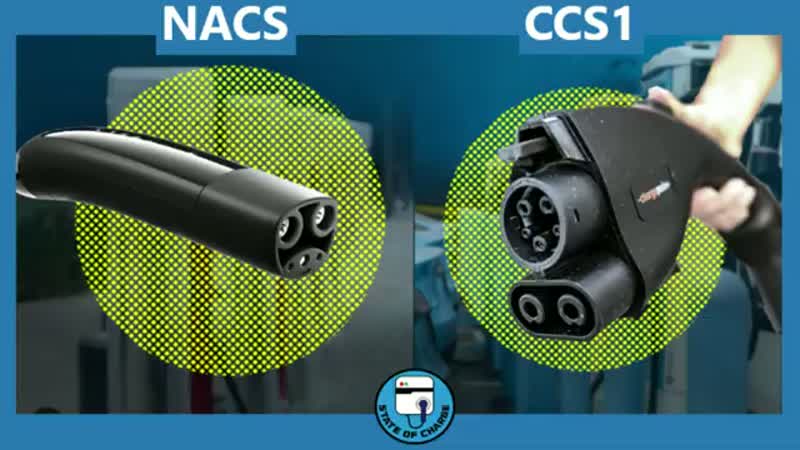
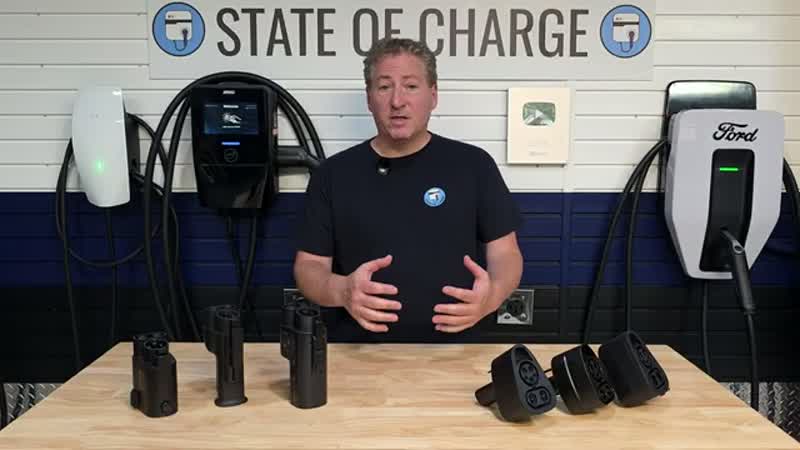
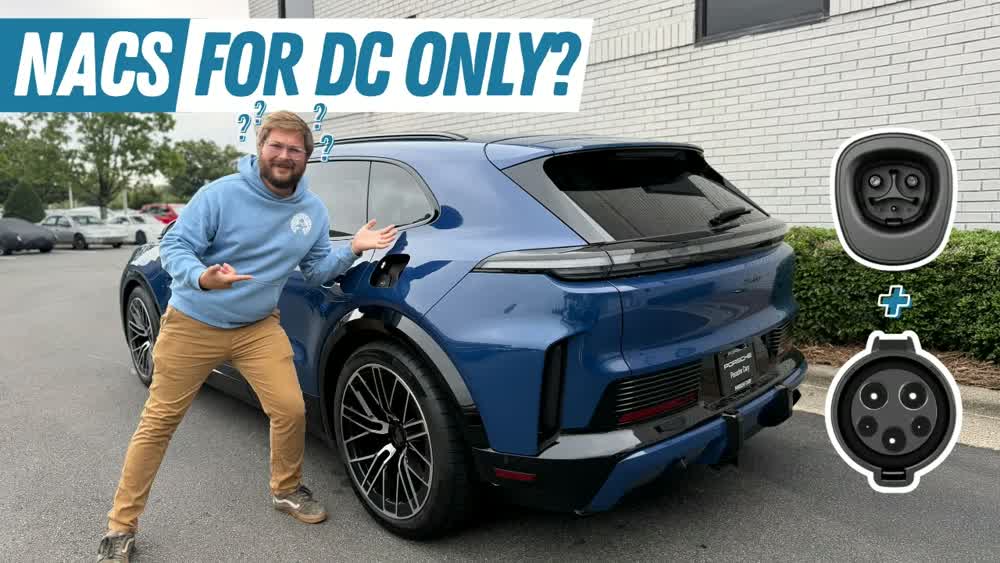
To chase those peak numbers, he needed a charger that could actually deliver the current the R2 was asking for. The R2 has a native NACS (Tesla-style) port, but the highest-current unit he could find — an ABB A400 — only dispensed its full 600 amps out of its CCS1 connector, not its NACS plug. So he reached for a CCS1-to-NACS adapter. That adapter was an older Tesla unit rated for about 500 amps. The R2, Rivian has confirmed, can pull up to roughly 630 amps. Something had to give — and it was the adapter’s pin.
Importantly, this was a lab-style measurement session pushing the car to its absolute limit, not a typical owner topping up on a road trip. But it exposes a genuine mismatch between what some new EVs can draw and what older or under-rated adapters can survive.
Why an Adapter Melts: The Amps vs. Volts Problem
To understand the failure, you only need one equation: power = volts × amps. The kilowatt figure that determines how fast you charge is the product of electrical pressure (voltage) and flow (current). There are two ways to make that number bigger.
- Raise the voltage. This is the 800-volt approach used by Hyundai, Kia, Porsche, and a growing list of newer EVs. They can charge fast while keeping current modest.
- Raise the current. This is the path Rivian chose for the R2, sticking with the same ~400-volt architecture as its larger R1 trucks to keep costs down.
Because the R2 stays at roughly 400 volts, the only way to hit a competitive charge curve is to push a lot of amps — and the R2 asks for around 630 of them. That’s more than almost anything else you can buy in North America, where most EVs top out near 500 amps. As we’ve argued before, 800 volts is becoming the new baseline precisely because it avoids this current problem.
Here’s the physical catch. Heat in a connector comes from electrical resistance, and the heat generated scales with the square of the current (power lost as heat = I²R). Roughly double the current and you get about four times the heat. A “passive” DC adapter has no active cooling — it just conducts electricity through its pins. Run 630 amps through hardware only certified for 500, and the heat builds faster than it can dissipate. The result is thermal derating at best and a melted pin at worst.
Which Adapters and EVs Are Most at Risk
Not every adapter is in danger, and not every EV is pushing these limits. The risk concentrates in a few specific places:
- Under-rated adapters. Many common NACS-to-CCS1 units are rated around 500 amps. That’s plenty for most cars — until you plug in something like the R2 that can exceed it.
- Older or uncertified units. The melted part was an older Tesla adapter. No-name adapters sold online without UL listing often skip the silver-coated copper pins and temperature sensors that quality units use.
- High-current EVs. Today the R2 is the standout, but any future 400-volt car that chases speed through amperage lands in the same territory.
There’s a sneaky detail here: your EV and the charger cannot “see” the adapter. There is no handshake, no communication, no built-in safety check telling the car to back off because the adapter is getting hot. The adapter alone is responsible for protecting itself. That’s why premium units include dual temperature sensors that throttle the charge or cut it entirely around 185°F (85°C). Cheap knockoffs frequently place those sensors poorly or leave them out, which is exactly why Ford, GM, Hyundai, and others explicitly warn against third-party adapters — and may void warranty coverage if damage occurs while using one.
How US Owners Can Charge Safely
None of this means adapters are dangerous. It means the right adapter, used within its limits, is perfectly safe. A few habits cover almost every scenario:
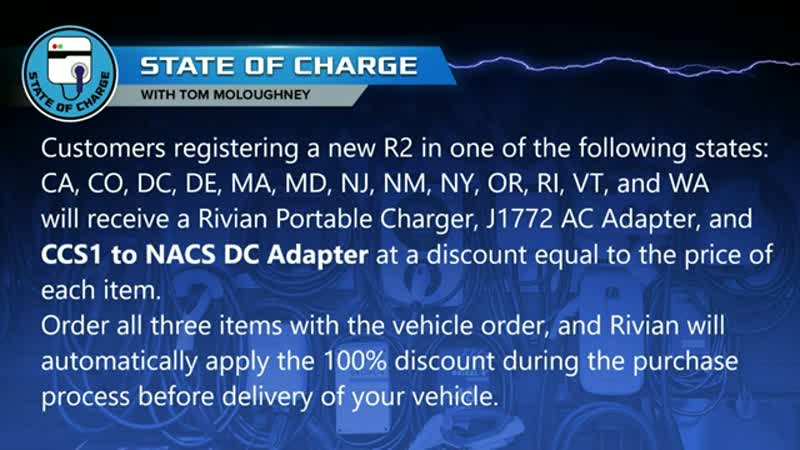
- Use the OEM or manufacturer-approved adapter. Rivian, Ford, and GM sell their own NACS adapters engineered and certified for their vehicles. When in doubt, buy the one with your automaker’s name on it.
- Know your amp rating. Check what your car can pull and what your adapter is rated for. If the car can exceed the adapter’s rating, don’t pin it to the floor on DC fast charging.
- Watch for heat. A little warmth at a DC fast charger is normal. A unit that is painfully hot to touch, smells of burning plastic, or buzzes is not. Stop immediately.
- Prefer native NACS when you can. The R2’s NACS port plugs straight into a Supercharger with no adapter at all. Adapters mostly enter the picture when you’re mixing CCS1 hardware — exactly the situation that caused the meltdown.
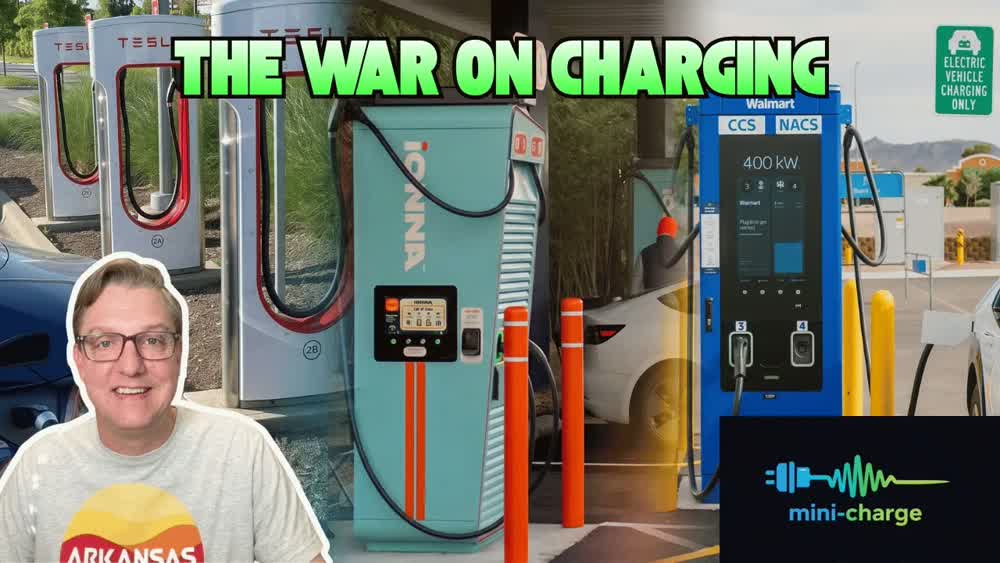
- Pick chargers that match your car. The R2 hits its peak on high-current Alpitronic units (found across Walmart’s network and Ionna) and 600-amp CCS hardware. A lower-amperage NACS connector will just charge a bit slower — and slower is completely fine.
- Inspect your gear. Avoid cracked, twisted, or heat-damaged cables, and don’t make a habit of charging in extreme heat when you have a choice.
The Bigger Picture: America Is Standardizing on NACS
This story only matters so much because the US charging landscape is mid-transition. Ford, GM, Rivian, Hyundai, and a long list of other brands have adopted Tesla’s NACS connector — now formalized as the SAE J3400 standard. Millions of existing CCS1 EVs now rely on NACS-to-CCS adapters to reach the Supercharger network. That turns adapter quality from a niche concern into a mainstream one.
In a way, the R2 episode is a useful stress test. It shows the edge of what today’s adapter technology comfortably handles, and it helps explain why automakers are investing in native high-amperage infrastructure — Rivian is building out its own high-current Rivian Adventure Network (RAN) for exactly this reason. As the standard matures, expect adapters rated for 600+ amps to become the norm rather than the exception.
The Verdict: Don’t Panic, Just Be Smart
The Rivian R2 didn’t “fail.” It charged fast — arguably faster than Rivian promised. The weak link was an older, under-rated adapter pushed past its limit in a measurement session. For the typical American EV owner, the takeaway is calm and practical: use the adapter your automaker sells or approves, respect its amp rating, and pay attention to heat. As the country settles on NACS, good adapter hygiene becomes just another routine part of owning an EV — no melted pins required.