Sandy Munro didn’t say China won the EV war because labor is cheap. He said the West gave away the factory — and for American buyers staring at $40,000 pickups and a dead $7,500 tax credit, that gap is now showing up in the sticker price.
“If you give away manufacturing, you’ve given away the farm”
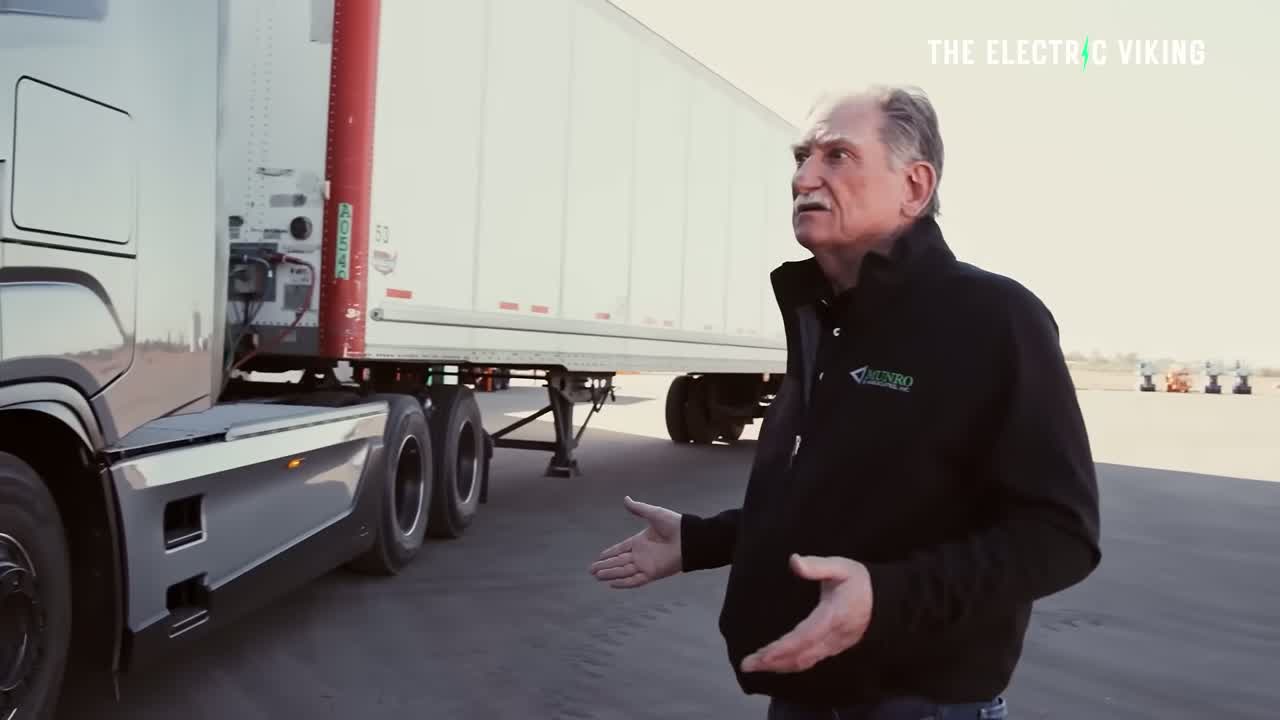
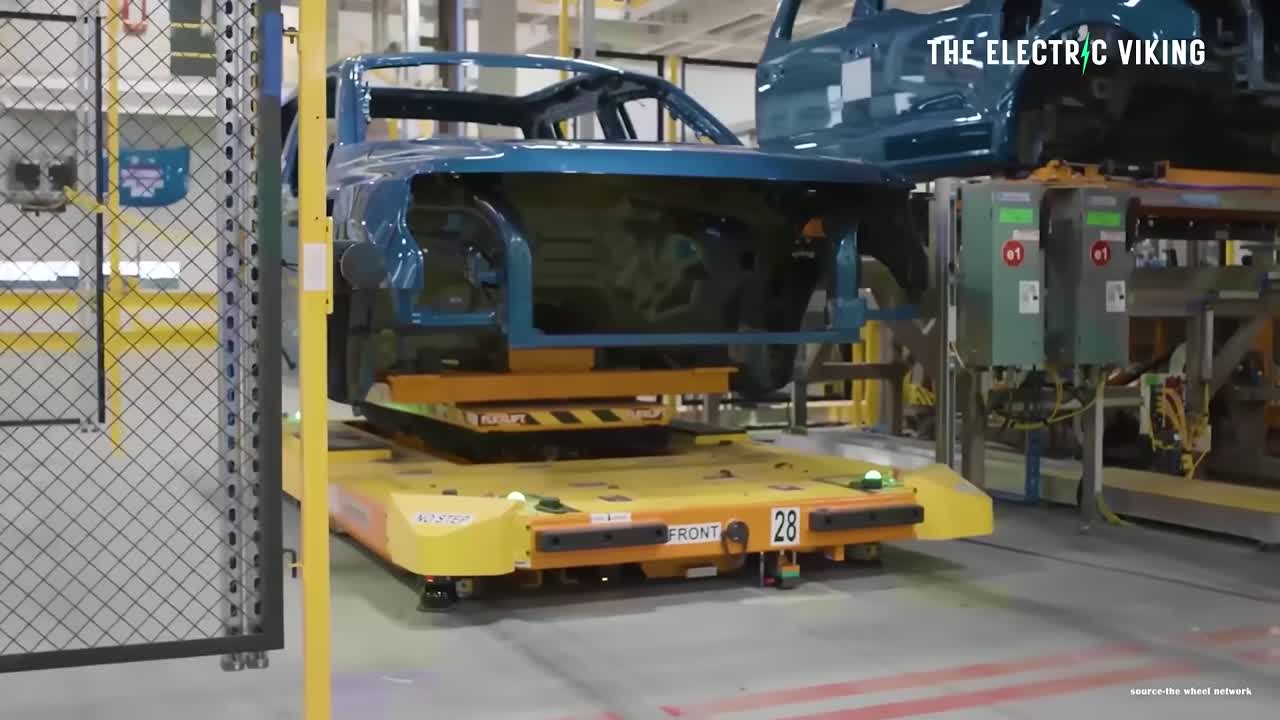
Tear-down legend Sandy Munro, speaking on the Fully Charged show, cut through the corporate spin that American and European automakers have been hiding behind. The usual excuse — “battery costs are too high,” “demand is weak,” “subsidies disappeared” — is, in Munro’s framing, a dodge. The real story is a 30-year structural collapse in Western physical-engineering talent and domestic manufacturing.

The Electric Viking’s Sam Evans, reacting to Munro, puts it bluntly: this isn’t about cheap labor or better software. It’s about a feedback loop the West switched off. When you outsource the building of a product, you don’t just lose factory jobs — you lose the people who figure out how to shave cost and complexity out of the part itself. As Munro puts it, the winners learned to “drive down costs exponentially” by owning the whole chain, from raw material to finished cell.
“If you give away manufacturing, you’ve given away the farm.” — Sandy Munro
The numbers that should worry Detroit and Washington
It’s easy to dismiss this as rhetoric. The data says otherwise. According to the IEA’s Global EV Outlook 2026, China’s share of its own new-car market crossed 60% electric in April 2026 and is projected near that level for the full year — while the United States sits around 10% and Europe around 28–33%. China also produces roughly three-quarters (75%) of the world’s EVs.
| Metric (2025–2026) | China | United States | Europe |
|---|
| EV share of new-car sales | ~60% | ~10% | ~28–33% |
| Share of global EV production | ~75% | small | moderate |
| Control of lithium refining | >70% | minimal | minimal |
| Control of battery anode output | ~85% | minimal | minimal |
| 2025 NEV exports | 2.62M (+104%) | — | importing |
Munro’s point lands hardest on the supply chain, not the showroom. China already controls over 70% of the world’s lithium refining and 85% of anode production, plus the vast majority of cell-manufacturing capacity. That is why a battery pack that cost $139/kWh in 2023 fell to about $107/kWh in 2025 (BloombergNEF), and why Chinese LFP cells are now being struck below $50/kWh — a level U.S. and European makers can’t match.
China — EV share of new cars
United States — EV share of new cars
China — global battery manufacturing
BYD just passed Tesla — and it wasn’t close
The cross-brand reality check arrived in early 2026. For the first time, BYD outsold Tesla in global battery-electric vehicles. Tesla delivered about 1.636 million cars in 2025 (down ~8.6%), while BYD sold roughly 2.26 million pure EVs (up ~28%) on its way to 4.6 million total new-energy vehicles. BYD’s overseas sales alone topped 1.04 million units across 110+ countries.
Tesla is still the dominant EV brand in the United States, holding roughly 45% of the domestic EV market. But the American market itself is cooling fast — Cox Automotive data showed U.S. EV sales across all brands plunged more than 40% year-on-year in November 2025, right after the federal $7,500 consumer tax credit expired on September 30, 2025. The irony: the policy that was supposed to build a U.S. EV industry left it more exposed, not less.
Why this hits American buyers and automakers
For a U.S. shopper, the Munro thesis translates into three concrete pressures:
- Price floor you can’t beat. With Chinese cells under $50/kWh and 70% of global battery capacity in China, legacy brands buying cells on the open market simply cannot match Chinese vertical integration. That gap flows straight into MSRP.
- The talent cliff. The average Western toolmaker is now in their 50s or 60s, and the pipeline isn’t refilling. When a U.S. automaker needs to fix a tooling error on a factory floor, the domestic expertise to do it quickly often doesn’t exist.
- A weaker policy cushion. The $7,500 federal credit is gone as of September 30, 2025. Without it, U.S. EVs compete on price against subsidized, scale-built Chinese rivals — exactly as the market contraction in late 2025 showed.
Munro and Evans are clear that this isn’t fatalism. Startups like Telo Trucks, which Munro has praised for clean-sheet, space-efficient engineering, prove the West can still design brilliantly. The problem is scaling — turning a clever prototype into millions of affordable units needs an industrial foundation that has been eroded for a generation.
The one American counterplay: close the loop
Munro did give a rare nod to a Western fightback — battery circularity. Companies like Redwood Materials, led by former Tesla exec JB Strawn, are building a domestic recycling ecosystem that recovers cathode and anode material from old packs and feeds it back into new cells. The catch, as the video stresses: you can’t recycle your way out of a talent shortage. A thriving recycling base needs a hyper-efficient domestic manufacturing sector first, to generate the scrap and volume that feed it.

For U.S. policymakers and buyers, that reframes the debate. Fixing this isn’t another round of factory subsidies — it’s a cultural shift that stops stigmatizing the trades and starts valuing the people who manipulate metal and molecules. As Munro warns, if the West doesn’t rebuild that base, the EV transition won’t just be won by China. It will be dictated by them.
FAQ: Didn’t the U.S. just tariff Chinese EVs? Doesn’t that protect us?
Tariffs blunt the import threat, but they don’t rebuild the underlying capability gap Munro describes — the talent, the tooling, and the vertical supply chains. Chinese brands are also localizing production (BYD’s Brazil plant, overseas factories planned at ~3 million units of capacity) to sidestep tariffs entirely. Protection buys time; it doesn’t manufacture the farm back.
FAQ: Is BYD actually selling in the U.S.?
Not directly — BYD’s passenger EVs aren’t officially sold in the U.S. market, which is why Tesla still leads domestically at ~45% share. The competitive pressure shows up indirectly: through pricing pressure on global commodities, through BYD’s strength in Europe and Latin America, and through the cell-supply economics that every automaker, including U.S. ones, must buy into.
Related reading on EVCUBE