Mazda just did the one thing almost no other automaker would: instead of chasing a bigger battery, it resurrected a 50-year-old rotary engine — not to drive the wheels, but to erase the range anxiety that’s still scaring off American EV buyers.
Why a 50-Year-Old Rotary Engine Is Suddenly Mazda’s EV Headline
For most of the industry, the “EV announcement” playbook is predictable: a bigger battery, a faster charger, a bolder range number. Mazda opened its latest chapter with none of those. The surprise isn’t a new solid-state cell — it’s the rotary engine, a technology the brand practically built its identity on and then watched fade away after the RX-8 ended production in 2012.
Here’s the twist that has the whole auto press paying attention: Mazda isn’t bringing the rotary back to power the car. In the MX-30 R-EV, the engine never touches the wheels. It runs only as a generator, quietly topping up a small battery so the electric motor keeps doing the driving. That single design decision reframes a “dead” technology as a practical answer to the one question every American road-tripper still asks: what if I run out of charge?

Mazda has history here. It acquired the rotary license in the 1960s, launched the Cosmo Sport in 1967, and by the early 1970s roughly every second Mazda rolled out with a rotary under the hood. Total rotary-engine vehicle production passed 2 million units by October 2023, and Mazda resumed rotary production in June 2023 for the first time in eleven years. This isn’t nostalgia for its own sake — it’s a bet that the rotary’s compact size and smooth power delivery still solve a modern problem.
How the Rotary Range Extender Actually Works
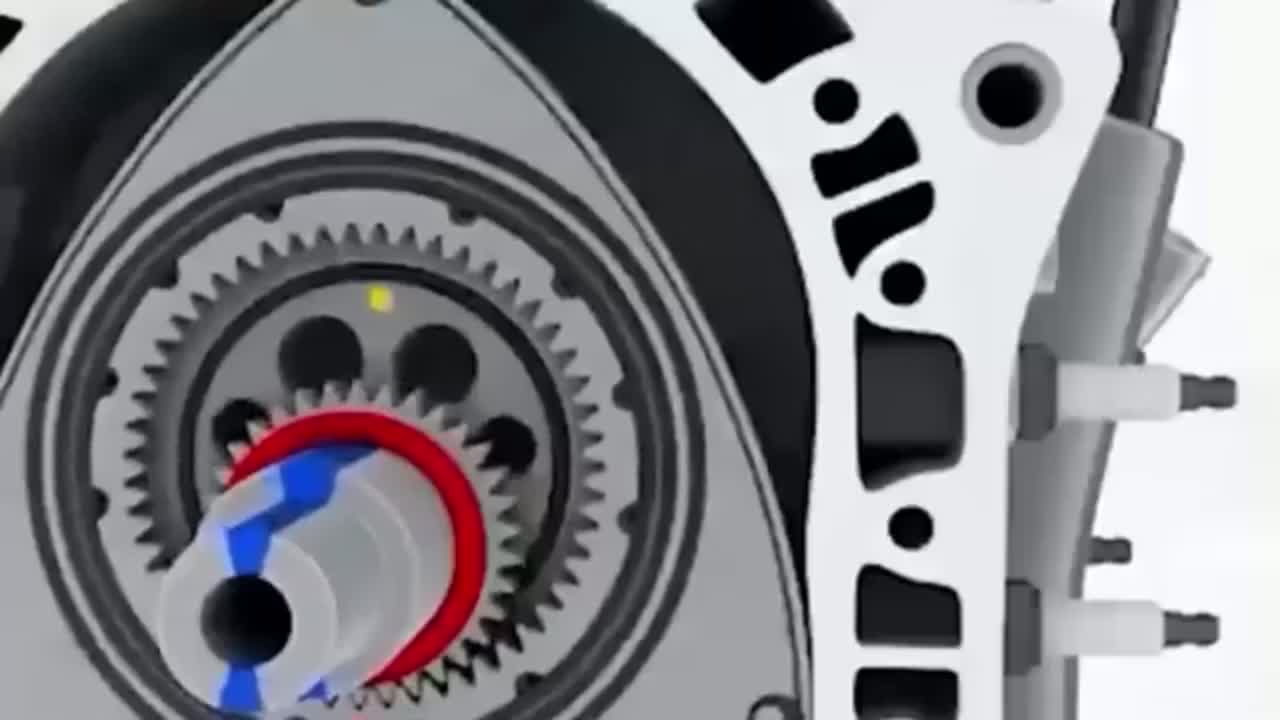
A conventional hybrid sends engine power to the wheels. The MX-30 R-EV does not. Its 830cc single-rotor engine spins up only when the battery drops below a set level, acting purely as a generator. Because it doesn’t have to chase constantly changing road speeds, it can sit in a narrow, efficient operating band — which is exactly how Mazda attacks the rotary’s old weaknesses: fuel burn, heat, and apex-seal wear.
The upgrades are specific. Direct injection replaces the old port-injection setup for cleaner, more complete combustion. Redesigned cooling channels and diamond-like carbon (DLC) coating on high-friction parts slow wear. Thicker apex seals — about 2.5 mm in the production unit — target the reliability complaint that haunted the RX-8. Mazda isn’t pretending every old problem vanished; it’s arguing the new role makes them manageable.
Battery-first driving feel
Old rotary weaknesses tamed
US charging-independence
Mazda vs Toyota vs BYD: Three Totally Different EV Philosophies
The video frames the move against Tesla and BYD, but the cleaner comparison for US shoppers is Mazda’s rotary range-extender against the pure-BEV crossovers already on American lots. The difference isn’t specs alone — it’s the idea of what an EV should be.
| Model | Powertrain | Electric range | Total range | Positioning |
|---|
| Mazda MX-30 R-EV | Rotary range-extender PHEV | ~53 mi (WLTP EV) | 400+ mi claimed | Engine generates power; wheels stay electric |
| Toyota bZ4X | Pure BEV | 228–252 mi (EPA) | same as EV range | Big-battery, Supercharger-adjacent ecosystem |
| Honda Prologue | Pure BEV (GM Ultium) | ~296 mi (EPA) | same as EV range | American-built, mainstream family SUV |
Read it the Mazda way: Toyota’s strength is its EV ecosystem and manufacturing scale; BYD’s is vertical integration and price; Mazda’s is engineering character and a multi-solution mindset. The MX-30 R-EV trades raw electric range for the freedom to never hunt for a plug on a long trip — a direct counter to the “bigger battery or bust” consensus.
The US Reality: Why Mazda’s Slow EV Rollout Meets the Moment
This is where the announcement stops being a curiosity and becomes a strategy. Mazda’s first US EV, the MX-30, was sold for only two model years with a 30-kWh battery good for about 100 miles of range — a non-starter for most American drivers. Mazda then pushed its next ground-up EV to roughly 2029, trimming planned EV investment through 2030 from $13.3 billion to $10 billion and leaning hard into hybrids.
The timing lines up with the market. According to S&P Global data cited across the industry, the hybrid share of new-vehicle sales climbed from 3.1% to 16.3% in just five years. The average new EV sticker price sat near $58,034 in late 2025 while the average hybrid was about $33,255 — and the $7,500 federal EV tax credit expired on September 30, 2025, removing a major reason to choose a plug-in. Mazda isn’t ignoring electrification; it’s betting that American buyers want electrified without being chained to charging infrastructure that’s still uneven outside major corridors.
Mazda’s own numbers tell the caution story. Global sales fell about 6% to 1.223 million units, and in the US its high-end push wobbled — April 2026 data showed the CX-90 down 39.2% and the CX-70 down 42.6% year over year. A brand that sells roughly 1.2 million vehicles a year across 120+ countries can’t afford to misread the American buyer, and the rotary range-extender is its hedge: electric when you want it, gasoline-generated confidence when you don’t.
What It Means for US Buyers Waiting on a “Real” Electric Mazda
The honest caveat: the MX-30 R-EV is not sold in the United States. Mazda’s designated US EVs — built on its in-house Skyactiv EV platform — are still years out, with a crossover due around 2027 and the next major EV near 2029. The China-built EZ-60 (sold globally as the 6e) would face a 100% import tariff if it came here, so don’t hold your breath.
So the rotary announcement is less a product you can buy tomorrow and more a signal of intent: Mazda would rather arrive late with something different than early with another me-too battery box. For the American driver tired of range anxiety, that’s a philosophy worth watching — even if the actual car lands via a future CX-series hybrid or a hydrogen-rotary spin-off Mazda has already patented.
“Sometimes a different way of thinking can also provide an answer.” That’s the whole Mazda thesis — not every EV problem has to be solved with a bigger battery or another charging station.
Mazda has even filed patents for a hydrogen rotary, imagining the same generator core swapped from gasoline to hydrogen as infrastructure matures. Whether that’s visionary or wishful, it fits a brand that has spent 60 years refusing to follow the crowd.
FAQ: Is the MX-30 R-EV a hybrid or an EV?
It’s a series plug-in hybrid (range extender). The wheels are driven only by the electric motor; the 830cc rotary engine is a generator that kicks in to recharge the 17.8-kWh battery. You can plug it in for daily electric miles, then rely on the rotary for longer trips — no mechanical link between engine and wheels.
FAQ: Will the rotary range-extender come to the US?
Not officially. The MX-30 R-EV is sold in Europe and Japan but not the United States. Mazda’s US electrified near-term story runs through hybrids and PHEVs like the CX-50 Hybrid and CX-90 PHEV, with dedicated EVs targeted for the late 2020s.
FAQ: Is a rotary engine reliable as a generator?
Mazda says redesigned apex seals, DLC coatings, and a stable generator operating range reduce the wear issues of old RX-8 road engines. Real-world long-term data is still forming, but the generator role is far less demanding than spinning a sports car to 9,000 rpm.
Related reading on EVCUBE