No products in the cart.

Your neighbor’s garage has an EV that stops charging at 80%. Yours — or the one you’re about to buy — may ask you to plug in and hit 100% every single week. In 2026 this isn’t forum noise: it’s two different batteries, two different software strategies, and two different sets of instructions straight from the factory. Get it wrong and you’re either leaving range on the table every day or aging a pack that didn’t need to age. Here’s the answer, manufacturer by manufacturer.
The 80% rule had an expiry date
“Never charge past 80%” is the most repeated piece of EV advice in America — and it was genuinely correct for the nickel-based chemistries that dominated the early U.S. market. Nickel manganese cobalt (NMC) and nickel cobalt aluminum (NCA) cells age fastest while sitting at high voltage, so keeping a daily limit at 80–90% measurably slows calendar aging. That part of the rule never stopped being true.
But 2026 is the year the rule stopped being universal. Lithium iron phosphate (LFP) packs went from a Chinese-market curiosity to a mainstream U.S. choice. Tesla began installing LFP in Standard Range Model 3 and Model Y in 2022 and rewrote the manual to tell those owners to keep their limit at 100% and fully charge at least once a week. Ford followed with LFP in the standard-range Mustang Mach-E. BYD — the largest EV maker on the planet — builds almost its entire lineup on LFP Blade cells. LFP’s olivine cathode and nearly flat voltage curve simply don’t punish a full charge the way nickel cells do. The 80% rule was written for a battery most new EVs no longer carry.

SIGNAL: The 80% rule was written for nickel batteries. A large share of EVs sold in the U.S. in 2026 carry LFP packs where 100% is not only safe — it’s required to keep the range estimate accurate.
LFP vs NMC: two batteries, two rulebooks
Same car, same charger, opposite instructions — and both can be right, because the chemistry underneath is not the same. This is why “which EV?” is the only question that matters before you set a charge limit.
| Property | LFP (lithium iron phosphate) | NMC / NCA (nickel-based) |
|---|---|---|
| Cycle life (full cycles) | ~3,000–5,000 | ~1,500–2,500 |
| Energy density | Lower — NMC packs hold ~20–30% more energy per kg | Higher — more range per pound |
| Pack cost (2025 avg) | ~$81/kWh | ~$128/kWh |
| Sitting at 100% | Tolerated; sustained high SOC adds little stress | Accelerates calendar aging; avoid long dwell at 100% |
| Daily charge guidance | 100% is fine; calibrate weekly | 80–90% daily; 100% only before trips |
| BMS calibration | Needs periodic 100% reference (flat voltage between ~30–80% SOC) | Less critical; occasional full charge helps |
The cycle-life gap is the headline: LFP packs are typically rated for roughly twice the full cycles of an equivalent NMC pack, which is why the same Tesla model can carry opposite instructions depending on which pack sits under the floor. The tradeoff is energy density — NMC holds 20–30% more energy per kilogram, so long-range and performance trims keep using it, and LFP “standard range” cars carry more weight for the same miles. American buyers feel this in the sticker price: LFP cells averaged about $81/kWh at pack level in 2025 versus $128/kWh for NMC, one more reason entry EVs keep getting cheaper even as incentives fade.
What Tesla, Ford, GM, Hyundai and Kia actually say
The most reliable move in 2026 is not copying another owner’s routine — it’s reading your own manual. Here is what the factory instructions currently say, brand by brand.
| Automaker / model | Chemistry | Daily limit | 100% guidance |
|---|---|---|---|
| Tesla Model 3 / Model Y RWD | LFP | 100% | Charge to 100% at least once a week (manual) |
| Tesla Model 3 / Model Y Long Range & Performance | NMC / NCA | 80% | 100% only before long trips |
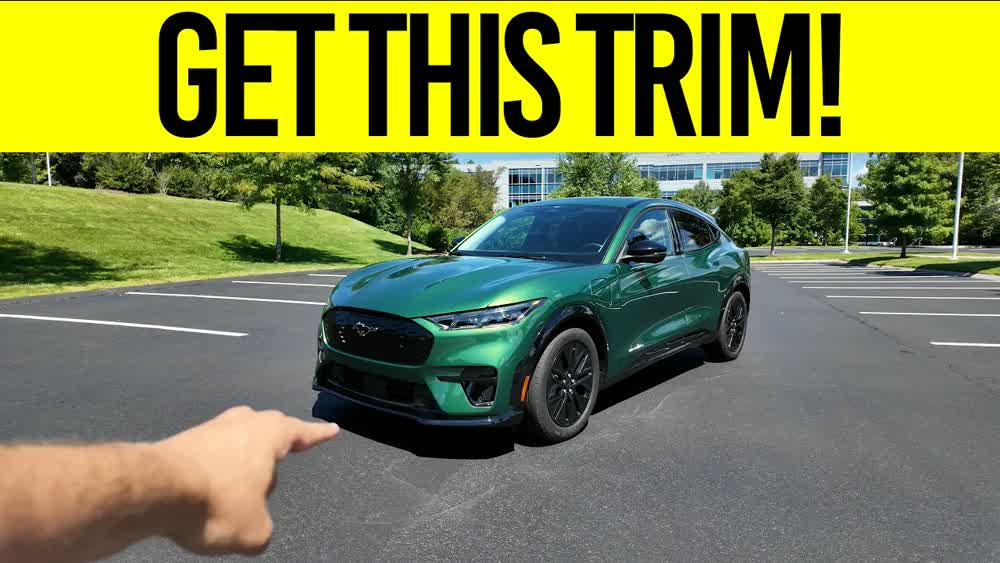
| Ford Mustang Mach-E (standard range) | LFP | 100% | 100% at least once a month to keep the range estimate accurate |
| Ford Mustang Mach-E (extended range) | NCM | 90% | 100% for long trips |
| Chevrolet Equinox / Silverado EV | NMC (Ultium) | 80% | Above 80% only for trips; avoid falling below 20% |
| Chevrolet Bolt EV | NMC | 100% recommended | Manual: charge to 100% regularly for accurate range and fastest DC fast charging |
| Hyundai Ioniq 5 / Kia EV6 | NMC | No fixed cap | If the battery drops below 20%, charge to 100% once a month or more |
Two patterns jump out. First, when a maker uses LFP, it wants you at 100% — Tesla weekly, Ford monthly — because the BMS needs that upper reference point to keep the displayed range honest. Second, the nickel cars are not “never charge to 100%” cars; they’re “don’t live at 100%” cars. Ford caps its NCM Mach-E at 90% for daily use. GM tells Equinox and Silverado EV owners to charge to 80% for daily driving and go above only for trips, partly because regenerative braking fades above 80%.
The interesting exception is the Chevrolet Bolt: it’s an NMC car, yet Chevrolet says charge it to 100% regularly. The Bolt’s large top buffer means a displayed 100% is still a comfortable state for the cells — and it keeps the range display and DC fast charging as fast as possible. It’s the cleanest proof that the same chemistry can be managed differently by different software.

SIGNAL: Set your limit once, from your manual, and stop worrying. LFP: 100% daily is fine. NMC: 80–90% day to day, 100% the night before a road trip, then drive it down.
The hidden software that decides for you
Here’s what almost nobody tells you: the percentage on your screen is partly a software decision, not a physical measurement. Every EV battery has a usable window carved out of its true capacity. Manufacturers typically hold back 3–5% at the top and 3–5% at the bottom as a buffer, so the “100%” you see is usually closer to 95–97% of the cell’s true state — and “0%” still leaves a little in reserve. Two cars parked at the same charger can show identical numbers while sitting at genuinely different physical states.
That matters for LFP owners specifically. An LFP cell’s voltage stays almost flat across a large part of its usable range, which makes it harder for the battery management system to tell 60% from 70%. Charging to a known 100% reference point lets the BMS recalibrate, which is exactly why Tesla tells RWD owners to hit 100% weekly and let it sit plugged in. Charging to 100% is often a request for information, not a demand that the battery suffer. And on any car with a departure-time scheduler, using it means an NMC pack finishes charging just before you leave instead of stewing at high voltage overnight.
The degradation math: it’s time at 100%, not hitting 100%
Fleet data finally gives us real numbers. Geotab’s analysis of more than 22,700 EVs found average degradation of about 2.3% per year, leaving roughly 81.6% capacity after eight years — comfortably inside the 8-year / 100,000-mile U.S. battery warranty. The data also settles the “100% panic”: degradation only clearly accelerates when a vehicle spends more than 80% of its time at very high or very low states of charge. Reaching 100% the night before a trip and driving it down a few hours later barely registers. Parking at 100% for days on end is the actual problem — and only for nickel cells.
The other big lever is charging speed, not the charge level: Geotab found high-power DC fast charging (>100 kW) is the single largest stressor, driving degradation up to 3.0% per year versus about 1.5% for AC-charged cars. An Idaho National Laboratory study of identical Nissan Leafs found the fast-charging group lost only about 4% extra capacity over 50,000 miles compared with a ~10–12% baseline. Heat adds roughly 0.4% per year in hot climates. The takeaway for American drivers: charge to 100% when the car asks for it, schedule NMC top-ups to finish before you leave, fast-charge when you need to, and stop treating 80% as a moral rule.
FAQ
Is it bad to charge my EV to 100% every night?
Depends entirely on chemistry. If you own an LFP car (Tesla RWD, standard-range Mach-E, most BYD models), charging to 100% every night is fine — and recommended at least weekly for range accuracy. If you own an NMC/NCA car (most Long Range and performance trims, Hyundai, Kia, GM), the issue isn’t reaching 100%, it’s dwelling there for hours. Use your departure-time scheduler so the pack finishes right before you drive.
How do I know if my EV has an LFP or NMC battery?
Three quick checks: (1) the owner’s manual states the chemistry; (2) in a Tesla, open Controls > Software > Additional Vehicle Information and look for “LFP”; (3) look at the charging screen — LFP cars show a 50%/100% style slider, nickel cars show “Daily” and “Trip” segments. On Ford, the VIN’s 8th digit identifies LFP on standard-range Mach-E models.
Does fast charging to 100% hurt more than slow charging?
Both chemistries taper charge speed above 80%, so the last 20% is slow regardless. Fleet data shows frequent DC fast charging is the bigger long-term stressor (~3.0%/yr vs ~1.5%/yr for AC), but occasional fast charging — including to 100% before a trip — has minimal impact. Slow overnight AC charging remains the healthiest baseline.
Will charging to 100% void my battery warranty?
No. Following the manufacturer’s own manual guidance is exactly what the warranty expects. Every EV sold in the U.S. carries at least an 8-year / 100,000-mile battery warranty, and degradation below roughly 70% capacity within that window is what triggers coverage — not the charge level you used.
Related reading on EVCUBE
Sources
- Geotab — How long do electric car batteries really last? (22,700-vehicle study)
- Ford — How do I maintain my electric vehicle battery? (LFP vs NCM guidance)
- Chevrolet — EV range and battery health tips (80% daily guidance, Bolt exception)
- Hyundai — IONIQ 5 owner’s manual (monthly 100% charge recommendation)
- Autoevolution — Tesla’s LFP manual now recommends charging to 100% weekly
- Kia Canada — 2023 EV6 owner’s manual (charging limit and 100% guidance)