No products in the cart.
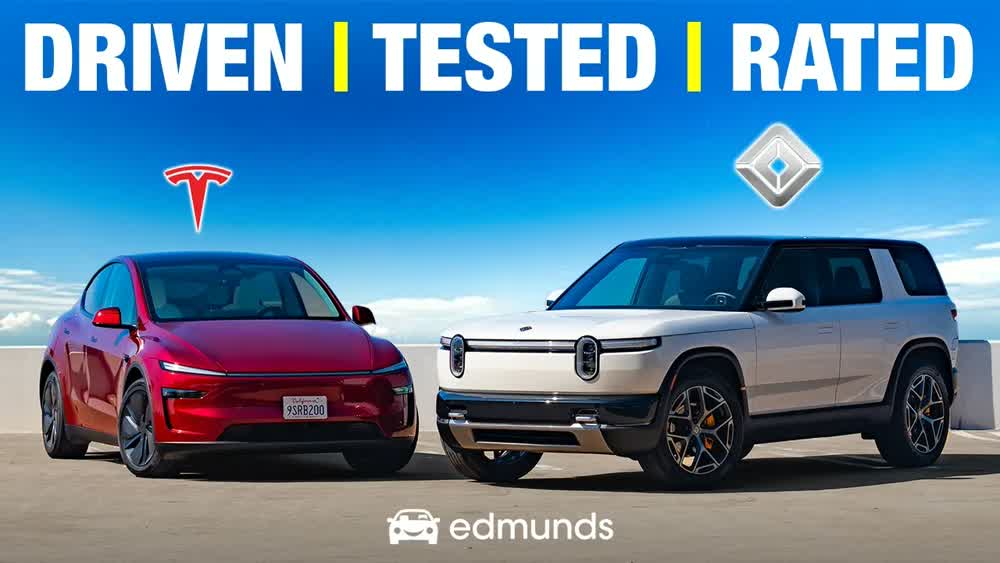
Tesla quietly killed the Model X and put the same six seats into a longer, lighter Model Y. The result is a 3-row electric SUV that starts at $61,990 — about $12,000 more than the Model Y Premium AWD it lines up with, but roughly the price of a mid-grade Kia EV9. Here’s what the long-wheelbase Model Y L actually delivers for American families who need an extra row but not an extra $20,000.
What’s actually different from a regular Model Y
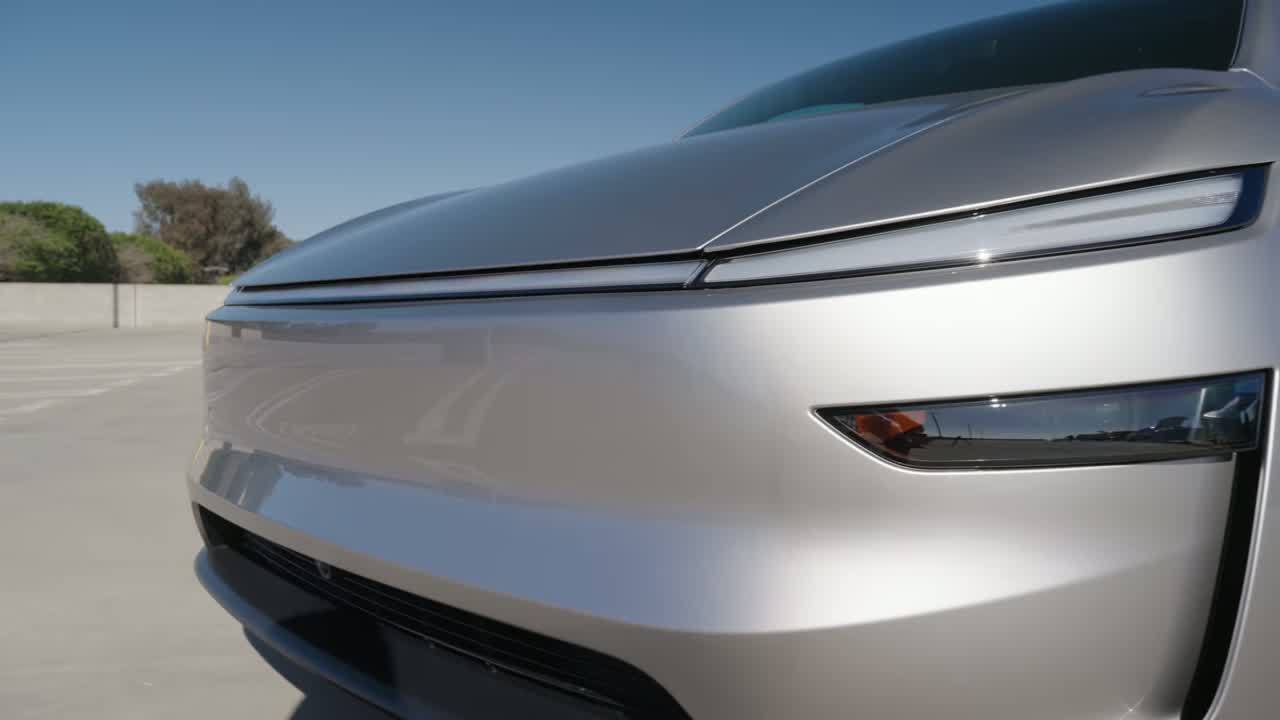
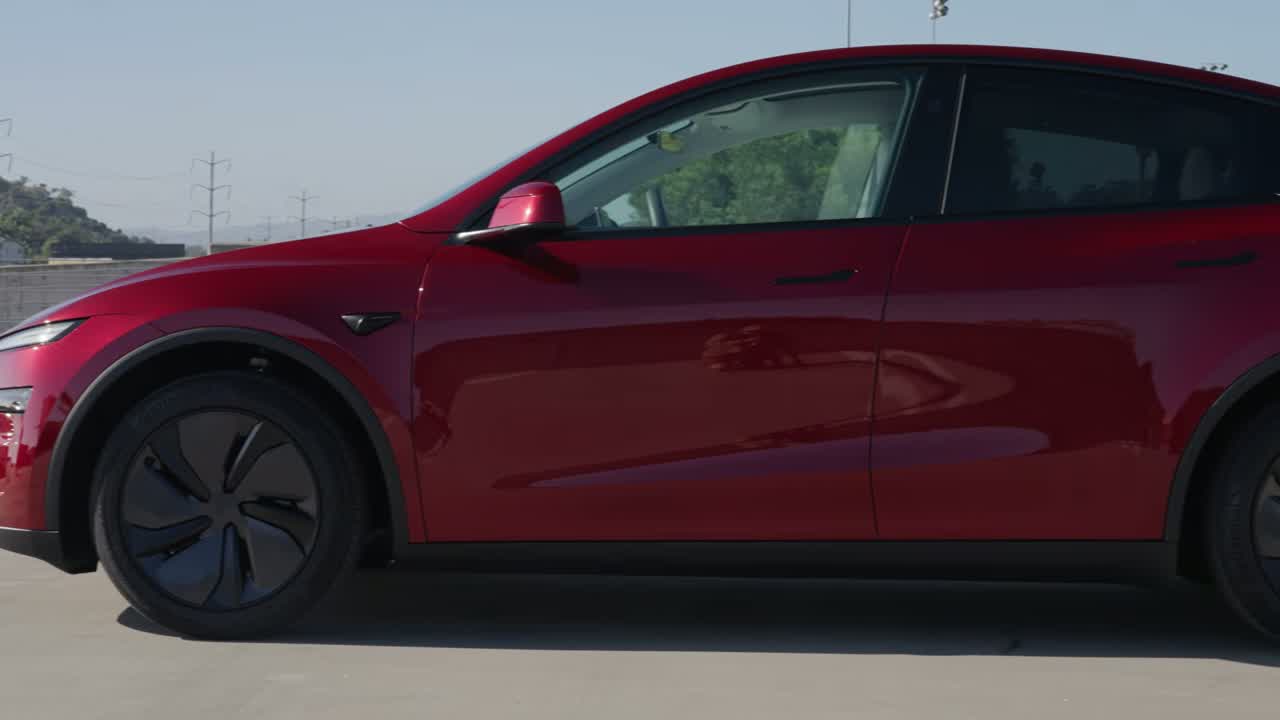
The Model Y L is not just a Model Y with a third-row seat added. Tesla added about 7 inches of overall length, 6 inches of wheelbase, and roughly 2 inches of height to the body, all in the service of getting adults into a third row that doesn’t punish them. Front and rear styling is almost identical to the standard Model Y, so the badge on the liftgate is the only honest tell from head-on.
The wheelbase stretch is the part that matters. Tesla used that extra 6 inches to lengthen the battery pack and stuff a few more cells in — the L now carries an 83 kWh pack, about 4% more capacity than the Model Y Premium. The longer floor also opened up cabin space between the second and third rows, which is what makes the third row usable instead of a “penalty box,” to use Edmunds’ word for the standard Model Y’s optional third row.
SIGNAL: This is the first Model Y where the third row is actually part of the design — not a bolt-on option that eats cargo space. Tesla built it because the Model X is gone, and they need a six-seat Tesla in the lineup by default.
Third-row reality: best Tesla has built, still best for kids
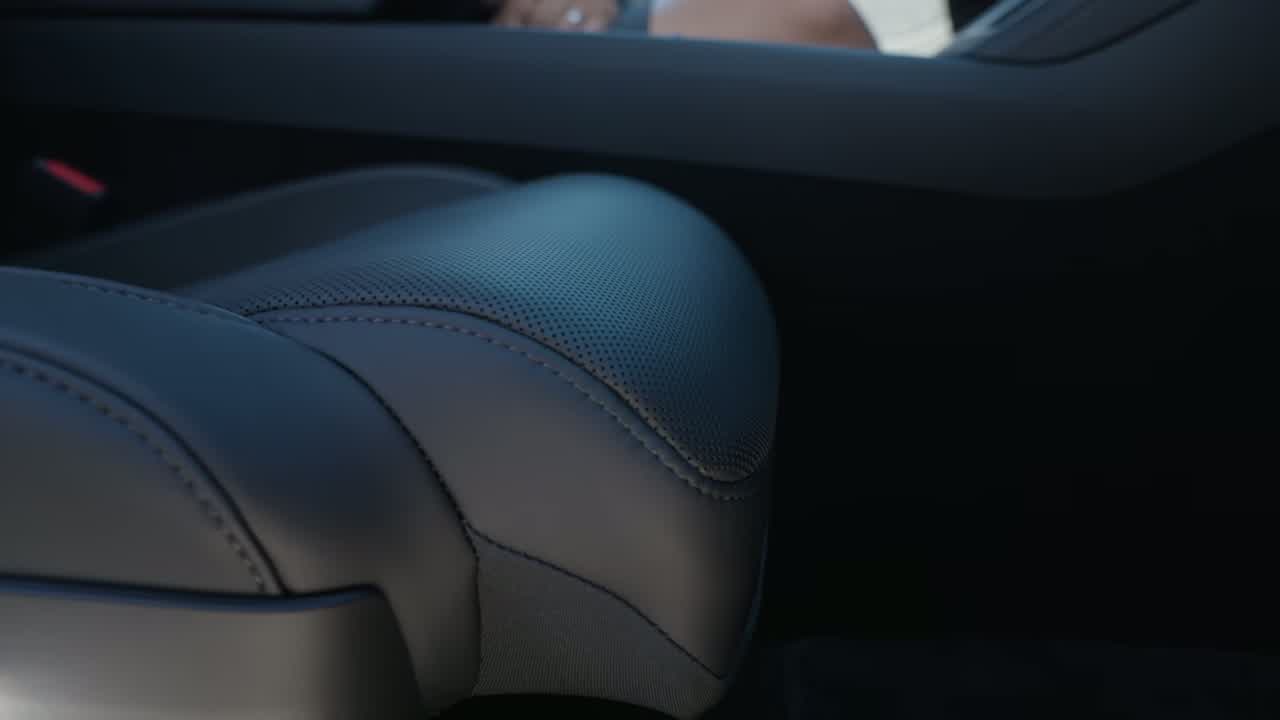
Edmunds brought a six-foot tester to the back of the L, and the verdict was clear: the third row “barely passes the three Brians test.” On paper, the L’s 31.0 inches of third-row legroom is roughly in line with a Hyundai Palisade. In person, the seat cushion sits lower and the footwell is narrow enough that two adults down there will play footsie the entire trip. The shoulder room is also tight — two grown-ups sit shoulder to shoulder.
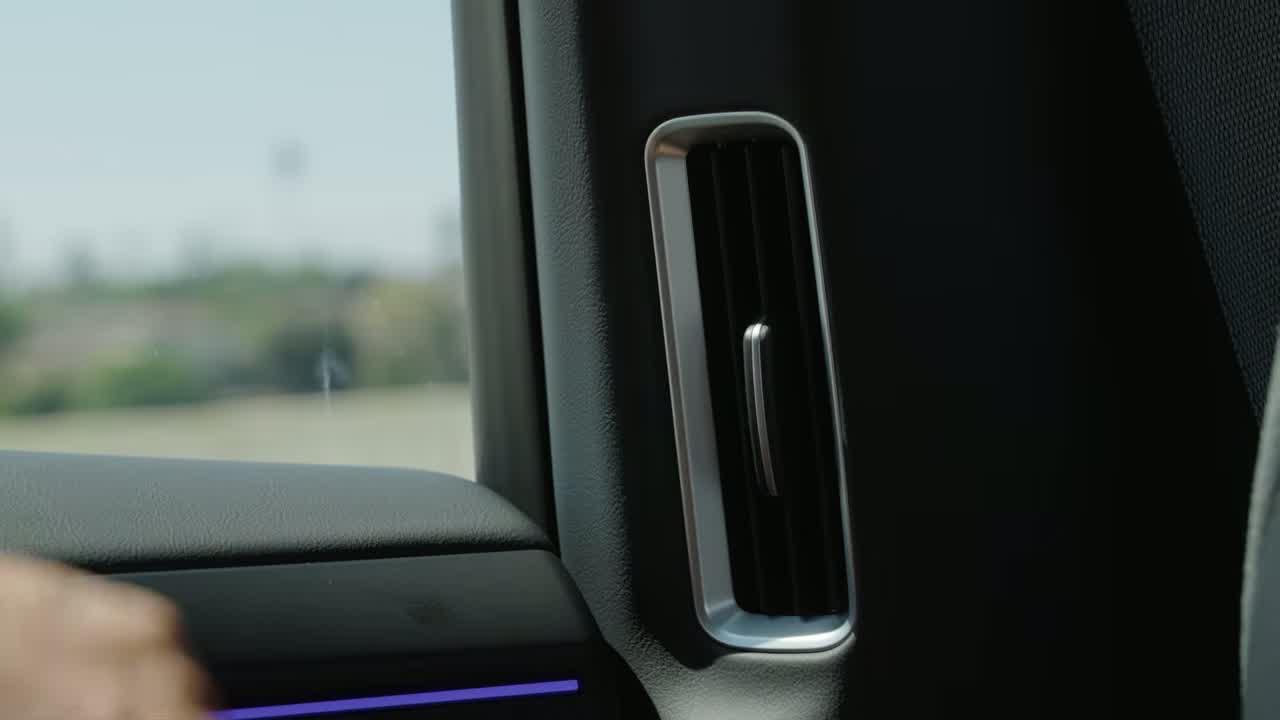
What Tesla did fix is the headroom complaint that haunted both the old Model Y third row and the Model X. The L is about 2 inches taller, and the roof in rows one and two is more heavily tinted, but the liftgate glass behind the third row can’t be tinted (you need to see out of it), so the sun beats down on rear passengers and the top of the headrest gets hot. Heated third-row seats and pillar air vents are real, but you have to turn the heaters on through the front touchscreen — there’s no third-row control panel.
The third row gets a brand-new side airbag mounted into the outer edge of the seat cushion, which Tesla says is an industry first because no regulation requires one. Four second-and-third-row seats get LATCH/ISOFIX anchors for child seats, and all four can be folded or raised from buttons in the cargo area.
Range and power: the no-compromise part
The 7-inch stretch adds weight, but Tesla offset it with the longer pack. The Model Y L is officially rated at 325 miles of Tesla-estimated range on the standard 19-inch wheels and 320 miles on the 20-inch wheels. EPA certification is still pending, and Tesla has hinted the final number may move up. Either way, the L lands within less than 1% of the 5-seat Model Y Premium AWD’s 327-mile EPA rating — no meaningful range tax for the extra row.
On power, the L borrows the rear drive unit from the Model Y Performance and pairs it with a front motor for an AWD combo making 496 horsepower and a manufacturer-estimated 0-60 mph in 4.4 seconds. That’s actually quicker than the Model Y Premium AWD’s 4.6 seconds, despite the bigger body and heavier curb weight (~4,612 lb). Top speed is 125 mph. The adaptive suspension is also lifted from the Performance but retuned for comfort, with a quirky two-mode selector that prioritizes comfort for either front or rear passengers. Edmunds’ tester reported the difference between the two modes is hard to feel from any seat.
Model Y L vs the rest of the 2026 Model Y lineup
| Trim | Base MSRP | EPA Range | 0–60 mph | Seats |
|---|---|---|---|---|
| Model Y Standard RWD | $39,990 | 321 mi | 6.8 s | 5 |
| Model Y Standard AWD | $41,990 | 294 mi | 4.6 s | 5 |
| Model Y Premium RWD | $45,990 | 357 mi | 5.4 s | 5 |
| Model Y Premium AWD (7-seat opt. +$2,500) | $49,990 | 327 mi | 4.6 s | 5–7 |
| Model Y Performance | $57,990 | 306 mi | 3.3 s | 5 |
| Model Y L Premium Launch Series | $61,990 | 325 mi (est.) | 4.4 s | 6 |
Source notes: Tesla.com configurator and MotorTrend first-drive specs, July–August 2026.
SIGNAL: At $61,990, the Model Y L is roughly 24% more expensive than the Model Y Premium AWD — but Tesla bundles 12 months of FSD Supervised ($99/mo value), Supercharging and Premium Connectivity into the Launch Series. That adds up to more than $2,000 of included subscriptions in year one, which narrows the real gap.
How the Model Y L prices against the 6/7-seat EV field
This is where the L either wins your driveway or loses it. Edmunds pointed out that every other 3-row EV SUV on sale today “is way overpriced,” then walked it back to: the L lines up against the EV9, Ioniq 9, and R1S on price once you get to a mid-grade configuration, and it has more features. The cheaper Model Y L trims that almost certainly follow the Launch Series will undercut all three. Until then, this is the table that matters for US buyers.
| 3-row EV SUV | Base MSRP | Top Trim MSRP | Best EPA Range | Battery (max) | Seats |
|---|---|---|---|---|---|
| 2027 Tesla Model Y L (Launch Series) | $61,990 | $61,990 (Launch only for now) | 325 mi (est.) | 83 kWh | 6 |
| 2026 Kia EV9 | $54,900 | $73,545 | 305 mi (Light Long Range) | 99.8 kWh | 6 or 7 |
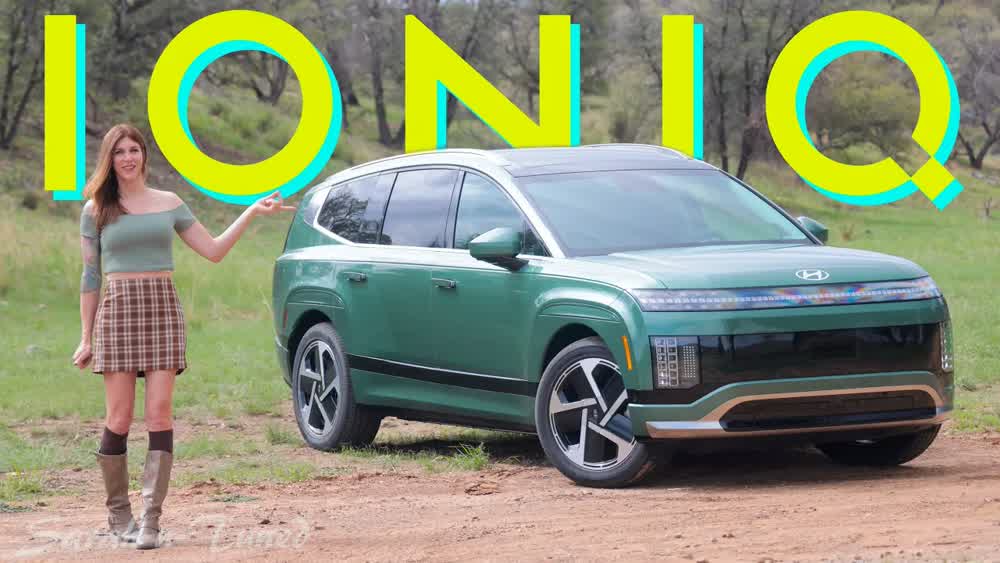
| 2026 Hyundai Ioniq 9 | $58,955 | $76,490 | 335 mi (S RWD) | 110.3 kWh | 6 or 7 |
| 2026 Rivian R1S (Dual Large) | $83,990 | $109,900+ | 410 mi (Max Battery, 22″) | ~135 kWh | 7 |
| 2027 Rivian R2 (5-seat, not 3-row) | $44,990 (late 2027) | $57,990 (Performance Launch) | 345 mi (est.) | n/a | 5 |
Source notes: MotorTrend, Car and Driver, evseekers.com, Rivian newsroom — pricing verified July–August 2026. Note: the R2 is included because it’s the closest Rivian by price; it is a 5-seat crossover, not a 3-row.
A few things stand out. The Model Y L undercuts a comparably equipped Kia EV9 Wind AWD ($65,395) by about 5%, and it undercuts a comparably equipped Hyundai Ioniq 9 SE AWD ($64,365) by roughly 4%, while shipping with FSD hardware and adaptive air suspension that neither Kia nor Hyundai include. Against the R1S, the gap widens to about 26% — the R1S is the larger, more off-road-capable truck, but if you don’t need to tow 7,000 lb or climb a trail, the Model Y L is the better suburban family tool.
Where the L genuinely loses is third-row comfort. Edmunds was blunt: “EV9, Ioniq 9, and R1S are also going to offer a touch more third-row room, and the seats on those cars are going to sit up higher, so your knees aren’t going to be uncomfortably high.” For an American family that genuinely seats three kids in car seats, the L works. For an adult riding in the third row on a 400-mile highway day, the EV9 or Ioniq 9 is more humane.
Cargo: 13 more cubic feet, but the third row eats most of it
Tesla’s official max cargo figure is just under 90 cubic feet (about 89) with all rear seats folded — roughly 17% more than the 5-seat Model Y’s 75.5 cubic feet. Behind the third row, MotorTrend measured 14.8 cubic feet (matched identically to the old Model X). That’s enough for a 20-inch and 28-inch suitcase plus a frunk-sized 20-in bag, but Edmunds found that fitting a standard “large” check-in case behind row three actually required going down a size. If you regularly carry six people, the cargo story is honestly tight; if you fold the third row flat most of the time, the L becomes a near-minivan.
The underfloor storage bin behind the third-row seatback survives intact (same size as the standard Model Y), and all four rear seats fold flat from buttons in the cargo wall — no walking around the car required. Towing capacity is 3,500 lb, matching the Model Y. The L also supports vehicle-to-load (V2L) at up to 2.4 kW and vehicle-to-home (V2H) through a charging-port adapter, which is genuinely useful for power outages or campsite setups.
Who should buy the Model Y L
Three buyer profiles make sense for the Launch Series as it sits today; everyone else should wait six to nine months.
Wait six months if you don’t need 6 seats daily. Edmunds’ own advice, repeated almost word-for-word in the review, is to “be a little bit patient.” The Launch Series is almost sold out according to Tesla, which means cheaper L trims are coming. When they do, the L will sit closer to the Model Y Premium AWD than to the EV9, and they’ll hold resale value better than the Launch Edition once a $54,990 L trim appears.
Buy now if you regularly carry 5–6 people. The third row is the best Tesla has ever made, and for child seats, grandparents, and the family road trip, it’s good enough. You also get a year of FSD Supervised included, which is otherwise $99/month and a real cost-of-ownership sweetener.
Skip it if adults ride in row three regularly. Buy the Kia EV9 Light Long Range ($60,595) or Hyundai Ioniq 9 SE AWD ($64,365) instead. Both have adult-sized third rows with higher seat cushions, both are still under $65k to start, and both deliver more third-row legroom than the L. The Model Y L is a 5-seat-plus-kids SUV. The EV9 and Ioniq 9 are genuine three-row family vans.
Is the Model Y L the replacement for the Model X?
Functionally, yes. Tesla ended Model X production earlier in 2026, and the Model Y L is the only six-seat Tesla now sold in the US. Dimensionally, it’s close: the Y L is 195.6 in long vs the Model X’s 198.3 in, sits on a wheelbase 3 in longer (119.7 in), and is 0.3 in shorter in height. Frunk space is smaller (4.1 cu ft vs 6.5 cu ft on the X), but max cargo volume behind the front seats is comparable at 85.6 cu ft vs 88.0 cu ft. The X had a 0-60 of 3.8 s; the L does it in 4.4 s, roughly 14% slower.
How much does the 2027 Model Y L cost in the US, and what does the Launch Series include?
The Launch Series MSRP is $61,990, or $63,630 out the door including destination and order fees. There is no cheaper trim available to order yet. The Launch Series adds 12 months of Full Self-Driving (Supervised), 12 months of Supercharger network access, 12 months of Premium Connectivity, microsuede dashboard trim, Launch Series sill plates and puddle lights, special exterior and interior badging, floor mats, and the exclusive Cosmic Silver paint and Zen Grey interior. FSD alone would cost $99/month — bundled FSD + Supercharging + Premium Connectivity represents more than $2,000 of included subscriptions in year one.
Does the Model Y L qualify for the $7,500 federal EV tax credit?
No. The federal $7,500 clean vehicle credit ended September 30, 2025, along with the $4,000 used-EV credit. Tesla’s response was the $39,990 Standard RWD trim, not a credit — federal buyers now get no purchase incentive on any Model Y variant. A handful of states still offer point-of-sale rebates (New York Drive Clean $2,000 for Standard trims, New Jersey Charge Up $1,500 for MSRP under $55k, Massachusetts MOR-EV $3,500 under $55k). The Model Y L Premium Launch Series exceeds most state MSRP caps and won’t qualify for those programs either.
Related reading on EVCUBE
Sources
- MotorTrend — 2027 Tesla Model Y L First Drive: Tesla’s Bestseller Gets Longer and More Useful
- MotorTrend — 2027 Tesla Model Y L First Look: The Model X Replacement (full specifications)
- Car and Driver — 2026 Kia EV9: pricing, range, and trims compared
- evseekers — Hyundai Ioniq 9 vs Kia EV9: which three-row EV wins (2026 model-year MSRPs and EPA ranges)
- Rivian newsroom — Rivian Introduces R2 Lineup: full trims, EPA ranges, and starting prices