Tesla’s robotaxi is live in seven US metros, the Cybercab is rolling off the line in Texas, and its Full Self-Driving software has logged nearly 12 billion miles — so why is Elon Musk deliberately tapping the brakes on the one vehicle meant to define Tesla’s next decade?
Watch: Tesla Car World breaks down the four Cybercab changes
The video from Tesla Car World lays out four things Musk and Tesla have “just revealed” about the Cybercab program in 2026: a live-but-throttled robotaxi rollout, the start of dedicated Cybercab production, Full Self-Driving turning into Tesla’s real moat, and a vehicle engineered like a robot rather than a car. A lot of it is forward-looking and, frankly, speculative. So we did the homework — cross-checking every claim against EPA filings, Morgan Stanley cost math, and the hard numbers Waymo and Amazon’s Zoox are now putting on the board. Here is what actually holds up, and what still doesn’t.
Change #1: The Robotaxi Is Already Live — So Why the Brakes?

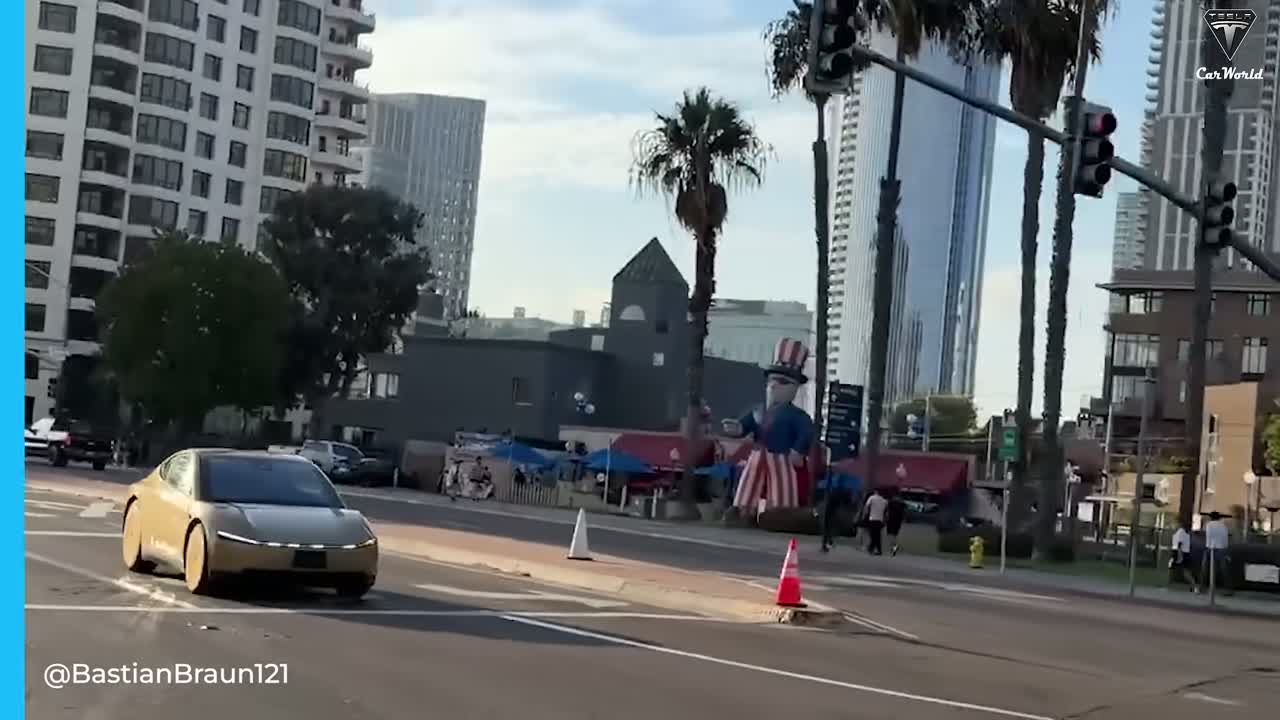
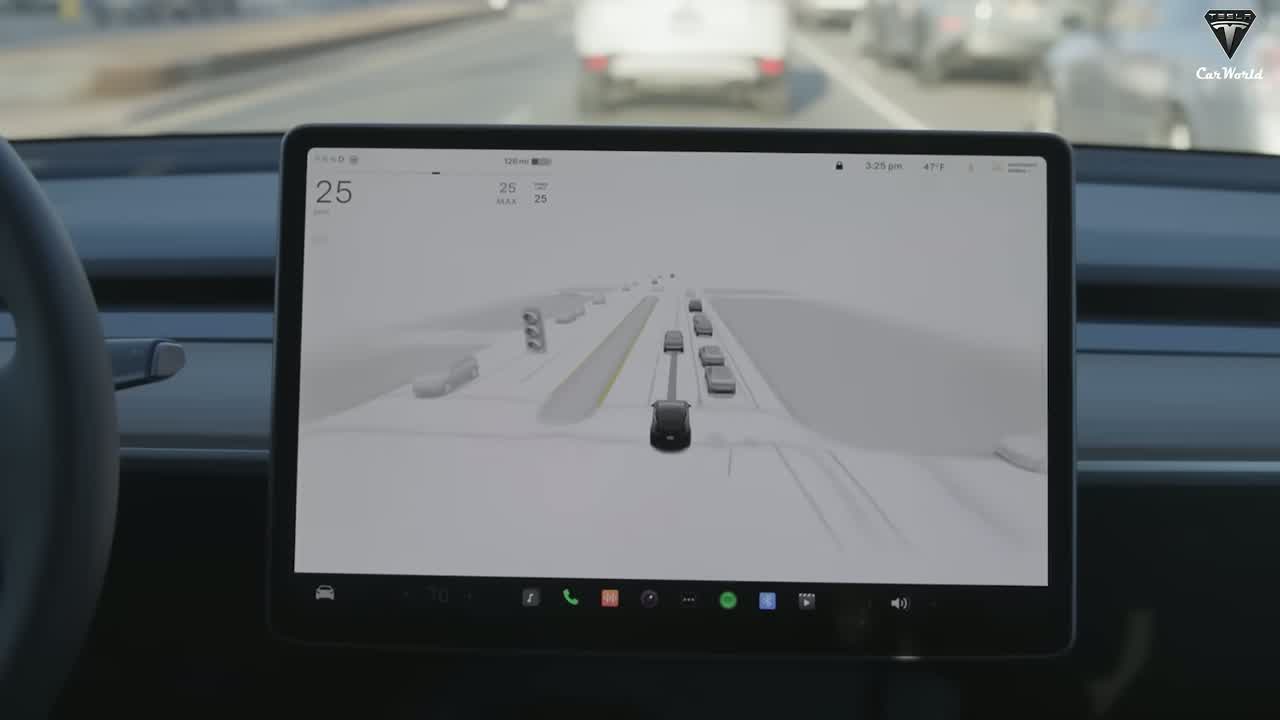
This is the part that isn’t speculative. Tesla’s robotaxi service is no longer a demo — it operates across seven major US metro areas. Austin keeps expanding, and Miami, Orlando and Tampa have joined the network, with Phoenix and Las Vegas next in line. The San Francisco Bay Area still runs with safety drivers because of California’s stricter permitting rules. Per the video, paid robotaxi mileage has reached roughly 2.5 million miles and is growing about 10% every week.
Weekly paid robotaxi mileage growth~10%/wk
Here’s the contradiction investors keep flagging: if the service is live in seven cities and Tesla believes FSD is ready, why is the driverless fleet still tiny? Third-party tracking puts Tesla at roughly 44 vehicles in Austin (about 20 of them fully driverless), across a geofence that took nearly a year to grow to ~245 square miles. Tesla’s own framing is that it isn’t trying to flood one mapped city — it’s validating “generalized” AI across different roads, weather and traffic. As the video puts it, Tesla isn’t optimizing for the fastest launch; it’s optimizing for the fastest path to nationwide scale.
Now put that next to Waymo. According to Electrek and Wikipedia, Waymo runs a fleet of roughly 3,000–3,500 robotaxis, delivers about 500,000 paid rides per week, drives around 4 million rider-only miles per week, and has surpassed 20 million lifetime trips. Its driverless coverage now tops 1,400 square miles across 11 cities — more territory than the entire state of Rhode Island, after a single expansion wave grew coverage about 27%. Two companies, two philosophies: Waymo is scaling a proven commercial operation; Tesla is deliberately metering supply until the software, charging network and regulators are all ready at once.
Change #2: The Cybercab Is Officially in Production
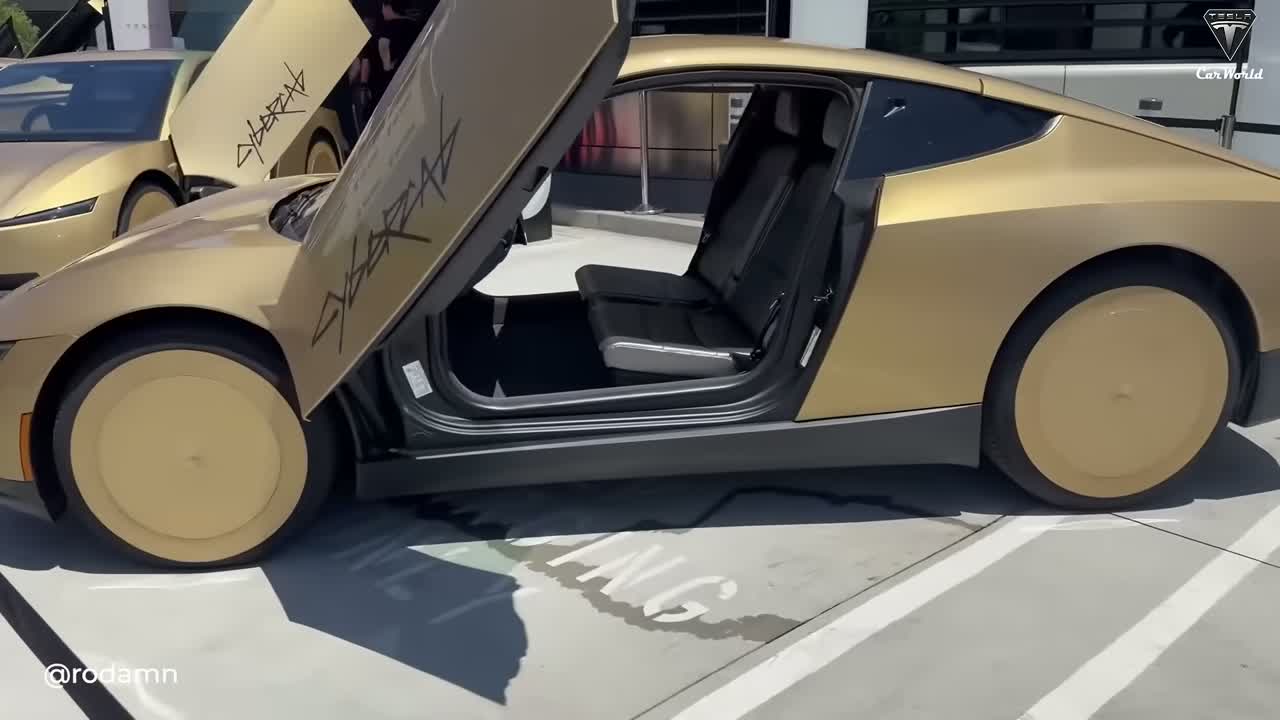
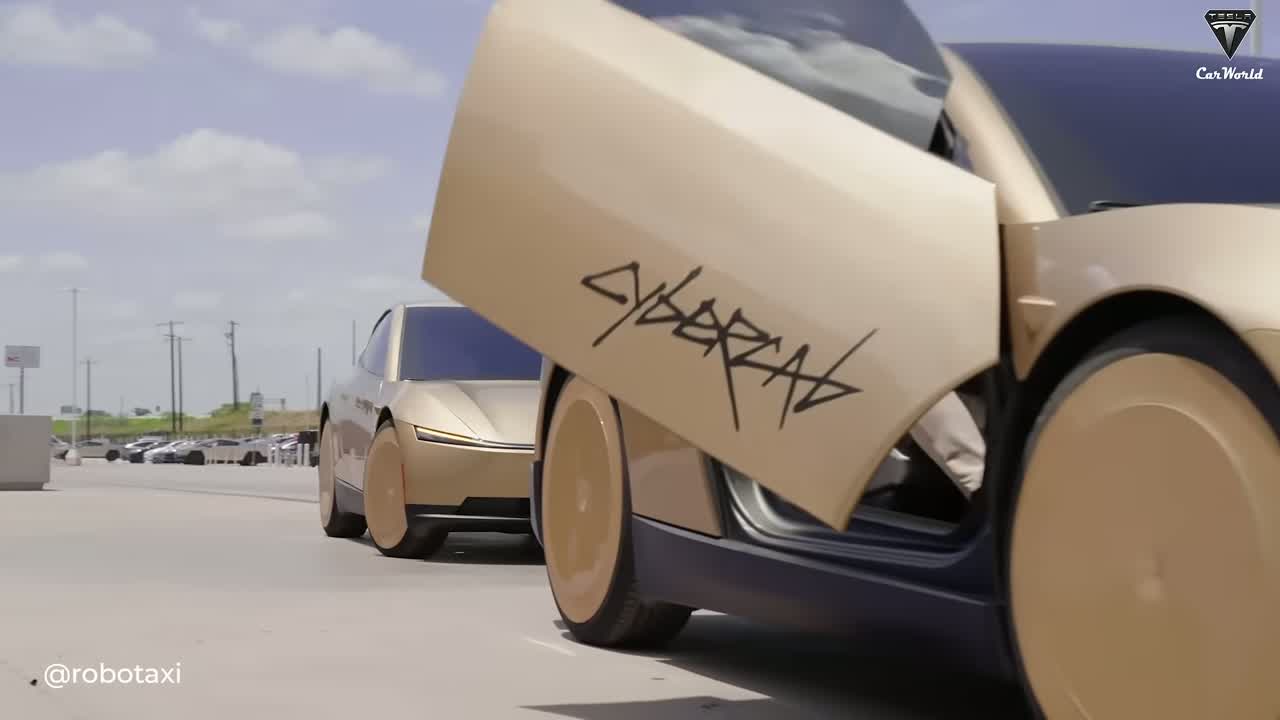
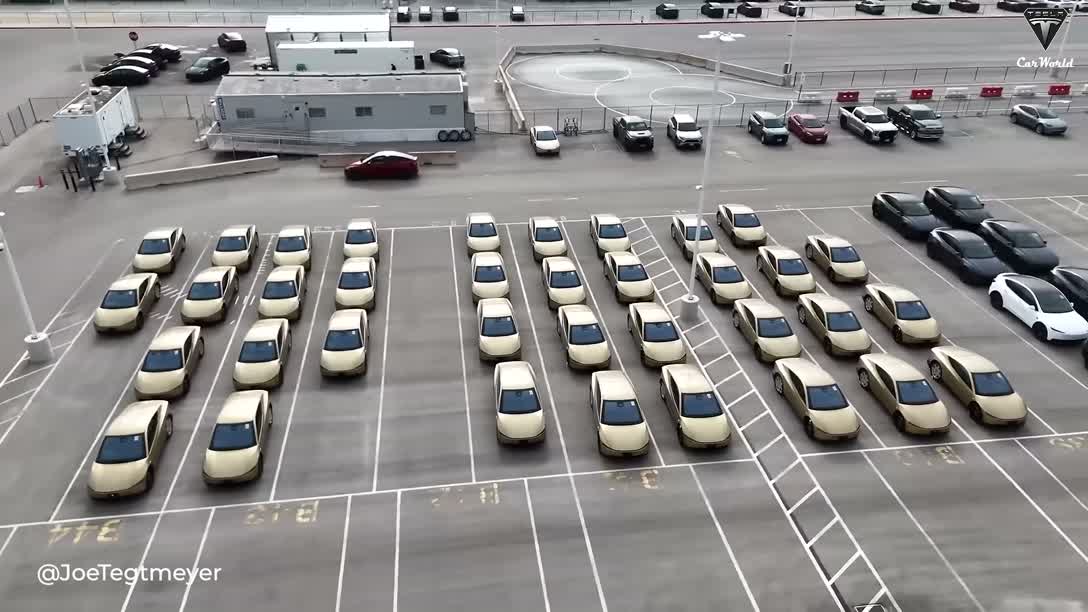
The second reveal is a genuine milestone. The first dedicated Cybercab rolled off the line at Gigafactory Texas on February 17, 2026, and Tesla confirmed official start of production on April 24, 2026 — beating its original April target. This is a real vehicle in commercial manufacturing, not another prototype on a show stage. Tesla says the initial line is designed for more than 125,000 vehicles a year, with a long-term ambition Musk has repeatedly pegged at 2 million units annually across multiple factories.
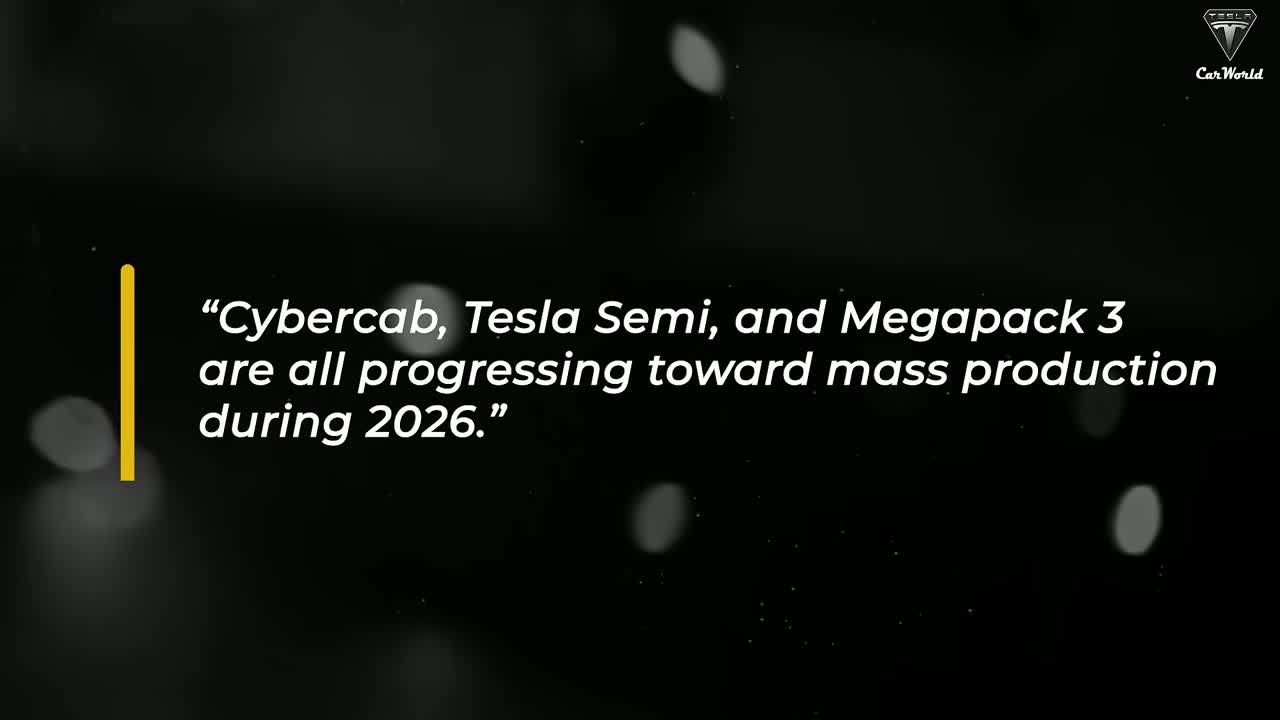
But production start and production scale are very different things. Tesla itself flags 4680 battery cell output as one of the biggest constraints, because those cells power both Cybercab and the Tesla Semi. And in a genuinely unusual move, Tesla says it will not maximize Cybercab output right away — production will track the pace of robotaxi deployment, so each finished car enters revenue service almost immediately rather than sitting idle. Cybercab, Tesla Semi and Megapack 3 are all targeted for mass production during 2026, one of the largest manufacturing expansions in the company’s history.
| Milestone | Date / figure | Status |
|---|
| Cybercab unveiled (“We, Robot”) | October 10, 2024 | Done |
| First production unit off the line | February 17, 2026 | Done |
| Official start of production | April 24, 2026 | Done |
| Initial designed line capacity | 125,000+ / year | Ramping |
| Long-term production goal | ~2,000,000 / year | Target |
| Consumer retail sales | 2027 (target) | Planned |
Change #3: FSD Is Now the Real Moat
A Cybercab is worthless without the software that drives it — and this is where Tesla’s numbers genuinely stand apart. Tesla reports 1.48 million active FSD subscribers in the US, up 56% year over year, and says more than 55% of new Teslas delivered in North America now include an FSD subscription. Vehicles running supervised FSD have accumulated nearly 12 billion miles — one of the largest real-world AI driving datasets on Earth.
New Tesla deliveries in North America that include FSD55%+
The rollout is widening in both directions. Tesla has begun pushing FSD V14 “light” to older AI3-hardware cars in the US and South Korea, while the robotaxi fleet runs the newer FSD V15 with seven claimed improvements to intersections, prediction and decision-making. Internationally, after its first approval in the Netherlands, Tesla has added Belgium, Denmark, Lithuania and Estonia, pushing cumulative European FSD distance past 50 million kilometers. And Tesla is doubling down on its most contested bet: camera-based vision only, with no lidar or radar as primary sensors — the opposite of what Waymo and Zoox rely on.
That sensor split is the heart of the debate. Waymo and Zoox stack lidar, radar and cameras and geofence tightly; Tesla wagers that neural nets trained on billions of miles can drive on vision alone, anywhere. If Tesla is right, its data advantage compounds with every mile. If it’s wrong, no amount of Cybercab volume fixes it.
Change #4: Designed Like a Robot, Not a Car
The fourth reveal is philosophical as much as mechanical. Unlike every Tesla before it, the Cybercab was never designed around a driver — it was designed around the autonomous system. The most obvious sign: no steering wheel and no pedals. Tesla says the vehicle is engineered to comply with existing Federal Motor Vehicle Safety Standards (FMVSS) so it can scale under current rules rather than lean on limited exemptions (more on why that claim is contested below).
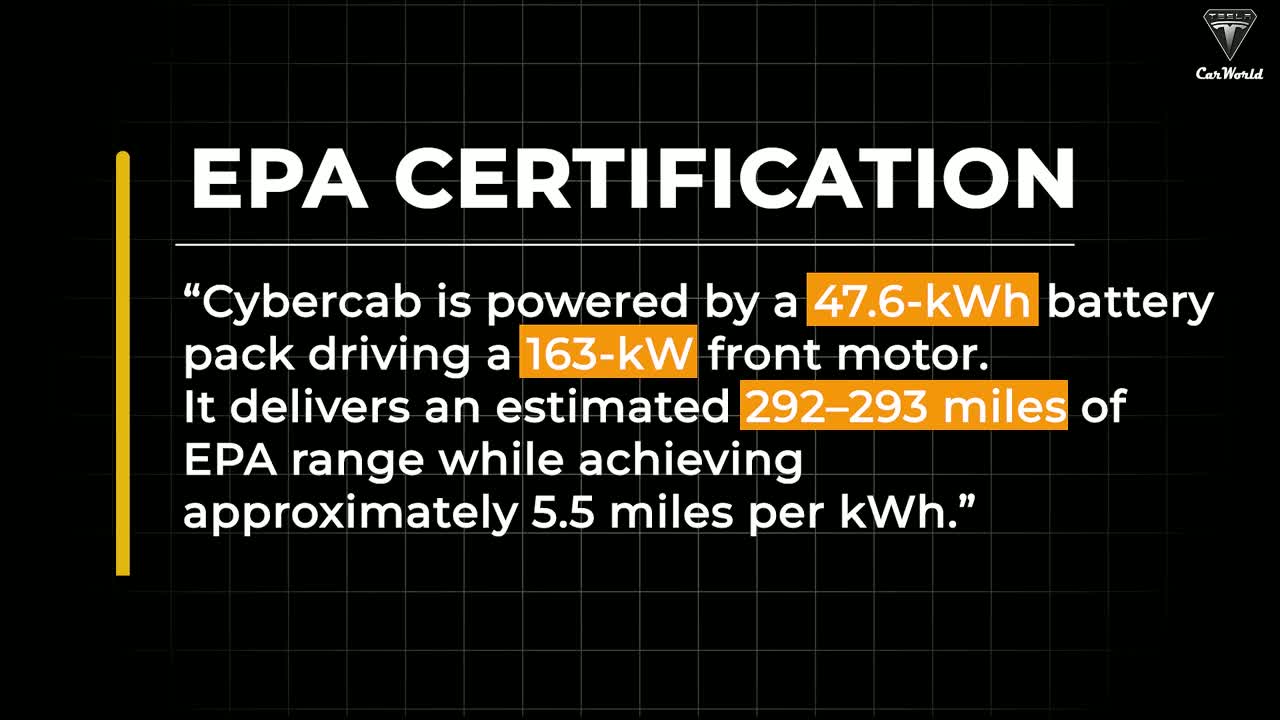
The rest of the design follows the same “profit per mile” logic. Cybercab uses wireless inductive charging — Tesla targets charging efficiency above 90% — so the car can top up over a pad between rides with no human plugging it in. It integrates Starlink V5 for connectivity where cellular is weak. And per EPA certification cited in the video, it’s powered by a 47.6 kWh battery and a 163 kW front motor, delivering an estimated 292–293 miles of range at roughly 5.5 miles per kWh, with a curb weight of just 3,113 lb — making it one of the most efficient EVs the EPA has ever tested. (Independent trackers list the lab figure higher, around 418 miles, with real-world range commonly estimated at 280–300 miles.) Combined with Musk’s target price of under $30,000, the message is blunt: the Cybercab isn’t built to win drag races — it’s built to win the math.
| Cybercab spec (per EPA / Tesla) | Figure |
|---|
| Battery pack | 47.6 kWh |
| Front motor | 163 kW (~219 hp) |
| Estimated range | 292–293 mi (EPA) |
| Efficiency | ~5.5 mi/kWh |
| Curb weight | 3,113 lb |
| Charging | Wireless inductive, >90% target efficiency |
| Controls | No steering wheel, no pedals |
| Target retail price | Under $30,000 |
Cybercab vs Waymo vs Zoox: How the Race Actually Stacks Up
The video frames Cybercab as the inevitable winner. The real picture is messier — each player is optimizing for a different variable. Here’s the grounded scoreboard, drawn from company figures and reporting from Electrek and Wikipedia.
| Metric | Tesla (Cybercab / Robotaxi) | Waymo | Zoox (Amazon) |
|---|
| Vehicle | Purpose-built, no wheel/pedals (Model Y today) | Retrofit Jaguar I-PACE + new Zeekr-based unit | Purpose-built, no wheel/pedals, bidirectional |
| Sensors | Cameras only (vision) | Lidar + radar + cameras | Lidar + radar + cameras |
| Driverless fleet | ~20–44 (Austin core) | ~3,000–3,500 | ~100 target on public roads |
| Paid rides | Ramping; ~2.5M paid robotaxi mi | ~500,000 / week | Free rides; NHTSA approval pending |
| Est. operating cost | ~$0.81 / mile | ~$1.43 / mile | Not disclosed |
| Avg. wait time | 15+ minutes | ~5.7 minutes | Limited pilots |
| No-wheel regulatory path | Claims existing FMVSS compliance | Operating driverless today | FMVSS exemption filed (up to 2,500 cars) |
The takeaway: Tesla owns the cost story (Morgan Stanley pegs its robotaxi operating cost at about $0.81/mile versus Waymo’s $1.43, and one Dallas fare comparison showed $6.15 for a Tesla ride versus $13.93 for the same Waymo trip). Waymo owns the scale-and-reliability story — 500,000 paid rides a week and wait times near 5.7 minutes against Tesla’s 15-plus. Zoox owns almost nothing at scale yet, but it validates the design thesis: a wheel-less robot cab is buildable. Cheap rides don’t matter if you can’t get one, and a great design doesn’t matter if regulators won’t clear it.
The Still-Unanswered Questions

Here’s where the video’s optimism outruns the evidence. Tesla says the Cybercab “complies with existing FMVSS” — but a car with no steering wheel and no pedals sits squarely in the same regulatory gray zone that forced Amazon’s Zoox to file an NHTSA exemption request for up to 2,500 vehicles, still under review after its public-comment window. If a purpose-built, wheel-less robotaxi truly needed no exemption, it’s fair to ask why a well-funded competitor felt it did. Until NHTSA rules and until FSD V15 is broadly validated, Tesla’s own guidance ties any major fleet ramp to late 2026 or early 2027.
Robotaxi is a business where a single serious accident can freeze approvals nationwide — which is exactly why the company that looks the most cautious today may simply be the one playing the longest game.
So the honest scorecard on the “four changes”: the live robotaxi network, the start of Cybercab production, and the FSD data lead are real and verifiable. The claim that a wheel-less Cybercab can scale nationwide under today’s rules — and that vision-only autonomy will decisively out-execute Waymo’s sensor-heavy, already-driverless fleet — is the bet, not the result.
Does the Cybercab really have no steering wheel or pedals — and is that street-legal?
Yes, the production Cybercab is designed with no steering wheel and no pedals. Tesla states it’s engineered to meet existing FMVSS, but vehicles without traditional controls remain a regulatory open question in the US — Amazon’s Zoox pursued an NHTSA exemption for up to 2,500 such vehicles, which was still under review as of mid-2026. Expect the “no-wheel” legality question to be settled by regulators, not marketing.
Related reading on EVCUBE
Over to you: Would you climb into a car with no steering wheel and no pedal to cut your ride cost roughly in half — or does the missing wheel still make you want to reach for one? Tell us where you land.
Sources