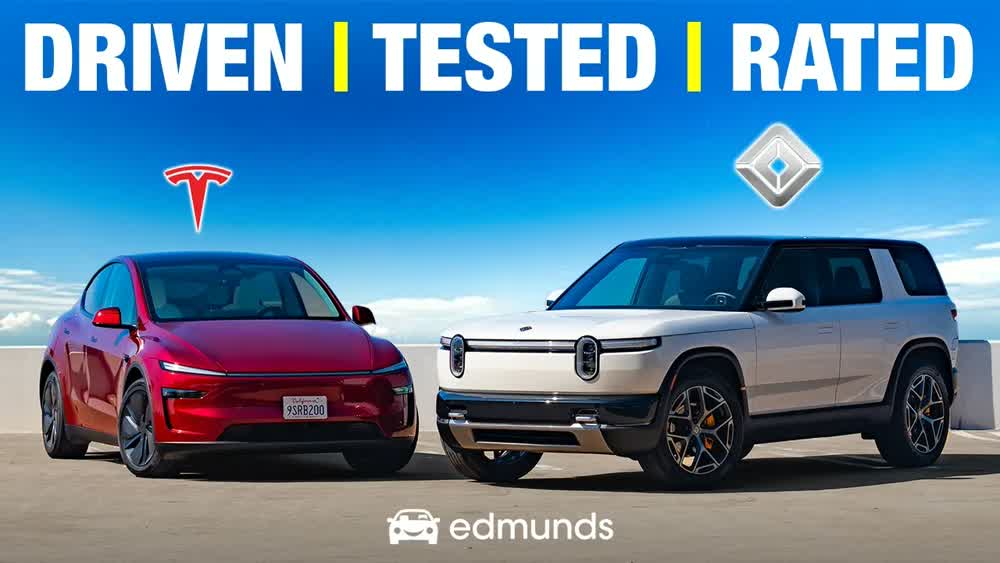
The 2026 Model Y now comes in a $39,990 “Standard” and a loaded “Premium” that looks almost identical in the photos — so why does one cost roughly $10,000 more, and is that gap actually worth it for a US buyer?
Tesla split its best-selling SUV into two very different cars for 2026. The badge on the tailgate is the same. What is behind it is not. After the “Juniper” refresh rolled out, the entry Model Y Standard undercuts the old base car by $5,000, while the Model Y Premium keeps the panoramic glass, the light bar, and the near-luxury cabin that made the Model Y famous. This is a practical, dollars-and-miles breakdown of what you actually get — and give up — at each price.

The lineup at a glance
The first thing to understand is that “Standard vs Premium” is not one comparison — it is a small family. Tesla now sells the Model Y in five US configurations spanning about a $17,500 spread. Here is the whole board, so you can see exactly where the two trims you are choosing between actually sit.
| 2026 Model Y trim | Starting MSRP* | EPA range | 0–60 mph | Drivetrain |
|---|
| Standard RWD | $39,990 | 321 mi | 6.8 s | Single motor, RWD |
| Standard AWD | $41,990 | 294 mi | 4.6 s | Dual motor, AWD |
| Premium RWD | $45,990 | 357 mi | 5.4 s | Single motor, RWD |
| Premium AWD | $49,990 | 327 mi | 4.6 s | Dual motor, AWD |
| Performance AWD | $57,490 | 306 mi | 3.3 s | Dual motor, AWD |
*MSRP before the roughly $1,640 destination and order fee. Note the trap in that table: the cheapest Model Y is not the longest-range one, and the quickest non-Performance car is not the most expensive one. The Premium RWD is the range king at 357 miles — 11% farther than the Standard RWD — yet it costs only about $6,000 more than the entry car.
Range and battery: a 6-mile gap, or a 36-mile one
Range is where the “Standard vs Premium” question gets slippery, because it depends which two cars you line up. The video’s head-to-head was the $39,990 Standard RWD against the $49,990 Premium AWD, and there the range difference is almost a rounding error: 321 miles vs 327 miles, a gap of just 6 miles or about 1.9%. On that pairing, you are clearly not paying $10,000 for range.
But the Standard’s smaller pack tells the real story. The Standard RWD runs a roughly 69.5 kWh battery making about 300 hp; the Premium cars use a larger pack near 79 kWh — a battery about 14% bigger. That is why the single-motor Premium RWD stretches to 357 miles, a 36-mile (11%) jump over the Standard RWD. Add the front motor for AWD and range drops again: the Standard AWD falls to 294 miles, roughly 8% less than the Standard RWD.
Standard RWD range vs class-best
321 / 357 mi (90%)
The takeaway: if maximum range is the goal, the smart money is not the loaded Premium AWD — it is the single-motor Premium RWD. For most daily US driving, though, 321 miles in the Standard is plenty, and the 6-mile gap to the Premium AWD is not a reason to spend more.
Performance: the one number the Standard can’t hide
Here the trims genuinely part ways. The Standard RWD does 0–60 mph in a leisurely 6.8 seconds — the reviewer’s own launch was, in his words, “underwhelming as expected.” Step up to a dual-motor car and that drops to 4.6 seconds, roughly 32% quicker. The Premium RWD splits the difference at 5.4 seconds.
It is not just straight-line speed. The Standard rides on basic passive dampers, while the Premium adds frequency-selective (frequency-dependent) shock absorbers that soak up broken pavement more gracefully. Interestingly, on softer 18-inch wheels the reviewer found the Standard’s ride “very similar” to the Premium — so the suspension gap is smaller than the spec sheet implies. Performance, not comfort, is where your extra dollars go.
Performance is not what you’re after if you’re getting the Standard — this is an entry-level Tesla that happens to ride better than you’d expect.
What the Standard trim actually gives up
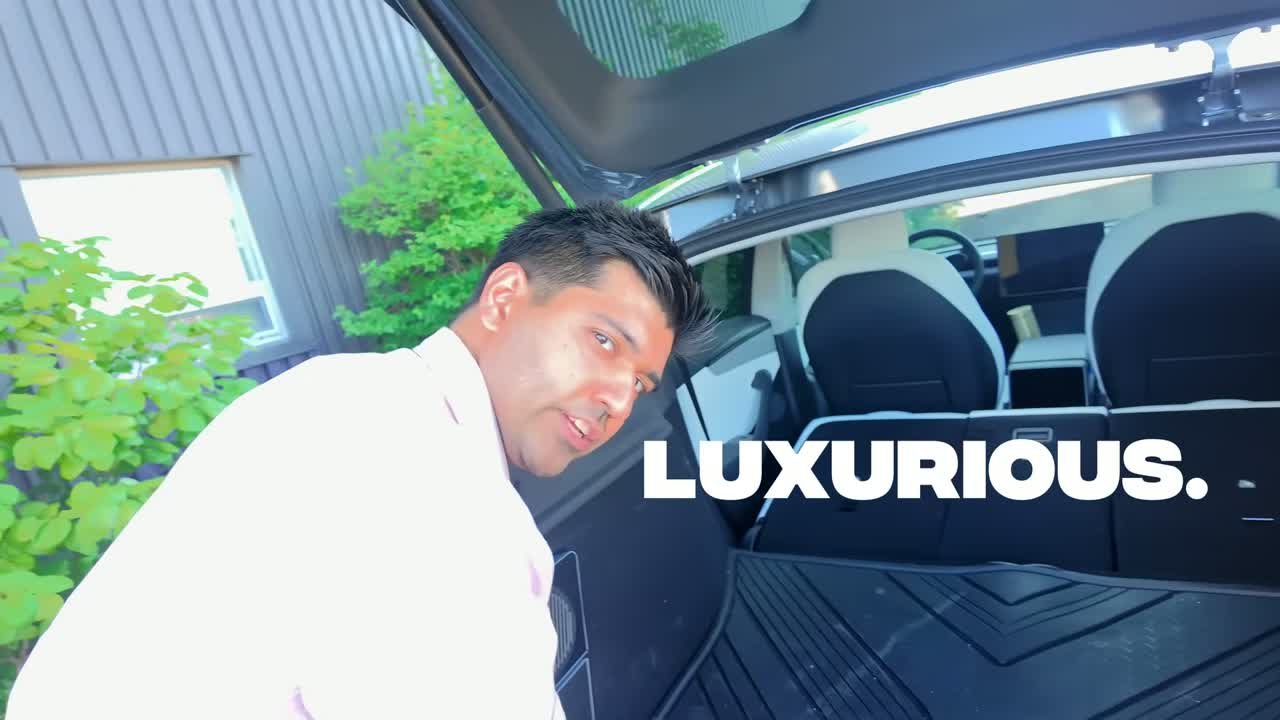
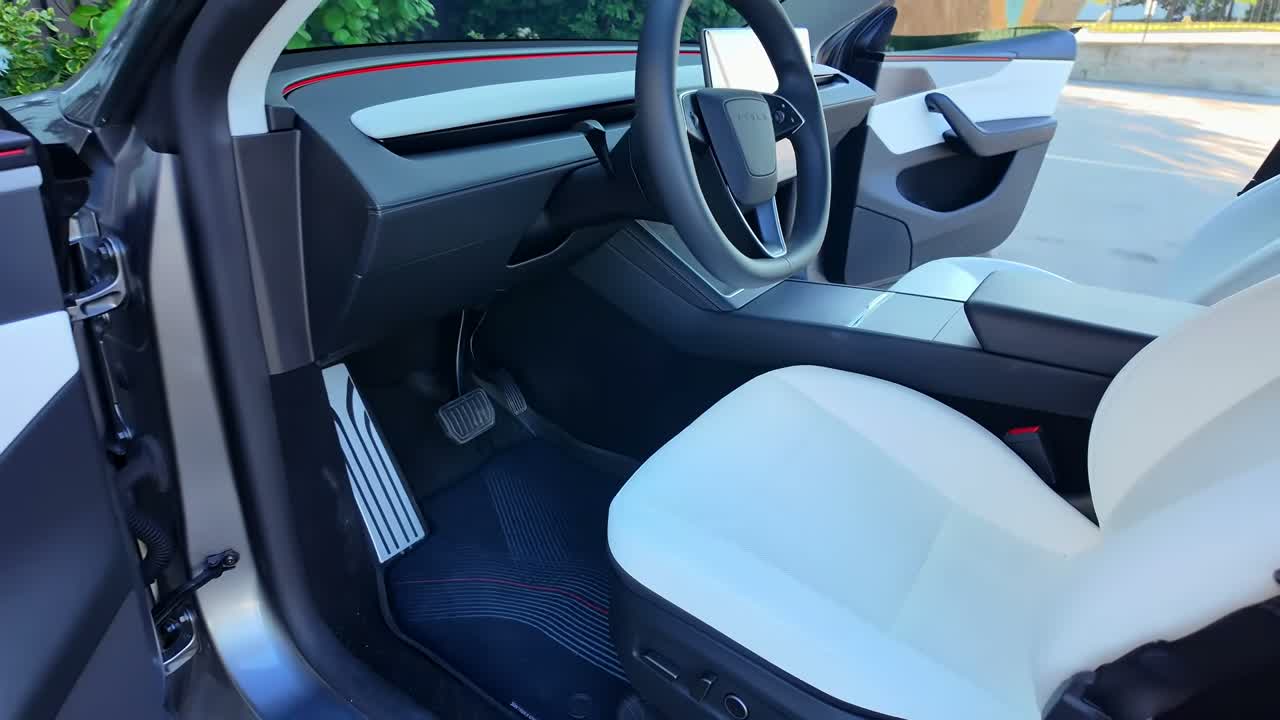
Tesla hit the lower price by deleting features, not by building a worse chassis. Once you know the list, the badge starts to feel like a different car. The single biggest loss is the roof: the Premium’s panoramic glass roof becomes a covered/solid roof with a full headliner on the Standard (Tesla says it cuts road noise; you lose the airy, open cabin).
The rest of the cost-cutting reads like a checklist:
- Audio: 7 speakers and no subwoofer on the Standard, versus 15 speakers plus a sub on the Premium — a 114% jump in speaker count you can genuinely hear.
- Seats: Standard gets cloth-style, heated-only front seats; the Premium adds vegan leather that is heated and ventilated (a real miss on a hot day).
- Glass & mirrors: single-pane windows and manually folding mirrors on the Standard; double-pane acoustic glass and auto-folding mirrors on the Premium.
- Convenience: no power-folding rear seats, no rear 8-inch screen, no ambient RGB lighting, and a manual steering-wheel adjustment on the Standard.
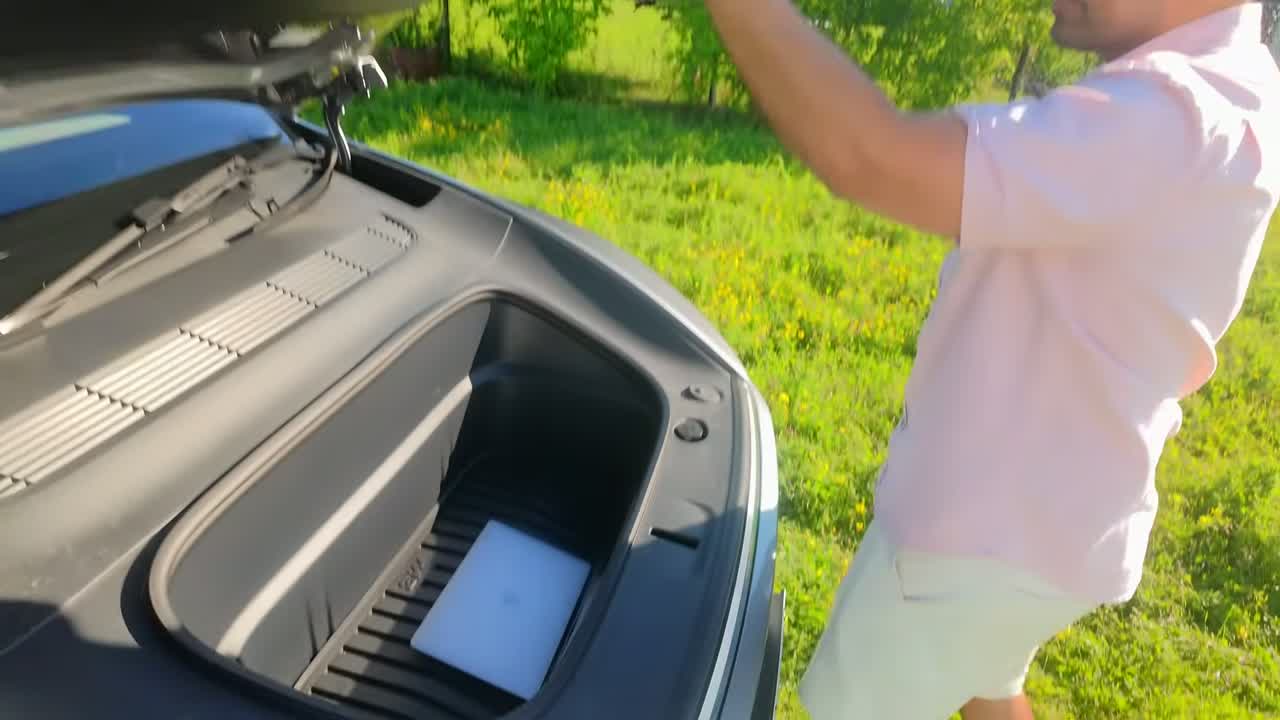
- Frunk: the Standard’s front trunk has no seals and no drain plug; the Premium’s is sealed and drainable.
- Exterior: the Standard deletes the full-width front light bar and rides on 18-inch aperture wheels (19-inch optional for $1,500).

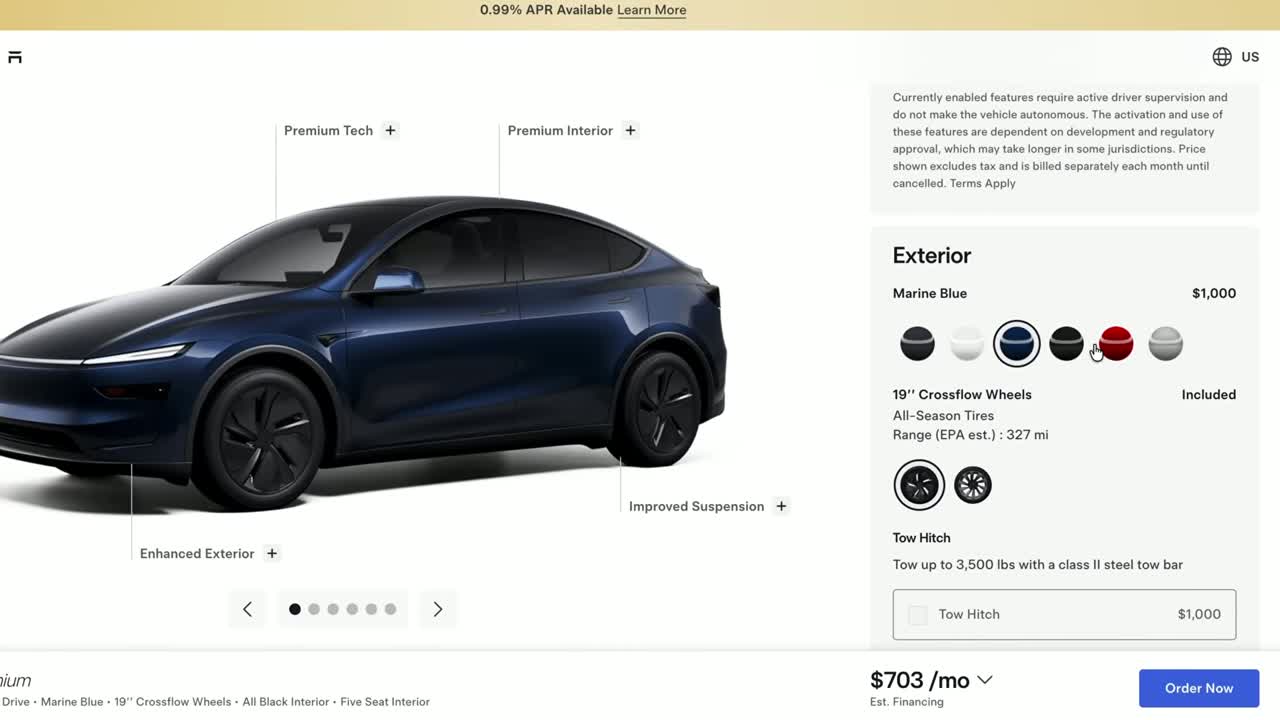
What stays the same matters too. Both trims share the 15.4-inch center touchscreen (sharper QHD panel with roughly 80% more pixels than the old car), a black headliner, the front bumper camera, HW4/AI4 self-driving hardware, and NACS/Supercharger access. Paint is where Tesla nickel-and-dimes everyone: Stealth Grey is free, Pearl White is $1,000, and Diamond Black is $1,500, while Premium unlocks pricier options up to $2,000.
A note on Autopilot — this trips up buyers
As of early 2026, Tesla removed Autosteer from the standard feature set on new cars across the board — you now get only traffic-aware cruise control unless you add Full Self-Driving (Supervised), which is $8,000 to buy or about $99/month to subscribe. This is not unique to the Standard trim, but budget buyers are the most likely to feel it. And remember the elephant in the room: the $7,500 federal EV tax credit expired on 2025-09-30, so every one of these prices is what you actually pay.
Price and value: which one actually makes sense?
Now the buyer’s-guide verdict, and it flips depending on which two cars you compare and where you live.
If you want the cheapest way into a Model Y, the $39,990 Standard RWD is a genuinely capable car — 321 miles, the same great screen and FSD hardware, and a ride that punches above its price. For a temperate-climate commuter who charges at home and doesn’t care about the glass roof or the stereo, it is the value pick of the entire lineup.
If you’re weighing Standard vs Premium in the US, the math is brutal for the Standard. A Premium RWD costs only about $6,000 more (roughly a 15% bump) yet adds 36 miles of range, the panoramic roof, double-pane glass, the 15-speaker system, ventilated seats, and every convenience feature. That $6,000 buys a lot of “nice.” As the reviewer put it, in the US it is “100% worth upgrading to the Premium.” The Standard AWD, meanwhile, is the odd one out: you pay $2,000 more than the Standard RWD and lose 27 miles of range for the second motor.
The Standard isn’t a cheaper Model Y so much as a stripped one — Tesla cut the features, not the badge, so the only real question is how much “premium” is worth to you in dollars.
Is the Model Y Standard’s range enough for a US road trip?
For daily driving, 321 miles is comfortably enough. For frequent long trips, the Premium RWD’s 357 miles (or the AWD’s 327) means fewer, shorter Supercharger stops — cold-weather highway range on the Standard can fall well below its EPA figure, so heavy road-trippers should lean Premium. If you mostly commute and charge at home, the Standard is more than adequate.
Related reading on EVCUBE
So which camp are you in — spend the extra $6,000 and jump to the Premium’s glass roof and 357-mile range, or pocket the cash, live with cloth seats, and call the Standard “enough”? Tell us where you land in the comments.
Sources