In 2018 I wired Tesla $8,000 for a promise. Eight years and two cars later, that promise still hasn’t shown up to drive me to work. The real cost of owning a Tesla isn’t the repairs everyone warns you about — it’s the depreciation curve, the running-cost savings that soften the blow, and one very expensive bet on software that remains, by Tesla’s own admission, a lease on the future rather than a purchase of the present.
The $8,000 receipt
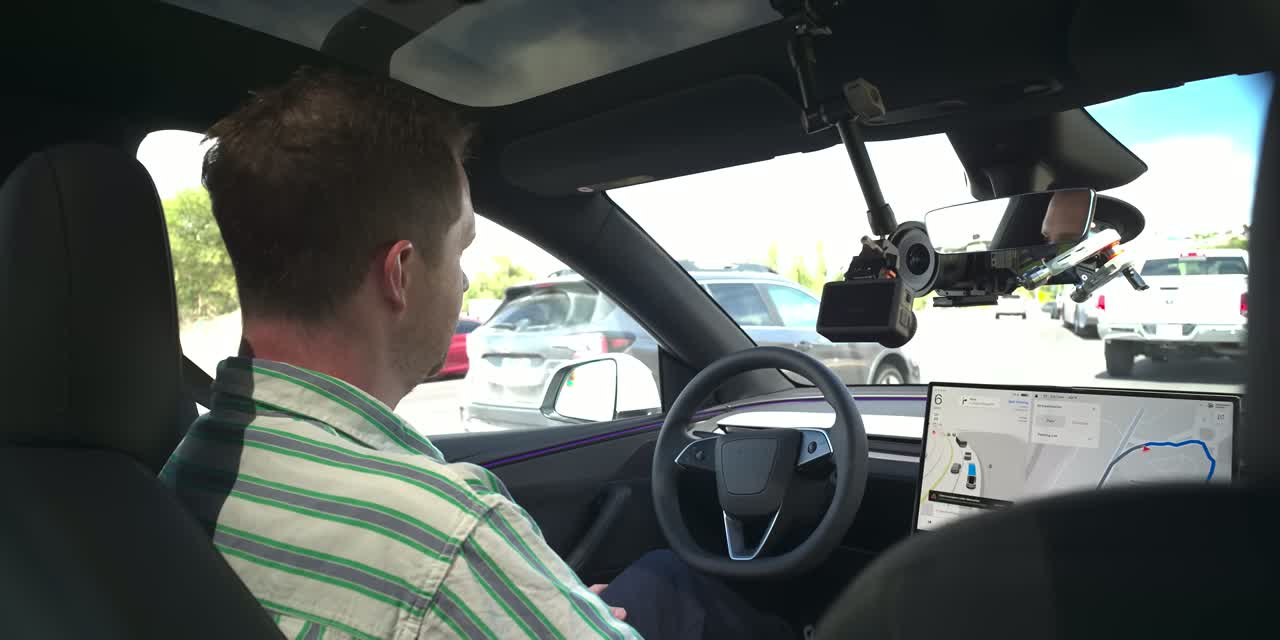
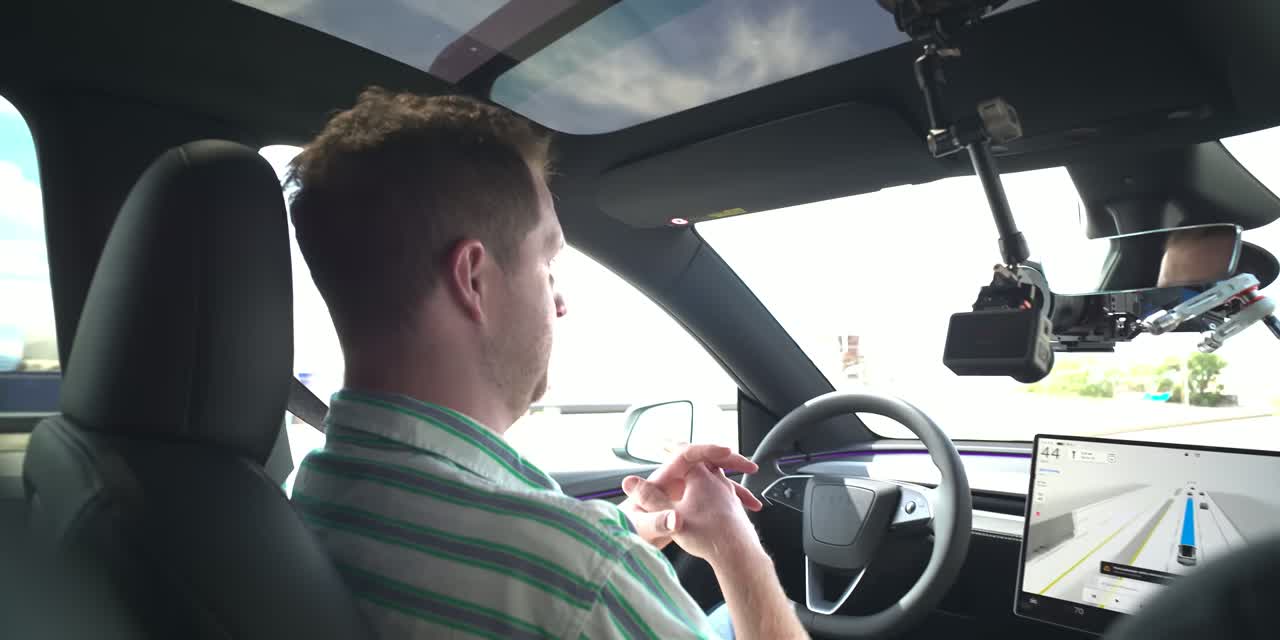
The owner at the center of this story took delivery of one of the first 2018 Model 3 Performance builds and checked every box on the order page: $5,000 for Enhanced Autopilot plus another $3,000 for “Full Self-Driving capability” — $8,000 pointed at features that did not yet exist. The pitch was familiar. By 2017 Elon Musk had already promised a car would drive itself from Los Angeles to New York within months. It didn’t. A hardware-3 retrofit promised by 2022 never arrived before the car was traded for a Model Y. On the next car, the owner skipped buying FSD outright and instead tried the subscription — and described that early build, FSD 10.2, as “very dangerous, very terrible.”
Here is the part the headlines miss: the car itself was good, the software genuinely improved, and by 2026 the same owner is praising FSD v14 as “a massive improvement” that “feels like a good driver.” The $8,000 question was never “is the car bad?” It was always “when do I get to stop watching the road?” — and eight years in, the answer is still: not yet, and maybe not in the hardware you already paid for.

What the depreciation math actually says
Depreciation is the single largest line item in the cost of owning almost any car, and Teslas sit on the wrong side of the average. According to iSeeCars’ analysis of more than 15 million vehicles, a new Tesla Model 3 loses 54.5% of its value after five years — about $20,213 walking out the door on a typical example. The Model Y fares a little worse at 57.8% ($26,020 lost). Compare that with the all-sedan average of 38.9% and the all-vehicle average of 41.5%, and the Tesla penalty is roughly 15 percentage points of extra value erased.
| Vehicle (5-yr view) | 5-yr depreciation | $ lost from MSRP | Value retained |
|---|
| Tesla Model 3 | 54.5% | $20,213 | 45.5% |
| Tesla Model Y | 57.8% | $26,020 | 42.2% |
| Average EV | 57.2% | $28,435 | 42.8% |
| Average gas sedan | 38.9% | — | 61.1% |
| Average vehicle | 41.5% | — | 58.5% |
Used Model 3 retained value at 5 years45.5%
And it keeps sliding. iSeeCars puts 7-year Model 3 depreciation at 64.3% and 10-year at 74.8%. An eight-year ownership horizon — the exact span of this story — lands squarely in the 65–70% loss band. That is the real ownership tax: not a repair bill, but the resale curve.
Cross-brand: Tesla vs a gas sedan vs its EV rivals
Stack the Model 3 against a mainstream gas sedan and the gap is the depreciation delta — about 15.6 points, or $8,000–$10,000 more value lost on a ~$45,000 car over five years. Against other EVs, Tesla actually holds up best: the average EV sheds 57.2%, and rivals like the Hyundai Ioniq 6 (~60.4%) and Polestar 2 (~60.6%) do worse. So Tesla is the least bad EV on resale even as it trails gas.
But running costs flip the story. Kelley Blue Book’s 5-year Cost-to-Own data names the Model 3 the most cost-effective luxury EV at $48,233 — $16,411 below the segment average. And the broader EV math is where Tesla owners win back ground: Consumer Reports data cited by the NRDC shows EV drivers spend roughly 60% less on fuel and about 50% less on maintenance than gas-car drivers, thanks to no oil changes, fewer fluids, and far fewer moving parts.
Run the headline number as a cost-per-mile and it stings in a different way: the $8,000 FSD bet spread over 100,000 miles is about $0.08 per mile — for software that is still “supervised” today. The car is cheap to run; the promise was expensive to pre-order.
Tesla share of the US EV market~45%
FSD competence vs. the average human (worst case), per the reviewer“better”
Cross-market: US vs Europe vs China
Ownership economics are not global. In the US, Tesla still commands more than 45% of EV sales and its Supercharger network underwrites used-car demand — a structural prop for resale that European and Chinese buyers don’t rely on to the same degree. The IEA’s Global EV Outlook shows the US, EU, and China pulling in three different directions on adoption, incentive design, and the competitive field: China’s far cheaper EV pricing and Europe’s denser manufacturer mix compress resale curves differently than the US Tesla-centric market. Maintenance norms diverge too — US owners lean on Tesla’s owned service and Supercharger network, while EU and Chinese markets have broader third-party EV repair ecosystems. The World Bank’s EV-readiness work frames how uneven charging and service infrastructure shifts the long-term cost burden onto owners in less-supported regions.
Cross-time: 2018 ownership vs 2026 ownership
The software arc is real and impressive. The first FSD the owner drove “tried to kill me multiple times” and racked up traffic violations; version 13 (driven a year ago) was “pretty good” but not confident; version 14 is “a massive improvement” that “feels like a good driver.” FSD v14’s network is reportedly about 10 times the size of the one tested a year earlier. So the product got dramatically better.

But the cost side shifted underneath owners. Tesla’s 2023 price cuts — Cox Automotive data cited by the NRDC shows the average EV transaction price fell about $14,300 in September 2023 versus the prior year — crushed used-Tesla values, and the early buyers ate that loss. Worse for 2018-era purchasers: in April 2025 Musk admitted that roughly 4 million Hardware-3 cars “simply do not have the capability to achieve unsupervised FSD.” Buyers who paid up to $15,000 for that promise are, on the record, capped by their own hardware.
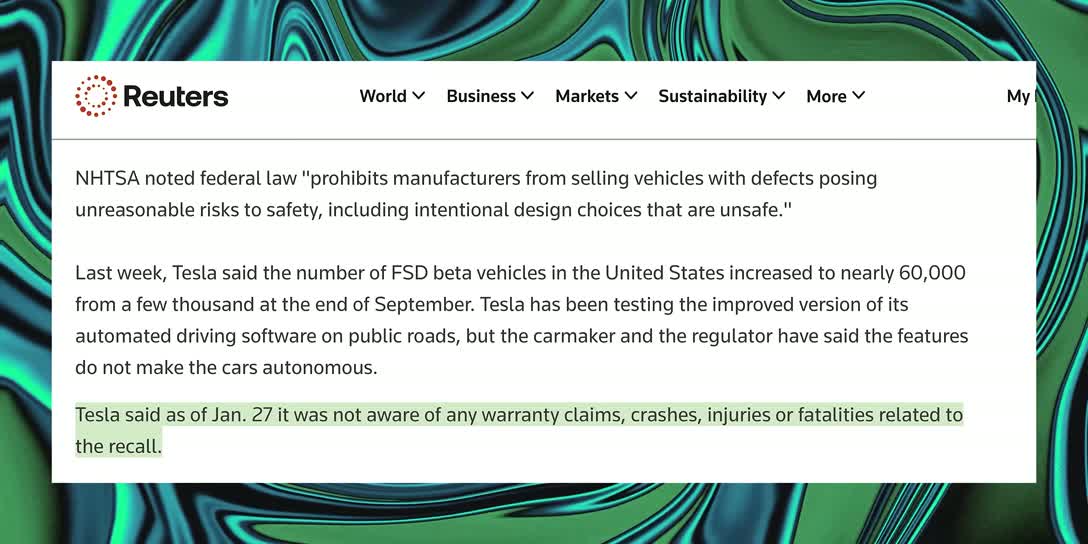
The final wall is liability, not regulation. A Miami jury found Tesla partially liable for a fatal Autopilot crash to the tune of a couple hundred million dollars, upheld in federal court in February 2026; the NHTSA has an open probe covering more than 3 million cars; and a 2022 recall deleted “rolling stop” behavior from nearly 54,000 vehicles. Exactly one automaker ever accepted eyes-off liability on a buyable US car — Mercedes, at 40 mph in two states — and it pulled the program in January 2025. The reason no one flips the “eyes-off” switch is the bill that arrives the moment the mistake becomes the manufacturer’s.
The real eight-year ownership verdict
Put the pieces together and the ownership math is two-sided. You lose more to depreciation than a gas-sedan buyer (about 54.5% / $20,000 over five years), but you claw much of it back in fuel (−60%) and maintenance (−50%) savings, and the Model 3’s total cost of ownership still beats its luxury-EV peers by $16,411 over five years. The trap isn’t the repair shop. It’s the $8,000 sunk into a supervised system whose unsupervised future may live on hardware you don’t own.
Tesla didn’t sell you a car that drives itself. It sold you a subscription to the idea of one — and billed the 2018 version in full.
For an eight-year owner who actually drives the car, the honest verdict is this: the cheapest part of owning a Tesla was the driving. The expensive part was waiting for the car to drive itself — and discovering the wait may outlast the hardware you paid to join it.
FAQ: the ownership questions buyers actually ask
Did the $8,000 FSD purchase ever pay off?
Not for unsupervised driving. FSD v14 is excellent but still requires a supervising driver, and Musk confirmed HW3 cars cannot reach unsupervised FSD. The $8,000 bought a very good supervised assistant, not the promised robotaxi.
How much does a Model 3 depreciate?
iSeeCars: 54.5% over five years (~$20,213 lost), 64.3% at seven years, and 74.8% at ten. An eight-year-old example sits near the 65–70% loss band.
Are Teslas expensive to repair?
Consumer Reports’ 2026 data ranks Tesla 9th overall in brand reliability (score 50), with the Model 3 and Model Y its most trouble-free EVs — though EVs in general still trail gas hybrids on reliability. Lower routine maintenance partly offsets repair risk.
Is it safe to take your hands off?
No. Every US Tesla FSD is “supervised.” The moment a maker tells you to stop watching, liability shifts to them — which is why only Mercedes tried, then pulled it in January 2025. The ~$200M Miami jury finding (Feb 2026) shows the cost of getting it wrong.
FSD outright or subscribe?
Given HW3’s ceiling and Tesla’s move toward AI5 hardware, a subscription is the rational hedge: you rent the supervised system without betting $8,000–$15,000 on hardware that may never deliver eyes-off.
Related reading on EVCUBE
Sources