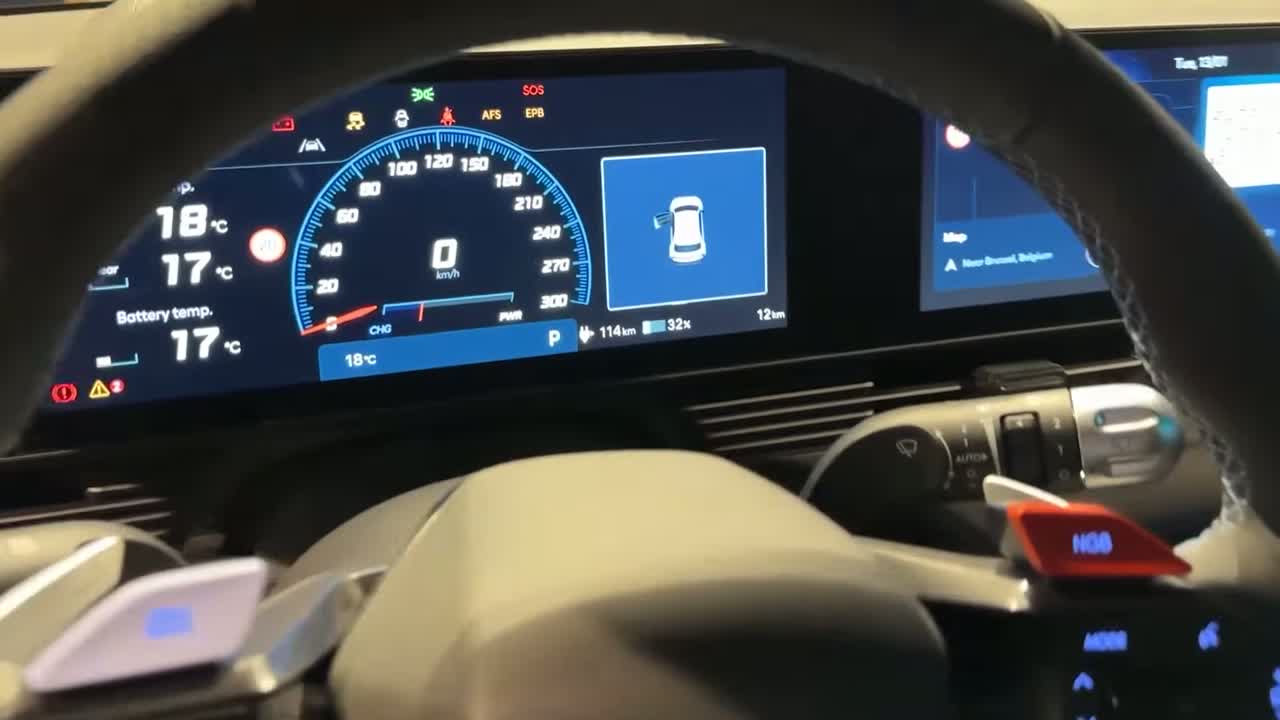
Tesla just spent a news cycle telling you the 2026 Model Y and Model 3 are “new.” But here is the uncomfortable truth most shoppers miss: the biggest 2026 changes are not the metal — they are the software, and that software is rolling out to the car you could buy today. So should you wait, or is waiting the most expensive mistake of the year? We broke down what genuinely changed, ran the US pricing, and cross-checked Tesla against its rivals and against its own past.
What Actually Changed for 2026
The 2026 Model Y and Model 3 are built on the “Juniper” and “Highland” platforms that Tesla introduced in 2025. The hardware that matters — the quieter cabin, the ventilated seats, the 8-inch rear screen, the sharper ride — is already on the cars Tesla ships today. On its own “Introducing New Model Y” page, Tesla quotes a 22% road-noise reduction, a 20% impact-noise reduction, and 5% more range on the same battery, plus wraparound ambient lighting and powered second-row recline. That is the real, lasting upgrade versus the pre-2025 cars.
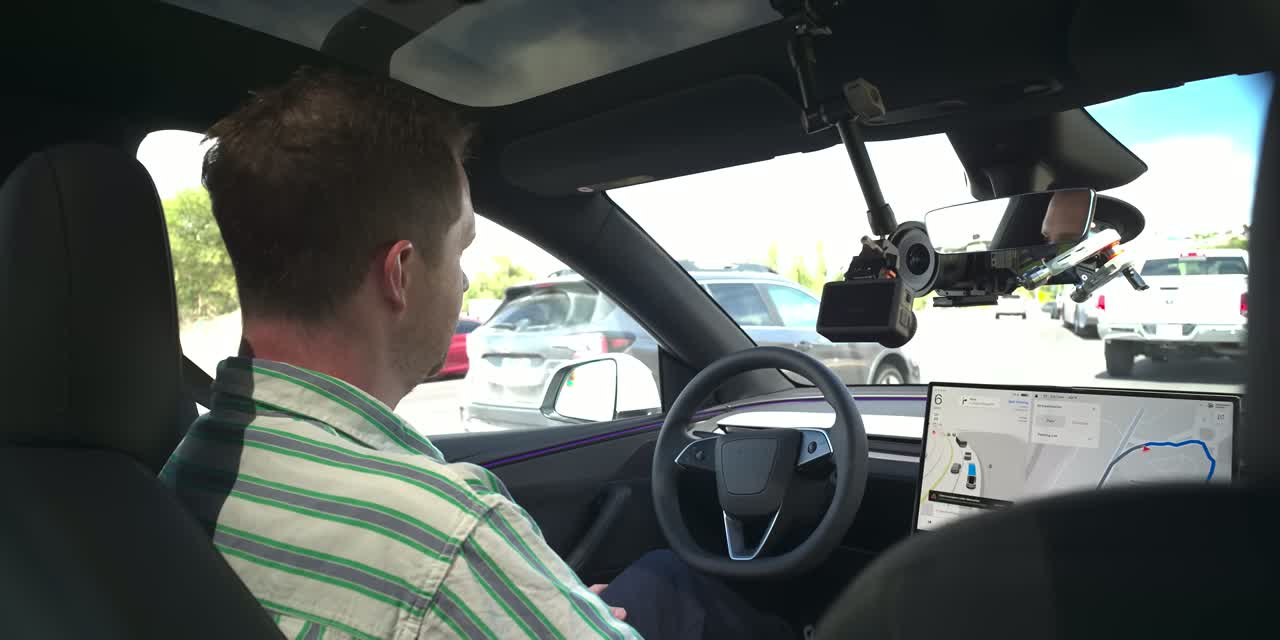
What is new for 2026 is mostly delivered over the air. The headline is FSD v14 “Lite”, which Electrek reports is now reaching roughly 4 million Hardware 3 cars (firmware 2026.20.5.1) — the first major self-driving update those owners have seen since early 2025. It brings the start-self-driving button, FSD streaks, a blue parking icon, destination messages, and saved parking spots. Critically, it remains a supervised, hands-on Level 2 system; on Tesla’s own Q1 2026 call, Elon Musk admitted HW3 “simply does not have the capability” for unsupervised driving.

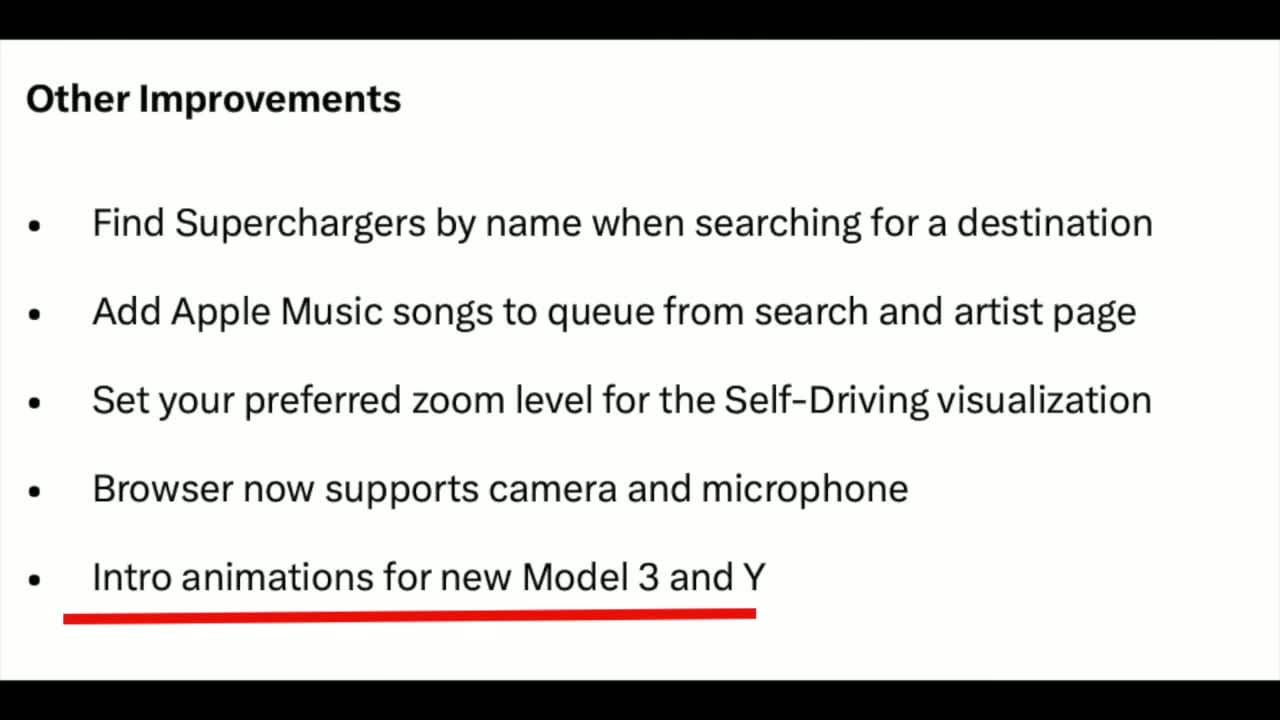
The 2026 “summer update” adds the rest of the story for Model 3 and Model Y owners: Grok voice control that can adjust the climate and even open the glove box, saved navigation preferences, frequent-trip recommendations, FSD streaks and stats viewable from the mobile app, a new entry animation, and arrival-energy set from your phone. None of that is locked to a future model year — it is coming to the cars on the lot.
The Pricing Math: Cross-Time and Cross-Brand
This is where the “wait” debate gets interesting. The Launch Series that anchored the Juniper rollout stickered at $59,990 with $8,000 of Full Self-Driving bundled in. Tesla then unbundled it: the Long Range AWD now starts at $48,990 — about $11,000 less for the identical car. Then on May 16, 2026, Tesla raised the Premium trims by $1,000, its first US price increase in two years. And the federal $7,500 tax credit died on September 30, 2025, so 2026 buyers pay full sticker.
Meanwhile, the new Standard trims genuinely widen the entry point: the Model Y Standard RWD at $39,990 and the Model 3 Standard at $36,990. Here is how the Tesla pair stacks up against the cross-shopped field in the US:
| Vehicle (2026, US) | Start price | EPA range | 0–60 mph | Why it matters |
|---|
| Tesla Model Y (Juniper) | $39,990 | 321–357 mi | 3.3–6.8s | Best-selling EV SUV in the US; #1 EV in Q1 2026 |
| Tesla Model 3 (Highland) | $36,990 | 272–341 mi | 2.9–5.8s | Cheapest Tesla; longest-range sedan in class |
| Hyundai IONIQ 5 | ~$42,500 | ~318 mi | ~4.3s | 800V charging; now on NACS |
| Toyota bZ | ~$35,000 | ~318 mi | ~6.0s | #3 US EV in Q1 2026 (10,029 sold) |
| Ford Mustang Mach-E | ~$36,495 | ~312 mi | ~5.5s | #7 US EV in Q1 2026 (4,600 sold) |
The cross-brand picture is the strongest “wait” argument that is not about Tesla at all. Rivals are cheaper at the entry and improving fast — Toyota’s bZ jumped to 10,029 units in Q1 2026 (a 79% year-over-year gain) according to Cox Automotive’s Kelley Blue Book, while the Mach-E and IONIQ 5 both out-rank the Model 3 on the Q1 sales list. If you do not need Tesla’s Supercharger network and software edge, the competition has never been better.
Further 2026 Tesla price-cut risk58%
That risk is not hypothetical. Delivery analysis from the rollout period shows Tesla built roughly 53,000 more Model 3 and Model Y units than it sold in Q1 2026, and global Q1 deliveries of about 358,000 came in below Wall Street estimates. Inventory overbuild is exactly the condition that produces the next price lever.
Cross-Market: You Are Not Paying the World’s Price
Americans are not getting the worst deal, but they are not getting the best one either. Tesla’s own regional order pages put the same Juniper Model Y at different starting points:
| Market | Model Y start (approx.) | USD equivalent |
|---|
| United States | $39,990 (Standard RWD) | $39,990 |
| China | ~¥263,500 (RWD) | ~$36,500 |
| Germany / Europe | ~€44,990 | ~$48,500 |
So US buyers pay more than Chinese customers but less than Europeans — and the gap is wide enough that anyone tempted to “wait for the US price to drop” has historical company. Conversions shift with exchange rates, but the ordering is stable: China is cheapest, the US is in the middle, Europe is most expensive.
The “No Going Back” Reality Check
The emotional core of the buy-now case comes from owners, not spec sheets. A survey of EV owners cited in the source coverage found that only 0.5% would consider returning to gas, that 96% of Tesla owners who bought in 2020 or earlier would consider another Tesla, and that 90% of all EV owners would buy another electric vehicle (with 5.5% drifting to a plug-in hybrid). That is the quiet force behind Tesla’s 54.2% US EV market share in Q1 2026 — up from 43.2% a year earlier, per Cox Automotive.
The 2026 Model Y and Model 3 are not new cars. They are last year’s great cars, finally finished in software — and that finish is coming to the one you can buy this afternoon.
One sobering caveat from the same coverage: in a widely reported Texas crash, the National Transportation Safety Board confirmed the driver manually overrode Full Self-Driving and pressed the pedal 100% of the way down. FSD — even v14 — is still a co-pilot, not a chauffeur.
Buy Now, or Wait? The Verdict
Here is the honest split. Buy now if you want the Juniper/Highland hardware at the new lower Standard pricing and you accept that the “2026 features” are mostly OTA updates that reach you anyway. The car itself is not about to be superseded by a fundamentally different 2026 model. Wait if your real bet is on price: Tesla’s inventory overbuild and the end of federal incentives make another cut plausible, and robotaxi expansion plus FSD maturity could improve the ownership case later in 2026. Our read — the wait thesis is weak for the car, real for the cheque.
Buy-now confidence72%
Wait-for-lower-price case55%
Frequently Asked Questions
Does the 2026 Model Y have different hardware than the 2025 Juniper?
Largely no. The headline hardware — acoustic glass, ventilated seats, 8-inch rear screen, retuned suspension, the cross-car light bars — is the 2025 Juniper refresh carried into 2026. The 2026-specific moves are the cheaper Standard trim, the unbundled Long Range pricing, and OTA software (FSD v14 Lite, the summer update).
Is Full Self-Driving worth buying in 2026?
Tesla no longer sells FSD as a one-time purchase on new cars in 2026; it is subscription-only at about $99/month. Given v14 Lite remains a supervised Level 2 system on Hardware 3, most buyers are better off subscribing month-to-month than committing upfront.
Should I wait for a Tesla price drop?
It is plausible. Tesla built roughly 53,000 more Model 3/Y than it sold in Q1 2026 and the federal credit is gone, which historically pressures pricing. But the new Standard trims already represent the lowest Tesla entry in years, so the downside you are waiting on may be modest.
What happened to the $7,500 federal EV tax credit?
It expired permanently on September 30, 2025. 2026 Tesla buyers pay full sticker, which is why state and utility incentives now matter more than ever — check Colorado, New York, California, and New Jersey before assuming the window price is final.
Related reading on EVCUBE
Sources
Independent analysis; every figure above is anchored to a named, public reference: