Tesla calls FSD 14.3.6 its smoothest supervised-driving release yet — and after watching it pilot an entire Massachusetts city, the most revealing moments weren’t the smooth ones. They were the two or three seconds when it wasn’t.
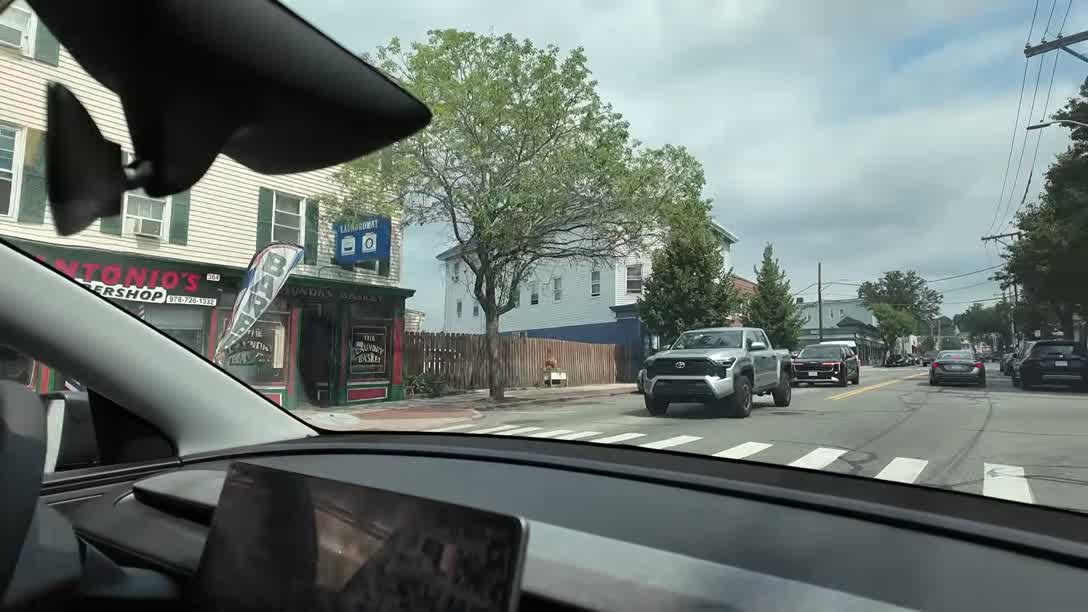
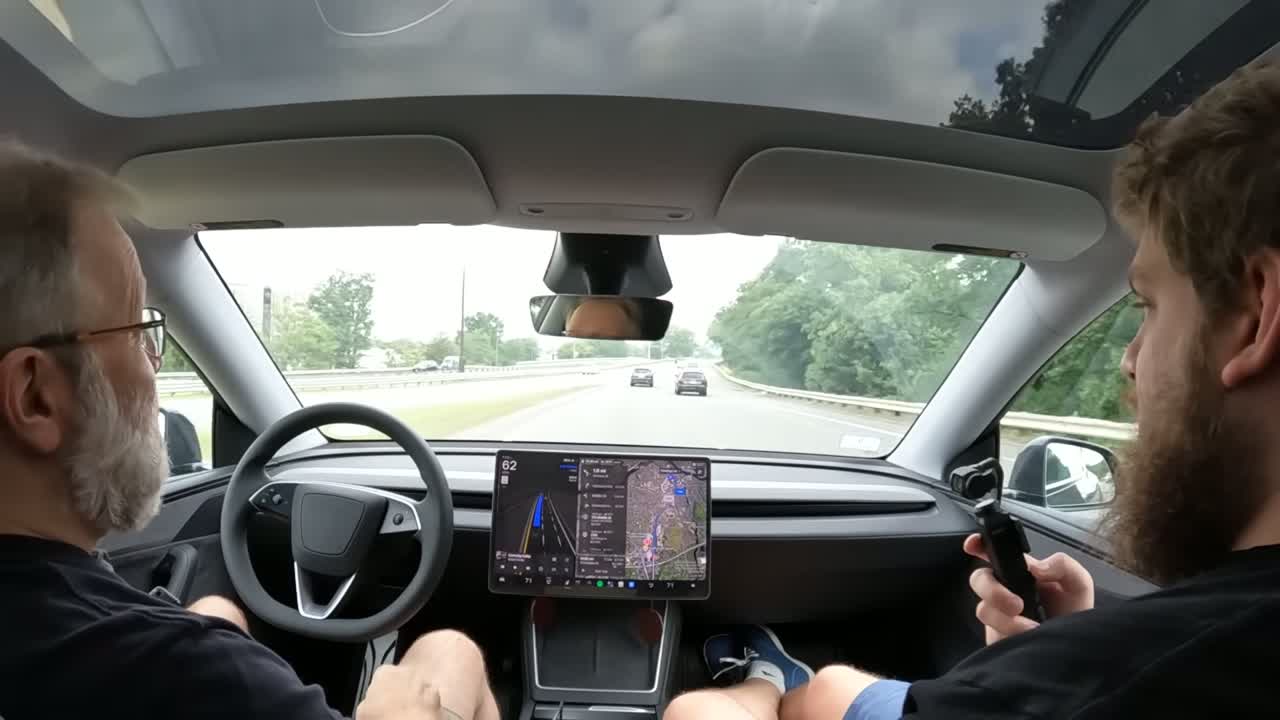
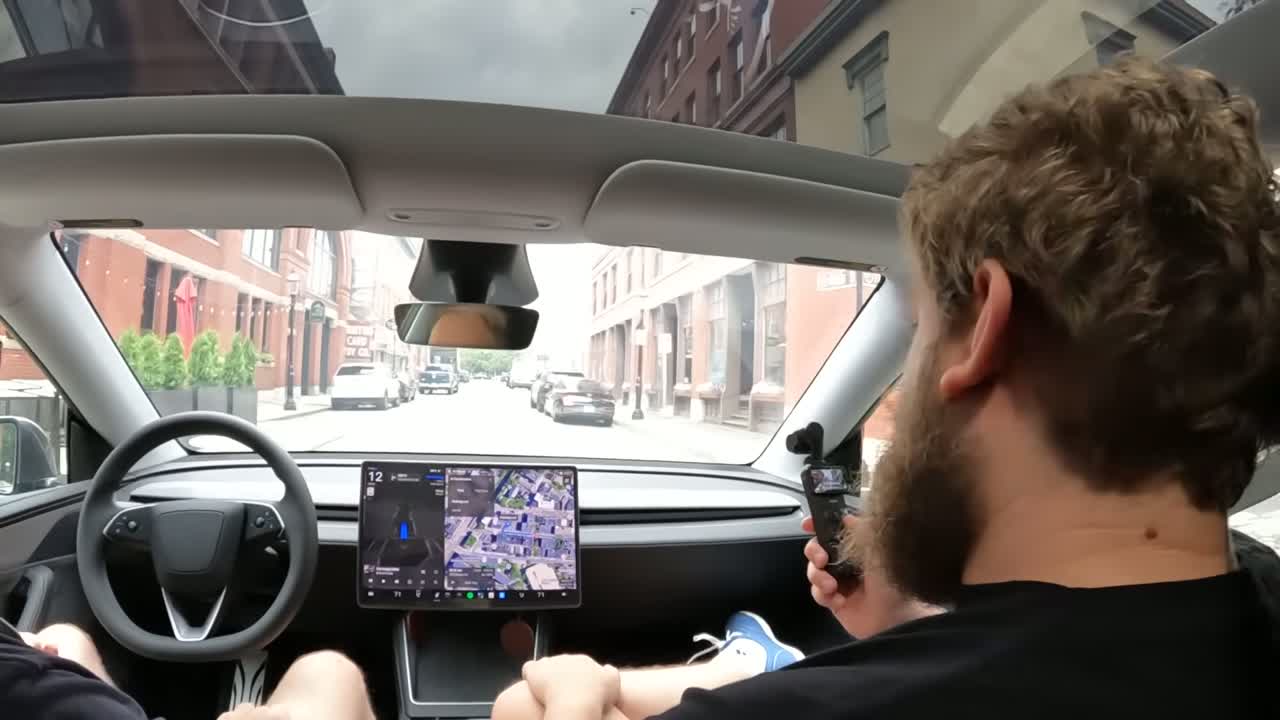
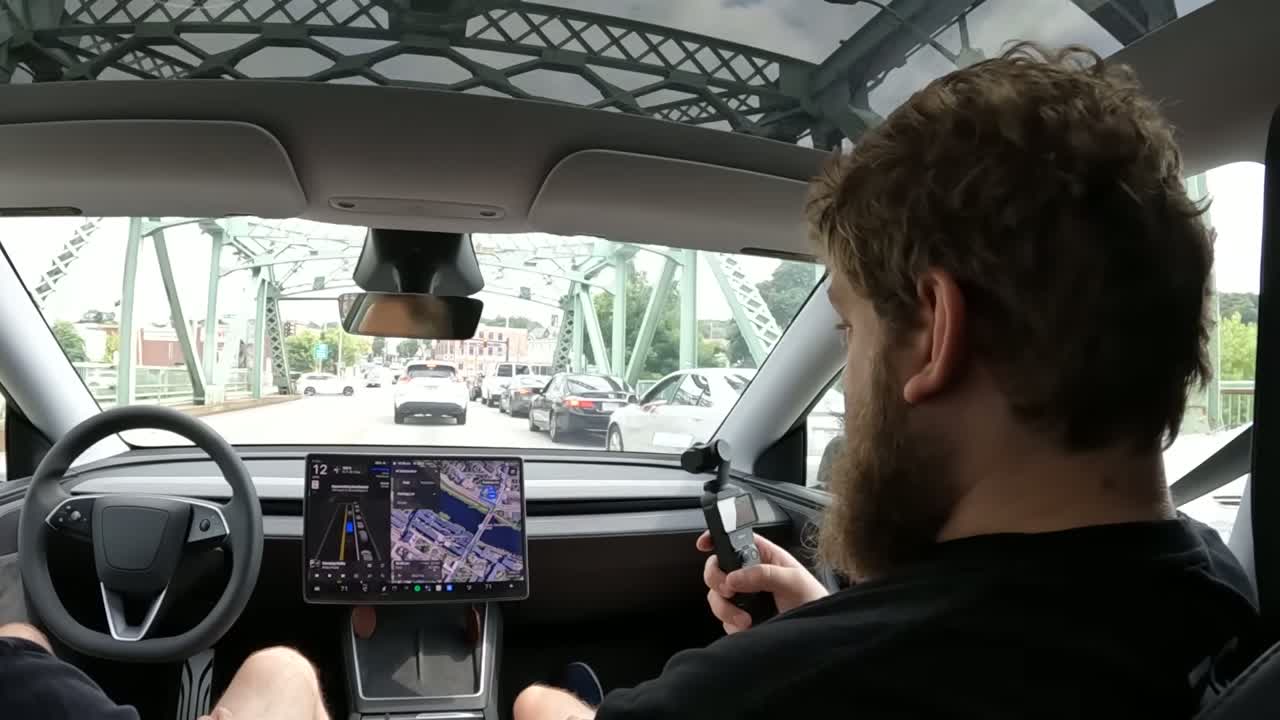
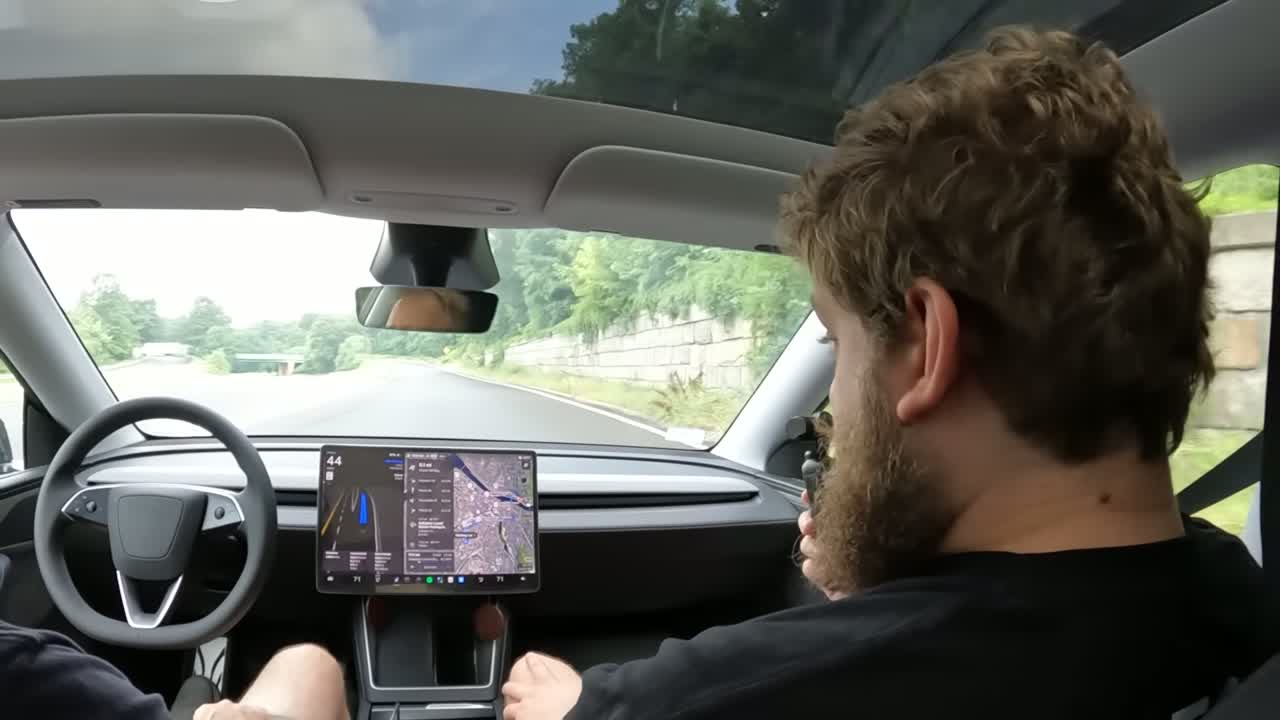
In the latest episode of Tesla Time News, hosts Zach and Jesse of the Now You Know channel ran Tesla’s newest Full Self-Driving build, FSD (Supervised) 14.3.6, over the exact route they’d previously used to test a Cybertruck and a 2018 Model 3 on “FSD light.” Their verdict was blunt: this is “the best version so far,” “close to perfect, and the most perfect version yet.” That’s a genuine, useful data point from experienced testers — but it’s one supervised drive, graded by feel. Below we separate what is verified about the v14 line from what is the video’s opinion, and set both against the hard numbers from NHTSA and from Tesla’s autonomy rivals.

What FSD 14.3.6 Actually Is (and Isn’t)
First, the label. Tesla’s own name for the product is FSD (Supervised), and NHTSA classifies it as an SAE Level 2 partial-automation system — the driver is legally responsible at all times, hands ready and eyes on the road. It is not a robotaxi, and 14.3.6 does not change that. The car costs $99/month or $8,000 one-time on top of the vehicle, per NBC News.
What is verified is the foundation this point-release sits on. FSD v14 shipped on October 7, 2025 — Tesla’s first major FSD update in roughly a year — folding in lessons from its Austin robotaxi program. Per Electrek’s published release notes, v14 added:
- Arrival Options — you pick where the car parks: Parking Lot, Street, Driveway, Parking Garage, or Curbside.
- Emergency-vehicle handling — pull over or yield for police cars, fire trucks, and ambulances.
- Navigation folded into the vision neural net for real-time blocked-road and detour handling.
- Better unprotected turns, lane changes, cut-in responses, and school-bus behavior.
The 14.3.x builds are later refinements on that base. Tesla did not publish standalone “14.3.6” notes, so anything specific to this exact build — the behavior in the video — is best treated as field observation, not spec sheet. That distinction matters, and we’ll hold to it.
What Improved: Highway, Interventions, and Smoothness
The single biggest theme across the drive was the disappearance of the annoyances that plagued earlier v14 builds. The testers explicitly said recent months had introduced “more phantom braking” and “more steering-wheel twitching,” and that 14.3.6 was “really smooth” by comparison. This tracks with the documented arc of the v14 line: the v14.1.4 update (late October 2025) was specifically aimed at abrupt braking, and v14.2 (November 21, 2025) upgraded the vision encoder for fewer hesitations and brake taps.
Concrete, observable improvements in the test:
- Blinker awareness: the car changed lanes to give room to a vehicle that had its turn signal on — behavior the hosts said they hadn’t seen before.
- Context-aware speed: on a rough cobblestone street it drove 17 mph despite reading a 30 mph limit — the same slow-down two other Tesla vehicles made on that street, hinting at fleet-learned behavior.
- Parking maturity: it backed cleanly into a lot space and exited with a tidy three-point turn — no “unlimited reverse” shuffle, and no straddling two spaces like the Cybertruck had done earlier.
- Hard scenarios handled: two-lanes-merging-to-one after a full highway stop, a legal right-on-red arrow (Massachusetts), double-parked cars, construction, and an officer directing traffic.
The best FSD update isn’t the one that dazzles you — it’s the one that bores you. As the hosts put it, they now want the videos to be unwatchably dull. On the highway and in dense city merges, 14.3.6 mostly gets there.
The engagement mode throughout was the aggressive “Hurry” profile. For scale on how assertive v14’s speed profiles can be: in earlier testing, the top “HURRY” profile was clocked at 79–81 mph on a 65 mph highway. Smoothness and assertiveness are not the same thing — and that’s where the edge cases come in.
Where It Still Disengages: The Edge Cases
Here’s the honest part the “close to perfect” headline can bury. Even in a drive the hosts graded an “A,” 14.3.6 produced a cluster of small interventions and one real letdown:
- A brake stab when it detected an ambulance (arguably correct, if abrupt).
- A “little jerk” of the wheel while reversing — “not quite a twitch,” but there.
- Several tiny brake stabs at intersections.
- One hard, unexplained brake — “Why didn’t it just stop?” — that dropped the grade from A+ to A. “Ruined it,” one host joked.
None of those required a safety takeover, but every one is a reminder that this is Level 2: a system that is excellent 99% of the time still asks you to be ready for the other 1%. The video’s own emotional arc — hope, then a run of A+ moments, then that one brake that “ruined it” — is exactly the experience regulators are now scrutinizing at fleet scale.
How It Compares: Waymo, Super Cruise, and BlueCruise
Comparing FSD to “competitors” is tricky because they’re not the same product. FSD is Level 2 but goes almost anywhere. Waymo is driverless (Level 4) but geofenced. Super Cruise and BlueCruise are hands-free but only on mapped divided highways. Scope is the whole story:
| System | Autonomy level | Where it works | Scale (verified) | Driver role |
|---|
| Tesla FSD (Supervised) 14.x | Level 2 | City + highway, nearly all roads | 10B+ cumulative supervised miles | Hands ready, eyes on, fully responsible |
| Waymo Driver | Level 4 | Geofenced in 4–5 metros; limited freeway | 170.7M rider-only miles (thru Dec 2025) | No driver |
| GM Super Cruise | Level 2 | ~750,000 mi of mapped divided highways | 1B cumulative hands-free miles | Hands off, eyes on |
| Ford BlueCruise | Level 2 | ~130,000 mi of “Blue Zone” highways | 264M hands-free miles in 2025 (+88% YoY) | Hands off, eyes on |
| Mercedes DRIVE PILOT | Level 3 | Specific CA/NV highways, heavy traffic <40 mph | Limited certified corridors | Hands off, eyes off (conditional) |
On measured safety outcomes, Waymo is the only operator publishing peer-review-grade numbers. Through 170.7 million rider-only miles (December 2025), against human benchmarks in the same cities, Waymo reports:
Fewer injury-causing crashes
82%
Fewer serious-injury or worse crashes
90%
Fewer pedestrian crashes with injuries
92%
But note the asterisk Waymo itself flags: those gains are inside geofenced urban corridors that exclude freeways for much of the period and exclude severe weather — the comparison is to humans in those specific streets, not everywhere. Waymo is also not immune to edge cases: in Austin, it issued a voluntary recall after its cars illegally passed stopped school buses at least 20 times.
Super Cruise and BlueCruise, meanwhile, buy their polish by shrinking the problem. GM’s system runs only on ~750,000 miles of pre-mapped divided highway (with 40% of triers converting to paid subscriptions), and Ford’s on ~130,000 miles of “Blue Zones.” Both keep your eyes on the road. Tesla’s trade is the opposite: no geofence, but you stay legally in the loop. What 14.3.6 is really chasing is Waymo-like smoothness while keeping FSD’s go-anywhere scope — and this build is the closest it has felt, according to the testers.
The Regulatory Cloud: What NHTSA Is Investigating
The context the video doesn’t dwell on: FSD is under active federal investigation. On October 7, 2025 — the same day v14 shipped — NHTSA’s Office of Defects Investigation opened Preliminary Evaluation PE25012 covering an estimated 2,882,566 (~2.9 million) Tesla vehicles equipped with FSD.
The verified numbers from the ODI resume:
- 58 total reports reviewed, involving 14 crashes and 23 injuries (zero fatalities to date).
- 18 complaints + 1 media report of a Tesla on FSD failing to stay stopped at a red light.
- 6 Standing General Order crash reports at red lights, 4 of them with injuries — with repeat incidents at a single intersection in Joppa, Maryland.
- The probe also covers wrong-way lane changes and railroad-crossing behavior.
A Preliminary Evaluation is the first rung; it can end in no action or escalate to a recall. It follows an October 2024 investigation into ~2.4 million FSD-equipped Teslas over low-visibility crashes. For balance, Tesla’s own Q2 2025 safety report claims one crash per 6.69 million miles with Autopilot/FSD engaged versus one per 963,000 miles without — figures that are self-reported and not independently audited. Tesla’s EMEA division has separately claimed supervised FSD is “5.2 times safer than manual driving” across 65 million km in five EU countries; that too is a company claim, not a regulator’s finding.
Is FSD 14.3.6 self-driving? Can I take my hands off and stop paying attention?
No. FSD (Supervised) is an SAE Level 2 system. NHTSA and Tesla both state the driver is fully responsible at all times, must keep hands ready and eyes on the road, and must be prepared to intervene instantly. 14.3.6 improves smoothness, but it does not raise the autonomy level or remove the driver’s legal responsibility. That’s the difference between Tesla’s Level 2 FSD and Waymo’s Level 4 driverless service.
So where does that leave 14.3.6? Verifiably, it’s the newest point release on a v14 platform built for smoothness, emergency-vehicle handling, and precise parking — riding on a fleet that has logged over 10 billion supervised miles, while its maker fields a federal probe into red-light behavior. Experientially, per two seasoned testers, it’s the best-driving FSD yet, with a handful of brake stabs still standing between “great” and “boringly perfect.” Would a car that drives boringly well 99% of the time earn your trust — or does that one hard brake per drive still keep your foot hovering over the pedal? Tell us where your line is.
Related reading on EVCUBE
Sources