Can a single battery redesign the electric car? For the better part of a decade, Toyota’s solid-state battery has been the automotive industry’s favorite “almost.” The promise is seductive: double the range, a ten-minute charge, and no flammable liquid inside. But in 2026 the more interesting question isn’t what the battery could do — it’s whether Toyota can actually build it. Here’s what’s real, what’s rumored, and what it means for you as a US buyer.

What a solid-state battery actually is
Strip away the hype and a solid-state battery does the same job as the lithium-ion pack in your phone or your EV: it stores electricity and releases it to a motor on demand. The change is tiny on paper and enormous in practice. Today’s cells use a liquid or gel electrolyte — a flammable, temperature-sensitive soup that ferries lithium ions between the cathode and anode. Solid-state swaps that liquid for a solid electrolyte, typically a ceramic, glass, or sulfide material.
That one substitution changes almost everything downstream. Because the solid layer is non-flammable and more thermally stable, you can theoretically drop the heavy cooling hardware and the fortress-like battery enclosure. Because solids can be packed more densely, you can fit more energy into the same space. The catch — and it’s a big one — is that a solid electrolyte has to be laid down in layers thinner than a human hair, perfectly defect-free, and bonded tightly to electrodes that swell and shrink every time the cell charges. Miss by a microscopic margin and you get an internal short.
“A solid battery isn’t a magic switch. It’s a decade of unglamorous manufacturing problems dressed up as a breakthrough.”
The numbers Toyota and rivals are throwing around
Energy density is the metric that matters most, because it decides how far you go per pound of battery. Current lithium-ion packs sit around 250–300 Wh/kg. Every solid-state target worth quoting lands at 400–500 Wh/kg — roughly double. Toyota’s own public targets, repeated in its global newsroom, point to a driving range near 1,200 km (about 745 miles) and a 10-minute charge from 10% to 80% on its first-generation cells, with a claimed 15-year lifespan.
Those are claims, not deliveries. The most sober read in 2026 came from the top of the battery world. Robin Zeng, chairman of CATL — the company that controls roughly 40% of the global EV battery market — told the World Economic Forum the technology is only at “level four of nine,” with true mass production no earlier than 2030. His own pilot cells hit 500 Wh/kg, and CATL still plans only a 5 GWh small-scale line by 2027. Translation: the chemistry works in the lab; the factory is the bottleneck.
Lab performance (confirmed)
85%
Mass-production readiness 2026
30%
US showroom availability this year
10%
Toyota’s real 2026–2027 timeline
Toyota is not bluffing, but it is moving on a longer clock than the headlines suggest. The company has spent years on this chemistry and, by multiple industry accounts, holds more solid-state patents than any other automaker. In June 2023, Toyota’s Technical Workshop laid out a plan to commercialize all-solid-state batteries in 2027–2028. A development line at its Teiho plant is already practicing the hard part: stacking anode, cathode, and solid-electrolyte layers at high speed without damaging the materials.
In October 2025, Toyota’s global newsroom confirmed a joint development agreement with Sumitomo Metal Mining to mass-produce a “highly durable cathode material” — aimed squarely at solving the degradation that has haunted solid-state cells through repeated charge cycles. Toyota reaffirmed the 2027–2028 launch window for BEVs with all-solid-state batteries, and in Japan the Ministry of Economy, Trade and Industry has approved the production plan. What you will not see in 2026 is a solid-state Toyota at a US dealership. Early output is expected to be measured in the hundreds of tons of material — tens of thousands of vehicles at best, reserved for flagship Lexus models first.
Cross-brand reality check: who’s actually close?
Solid-state is no longer a Toyota solo act. Here is how the field stacks up, using each player’s own stated targets and the most recent public data:
| Player | Approach | Stated target | Timeline | 2026 reality |
|---|
| Toyota (Japan) | Sulfide solid electrolyte + durable cathode | ~745 mi range, 10-min charge, 400–500 Wh/kg | 2027–2028 launch | Pilot line running; flagship-first, low volume |
| QuantumScape (USA / VW) | Ceramic garnet separator, anode-free Li-metal | QSE-5 cell: 844 Wh/L, 95%+ retention after 1,000 cycles | 2026–2028 | Shipping B1 samples; Eagle Line pilot in San Jose |
| Samsung SDI (Korea) | Oxide/polymer hybrid | ~900 km range cells | Semi-solid 2026, full SSB late 2027 | Supplying BMW with semi-solid cells |
| CATL (China) | Sulfide solid electrolyte | 500 Wh/kg pilot cells, 5 GWh by 2027 | Small scale 2027, mass 2030 | Chairman: “level 4 of 9,” 3–5× cost premium |
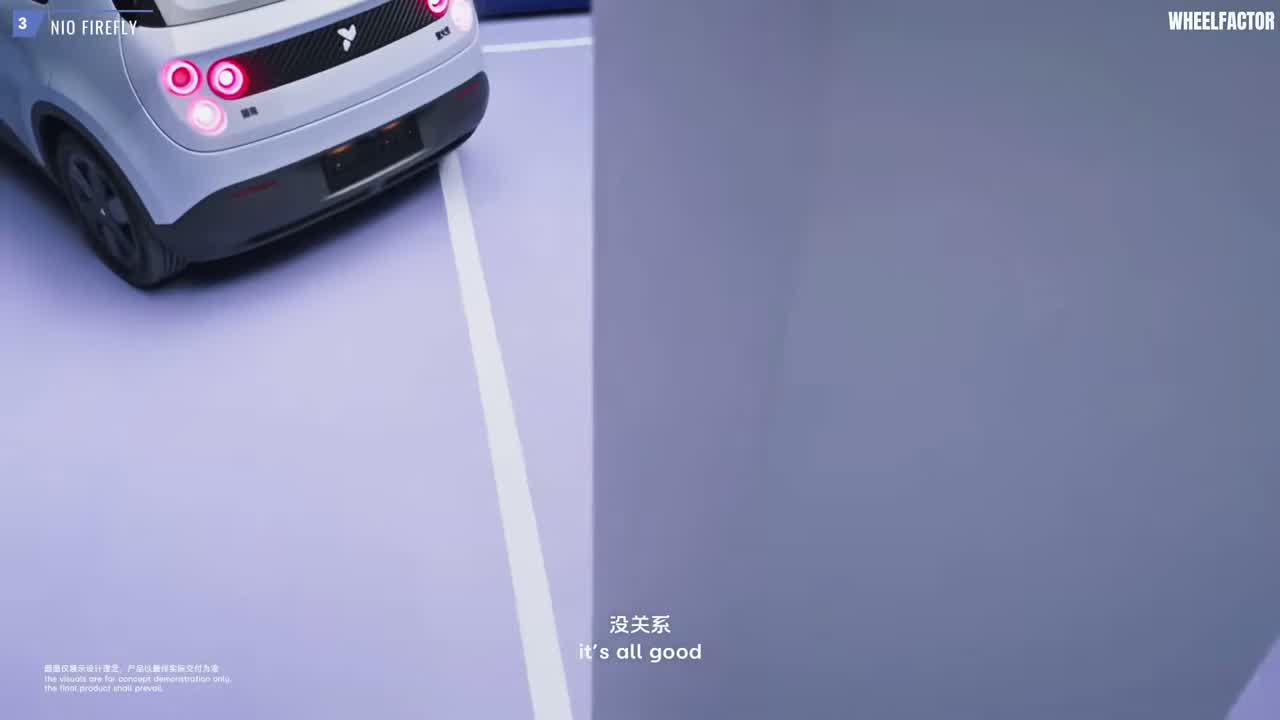
| Chinese semi-solid (Nio, SAIC) | Mixed liquid-solid (not true solid-state) | 130–150 kWh packs | Shipping now | SAIC MG4 passed 100,000 units in 8 months |
Notice the split. The West and Japan are racing the all-solid finish line for 2027–2028, while China is quietly shipping semi-solid packs today. CATL’s chief is right about one thing: a “solid-state” car you can buy in China right now is almost always semi-solid — a genuinely different, milder technology that still contains liquid.
Cross-market and cross-time: why this keeps slipping
The solid-state story is a lesson in how innovation travels. In Japan, the incumbent (Toyota) plus oil-refiner Idemitsu Kosan controls much of the sulfide-electrolyte supply chain and the patent estate. In China, a state-coordinated consortium (CASIP) bundles CATL, BYD, Gotion, and others toward a 2030 supply chain. In Korea, Samsung SDI and SK On feed both BMW and Hyundai. Different strategies, same wall: scaling from a handful of perfect cells to gigawatt-hours of flawless ones.
Zoom out in time and the pattern repeats. The 2010s gave us breathless lab promises. 2023 brought Toyota’s formal workshop roadmap. 2026 brings pilot lines and cathode-supply deals. 2027–2028 is the window Toyota, QuantumScape’s VW program, and Samsung all point to. And 2030 is where CATL plants its mass-production flag. Every previous “arrival year” has slipped — so treat 2027–2028 as a best-case, flagship-only debut, not a mainstream moment.
What this means for US buyers
Here is the honest bottom line. If you are shopping for an EV in the US in 2026, a Toyota solid-state battery will not be an option — not in a RAV4, not in a bZ, not even in most Lexuses. What you will get soon is Toyota’s “bridge” technology: improved performance lithium-ion (and bipolar packs) that already target ~500 miles WLTP and 20-minute 10–80% charging at a lower cost than today’s bZ4X pack.
So should you wait? For most US households, no. Current lithium-ion is excellent, rapidly cheaper, and backed by a fast-growing charging network — IEA data shows electric cars are now roughly one in five new cars sold globally, and the mature supply chain is exactly why prices keep falling. Solid-state is worth waiting for only if you specifically want a flagship Lexus around 2028 and can pay the early-adopter premium, which analysts peg at 3–5× the per-kWh cost of today’s cells.
“Toyota didn’t invent the future in 2026. It started a pilot line — and that’s the part that actually counts.”
Frequently asked questions
Is Toyota’s solid-state battery available in the US in 2026?
No. Toyota targets a 2027–2028 launch for BEVs with all-solid-state batteries, and early production is expected to be low-volume and flagship-first (Lexus). US mainstream availability is unlikely before the late 2020s at the earliest.
How much better is solid-state than today’s lithium-ion?
On paper, about 2× the energy density (400–500 Wh/kg vs 250–300 Wh/kg), a ~10-minute 10–80% charge, and a claimed 15-year life. The gap between those lab numbers and mass-produced, affordable cells is the entire challenge.
Are “solid-state” cars already on sale in China real solid-state?
Most are semi-solid — a mixed liquid-solid chemistry, not true all-solid-state. SAIC’s MG4 became the first mass-produced semi-solid EV and crossed 100,000 units in eight months, but that is a different, less disruptive technology than what Toyota and CATL are developing.
Why is mass production so hard?
The solid electrolyte must be deposited in ultra-thin, essentially defect-free layers and bonded tightly to electrodes that change volume while charging. A single microscopic pinhole creates an internal short. Scaling that from a lab cell to gigawatt-hour volume — at acceptable yield and cost — is unsolved industry-wide.
Related reading on EVCUBE
So here’s the question we’ll leave you with: would you wait two more years for a solid-state Toyota flagship, or buy a current EV and let the tech mature? Tell us in the comments — and if this breakdown helped, pass it along to the next person hyping the “1,000-mile battery.”