A decade ago, Tony Seba predicted the exact year electric cars would become cheaper to build than gas cars. He was right. Now RethinkX says the real disruption lands in 2027 — and it changes what you should drive, buy, and invest in.
The Electric Viking’s Sam Evans is not alone in thinking Tony Seba and his RethinkX team have been the most accurate forecasters of the clean-energy and EV disruption of the past ten years. Mainstream analysts were drawing flat lines for solar and EV adoption while Seba was pointing to the S-curve. The part most people missed this year: over the first half of 2026, RethinkX pushed its predictions to an entirely new level — and the numbers behind them are worth a hard look.
Why Seba’s track record deserves a second look
Before you dismiss the 2027 call as hype, consider how wrong the skeptics have been. In his 2014 book Clean Disruption, Seba published an estimate for the inflation-adjusted cost of a 200-mile-range EV. RethinkX later checked it against the cheapest real-world model — the 2023 Chevrolet Bolt — and found a difference of just $125, or less than 1%. The man called the price of a car a decade out to within a rounding error.
He did the same on batteries. In 2014 he wrote that industry lithium-ion pack prices would reach $100/kWh by 2028; by November 2023 the volume-weighted global average had already hit $139/kWh, with CATL and BYD signaling they would halve that in 2024. The curve is bending faster than the consensus, exactly as the framework predicted. That is the pattern behind this article’s headline: the future of EVs is not what the cautious forecasters think.

The 2027 sodium-ion tipping point
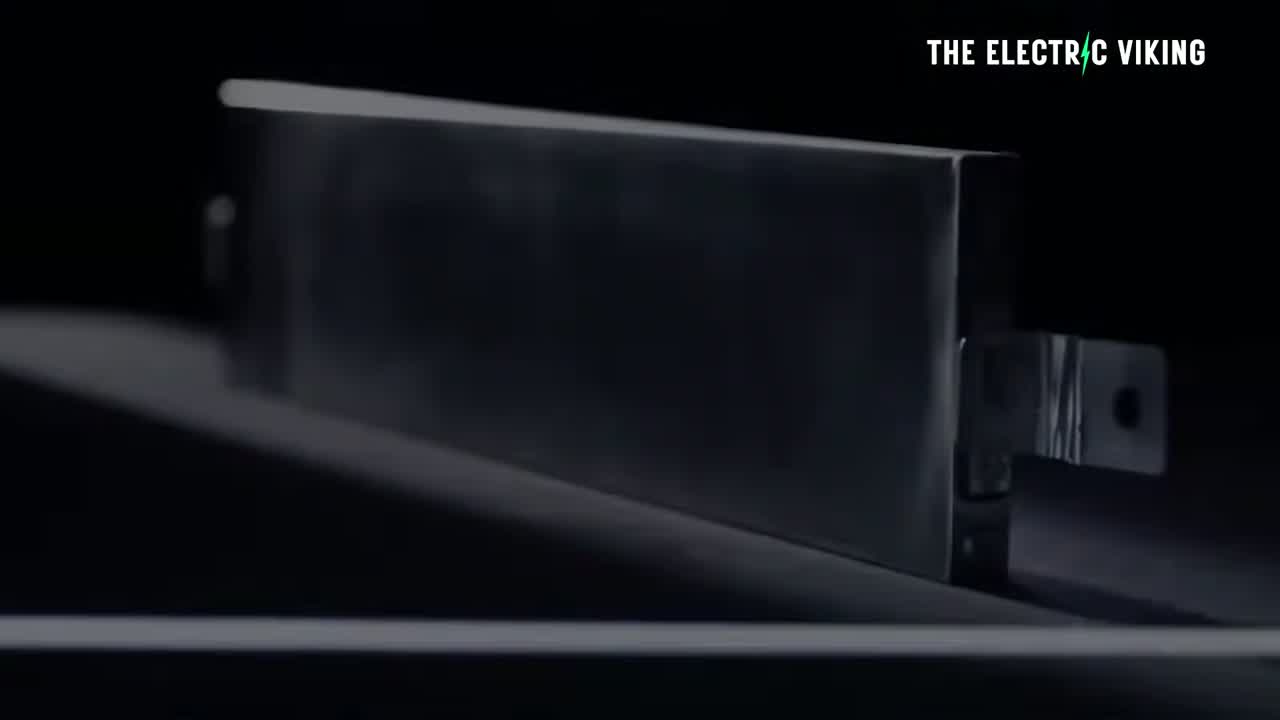
Here is where the 2026 updates get interesting. Seba has long argued new battery chemistries would disrupt lithium — and he pinned the year at 2027. That is not fantasy: CATL’s Naxtra sodium-ion cells are already at 175 Wh/kg, on par with mainstream LFP, and the company projects cell costs falling to roughly $19/kWh at full production scale. BYD’s third-generation sodium platform is quoting up to 10,000 cycles, while CATL’s stationary TENER sodium system is rated at 15,000 cycles — about triple typical LFP and enough to outlast the car around it.
Sodium is essentially salt. No lithium, no cobalt, no nickel. Those structural cost advantages are why Seba calls 2027 the year the low-end market “falls off a cliff” for internal-combustion cars. The table below shows why a gas car cannot math its way back into the game.
| Metric | Sodium-ion (CATL/BYD) | LFP lithium-ion |
|---|
| Cell energy density | ~175 Wh/kg | 160–180 Wh/kg |
| Projected cost at scale | ~$19/kWh (CATL target) | $55–65/kWh (large-volume) |
| Cycle life | 10,000–15,000 cycles | 2,000–3,000 (EV), 10,000 (storage) |
| Low-temp performance | >90% capacity at -20°C | ~70–75% at -20°C |
| Critical minerals | None (abundant sodium) | Lithium; some nickel/cobalt |
The catch the video admits: sodium is disruptive “in our minds” in 2026, but the real production ramp is 2027. That timing lines up with CATL’s Naxtra passenger-vehicle mass production at the end of 2026 and broad availability through 2027.
The global picture: an S-curve, not a flat line
Seba’s core point is that adoption follows an S-curve, not a straight line — and the 2026 data backs him up. According to the IEA’s Global EV Outlook 2026, global electric car sales are expected to reach 23 million in 2026, or 28% of all new car sales. That is not a niche; it is more than a quarter of the world’s market in a single year.
| Region | 2026 EV share of new cars | Recent momentum |
|---|
| China | ~60% | 70% of BEVs already cheaper than avg. gas car (2025) |
| Europe | ~33% (1 in 3) | Sales up ~20% YoY; +30% in Q1 2026 |
| United States | ~10% | Flat; lagging on policy and incentives |
| Asia Pacific ex-China | rising fast | +80% YoY in Q1 2026 |
| Latin America | rising fast | +75% YoY in Q1 2026 |
The cross-market gap is the story: China is already at price parity and pushing toward 90%+ of sales by 2035, while the US sits near 10%. That divergence is exactly what Seba means when he says the S-curves are accelerating, not slowing.
What it means for US buyers and investors
For American readers the takeaway is sharper than “EVs are coming.” The federal $7,500 tax credit expired on September 30, 2025, so the US price gap is now closing on raw economics rather than subsidies — which is precisely the condition Seba says drives disruption. With NACS/Supercharger access now standard across most brands, the practical reasons to wait are shrinking.
For investors, the signal is about incumbents. A gas car that cannot match an EV on upfront price, running cost, or lifespan is fighting physics. Seba’s blunt advice in the video: capital still parked in legacy internal-combustion economics is “playing Russian roulette.” That is a claim you should stress-test, but the direction of the data — sodium at $19/kWh, China at 60% EV share, global sales at 23 million — is hard to spin the other way.
Seba forecast accuracy (price)
Sodium-ion cost advantage vs LFP
2027 disruption readiness
US buyer urgency
Did Seba really predict the right year for EV cost parity?
Yes. RethinkX’s own audit shows his 2014 estimate for a 200-mile EV in 2023 landed within 1% of the actual cheapest model (the Chevy Bolt at $15,741 vs his $15,616). He also projected $100/kWh battery packs by 2028; the market hit $139/kWh by late 2023 and Chinese makers said they would halve that in 2024.
Is sodium-ion actually cheaper, or just hype?
Today sodium is roughly at parity with LFP at low production volumes (~$70–120/kWh in 2026), but its cost floor is structurally lower because sodium carbonate trades around $300–400 per tonne versus $25,000–38,000 for battery-grade lithium. CATL targets ~$19/kWh at full scale — more than 60% below large-volume LFP.
What should a US buyer do in 2026?
The $7,500 federal credit is gone as of September 30, 2025, so compare on total cost of ownership: an EV at ~$19/kWh-equivalent energy and 10,000+ cycles beats a gas car on running cost and longevity. With NACS charging now widespread, range anxiety is mostly a 2022 problem.
Related reading on EVCUBE