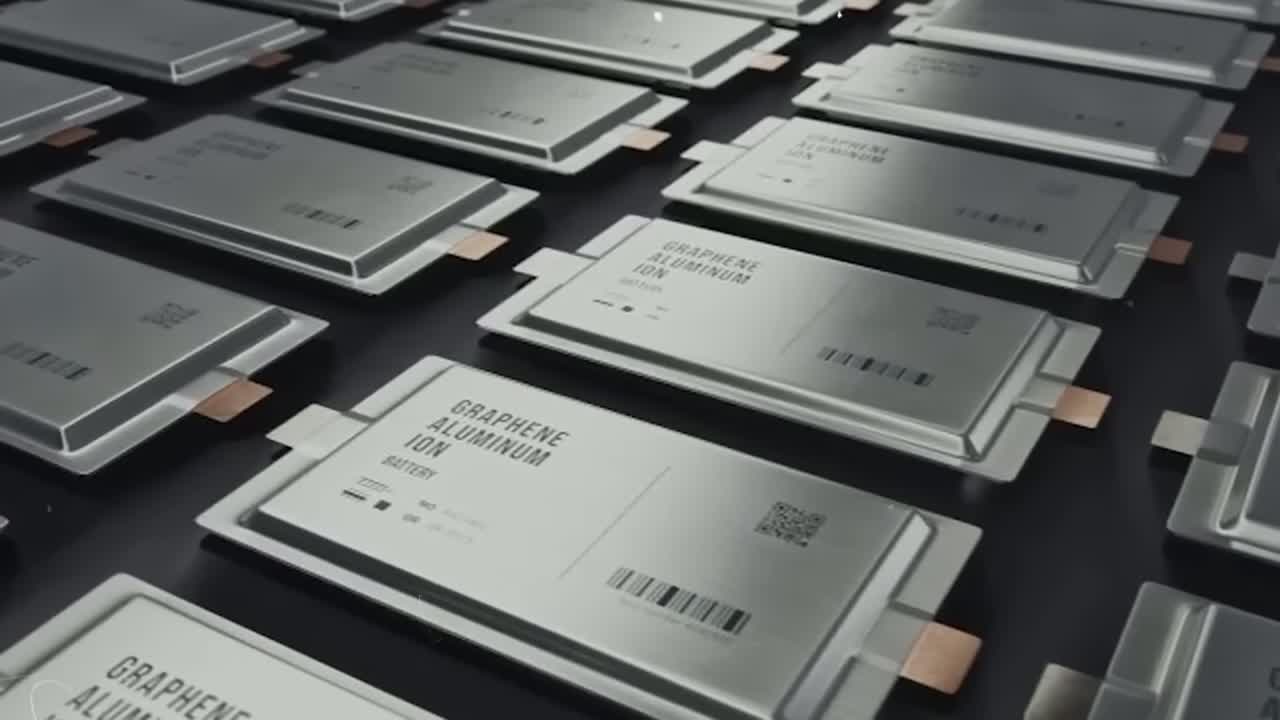
Open the floor of almost any electric car and you will find the same thing: a flat, heavy, silently humming slab of lithium-ion cells. It is the single most important — and least understood — component in the vehicle. Here is the twist: there is no such thing as one “lithium battery.” The chemistry under your feet is the outcome of a 30-year argument between energy, cost, safety, and lifespan — and in 2026 that argument is being rewritten in real time. The battery beneath your floor is not a fuel tank. It is a bet on which chemistry wins the next decade.
Why lithium — and not something simpler?
Electric cars are not new. The earliest EVs of the late 1800s ran on lead-acid batteries — the same basic chemistry still used to start gasoline engines today. They were cheap and reliable, but catastrophically heavy for the energy they held, so those cars could only crawl a short distance before recharging. Through the 20th century engineers chased better chemistry: nickel-cadmium improved things but used toxic materials; nickel-metal-hydride (NiMH) became the workhorse of early hybrids like the Prius. None could deliver what a fully electric car demanded: long range, fast charging, and a pack light enough not to wreck the driving experience.
Lithium-ion changed the equation. The same cells that shrank into your laptop and smartphone in the 1990s could store far more energy per kilogram than anything before them, be recharged thousands of times under proper management, and lose little charge sitting idle. By the late 2000s, better manufacturing, battery-management systems (BMS), and cooling made giant lithium packs dependable enough for mass production. Lithium did not win because it was best. It won because it was the least bad at everything at once.

The lie in the word “lithium”: NMC vs LFP
Call it a “lithium battery” and you have said almost nothing. The cathode — the part that defines the cell’s personality — comes in fundamentally different recipes, and the two big families pull in opposite directions.
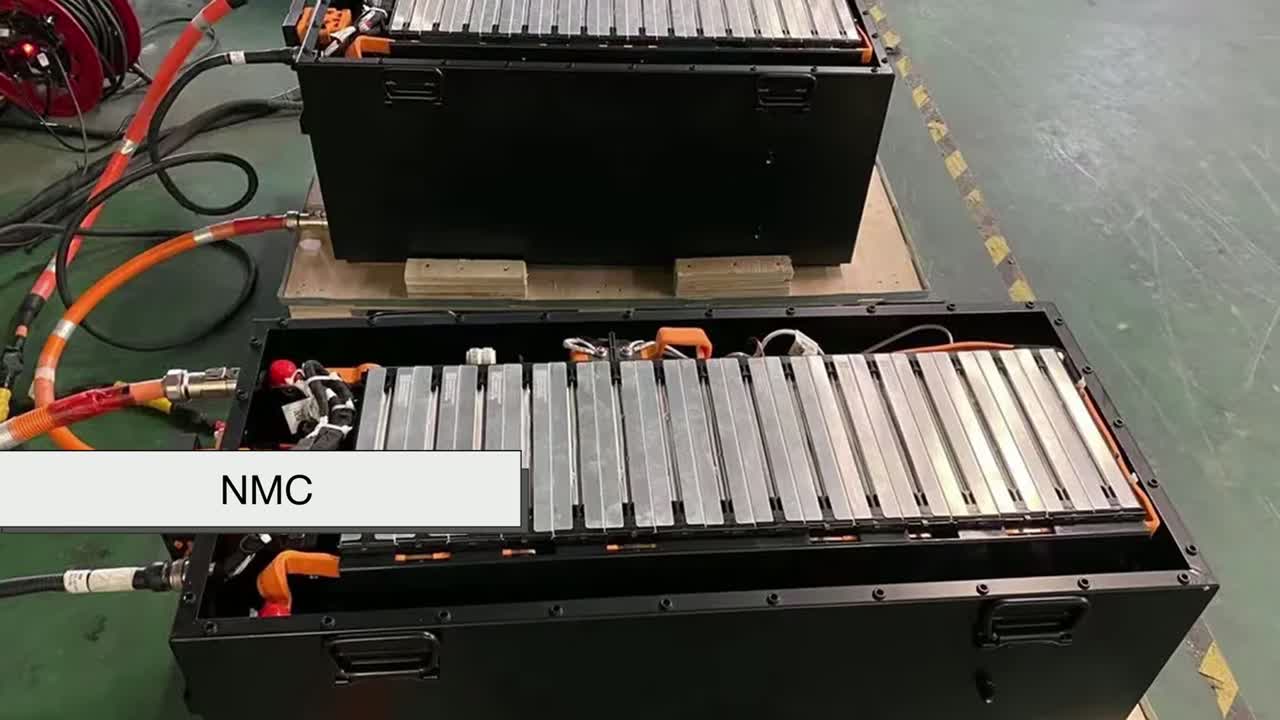
- NMC / NCA (nickel-manganese-cobalt, or nickel-cobalt-aluminum): nickel-rich cells pack the most energy into the smallest space, so they give the longest range. The cost is real money (nickel and cobalt are pricey and politically exposed) plus the need for careful thermal management.
- LFP (lithium iron phosphate): lower energy density, but dramatically cheaper to build, extraordinarily durable across thousands of cycles, and far more thermally stable — which translates directly into safety. It is the value play.
Argonne National Laboratory’s own BatPaC cost model (GPRA 2025) makes the tradeoff concrete for a comparable 200 kW pack:
| Metric (Argonne BatPaC, 2025) | NMC955 (94 kWh) | LFP (75 kWh) |
|---|
| Pack specific energy | 213 Wh/kg | 157 Wh/kg |
| Pack energy density | 404 Wh/L | 281 Wh/L |
| Cathode active material price | $22.5 / kg | $8.5 / kg |
| Cell cost | $86.5 / kWh | $82.7 / kWh |
| Pack price to OEM | $103.1 / kWh | $101.7 / kWh |
The punchline: NMC holds about 36% more energy per kilogram, but LFP’s cathode material costs roughly one-third as much. That is why the industry has split in two.
LFP share of global EV batteries (2025)
~50%
According to Rho Motion data cited in Argonne research, the 2025 global EV battery mix was roughly NMC 45%, NCA 4%, and LFP 50% — a stunning reversal from a decade ago when nickel chemistries ruled.
The cost curve that changed everything
None of this would matter to a everyday buyer without the price collapse. BloombergNEF’s annual Lithium-Ion Battery Price Survey tracks it precisely:
Battery pack cost decline since 2010 (real terms)
−93%
- 2010: about $1,474 / kWh
- 2024: $115 / kWh
- 2025: a record-low $108 / kWh — down 8% in a single year, and 93% below 2010 in real terms.
- BEV packs: $99 / kWh, the second straight year below the symbolic $100 threshold.
- LFP vs NMC packs: $81 / kWh vs $128 / kWh.
- Stationary storage: $70 / kWh, a 45% drop and the cheapest segment for the first time.
This is the quiet engine of the EV revolution. When packs cross $100/kWh, electric cars reach price parity with combustion equivalents — a line China has already crossed in almost every vehicle segment.
China’s stranglehold — and why it shows up in your invoice
The cost curve is not evenly distributed. BloombergNEF puts average 2025 pack prices at just $84 / kWh in China, while North America was 44% higher and Europe 56% higher. The gap is structural: China builds the overwhelming majority of the world’s cells, dominates LFP production, and refines most of the battery-grade lithium, nickel, and cobalt the rest of the world still depends on — a concentration the IEA has repeatedly flagged as a supply-chain risk. That is why an American or European EV still costs more than its Chinese counterpart even when the underlying chemistry is identical.
The chemistry civil war, brand by brand
The NMC-vs-LFP split plays out differently inside every automaker’s lineup:
| Player | Chemistry posture | Signature numbers |
|---|
| Tesla | Standard-range → LFP (CATL/BYD); long-range → NMC | LFP cuts cell cost, NMC protects max range |
| BYD (Blade) | LFP cell-to-pack, structural “Blade” design | High safety, volume-efficient packaging |
| CATL (Qilin / Naxtra) | High-nickel NMC plus sodium-ion pivot | 3rd-gen Qilin ~280 Wh/kg / 1,000 km; Naxtra sodium 175 Wh/kg |
| Toyota | Banking on solid-state | Targeting limited runs ~2027–2030 |
CATL — the world’s largest cell maker — now ships a third-generation Qilin cell at about 280 Wh/kg enabling roughly 1,000 km of range, while its sodium-ion “Naxtra” brand reaches 175 Wh/kg, on par with mainstream LFP, with mass production scheduled for the fourth quarter of 2026.
The next shift: sodium and solid-state
Lithium’s reign is not permanent. Two challengers are moving from lab to factory floor.
Sodium-ion swaps lithium for one of the most abundant elements on Earth. CATL’s TENER Sodium energy-storage system begins customer deliveries in China in September 2026, with the company having invested nearly $1.5 billion in the chemistry since 2016. The killer features are cost and cold weather: sodium holds above 90% capacity at −40 °C and avoids cobalt and nickel entirely. BYD is building a 30 GWh sodium plant as a natural extension of its LFP empire. The catch is physics — sodium’s larger atom caps energy density around 105–175 Wh/kg, below LFP, so it targets value cars, cold climates, and grid storage rather than long-range flagships.
Solid-state replaces the flammable liquid electrolyte with a solid one, promising more energy and far less fire risk. The hype is enormous; the shipping is not. CATL’s own chairman rates solid-state at just level 4 of 9 on its road-to-mass-production scale and doubts million-unit output before 2030. As of mid-2026, not a single all-solid-state battery powers a customer car.
By 2030, “lithium” may describe the exception, not the rule. The smart money is on a multi-chemistry world where lithium, sodium, and eventually solid-state each own the slice they are best at.
FAQ: the questions buyers actually ask
Is LFP “worse” than NMC?
For range, yes — LFP stores less energy per kilogram (about 157 Wh/kg at pack level vs 213 for NMC, per Argonne). But it is cheaper, lasts longer in cycle life, and is safer in thermal runaway. For daily commuting and fleet use, most buyers never feel the penalty and save money doing it.
Are solid-state batteries available now?
No. As of 2026 they remain pre-mass-production. Toyota and others target limited runs around 2027–2030, and CATL expects costs and manufacturing hurdles to delay million-unit output past 2030. Do not pay a premium today for “solid-state” in a showroom car.
Does cold weather kill EV range?
It hurts all lithium chemistries, but unevenly. LFP is the weakest in the cold; sodium-ion is the strongest, holding above 90% capacity at −40 °C. That is precisely why sodium is aimed at northern climates and grid storage.
Why is China so far ahead on batteries?
Two decades of manufacturing scale, intense competition that crushed margins, and dominance of LFP production plus most of the world’s refining of lithium, nickel, and cobalt. The result: Chinese pack prices of $84/kWh vs $120+ in North America and Europe.
Related reading on EVCUBE
Your turn: When you shop your next EV, will you chase maximum range (NMC) or maximum value and lifespan (LFP)? And are you willing to wait for sodium or solid-state to mature — or buy the lithium pack in front of you today? Tell us in the comments which bet you’re making.