The $7,500 federal EV tax credit is gone for good, Tesla has reshuffled both lineups into five trims, and prices just ticked up in May 2026 — so the old “wait for the next discount” playbook no longer applies to the Model Y and Model 3.
What Actually Changed for 2026
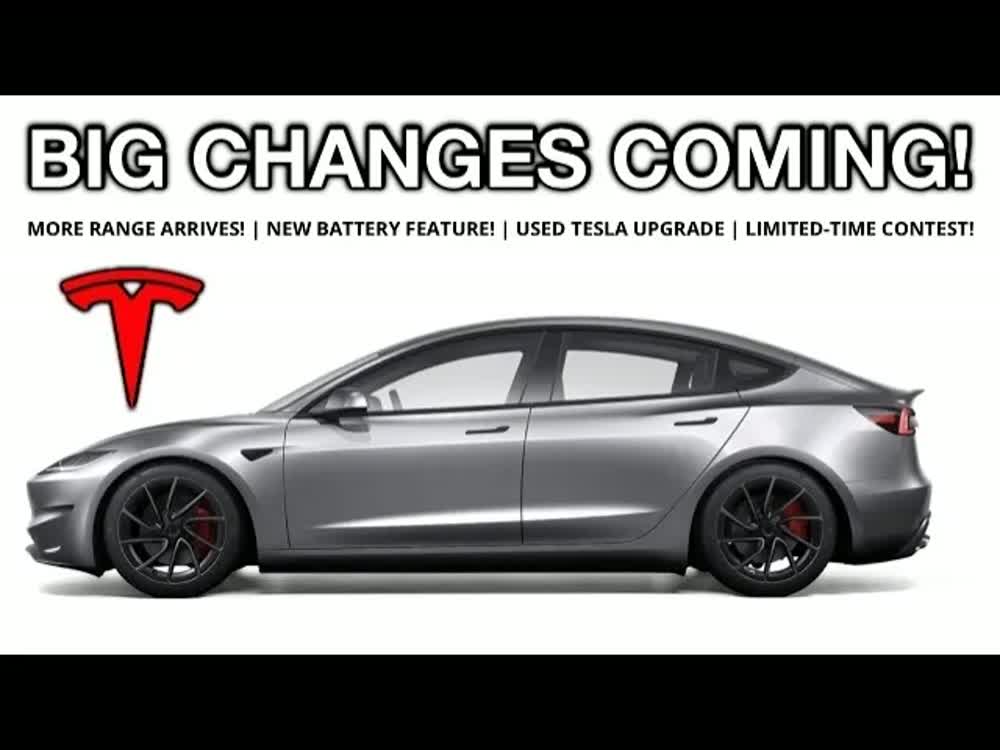
Both cars now ride on their respective major refreshes. The Model Y is in its “Juniper” era — the mid-cycle update that first reached the US in 2025 — while the Model 3 has been in its “Highland” generation since 2024. For 2026 the headline change is not a new body, but a new pricing architecture. After the federal credit disappeared, Tesla introduced stripped-down “Standard” trims to pull the entry price back down: the Model Y starts at $39,990 and the Model 3 at $36,990. These Standard cars give up the panoramic glass roof, premium audio, ventilated seats, and the rear screen to hit a number, so the “Long Range” name was retired in favor of “Premium” on the better-equipped versions.

The $7,500 Elephant in the Room
This is the single biggest factor in any buy-now-or-wait decision, and it is not coming back. The IRS confirms the New Clean Vehicle Credit is not available for vehicles acquired after September 30, 2025 — the “One Big Beautiful Bill” killed it early. Cox Automotive had warned that Q4 2025 EV sales could “plunge” once the incentive evaporated, and Tesla itself flagged “a few rough quarters” on the post-credit demand hit. For a buyer, the math is brutal: a Model Y that effectively cost ~$32,490 net of credit in September 2025 now starts at $39,990 out of pocket, a ~$7,500 swing that no “price cut” has undone.
Tesla’s counter-move was twofold. First, it launched the cheaper Standard trims to soften the sticker shock. Then, according to a June 2026 buyer guide, Tesla raised prices on May 16, 2026 for the first time in roughly two years. So the relief was partial, and it has already begun reversing. Waiting for the credit to return is a losing strategy; the policy is repealed, not paused.
One more cost buyers forget
Home charging just got more expensive too. As covered in the source video, Tesla’s Wall Connector rose about 15% — from roughly $485 to $600 — making a Level 2 home setup a bigger line item. Budget $500–$1,500 for the electrical install on top of the hardware if you plan to charge at home, which is where a Model Y or Model 3 is cheapest to run (about $0.04–$0.05 per mile on residential rates versus roughly double that at a Supercharger).
Model Y vs Model 3: Which One Fits?
The refreshes made both cars quieter and nicer inside, but they solve different problems. The Model Y is the practical choice — hatchback access, about 76 cubic feet of cargo, 3,500 lb towing, and an optional seven-seat layout. The Model 3 is the efficiency and value play: it is $3,000 cheaper at the entry level and its Long Range RWD variant is the range king of the pair. One quirk worth knowing: the Model 3 Highland deleted the turn-signal stalk (signals are now wheel buttons), while the Model Y Juniper kept a physical stalk — a small thing that matters daily to some drivers.
| Trim (EPA range) | 2026 Model Y | 2026 Model 3 |
|---|
| Entry RWD (321 mi) | $39,990 | $36,990 |
| Best-range RWD | Premium RWD — $44,990 / 357 mi | Long Range RWD — $42,490 / 363 mi |
| Dual-motor AWD | Standard AWD $41,990 / 294 mi · Premium AWD $48,990 / 327 mi | Premium AWD — $47,490 / 346 mi |
| Performance AWD | $57,490 / 306 mi | $54,490 / 309 mi |
If maximum miles per dollar is the goal, the Model 3 Long Range RWD at $42,490 with 363 EPA miles is hard to beat — it out-ranges every Tesla except the Model S. For families, the Model Y Premium RWD at $44,990 (357 mi) is the sweet spot: best SUV range, full premium interior, and the cargo and towing flexibility the sedan cannot match. The Standard trims are fine commuters but feel de-contented, and the Standard AWD Model Y’s 294 mi is the shortest range in either lineup.
Range, Efficiency, and What You’ll Really Get
EPA numbers are optimistic. Real-world drivers should plan on roughly 85–90% of the rating in mild weather, dropping 20–30% in cold snaps and 15–20% at sustained 75+ mph highway speeds. That means the 357-mi Model Y Premium realistically delivers about 300–320 mi in shoulder-season mixed driving and closer to 250–285 mi in winter — still more than enough for the average 37-mile daily commute, with Supercharger access (250 kW on Premium/Performance trims, ~225 kW on Standard) for road trips. Battery durability is reassuring: Tesla’s latest Impact Report states its packs retain about 80% of original capacity at 200,000 miles or up to roughly 15 years, which de-risks both new and used purchases.
The Case to Buy Now
For most US households that need a car in 2026, the balance tips toward buying. The credit is permanently gone, so “wait and save $7,500” is no longer an option — the only question is whether Tesla’s sticker falls further from here, and that is uncertain. The Juniper and Highland cars are mature, refined versions of each platform (quieter cabins, better suspension, modern interiors), not first-wave experiments. FSD is now a $99/month subscription rather than an $8,000 upfront buyout, so you can trial it cheaply. Tesla insurance has also expanded to roughly 16 states, and the next state (Washington) will even price in a separate FSD safety score — potentially lowering premiums for safe drivers. And if you need three rows, US orders for the new Model Y L just opened at $61,990 with 325 mi, a tow hook, and a year of free Supercharging, connectivity, and FSD included.
The Case to Wait
There are two legitimate reasons to hold. First, with the credit gone and a demand dip expected, Tesla may discount again as inventory builds — the May 2026 increase could reverse if volume softens, and end-of-quarter pushes already produce modest incentives. Second, a cheaper next-generation “Redwood” platform and a sub-$30,000 Tesla have been rumored for 2026 and beyond, but nothing has been confirmed for the US Model Y or Model 3 — treat that as speculation, not a near-term sure thing. Also note FSD V14 for older Hardware-3 cars was, per the source video, still in early-access and not yet fleet-wide as of the recording, so waiting a few months could mean a more stable software experience on a used HW3 car.
The Verdict
Buy now if you need a vehicle and want the best-built versions Tesla has shipped — the credit will not return, and the current cars are genuinely better than the ones that came before. Wait only if you are specifically gambling on an unconfirmed cheaper next-gen Tesla, or if you expect Tesla to cut prices as post-credit inventory piles up. For the typical American buyer, the cost of waiting is the cost of driving your old car another year, not the cost of a discount that is likely to materialize.
Buy-now confidence for a typical 2026 buyer
Likelihood of a meaningful further Tesla price cut near-term
Is the $7,500 federal credit really gone, or just paused?
It is gone. The IRS states the New Clean Vehicle Credit is not available for vehicles acquired after September 30, 2025, under the “One Big Beautiful Bill.” There is no scheduled return, so any savings must come from Tesla pricing or state/local incentives, not the federal credit.
Which 2026 trim gives the most range for the money?
The Model 3 Long Range RWD at $42,490 with 363 EPA miles is the efficiency leader, while the Model Y Premium RWD at $44,990 with 357 mi is the best range in the SUV body. The Standard trims trade range and features for a lower sticker and are best for short commutes.
Should I worry about battery life on a new Tesla?
Not much. Tesla’s Impact Report indicates packs retain about 80% of capacity at 200,000 miles or up to ~15 years on average, consistent across battery types. Combined with an 8-year/100,000–120,000-mi battery warranty, long-term degradation risk is low.
Sources: IRS — New Clean Vehicle Credit ended after Sept. 30, 2025 (irs.gov); U.S. News 2026 Tesla Model Y review (cars.usnews.com, Mar. 31, 2026); Tesla Model Archive 2026 Model Y & Model 3 trim comparisons (teslamodelarchive.com); Tesla US configurator / Model 3 specs (tesla.com/model3); Cox Automotive Q4 2025 EV sales commentary (coxautoinc.com); Frunk To Trunk YouTube briefing (3PAUhFrVLx4) for Wall Connector price, Model Y L US pricing, Tesla insurance expansion, and FSD V14 status. Related:
our hands-on Model 3 Auto Park review.