No products in the cart.
EVCUBE.NET ? EV infrastructure analysis
BYD FLASH Charging: what the 5-minute EV claim really means
BYD’s FLASH Charging demo is interesting for one simple reason: it tries to turn the biggest EV objection, charging time, into a public product demonstration. The headline number is bold, but the deeper story is the stack behind it: charging power, battery chemistry, thermal control, charging hardware and the infrastructure needed to make it real.
What BYD is actually saying
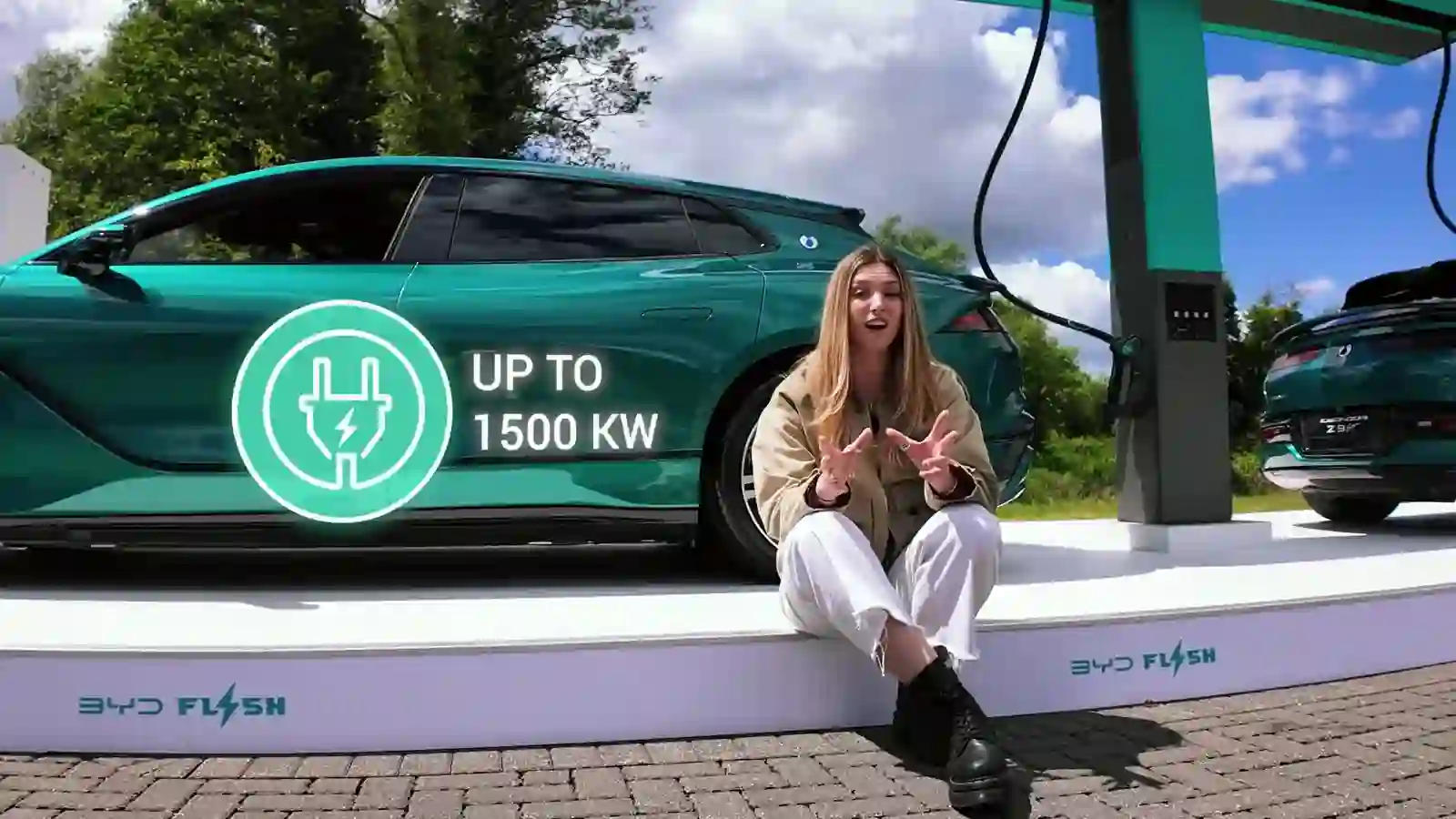
BYD’s own announcement is more specific than the simplified internet version of the story. The company says its Super e-Platform reaches 1 MW, while the flash charger can deliver up to 1,500 kW through a single connector in Chinese-market specification. That is paired with a second-generation Blade Battery and an infrastructure plan that aims to build 20,000 FLASH Charging stations in China and begin a wider rollout by the end of 2026.
That matters because this is not just a faster charger. It is a full charging ecosystem: the battery has to accept the energy, the power electronics have to supply it, and the site infrastructure has to support it. Without that combination, the numbers on the poster do not mean much outside a controlled demo.
The demo is the proof point, not the whole story
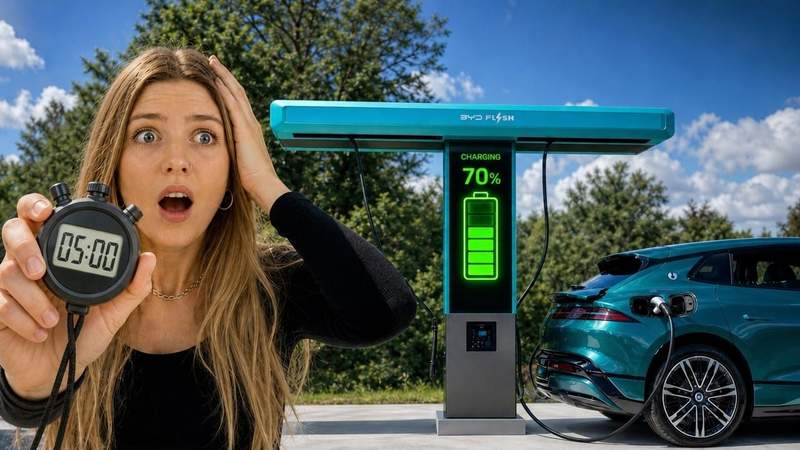
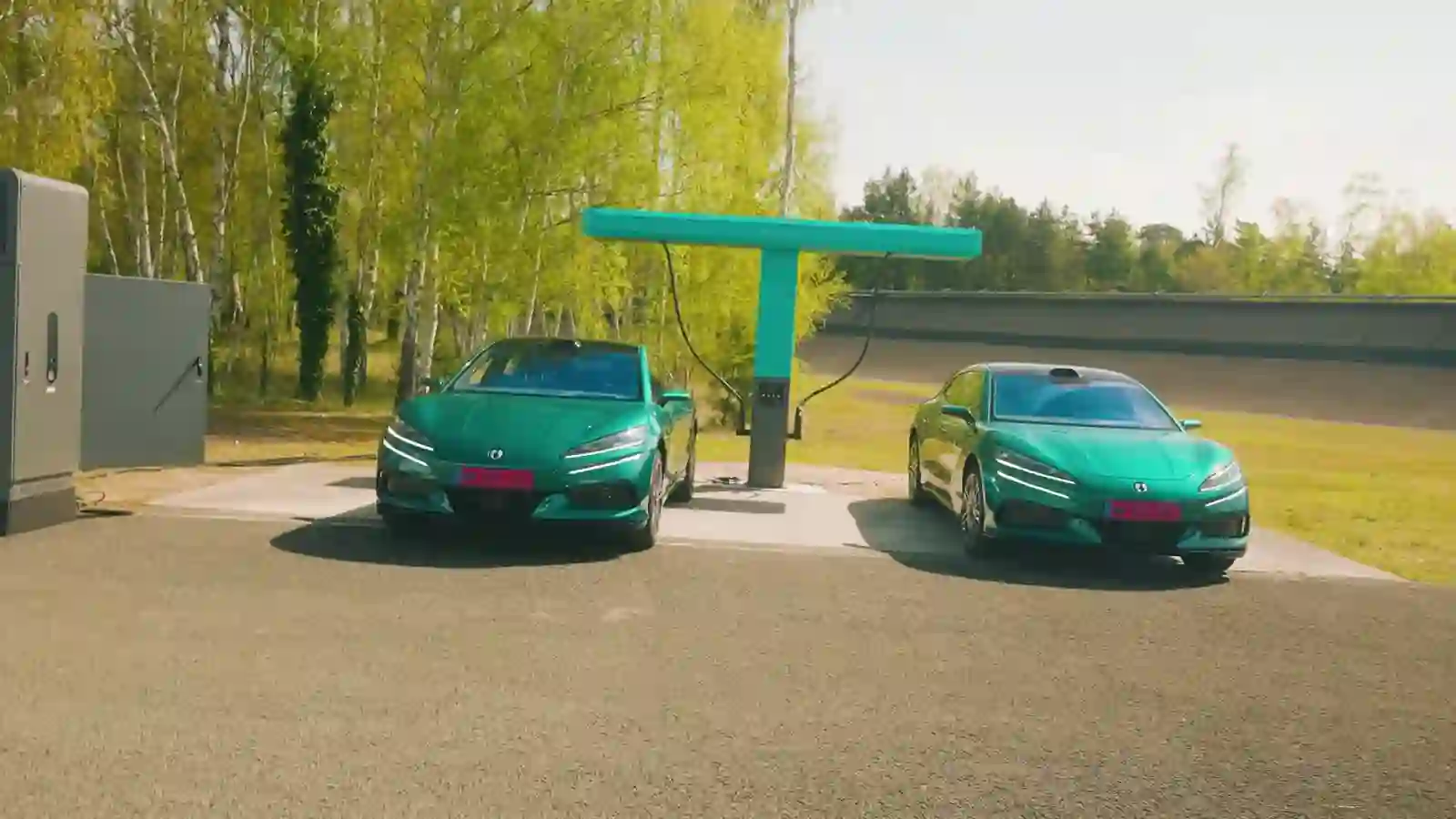
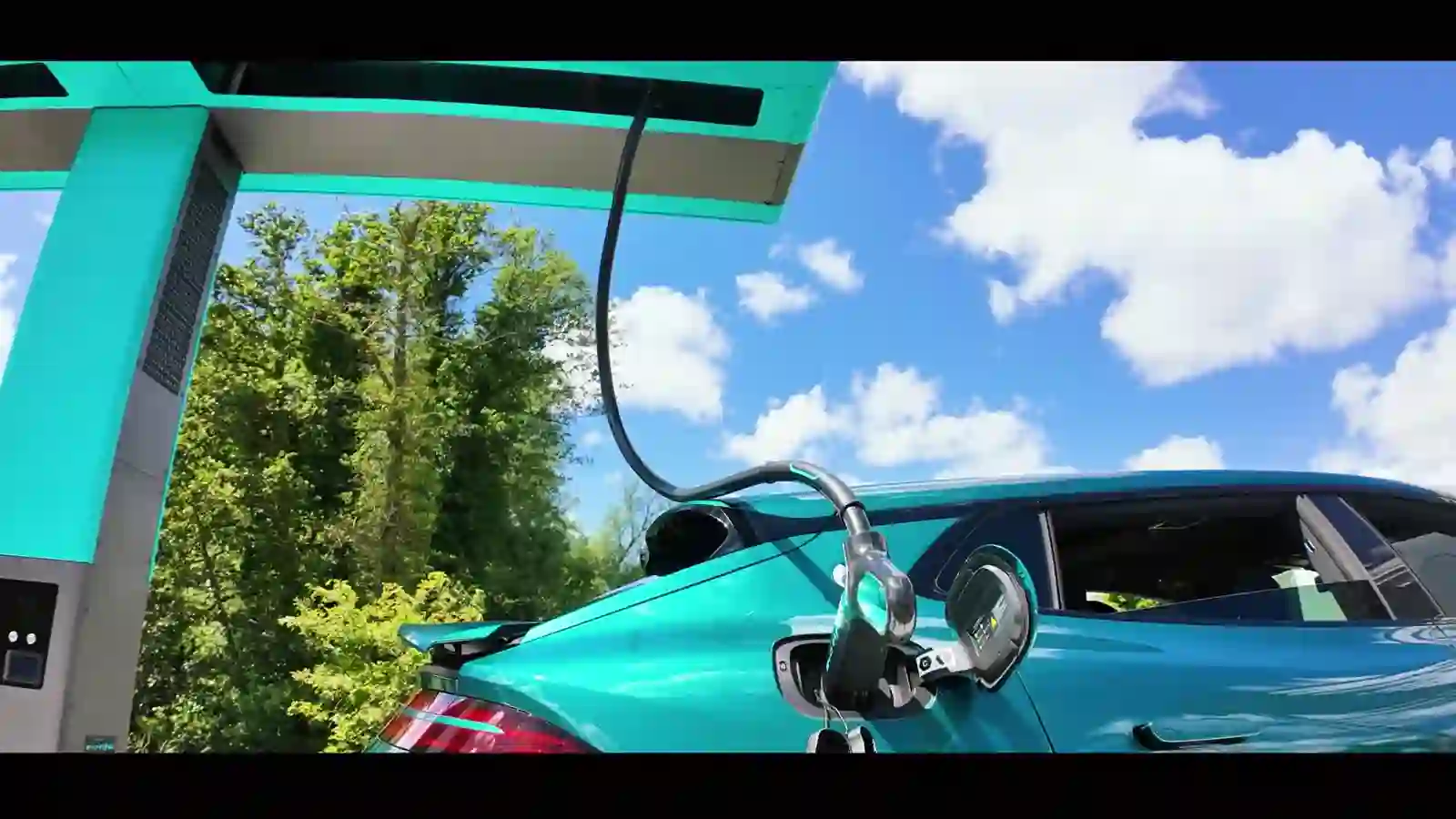
Electroheads’ video gives the story momentum because it shows the charging system in action, not just on a slide. The sequence at BYD’s UK HQ also introduces the DENZA Z9GT, which BYD has positioned as the European launch vehicle for its Flash Charging push. In other words, the demo is being used to show that the hardware is ready enough to be discussed publicly, not merely hinted at in press copy.
5 minutesBYD’s core claim for the 10% to 70% window.
9 minutesThe company says 10% to 97% is possible in nine minutes.
1 MWBYD’s Super e-Platform target architecture.
1,500 kWFlash charger output in Chinese-market spec.
Why the Blade Battery matters here
BYD’s Blade Battery page describes Blade as an LFP battery designed around safety and durability, which is exactly the kind of chemistry you would expect to be paired with aggressive charging targets. Fast charging only works as a story if the battery can repeatedly accept high power without turning the pack into a trade-off between speed and life span.
The practical takeaway is simple: the battery is not a footnote. It is the part of the system that makes the charging headline believable. That is why the combination of flash charging and Blade Battery 2.0 feels more meaningful than a one-off charger reveal.
Key moments from the video
What still needs proving
| Question | What the current evidence says | Why readers should care |
|---|---|---|
| Does 5-minute charging apply to every EV? | No. BYD is talking about a specific platform and compatible charging stack. | The claim is huge, but it is not a universal rule for all cars on the road. |
| Is the technology already everywhere? | No. BYD says rollout is starting in China and broader deployment is later. | Availability is the difference between a demo and a market shift. |
| Does the charging speed solve infrastructure? | Not by itself. High-power charging still needs serious site power and grid support. | This is where charging operators and site planners come in. |
| Is the video independent verification? | No. It is a well-shot public demo and commentary from Electroheads. | That makes it useful, but it is still one part of the evidence base. |
The important nuance is that the video demonstrates confidence and progress, not a final answer to every charging problem.
Why this matters for EVCUBE.NET readers
For a site focused on EV charging, this is the kind of story that connects product hype to infrastructure reality. A charger capable of this kind of output changes how we think about public charging stalls, site power design, cable cooling, and the practical relationship between the car and the grid.
That is also why the article links naturally to the rest of the charging library: the interesting part is not just that charging got faster, but what has to change in the real world to let that speed exist beyond a staged demo.
FAQ
Is BYD claiming every EV will charge this fast?
No. The claim depends on BYD’s own platform, battery and charger stack. It is a system claim, not a universal EV claim.
Why does the demo use the DENZA Z9GT?
BYD has positioned the Z9GT as a high-profile vehicle to showcase the new charging technology in Europe.
What is the biggest real-world limitation?
Infrastructure. The charger, the site power and the vehicle all need to work together at very high power levels.
How should readers interpret the 5-minute claim?
As a meaningful step forward, but not as proof that charging anxiety is fully solved for every market or every car.
Sources
Bottom line
BYD’s FLASH Charging story is important because it moves fast charging from aspiration to public demonstration, but the real test is whether the charger, the battery and the grid can scale together outside the spotlight.
That is why this looks like more than a marketing reveal: it is a glimpse of what the next phase of EV adoption will have to solve.