Beijing just published the document that will quietly decide how cheap — and how clean — your next electric car turns out to be. China’s 15th Five-Year Plan renewable roadmap, released July 23, 2026, sets a 2030 target of 3.5 billion kilowatts of renewable capacity, with wind and solar alone exceeding 2.8 billion kW. This is not an energy story. It is the supply-chain story of the decade — and US buyers are standing on the demand side of it.
What Beijing Actually Announced
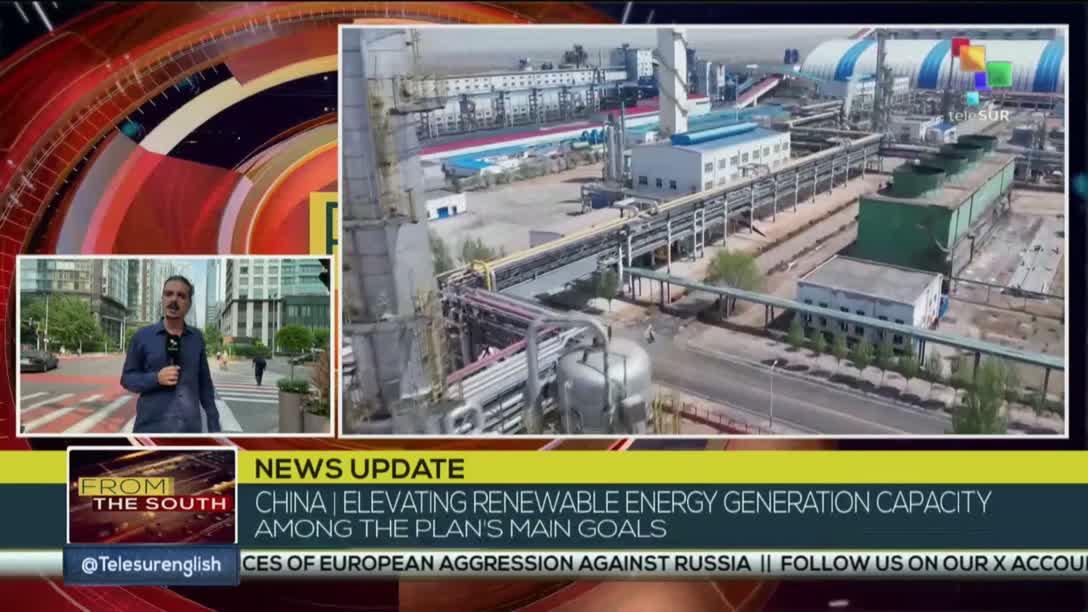
The National Development and Reform Commission and the National Energy Administration jointly issued the Renewable Energy Development Plan for the 2026–2030 period, the “15th Five-Year Plan” window. China is already the world’s largest renewable market, and the new plan pushes the sector from “scale expansion” into what Chinese officials call a stage of reliable substitution — renewables that don’t just add megawatts but actually replace fossil generation on the grid.
The headline targets, confirmed by the official NEA/NDRC press release carried by the State Council Information Office:
- Total renewable installed capacity: about 3.5 billion kW by 2030, generating roughly 6 trillion kWh per year.
- Wind + solar: more than 2.8 billion kW, with annual generation above 4 trillion kWh.
- Electricity mix by 2030: “half non-fossil, nearly half renewable, and 30 percent new energy” — meaning renewables approach half of all generation, with wind/solar/battery “new energy” at roughly a third.
- Reliable substitution: over 300 million kW of new dependable peak capacity from renewables, an average wind+solar “confidence output” of 8%, and wind+solar supplying more than 20% of evening peak electricity.
- Storage: about 160 million kW of pumped storage by 2030, on top of a storage fleet that already hit 136 million kW / 351 GWh by end-2025 (up 84% year-on-year).

The plan also leans hard into international cooperation — exporting green technology and standards to Global South partners. For an EV audience, that last point matters more than it sounds.
The Numbers Behind the Plan (2020 → 2025 → 2030)
The 2030 targets only make sense against the trajectory. China’s renewable capacity roughly doubled-and-a-half in five years, and the plan aims to add another 1.2 billion kW on top of that.
| Metric | ~2020 | End-2025 | 2030 target |
|---|
| Total renewable capacity | ~930 GW | ~2.34 billion kW (≈60% of all capacity) | ~3.5 billion kW |
| Wind + solar capacity | ~535 GW | 1.84 billion kW (first time > thermal) | >2.8 billion kW |
| Renewable share of generation | ~29% | 38% of electricity used | ~50% non-fossil in mix |
| New energy storage | modest | 136 GW / 351 GWh (+84% YoY) | pumped storage 160 GW |
| Non-fossil share of energy use | ~16% | 21.7% (15th FYP baseline) | 25% by 2030 |
Two things jump out. First, China didn’t just meet its last five-year goals — wind and solar capacity of 1.84 billion kW historically exceeded thermal power for the first time by end-2025. Second, the 2030 target is a step-change in quality, not just quantity: the plan’s new “reliable substitution” metrics are about keeping the lights on when the sun isn’t shining.
Why This Is Really an EV Story
Here is the part the energy headlines miss. China controls more than 70% of the global solar, wind, battery, and EV supply chains, according to IRENA data reported by China Energy News. A renewable build of this scale does three things to the electric-car economy — and none of them stay inside China’s borders.

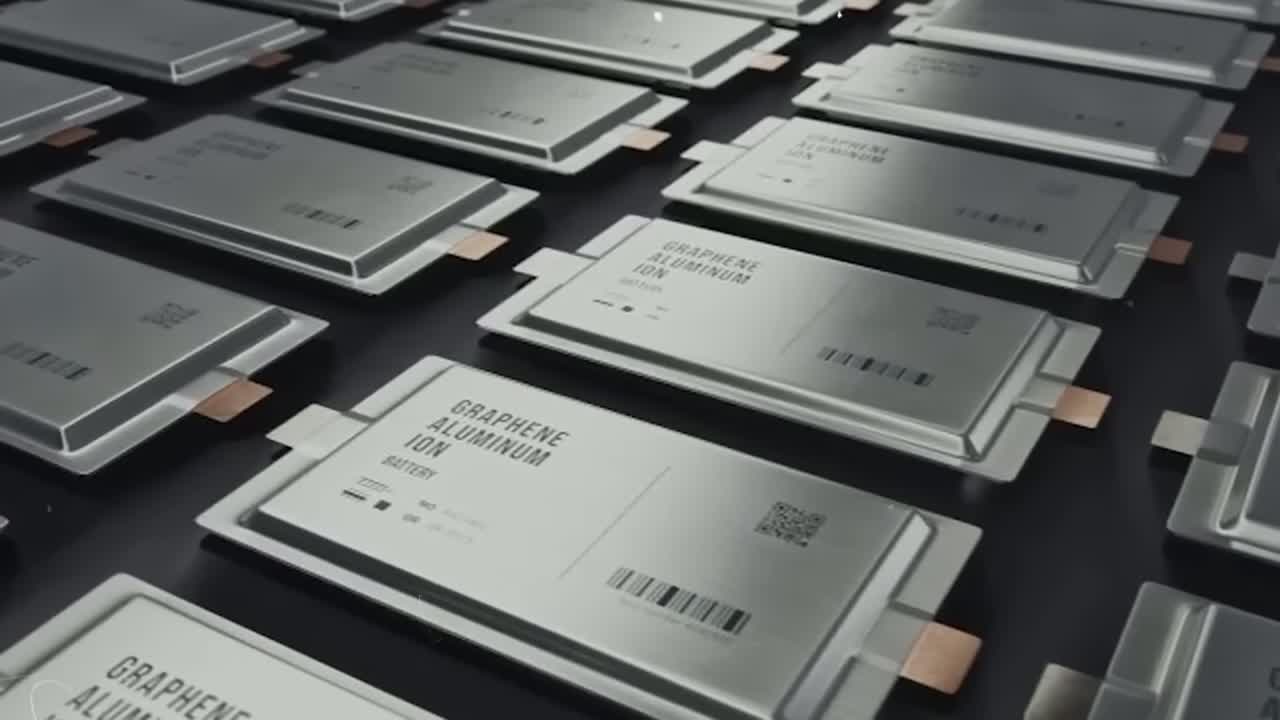
1. Greener manufacturing. Battery cells and cathodes are energy-hungry to make. When Chinese gigafactories draw on 3.5 billion kW of renewable capacity, the embedded carbon of every pack falls. That is not a feel-good footnote — the EU’s Carbon Border Adjustment Mechanism and a growing class of US lifecycle-emissions buyers are starting to price that carbon directly. A “green” car increasingly means a car built on green electrons.
2. Cheaper electrons, cheaper cars. IRENA found China’s solar-plus-storage levelized cost is already below the cost of new coal, while a new US gas plant runs around $102/MWh. Since 2010, solar install costs fell 87%, onshore wind 55%, and battery storage a striking 93%. Those declines flow straight into battery pack prices — the single biggest cost lever in an EV.
3. A charging grid that doesn’t need gas. The 136 GW storage fleet (up 84% in a single year) is the unglamorous hero of mass EV charging: it lets millions of cars plug in at night without firing up fossil peakers. China is effectively stress-testing the charging-density playbook the rest of the world will have to copy.
China’s share of global solar / wind / battery / EV supply chains
72%+
Renewable share of China’s installed power capacity (2025)
60%
New energy storage growth, year-on-year (2025)
84%
China isn’t just building renewables — it is building the factory floor of the electric century. Every green kilowatt is a kilowatt shaved off the carbon ledger of the car in your driveway.
China vs the United States: The Renewable Gap That Feeds the EV Gap
The plan lands in a very different policy environment across the Pacific. The strategic contrast is stark, and it shows up in hard numbers.
| Metric | China | United States |
|---|
| Total installed renewable capacity (end-2025) | ~2.2 TW — over half the world’s total | ~400 GW |
| Solar PV capacity (end-2025) | 1.16 TW | ~200 GW |
| Wind + solar vs fossil power | 1.84 TW, first time exceeding thermal | growing, not yet dominant |
| Share of global solar/wind/battery/EV supply chains | >70% | minority share |
| Solar + storage cost (LCOE) | below new coal | new gas (CCGT) ~$102/MWh |
For the European angle: China’s 2025 renewable generation alone — about 4.0 trillion kWh — surpassed the total electricity consumption of all 27 EU countries (~3.8 trillion kWh), per NEA data cited by Chinese media. The United States, having retreated from parts of the Paris framework, is now watching a competitor set the industrial and price benchmark for the transition it helped pioneer.
The Bottom Line for US Buyers
If you are shopping for an EV in America, the July 2026 Beijing plan will reach you in three ways. Prices: continued Chinese battery-cost deflation pressures global pack pricing downward, tariff and trade walls notwithstanding. Emissions: cars built on greener Chinese supply chains score better on lifecycle carbon — a real differentiator as EU and corporate buyers tighten rules. Infrastructure: China’s storage-first charging model is the template US utilities are quietly studying to avoid gas-peaker buildouts.
The risk for US buyers is geopolitical, not technical: trade barriers could blunt the price benefit. But the plan’s Global South push means Chinese EV technology is expanding its addressable market — and scale is exactly what drives the cost curve.
Related reading on EVCUBE
Sources
What exactly is China’s 15th Five-Year Plan renewable target?
The 15th FYP covers 2026–2030. Its renewable plan targets about 3.5 billion kW of total renewable capacity and more than 2.8 billion kW of wind + solar by 2030, with renewables approaching half of electricity generation and “new energy” near 30% of the energy mix.
How does a Beijing plan affect US EV prices?
China makes over 70% of the world’s batteries and solar/wind hardware. Falling Chinese clean-energy and storage costs flow into lower global battery-pack prices — the biggest single cost in an EV — even after tariffs.
Is China really the global renewable leader?
By end-2025 China had roughly 2.2 TW of renewable capacity — over half the world’s total — with solar at 1.16 TW and wind+solar capacity exceeding thermal power for the first time. Its 2025 renewable generation (~4.0 TWh) exceeded all 27 EU countries’ total electricity use.
What does “new energy” mean in the plan?
In Chinese planning, “new energy” means all renewables except conventional hydropower — primarily wind, solar, biomass, geothermal, marine, and battery storage. The plan targets new energy at about 30% of the 2030 energy mix.
So here is the question worth sitting with: will China’s 2026–2030 renewable plan make the EVs Americans buy cheaper, or just greener — and which one actually moves the US market? Tell us what you think.