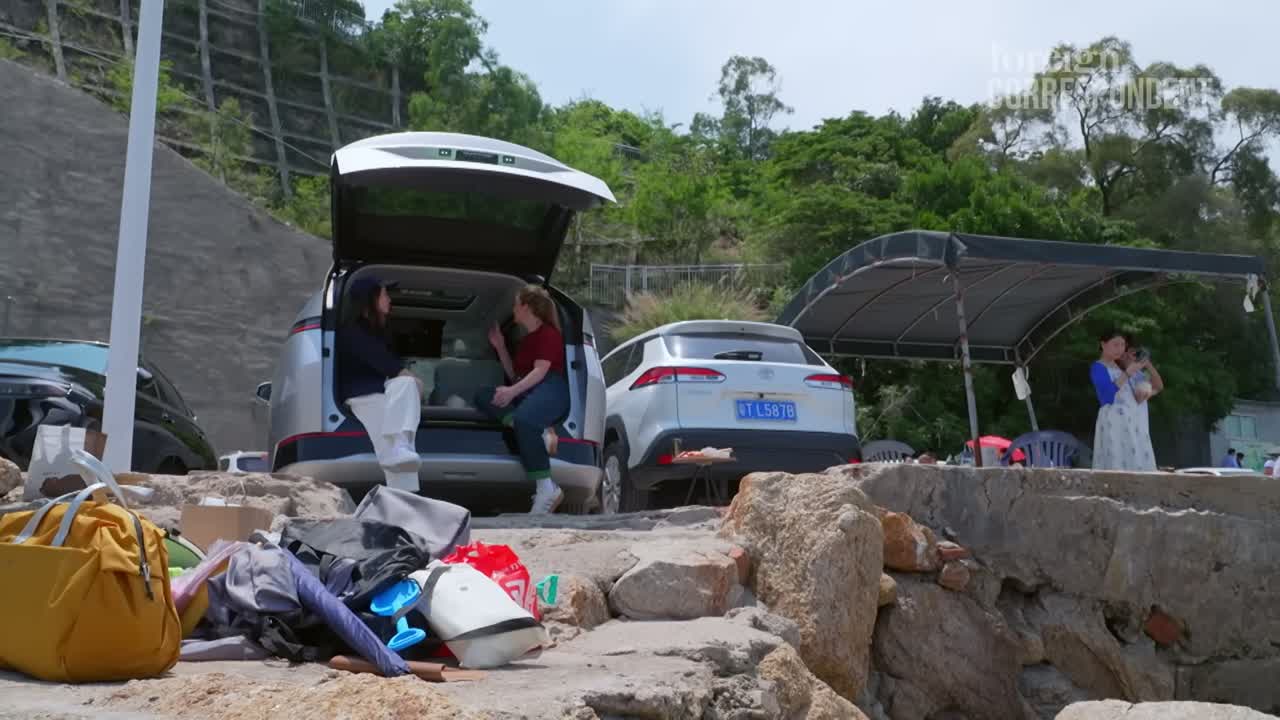
China didn’t just adopt electric cars — it built an electric society. In 2025, more than half of all new cars sold there were EVs, and the country makes roughly three-quarters of the world’s battery-electric vehicles.
The numbers behind the silent revolution
The scale is hard to grasp from abroad. In 2025, China’s new-energy vehicle (NEV) sales reached 16.49 million units, and — for the first time — EVs accounted for more than 50% of all new car sales domestically. Production and sales of cars overall hit 34.4–34.5 million, and China built about 34 million vehicles last year, exporting roughly 7 million (around 20%) beyond its borders. Analysts on the ground put China’s share of the world’s EVs at close to 75%. This wasn’t an accident: Beijing identified electrification as the future back in 2001 and spent decades and billions building the supply chain, the factories, and the charging network.

BYD alone sold 4.6 million vehicles in 2025, with about 2.257 million pure electric — enough to overtake Tesla as the world’s top-selling BEV brand. The result is a market where an EV isn’t a statement; it’s the default.
Charging is national infrastructure
In China, charging is treated as a public utility, not a perk. By late 2025 the country had about 18.06 million charging points — up 54.5% year over year — supporting some 40 million NEVs, and a national plan targets 28 million chargers by 2027. Walk into a random shopping center and you’ll find dozens of stalls. NIO takes it further with battery swap stations: drive in, drop the old pack, clip in a fresh one, and you’re gone in just over four minutes — faster than filling a gas tank.
| Indicator | China (2025) | US context |
|---|
| EV share of new cars | >50% | ~10% (approx.) |
| NEV sales | 16.49 million | ~1.5 million (approx.) |
| Public charging points | 18.06 million | ~200k+ public (approx.) |
| Battery swap time | ~4 min (NIO) | rare |
China EV share of new cars
Charge-point growth YoY

Speed that rewrites the rules
Charging speed is where China’s lead looks most startling to Western eyes. BYD’s “megawatt flash charging” — unveiled in 2025 on its Super e-Platform — delivers 1,000V, 1,000A, and a peak 1,000 kW (1 MW), adding about 2 km of range per second: 5 minutes buys roughly 400 km. BYD plans more than 4,000 of these megawatt stations. In March 2026 it went further, revealing a second-generation Blade Battery that goes from 10% to 70% in 5 minutes and 10% to 97% in 9 minutes, with a 20,000-station flash-charging rollout planned across China by year-end. CATL’s third-generation Shenxing cell charges 10%–80% in about 3 minutes 44 seconds.
For an American driver used to 20–45 minute fast charges, that’s a different world — refueling speed that finally matches gasoline.
What the US can learn
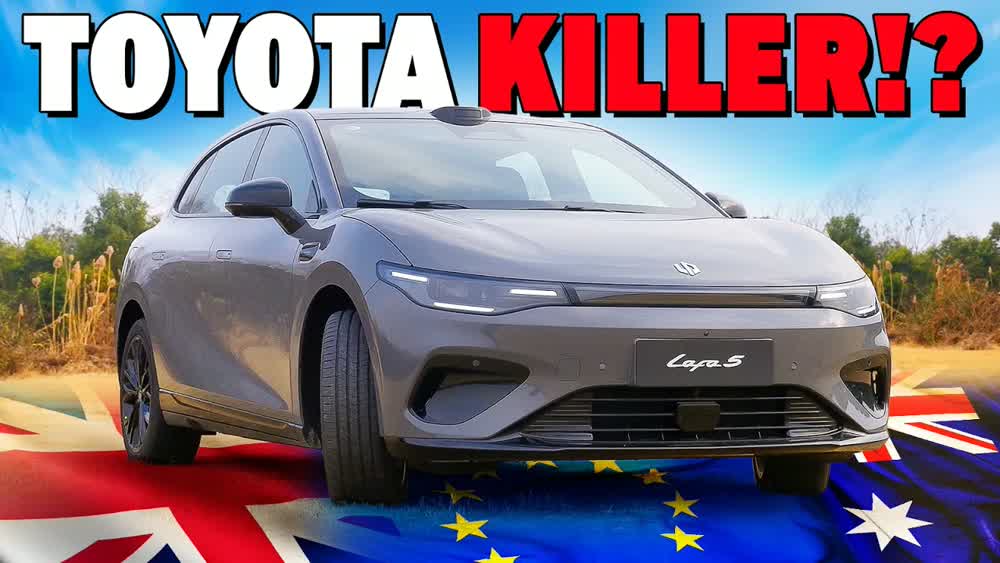
The takeaway isn’t “copy China” — it’s that EV adoption accelerates when three things line up: affordable models, ubiquitous charging, and software that feels like a consumer device. China’s cars are cheap because most sell under the equivalent of $45,000, and because the supply chain is local end to end. Western automakers are now racing to compress their own development cycles; Renault’s Shanghai lab, for instance, claims it can build an EV in about 20 months versus the old ~36. The competitive pressure is real, and it’s arriving on US shores through brands like Leapmotor’s B10 coming to North America.
None of this means the “EV is dead” narrative holds up. Quite the opposite — China shows what a mature EV market looks like once charging and price friction disappear. For the US trajectory, see why the EV-is-dead narrative collapsed in 2026 and the bigger picture in how China dominates the global EV factory boom.
Is China really making 75% of the world’s EVs?
By volume, yes — analysts and reporting from 2025 put China’s share of global battery-electric vehicle production at roughly 75%, supported by the world’s largest domestic market and an integrated supply chain from cells to cars.
How fast can Chinese EVs charge versus US ones?
Top Chinese systems (BYD megawatt, CATL Shenxing) reach 80% in roughly 4–10 minutes. Most current US fast-charging tops out at 150–350 kW, delivering 10–80% in 20–45 minutes — though that gap is narrowing as 800V platforms spread.
Sources: ABC News In-depth (China EV future report, ~75% of world’s EVs, 50% new-car EV share); Xinhua / China EV statistics 2025 (16.49M NEV sales, >50% domestic share, 18.06M charging points); BYD (Super e-Platform, 1,000 kW flash charging, 5 min / 400 km, 4,000+ stations); BYD global (2nd-gen Blade Battery, 10–70% in 5 min, 20,000 stations by end-2026); CATL (3rd-gen Shenxing, 10–80% in 3 min 44 s); China NEV export data 2025 (~7M cars, ~20% exported).