An Australian broadcast called China’s EV industry “mind-blowingly advanced and miles in front” — and the numbers behind BYD nearly overtaking Toyota Down Under are just the tip of a structural lead.
The Australia tell
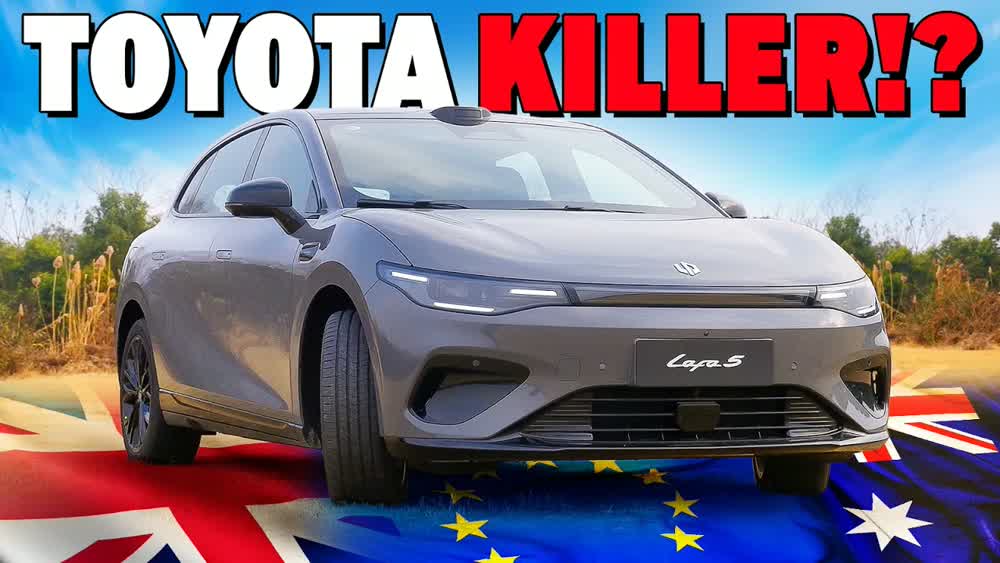
ABC’s Foreign Correspondent opened on a striking stat: BYD came within a whisker of toppling Toyota as Australia’s best-selling car brand, with almost 19,000 vehicles sold in a single month. Premium Chinese marques like Zeekr and Xpeng are rapidly expanding their Australian footprint. The segment then ventured into the surreal — jumping cars, fridges built into EVs, TVs in everything, and a fully electric, autonomous flying car slated to go on sale in Beijing by year’s end. It reads like science fiction, but it’s a window into how far the ecosystem has run.

The point the reporting makes isn’t “China has cool gadgets.” It’s that the entire supply chain — from cells to software to交货 speed — is now so integrated that competitors are racing a different race.
The scale of the lead
| Metric | China’s position (2025–26) |
|---|
| Share of global EV sales | ~2/3 |
| Production cost vs developed economies | ~30% lower (IEA) |
| Share of global EV battery output | ~70% |
| Share of global solar panels | ~80% |
| NEV exports (2025) | 2.615 million, +103.7% YoY |
| EU brand share (Apr 2026) | >15% BEV; 29% PHEV |
| CATL global battery share | 39.2% |
The advantage isn’t one breakthrough — it’s a system. China controls roughly 77% of lithium refining, 64% of battery installations, and over 70% of both battery materials and LiDAR-equipped production models. European battery cells cost about 30% more per kWh to build; German-made cells run ~$13/kWh above Chinese ones. Layer on industrial power and labor costs that are a fraction of Europe’s, and the per-vehicle cost gap reaches $2,000–$3,000.
Cost efficiency edge
Battery supply control
Export momentum
Tariffs slowed it, didn’t stop it
When the EU slapped 10–40% anti-subsidy tariffs on Chinese EVs in 2024, most assumed the European share would collapse. Instead, by April 2026 Chinese brands held over 15% of the EU BEV market and 29% of plug-in hybrids, with PHEV exports to Europe up roughly sixfold. Tariffs simply pushed a smarter response: localize. BYD’s Hungary plant enters mass production in Q4 2026, CATL’s Hungarian battery factory is already in place, and China now runs 22 overseas manufacturing bases with 350,000+ units of annual overseas capacity.
For US buyers, the direct impact is limited by tariffs and policy — but the indirect one is huge. Chinese cost discipline is forcing every legacy and startup automaker to slash prices and accelerate software, exactly as our deep dive on China’s EV future laid out. And the next wave of US launches will be measured against a price bar China already set.
Can the US or Europe catch up?
Not quickly through single-point fixes. The gap is systemic — supply-chain integration, automation, and cost discipline built over a decade. Tariffs buy time but also accelerate Chinese localization in target markets. Real catch-up requires matching the full ecosystem, not just one technology.
Related reading on EVCUBE
Sources: ABC News (Australia) Foreign Correspondent “China’s EV industry”;
IEA — Global EV Outlook 2026; China NEV export data 2025–26; EU market share reports (Apr 2026); CATL global battery share.