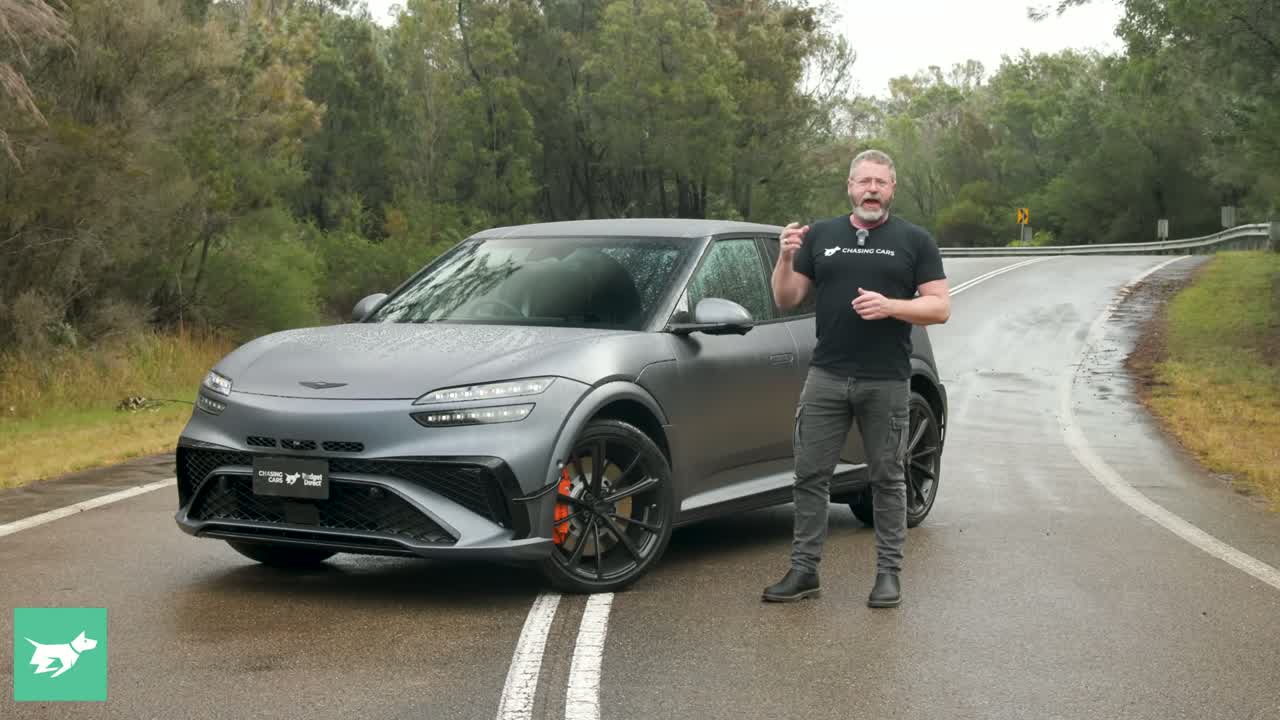
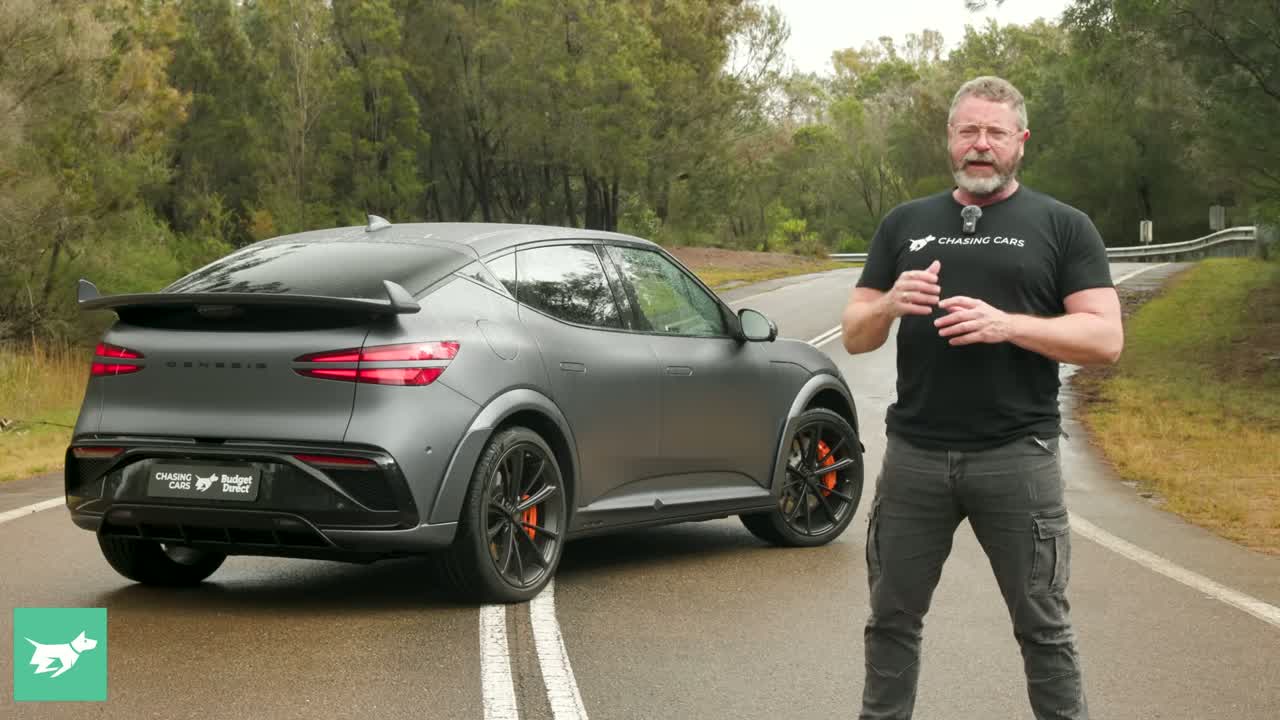
Can a performance badge that barely existed two years ago really run down a BMW M car for roughly $40,000 less? With the 2026 Genesis GV60 Magma — 641 horsepower, a sub-4-second 0-60, and an 18-minute fast charge — Hyundai’s luxury arm is betting a very expensive “yes.”
Source Video — Chasing Cars

The Pitch: The Ioniq 5 N’s Playbook, Wearing a Tuxedo
Genesis did not invent the hardware in the GV60 Magma. It borrowed it. Underneath sits the same 800-volt E-GMP platform and 84-kWh battery that powers the Hyundai Ioniq 5 N, the car that redefined what an affordable performance EV could feel like. What Genesis added is restraint — and a much longer list of luxury materials. The reviewer in the source video put it perfectly: this is the car for the 35-to-55-year-old who goes to the gym but no longer needs to look like he’s trying.
That single strategic choice is the whole story. The Ioniq 5 N is a raw, in-your-face track weapon. The Magma takes near-identical mechanicals and tunes them for a quieter, more composed personality — adaptive dampers with end-of-stroke cushioning, extra sound deadening, suede-effect trim running up the pillars and across the roof, and a 17-speaker Bang & Olufsen system. It is, in the reviewer’s words, “next-level elevation for a Genesis,” and it costs only about $15,000 more than the Hyundai it’s based on.
Power & Numbers: 641 HP From a Korean Crossover
The dual-motor setup is genuinely serious. Genesis quotes 601 hp and 546 lb-ft in normal operation, rising to 641 hp (478 kW) and 583 lb-ft in Boost Mode — a roughly 7% jump on demand. The front motor makes 175 kW; the rear makes 303 kW, keeping the car rear-biased in its sportier modes. The result is 0-60 mph in 3.4 seconds and a 164-mph top speed, numbers Genesis chased at the Nürburgring and validated on the Autobahn.
Stopping power matches the pace: 400 mm front rotors with four-piston monobloc calipers, wrapped in Pirelli P Zero 275/30 R21 rubber on forged 21-inch wheels. Even the aerodynamics got attention — canards, revised wheel arches, a new diffuser and rear wing. The trade-off is a drag coefficient of 0.31 versus 0.28 on the standard GV60, about 11% slipperier on the base car, which quietly foreshadows the Magma’s biggest compromise (more on that below).
Price vs BMW iX M60
~37% less
Peak DC charge vs Audi SQ8 e-tron
~106% faster
How It Stacks Up Against the Establishment
Here is where the Magma’s case gets interesting for US buyers. Genesis is asking around $69,950 to start (before a $1,545 destination fee), initially in California, New York, and New Jersey. That puts it in a strange no-man’s-land: far pricier than a Tesla Model Y Performance, but dramatically cheaper than the German luxury-performance EVs it out-muscles. The table below uses current US-market figures.
| Spec (US market) | Genesis GV60 Magma | BMW iX M60 | Tesla Model Y Performance | Audi SQ8 e-tron |
|---|
| Starting price | ~$69,950 | ~$110,600 | ~$52,490 | ~$92,600 |
| Horsepower (peak) | 641 hp | 610 hp | 510 hp | 496 hp |
| 0-60 mph | 3.4 sec | 3.6 sec | 3.3 sec | 4.2 sec |
| Top speed | 164 mph | 155 mph | 155 mph | 130 mph |
| EPA range (est.) | ~240 mi | ~280 mi | 306 mi | 253 mi |
| Usable battery | 84 kWh | 107 kWh | 81 kWh | 106 kWh |
| Peak DC charging | 350 kW | 200 kW | 250 kW | 170 kW |
| 10-80% charge | 18 min | ~35 min | ~27 min | ~31 min |
| Architecture | 800V | 400V | 400V | 400V |
Read across that table and the pattern is clear. The Magma undercuts the BMW iX M60 by about 37% on price while making more peak horsepower and hitting 60 mph a tenth quicker. Against the Audi SQ8 e-tron, it is roughly 24% cheaper, 29% more powerful, and nearly a full second faster to 60. Only the Tesla Model Y Performance beats it outright on straight-line speed (3.3 vs 3.4 sec) and value — but the Tesla is a fundamentally cheaper, less lavish product, and the Magma costs about 33% more precisely because of what surrounds the driver.
The 800-Volt Trump Card
If there is one number that separates the Genesis from the German field, it is the voltage. The Magma’s 800V architecture allows a 10-to-80% DC fast charge in 18 minutes at up to 350 kW. The 400V Audi SQ8 e-tron needs about 31 minutes and tops out near 170 kW — meaning the Magma’s peak intake is roughly 106% higher, and its usable top-up is about 42% quicker. The BMW iX M60, despite a much larger 107-kWh battery, caps out around 200 kW and takes about 35 minutes for the same fill.
This is the E-GMP advantage that Hyundai Motor Group has been pressing for years, and it reframes the Magma’s modest battery as less of a liability. You are not carrying a heavy 107-kWh pack around; you are carrying 84 kWh and refilling it in the time it takes to buy a coffee. On a road trip, an 18-minute stop is the difference between a chore and a stretch break — and it is a concrete US selling point now that public 350 kW hardware is increasingly common and NACS access is opening Tesla’s Supercharger network to more brands.
The Catch: Range, Price, and a Vanished Tax Credit
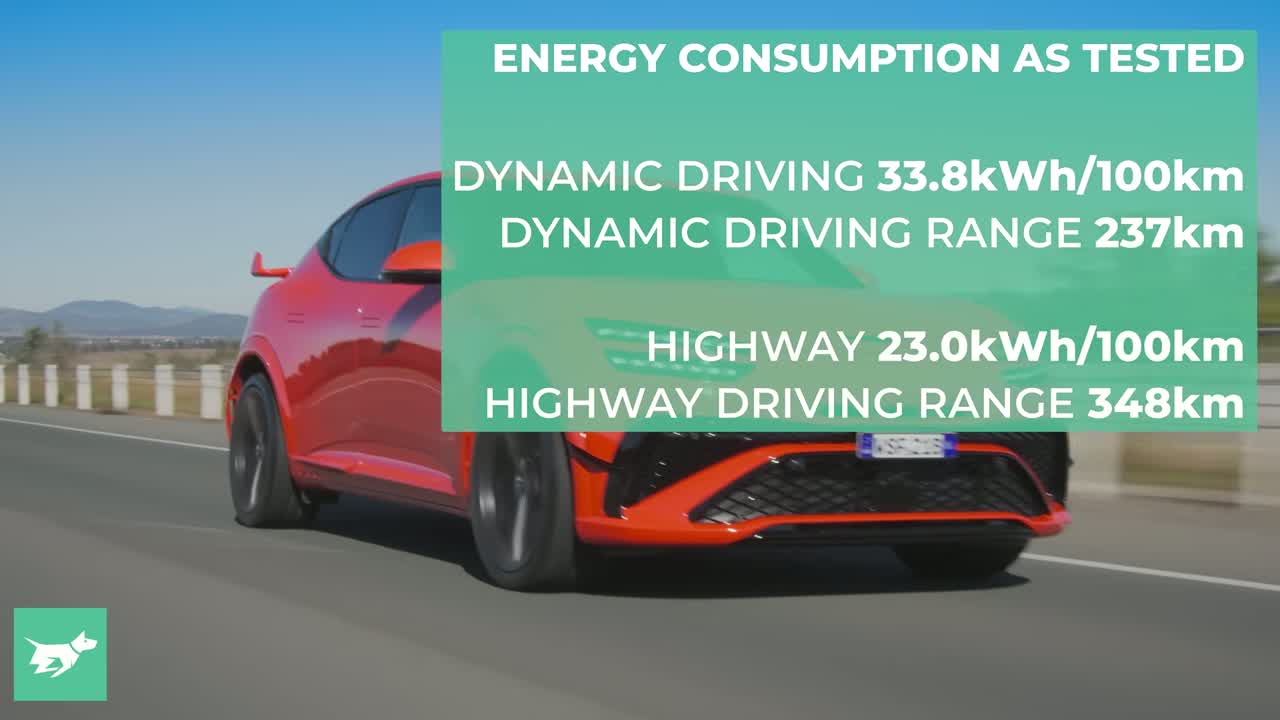
No performance EV is free of compromise, and the Magma’s is efficiency. Its estimated EPA range lands around 240 miles — versus 306 miles for the rear-drive base GV60, a drop of roughly 22%. The physics are unavoidable: fat 275-section Pirellis, a wider and lower body, and that 0.31 drag figure all cost electrons. In the source video the reviewer noted his real-world highway figure fell to about 233 miles of indicated range, so buyers should plan for a genuine mid-200s number, not the sticker optimism.
Then there is the money. At about $69,950, the Magma is a serious luxury purchase, and the math got harder for everyone: the $7,500 US federal EV tax credit expired on September 30, 2025, so there is no longer a government cushion to soften the blow. That said, the value framing still holds. You are getting BMW-and-Audi-beating performance, an interior the video repeatedly compares to Bentley-grade materials, and Genesis’s white-glove ownership perks — valet servicing that collects and returns your car — for tens of thousands less than the badge-name Germans.
The GV60 Magma is what happens when an N-car grows up, buys a tailored suit, and quietly keeps the running shoes on underneath.
The Verdict: A Performance EV You Can Actually Live With
The knock on the Magma is that its on-center steering is a touch “fluffy and aloof” compared with the razor-sharp Ioniq 6 N — a fair criticism for hardcore drivers. But that misses the point of the whole exercise. This car’s genius is bandwidth: six drive modes spanning a supple GT tune that it selects itself all the way up to a Sprint setting the reviewer said felt “like a race car” flat-out in the rain. It is, in his words, “stunningly comfortable for an EV, full stop.”
That is the real headline. The Magma proves you no longer have to choose between a track toy and a livable luxury crossover. It out-charges the Germans, undercuts them by 24-37%, matches or beats their acceleration, and does it while pampering you. Genesis didn’t reinvent the performance EV — it just made the most sensible one yet.
So here is the question for your driveway: would you take 641 refined horsepower and an 18-minute charge over a badge with a longer history and a $40,000-higher price? Tell us where you land.
Is the GV60 Magma eligible for the $7,500 federal EV tax credit?
No. The US federal clean-vehicle credit expired on September 30, 2025, so no new EV — including the imported GV60 Magma — qualifies for it in 2026. Factor the full ~$69,950 starting price into your budget, and check for any state-level incentives in California, New York, or New Jersey, where the car launches first.
Related reading on EVCUBE
Sources