China now builds nearly three-quarters of the world’s electric vehicles. For American drivers, that manufacturing boom is not a distant story — it shapes the price you pay, the cars available to you, and how vulnerable U.S. automakers are in the next decade of the auto industry.
How a subsidized home market became a global factory
The story of China’s EV dominance did not start with exports. It started with a brutally competitive domestic market. For years, Beijing backed electric vehicles with consumer rebates, charging infrastructure, and pressure on local governments to build plants. The result, according to CNBC’s reporting, is an intensely overcrowded home market where price wars, heavy discounts, and automaker-financed cheap loans are the norm — and where it is genuinely hard for any single company to turn a profit.

That pressure is exactly what pushed Chinese carmakers outward. When profit at home gets squeezed, the logical move is to sell abroad. And the world said yes: virtually everywhere except the United States, Chinese EV brands are gaining market share fast. In 2025, China sold more than 13 million EVs — about six in every ten electric vehicles sold worldwide — and the International Energy Agency (IEA) estimates China now accounts for nearly 75% of global EV production and around 40% of worldwide EV trade.
The numbers behind the boom
The scale is easier to see side by side. Chinese automakers supplied roughly 60% of all EVs sold globally in 2025, while European and North American manufacturers each accounted for about 15%, per the IEA’s Global EV Outlook 2026. The export machine is accelerating too: Chinese EV exports more than doubled to a record of over 2.5 million units in 2025, and total vehicle exports reached 7.1 million.
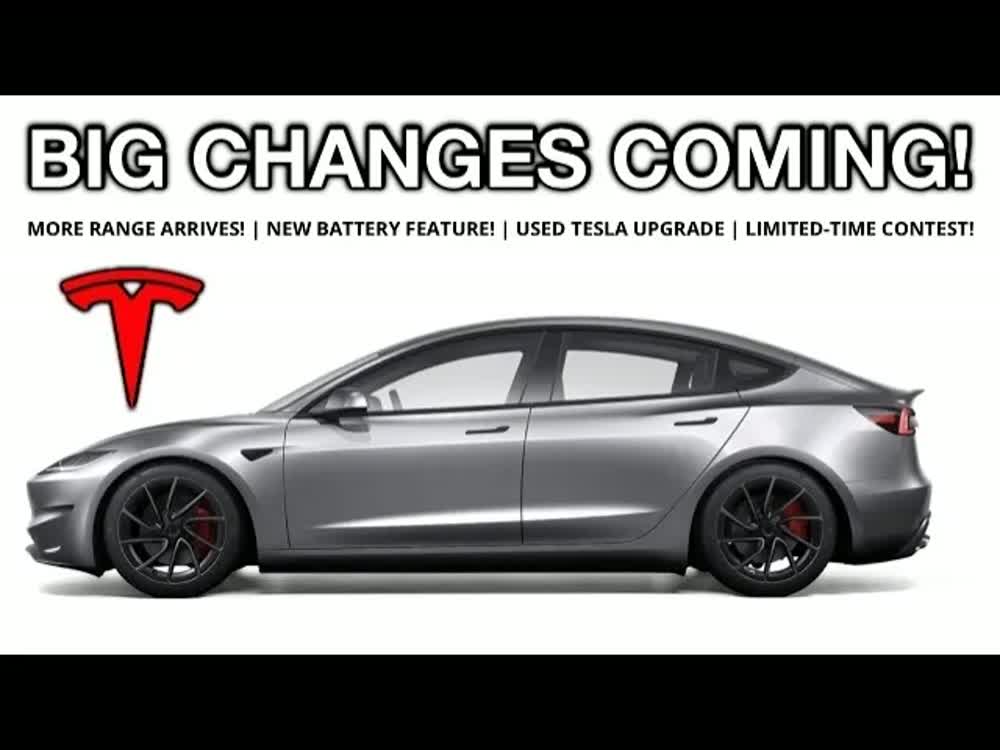
The single clearest emblem of the shift is BYD. In 2025, BYD sold about 4.6 million new-energy vehicles overall and roughly 2.26 million pure battery-electric cars — a 27.9% jump that pushed it past Tesla in annual BEV sales for the first time. Tesla, by contrast, delivered about 1.64 million vehicles in 2025, down 8.6% year over year. BYD’s overseas sales also crossed 1 million units for the first time.
| Metric (2025) | China / BYD | United States / Tesla |
|---|
| Share of global EV production | ~75% (China) | ~15% (North America) |
| Pure BEV sales | BYD ~2.26M (+27.9%) | Tesla ~1.64M (-8.6%) |
| EV exports | China >2.5M units (doubled) | Negligible to most markets |
| Global battery share | CATL 39.2% + BYD 16.4% | No top-2 supplier |
| US market access | Blocked by 100% tariff | Domestic incumbents |
China’s share of global EV production
CATL + BYD share of global EV batteries
Battery supply is where the lead gets structural. According to SNE Research, Chinese firms controlled about 70% of global EV battery installations in 2025. CATL alone held 39.2% of the market and BYD another 16.4% — together more than half the world’s cells. China also processes the overwhelming majority of the raw materials that go into those batteries: over 60% of lithium, about 65% of cobalt, and more than 85% of graphite. Whoever controls the cells controls the cost floor for every automaker downstream.
Why Chinese EVs are almost absent from the U.S.
The simplest reason is the tariff wall. In 2024, the U.S. raised the duty on Chinese-made EVs to 100% — on top of a 2.5% base tariff — effectively closing the door to direct imports. A $25,000 Chinese EV can land in the U.S. at more than $50,000 once duties and compliance are added, wiping out its price advantage against a Tesla Model 3. A January 2025 Commerce Department rule went further, restricting Chinese-connected-vehicle software (from the 2027 model year) and hardware (from 2030) on national-security grounds.
The effect is stark: Chinese-brand passenger EV exports to the U.S. are close to zero, and China’s share of the American market is well under 0.1%. Meanwhile, the American EV market itself softened — Cox Automotive data showed U.S. EV sales across all brands fell more than 40% year over year in November 2025, after the $7,500 federal tax credit expired on September 30, 2025. So at the very moment Chinese cars got cheaper and better, U.S. buyers lost both the products and a key subsidy.
What it means for American buyers and automakers
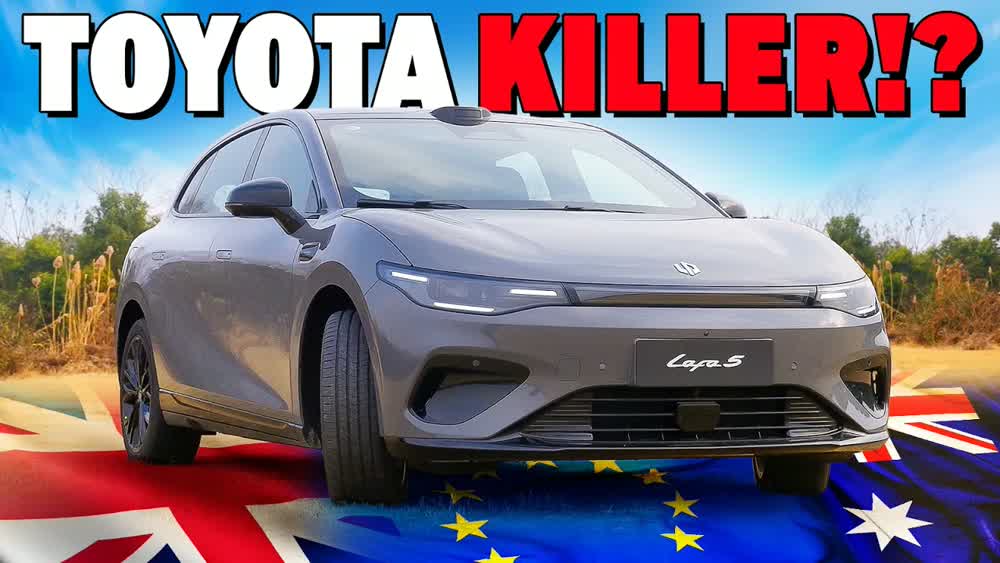
The tariff keeps Chinese cars off U.S. lots, but it does not neutralize the underlying cost gap — it just redirects it. Chinese brands are instead building factories in or near the markets they want to serve: BYD has opened plants in Thailand, Uzbekistan, and Brazil, with a Hungarian factory for Europe on the way. This is the core dynamic CNBC highlighted: trade barriers “forced Chinese cars to get creative,” cementing their lead through local investment rather than exports. Rhodium Group estimates China attracted three to four times more EV and battery investment than the U.S. did domestically, and Chinese outbound auto investment may run four to six times ahead of U.S. firms internationally.
For U.S. automakers, the strategic risk is twofold. First, Chinese firms are taking market share in every region that matters — Europe, Latin America, Southeast Asia — building scale that U.S. brands cannot match at home alone. Second, because electric platforms are the natural base for software, sensors, and autonomous driving, the spillover effects reach robotics and self-driving tech. As one analyst CNBC spoke with put it, the U.S. “really risks falling behind.” A factory in a town in Hungary or Indonesia that employs thousands also builds political ties that protect Chinese interests locally — what the reporting calls “industrial diplomacy.”
For American consumers, the irony is direct: the most affordable, feature-rich EVs in the world are being kept out by policy, even as domestic EV prices stay high and choices narrow. The BYD Seal and other long-range Chinese models show what that competition looks like, and legacy players like Volkswagen are rethinking their U.S. EV strategy in response to the shifting landscape. The question for the next few years is whether the U.S. can build competitive scale of its own — or simply watch the global auto industry restructure around a manufacturing hub it chose to wall off.
Will Chinese EVs ever be sold directly in the U.S.?
Not under current policy. The 100% tariff plus the connected-vehicle restrictions make importing Chinese-branded EVs commercially impossible, and there is no sign the rules will loosen soon. Some Chinese-owned brands already sell in the U.S. through other channels — Volvo and Polestar (both under Geely) and China-built Buick and Lincoln models — but those face far lower duties or duty-drawback arrangements. A true Chinese-branded EV on an American lot would require a major policy reversal.
Does China’s lead come only from government subsidies?
Subsidies built the early market, but the durable advantage is scale and supply-chain control. China’s dominance of battery cell production (about 70% globally) and critical mineral processing means it can set the cost floor for EVs worldwide. Even if subsidies faded, the manufacturing and materials lead would remain — which is why analysts expect the gap to persist rather than close on its own.
How does this affect the price of EVs I can actually buy?
Indirectly but meaningfully. With the most cost-competitive EVs excluded, U.S. buyers face fewer low-price options, and the expired $7,500 federal credit removed another lever that had brought prices down. In markets where Chinese EVs compete, average EV prices have fallen; in the U.S., the absence of that competition leaves more pricing power with incumbent brands.
Sources: CNBC (source video, “How China Came to Dominate the Global EV Factory Boom”); International Energy Agency, Global EV Outlook 2026; SNE Research 2025 battery installation data (via CnEVPost / EV Magz); Rhodium Group (EV & battery investment estimates); Cox Automotive (U.S. EV sales, Nov 2025); Atlas Public Policy (clean-energy investment tracking); CarGurus (U.S. Chinese-EV tariff explainer); company disclosures from BYD and Tesla (2025 deliveries).