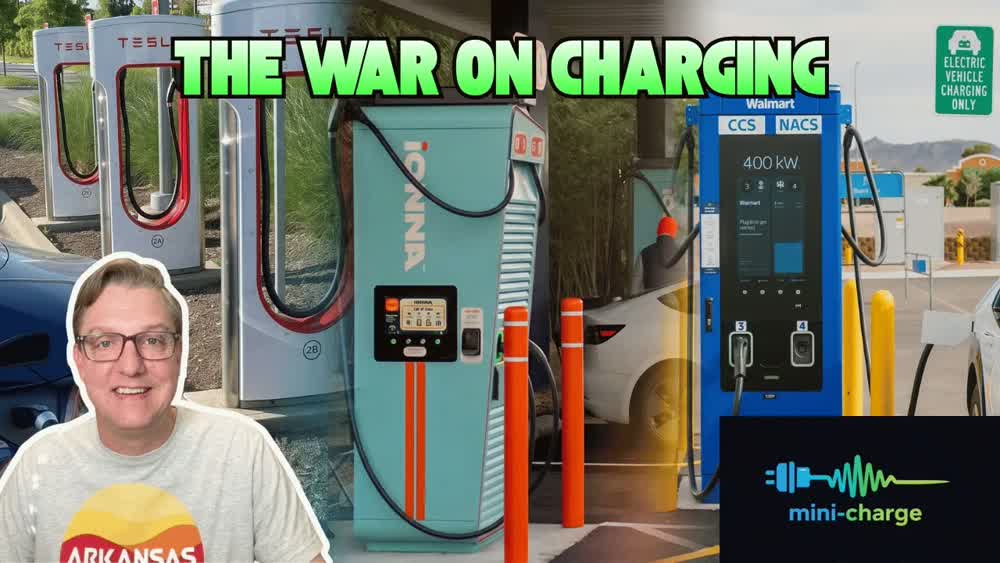
One public charging cabinet caught fire three separate times — and investigators found three completely different causes, none of them the one everyone assumed. For US drivers who charge away from home, the pattern is the real story.
Why one charger, three fires, should matter to US drivers
The cases come from British Columbia, but the lessons land just as hard at a Sheetz, a Pilot, or a Walmart parking lot in the States. The hardware at the center is a FreeWire Boost 200 — a “battery-integrated” DC fast charger that stores roughly 160 kW of energy internally across eight bolted-together modules and steps up to a 1,800 V cabinet before dumping power into a car faster than the grid alone allows. In plain terms: it is a small battery energy storage system bolted to a fuel-pump-adjacent post. When that much stored energy sits a few feet from gasoline, the margin for error is thin.

FreeWire itself went out of business in 2024, and a third-party firm (Speed Charge) took over support and preventative maintenance. That handoff — orphaned hardware, new caretaker, remote access — is exactly where the first failure began.
Incident 1: A heater that should never have been switched on
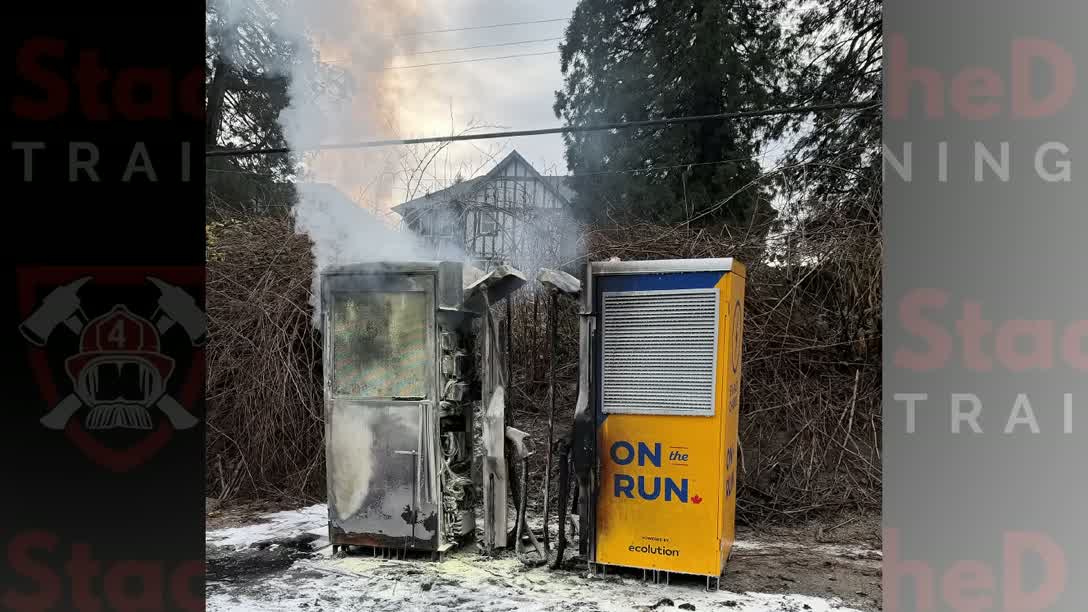
Back in October 2025, an On the Run station in New Westminster, BC, caught fire. A technician had serviced the unit in August 2025 and found nothing wrong — yet six weeks later it was fully involved in flames.
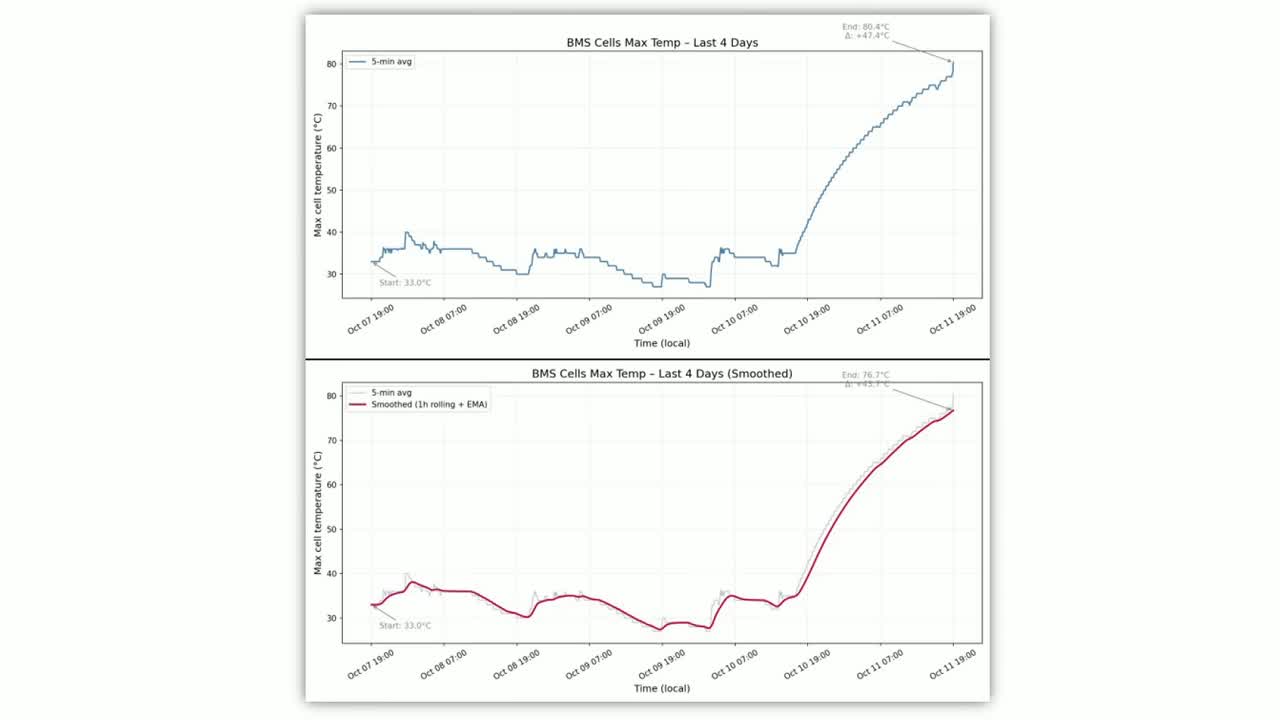
Here is what investigators found. Speed Charge had rolled out remote diagnostics: a technician could log in, push the charger into diagnostic mode, and manually control subsystems like the battery heater, bypassing the normal automated safety interlocks. During a routine HVAC check, someone accidentally switched the battery heater on and never switched it off. The heater then ran for 26 straight hours with no automatic shutoff.
Peak pack temperature, normal operation
Critical-alert threshold (55°C, silent email only)
Temperature at thermal runaway
The cabinet historically never exceeded 41°C. At 55°C the system did fire a critical alert — but it landed as a silent email on a Friday, with no acknowledgement and no escalation. Nobody acted. The next day, while the charger wasn’t even in use, the pack hit 82°C and went into thermal runaway. Fire crews arrived to a fully involved cabinet; nearby trees, a street light, and an adjacent charger were damaged, the next-door restaurant was evacuated, and thankfully no one was hurt.
The golden line: It wasn’t water intrusion. It was a heater that should never have been on in the first place — left running because a warning went to an inbox instead of a person.
Incident 2: Batteries parked, charged, and forgotten
About six weeks later, the same Boost 200 model surfaced again in Langley, BC. Five of these units had been pulled from service and swapped for newer direct-to-grid chargers that have no internal batteries. But the old packs were never removed or discharged — they were left at a 70–80% state of charge, sitting outdoors, uncovered, for over five months. No grid power, no monitoring, no routine inspection. With no power, the battery management system wasn’t even running.
Eventually one ignited, and investigators are confident water intrusion was the trigger — rainwater likely worked past the factory seals during decommissioning and reached the pack. Even after firefighters knocked down the initial fire, the battery reignited three separate times over the next 90 minutes. They posted security overnight to watch it.
Two different chargers, two different root causes (human error in remote maintenance vs. neglected stored energy), same dangerous outcome.
Incident 3: The third-party adapter that blew in half
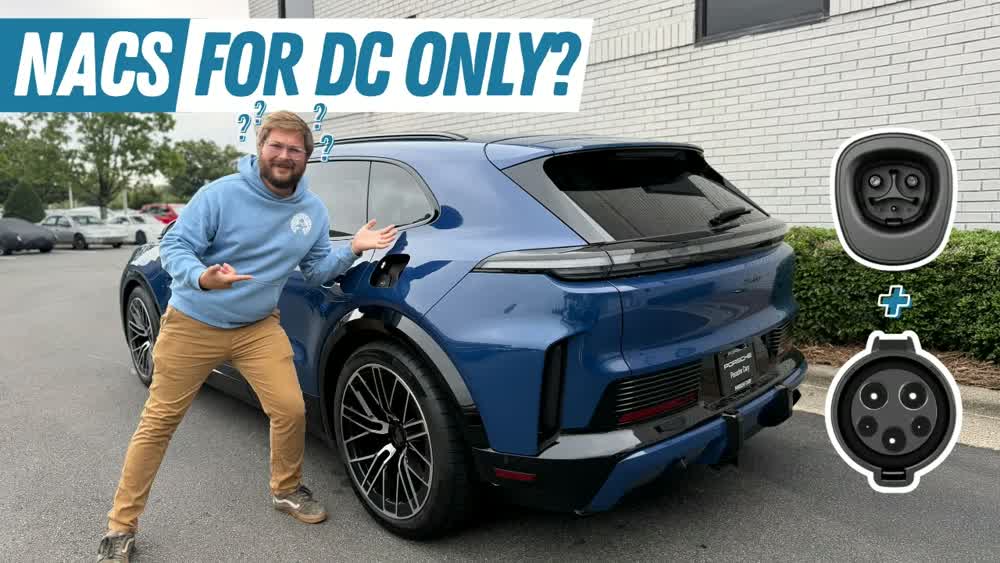
The third case involves the same brand conversation but a different failure mode — and it is the one every US adapter-buyer needs to hear. In August 2024, in Hope, BC, a Tesla owner used a third-party A2Z EV adapter on a non-Tesla fast charger. They had used that adapter roughly 50 times before with no incident. This time, they plugged in, started the session from a phone app, and walked away.

Then came a bright flash and a loud bang that knocked them to the ground — an arc flash. The adapter was blown in half; there was melting on the cable terminals, burned components on the charger’s circuit board, and scorching at the car’s charge port. The owner walked away with only scrapes and abrasions, but it could easily have been worse — their spouse was sitting in the passenger seat.
Investigators believe the failure started during the station’s routine isolation test at startup. Even at low power, resistive heating deformed the adapter’s internal bus bars; as the station ramped to full pack voltage, a short dumped that voltage back through the ground pin into the station. The adapter never stood a chance.
The takeaway is uncomfortable but clean: anything that sits between your car and the charger — an adapter, an extension cord, a “compatible” accessory — is exactly the gear you should be skeptical of. Use what the manufacturer built for that connection, or gear that’s actually certified for it, not just advertised as compatible.
What the data says about public charging risk in the US
These incidents are outliers, not the daily experience of most EV drivers — and the numbers back that up. The US now has roughly 64,000 public DC fast-charging ports and more than 180,000 Level 2 public stations (DOE Alternative Fuels Data Center, 2026). Reliability is also trending up: Paren’s Q1 2026 dataset puts the national DC fast-charging reliability score at 93.5%, up from 93.4% in Q4 2025 and a far tighter band than the 85–92% range most states sat in a year earlier. Even the laggard, Oklahoma, climbed from 77.7% to a floor that’s rising.

But “reliable enough” and “safe by design” are different questions. The table below contrasts the three investigated failures with the everyday reliability picture — the gap between a rare thermal event and a common “charger out of service” annoyance.
| Failure type | Root cause | How often it shows up | Who owns the fix |
|---|
| Stored-energy thermal runaway (Boost 200 #1) | Remote heater left on; silent alert | Rare, brand-specific | Maintainer / OEM |
| Neglected decommissioned pack (Boost 200 #2) | Water intrusion; no monitoring | Rare; storage/retirement gap | Site operator |
| Adapter arc flash (#3) | Uncertified third-party accessory | Low; rising with adapters | Driver |
| Broken / unavailable charger | Hardware, payment, vandalism | ~21% of non-Tesla DCFC sessions | Network operator |
Cross-brand reliability: the Supercharger gap
The single most useful comparison for a US buyer is brand-to-brand. J.D. Power’s 2024 EVX Public Charging Study found about 21% of non-Tesla DC fast-charging sessions were abandoned because the charger malfunctioned or was unavailable. Tesla’s Supercharger network, on the same metric, holds roughly 99% uptime. That is the widest reliability gap of any major EV market.
The market is also shifting fast. Paren reports that 3,300 new DC ports came online in a single quarter while average utilization held at 15.6%, that chargers of 250 kW or higher made up 67% of new installs, and that pricing stayed steady near 53¢/kWh. Tesla’s share of new installations slipped from over 40% to 26% as smaller networks grabbed more than 30% of deployments — a more competitive field, but one where maintenance discipline varies widely.
What EV owners should actually do
None of this means “don’t public-charge.” It means charge with eyes open:
- Buy certified accessories. Use the adapter or cable the manufacturer built, or one certified (UL/ETL) for your exact connection — not one merely “advertised as compatible.”
- Trust the codes that exist. US installs should follow NFPA 70 (NEC Article 625) with equipment listed to UL 2202 / UL 2594, plus the 2024 IECC’s EV-ready parking provisions.
- Watch for the recall signals. NHTSA’s 2026 files show thermal-risk recalls scaling fast — Volkswagen ID.4 (43,881 vehicles, 5 reported thermal events, 80% charge cap, DC fast-charge paused), Jaguar I-Pace (2,278, folded anode tabs), and a 2026 Nissan LEAF batch (51 vehicles, a confirmed thermal event). If your car is named, charge outdoors and cap the state of charge until fixed.
- Report, don’t assume. A silent inbox alert is how Incident 1 turned into a fire. If a charger looks damaged, say something.
FAQ: Are EV chargers more dangerous than gas pumps?
No single-category answer exists, but NFPA’s own research notes there is no current evidence an EV is more likely to catch fire than an internal-combustion vehicle. The unique challenge is stranded energy: a lithium pack can reignite for 90 minutes or more (as Incident 2 showed), which is why codes now push for emergency disconnects within 50 feet and clear first-responder access.
Related reading on EVCUBE
Sources