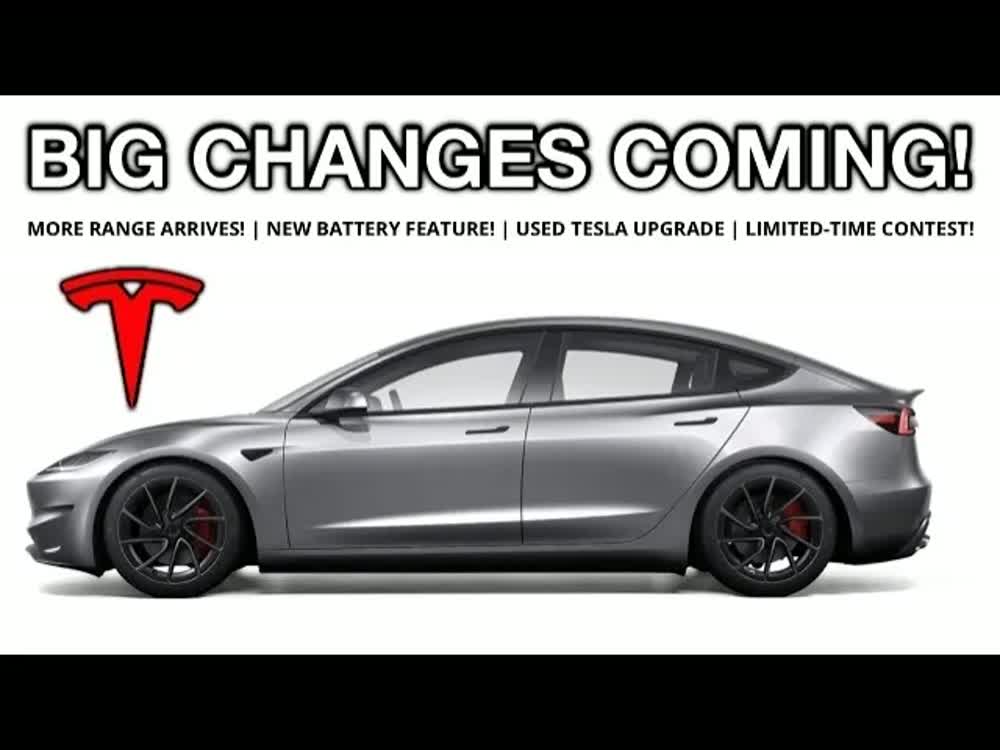
The Rivian R2 wears a bigger EPA number than the Tesla Model Y — 330 miles to 306 — yet in a side-by-side 70-mph highway test, the Tesla drove 57 miles farther on a smaller battery. The spec sheet lied; the highway told the truth.
Two Performance Crossovers, One Highway
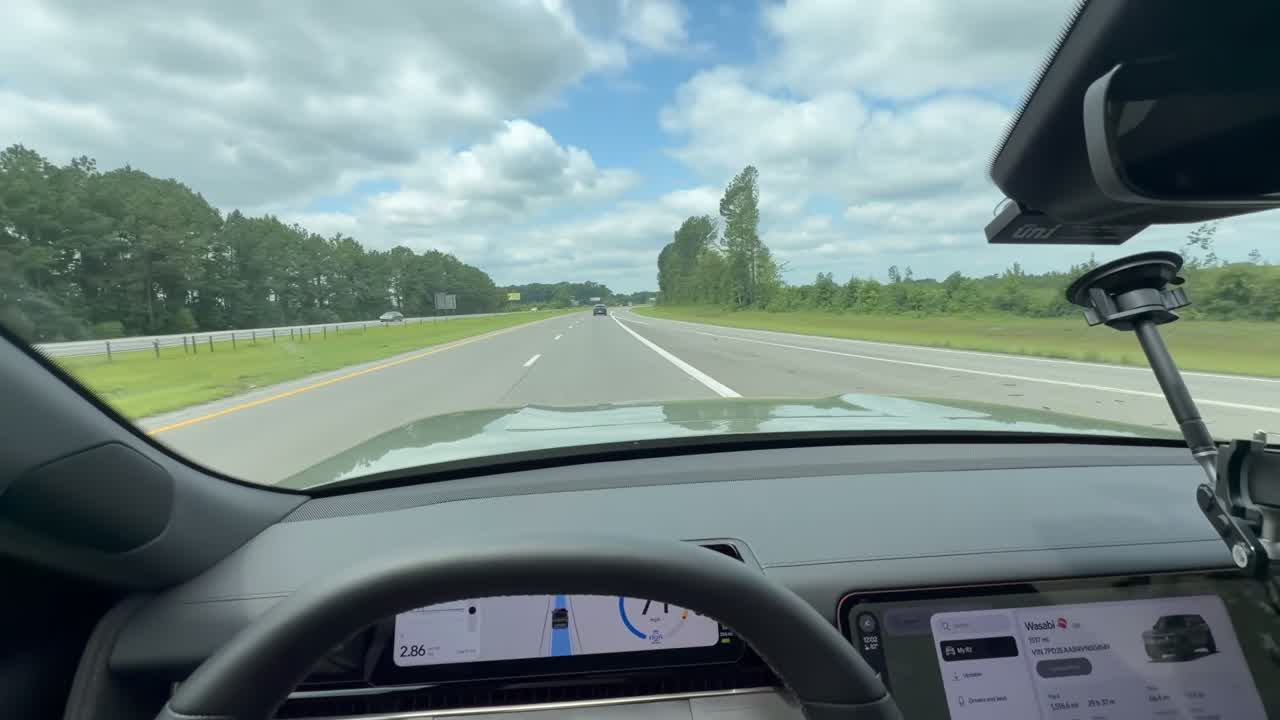
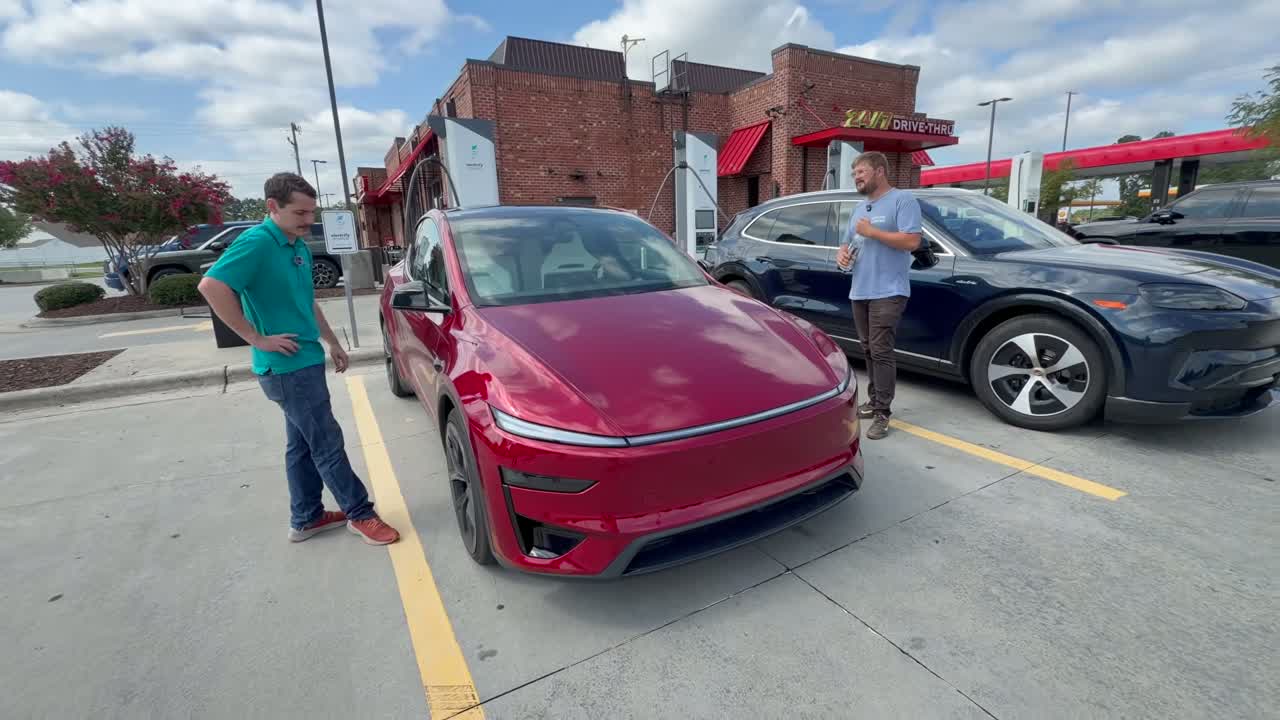
Out of Spec Reviews did what no brochure will do for you: they lined up the 2027 Rivian R2 Performance and the Tesla Model Y Performance — both dual-motor, both AWD, both in their most comparable trims — and drove each one at a steady 70 mph from a full battery until it physically couldn’t hold 70 anymore. Same day, same North Carolina loop, warm and clear, every car taking a turn at the front. This isn’t a lab estimate. It’s a coffin-to-coffin duel.

The R2 tested was the only configuration on sale at the time: the Performance with the 21-inch road wheels and Pirelli Scorpion MS tires — the most efficient setup Rivian offers, the one every early buyer will reference for years. Rivian supplied the wheels and signed off on the car. This was a representative R2, not a worst-case one.
The Numbers That Broke the Script
Here is the corrected, ground-truth data — the testers cross-checked each car’s optimistic speedometer against a Porsche Cayenne used as a rolling reference, so these distances are real miles, not dashboard guesses:
| Vehicle | EPA Range | 70-MPH Real Range | % of EPA | Energy Used | Efficiency |
|---|
| Tesla Model Y Performance | 306 mi | 310.1 mi | 101.3% | 82.2 kWh | 3.77 mi/kWh |
| Rivian R2 Performance | 330 mi | 253 mi | 77.3% | 89.3 kWh | 2.83 mi/kWh |
| Rivian R1S (Max Pack, ref) | 410 mi | 358.6 mi | 87.5% | — | 2.62 mi/kWh |
Read that top row again. The car with the lower EPA rating beat its own rating. The car with the higher EPA rating hit just 77.3% of it. On paper the R2 had a 24-mile advantage. In the real world it finished 57 miles behind. That is an 81-mile swing between what the window sticker promised and what the highway delivered.
Model Y — 101.3% of EPA
R2 — 77.3% of EPA
And note the battery math. The R2 pulled 89.3 kWh out of a pack Rivian quotes at 87.9 kWh usable — more than the manufacturer’s own number. The Model Y pulled 82.2 kWh from a smaller pack. So the Tesla went farther and used less energy: 3.77 miles per kWh versus the R2’s 2.83. That 33% efficiency gap is the whole ballgame.
Why the R2 Lost a Race It Should Have Won
The honest answer is shape. The R2 is a boxy, adventure-styled SUV; the Model Y is an egg. At a constant 70 mph, aerodynamic drag is the dominant energy cost, and drag scales brutally with speed. A bluff front end simply costs more per mile on the interstate — which is exactly where American buyers live.
Out of Spec hunted for excuses and found almost none. The R2’s hands-free driver-assist (Universal Hands-Free) peaks at just 200 watts — flat out, that accounts for under 2 miles of range. The weather was ideal. Every car held 70 mph. Rivian even pulled the logs from the test vehicle and, per the hosts, raised no objection. When a maker doesn’t dispute the result, you can trust the result.
“You can buy a car that has more range on paper by 24 miles and then go 57 miles less far than the other car in the same test, in side-by-side conditions. That is not an automaker problem. That is a problem with the EPA range ratings.” — Kyle Conner, Out of Spec Reviews
The R1S Plot Twist
The most uncomfortable number for Rivian fans wasn’t the Model Y — it was the R1S. The larger, older, heavier R1S Max Pack, carrying roughly 25,000 miles of wear and a 410-mile EPA rating, drove 358.6 miles at 2.62 mi/kWh. That’s more than 100 miles farther than the brand-new R2, at nearly identical efficiency.
You would expect the smaller, lighter R2 to be meaningfully more efficient than its big sibling. It wasn’t. The two are within a rounding error of each other on the highway, which suggests the R2’s real-world efficiency ceiling is set by its shape and weight, not by any generation gap in Rivian’s engineering.
EPA Ratings Are the Real Story
Step back from the brand rivalry and the bigger issue surfaces: the two cars weren’t measured the same way. Automakers can choose between EPA test cycles, and the incentives are lopsided. Tesla appears to test conservatively, so its cars routinely beat their sticker numbers in independent highway tests. Rivian appears to chase the highest advertised figure, so its real-world results land well short. A buyer comparing “330 vs 306” on a Monroney label has no idea those two numbers came from different procedures.
This isn’t unique to Rivian. Independent 70-mph testing consistently shows mainstream EVs landing between the high-60s and low-80s percent of EPA on the highway; the Hyundai Ioniq 5, a key R2 cross-shop, similarly falls short of its combined rating once you hold a steady interstate cruise. The takeaway for US buyers: treat EPA range as a showroom number, not a road-trip promise — and discount boxy SUVs hardest at 70+ mph.
For context on where the R2 fits against its rivals on price and specs, see our Rivian R2 breakdown and the $45K pricing analysis. And if you want the R1S owner reality check, we covered it in this owner report.
So is the R2 a bad road-tripper? Not necessarily. 253 miles at a constant 70 mph is enough for plenty of buyers, and the R2 charges on the NACS network — over 21,000 Superchargers — with a 10–80% charge in under 30 minutes. But if you want a single do-it-all vehicle that genuinely delivers 300 real highway miles, the current R2 isn’t there yet. Push to 80 mph or add winter cold and the hosts expect that number to fall into the low 200s. Know what you’re buying before you sign.
FAQ: Should I still buy the Rivian R2?
If your daily driving is local and you road-trip occasionally with planned charging stops, the R2’s 253-mile highway reality is fine — and its off-road capability, interior, and software are genuinely strong. If you regularly drive 300+ highway miles in a day and hate charging stops, the Model Y (or a more aero-efficient EV) will serve you better today. Either way, budget for ~77% of the EPA highway number, not 100%.
FAQ: Why did the Model Y beat its own EPA rating?
Tesla appears to certify the Model Y on a conservative EPA cycle, so real-world highway efficiency overshoots the sticker. Out of Spec measured 310.1 miles against a 306-mile EPA rating — 101.3%. It’s the same car, tested the same way as the R2; the gap is in how each automaker targets the rating, not in the test itself.
Related reading on EVCUBE