Every automaker promises solid-state batteries will soon erase range anxiety — but as of 2026, not one true all-solid-state cell powers a car you can actually walk onto a lot and buy. Here is the real scoreboard.
What “solid-state” actually means — and why it matters
Every battery you own hides a tiny amount of flammable liquid. It is the electrolyte, the medium lithium ions swim through as the cell charges and drains. Solid-state replaces that liquid with a thin layer of ceramic, glass, or polymer. Argonne National Laboratory describes the solid separator as non-flammable, so one fire pathway simply disappears. The bigger prize is on the anode side: engineers can ditch bulky graphite and use a thin foil of pure lithium metal instead, which stores far more energy in far less space.

That is the whole idea in one sentence. But the numbers are what separate reality from marketing — and right now the gap between a sample cell and a car you can drive is the entire story.
The 2026 scoreboard: who is actually building it
Four names dominate the conversation, and they are not in the same place. Toyota and Samsung SDI bet on sulfide chemistry; CATL, the world’s largest cell maker, is also on sulfide; QuantumScape, a California company, took a different oxide/garnet, anode-free route. None has a cell in a production car today.
| Developer | Route | Claimed energy density | Target timing | Real status in 2026 |
|---|
| Toyota | Sulfide | 450–500 Wh/kg | Vehicles 2027–2028 | Japan production license granted; pilot lines up; zero cars on sale |
| Samsung SDI | Sulfide (anode-less) | ~450 Wh/kg (900 Wh/L) | Mass production 2027 | Sample cells with BMW & SolidPower since 2025 |
| CATL | Sulfide | 500+ Wh/kg (lab) | Small 2027, mass ~2030 | Publicly denied 2027 mass-production rumors |
| QuantumScape | Oxide/garnet (anode-free) | 301 Wh/kg (844 Wh/L) | Samples now; VW 2027 | Eagle Line live; shipping QSE-5 samples |
Toyota has held a production license in Japan since October 2025 and targets first vehicles — likely a flagship Lexus — in 2027–2028, with a claimed 10-minute 10–80% charge and 621–745 miles of range. Samsung SDI says its 900 Wh/L “dream battery” reaches mass production in 2027 and can charge from 8% to 80% in 9 minutes. CATL aims for small-scale output in 2027 and true volume around 2030. QuantumScape, the only US-led name here, inaugurated its Eagle Line pilot in San Jose in February 2026 and is already shipping QSE-5 cells to Volkswagen’s PowerCo and to Ducati.
The numbers that matter to US buyers
Forget the breathless claims for a second and look at what is measured. Today’s best lithium-ion cells hold about 250–300 Wh/kg. QuantumScape’s QSE-5 sits at 301 Wh/kg — roughly 20–30% better, and that is a company-rated spec on sample cells, not a car you can buy. Independent labs reached about 451 Wh/kg in May 2026. So the technology is better. It is not triple.
Today’s Li-ion (best)
QuantumScape QSE-5
Samsung / Toyota (claimed)
Lab record (May 2026)
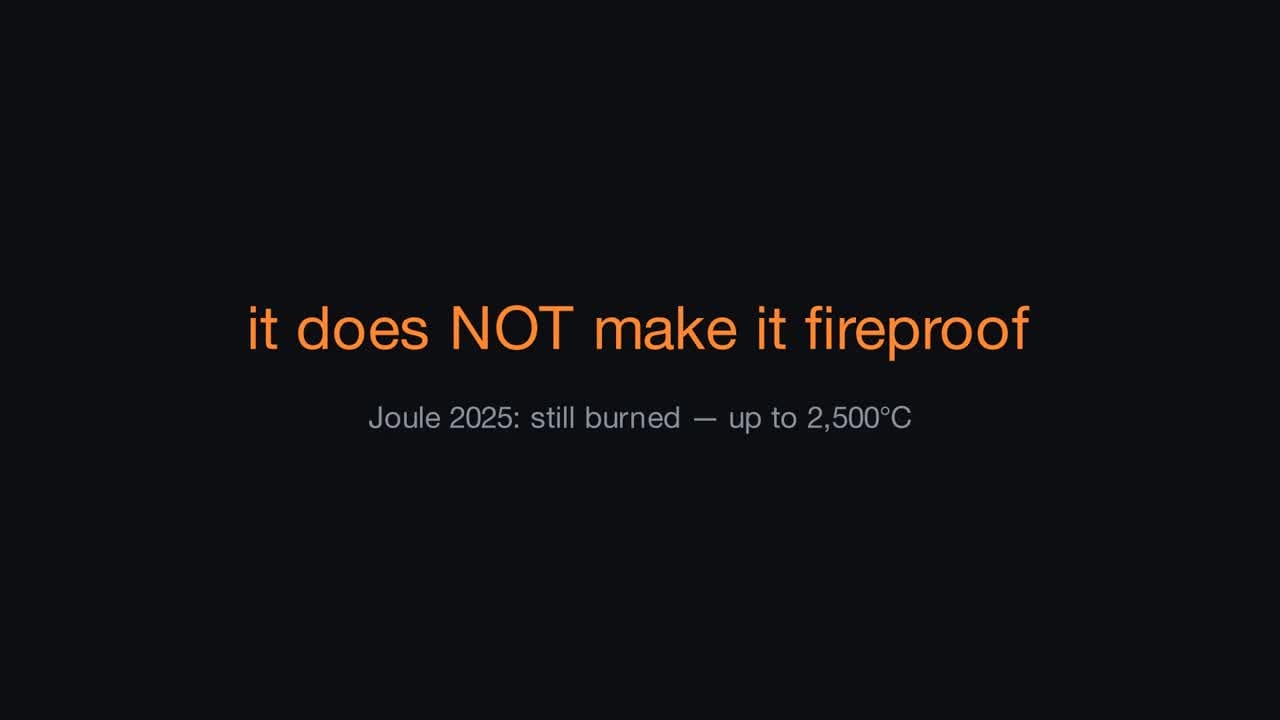
On charging, QuantumScape specs 10–80% in under 15 minutes and Toyota targets under 10. On lifespan, QuantumScape quotes over 95% capacity after 1,000 cycles — strong, but a prototype figure. The catch is honesty about safety: removing the liquid removes one fire risk, not all of them. 2025 research in the journal Joule found solid-state cells can still overheat and burn, in reactions measured up to 2,500°C. Solid-state is safer, not fireproof.
What is actually shipping today: “semi-solid”
This is where the marketing trick lives. Most “solid-state cars” in 2026 headlines are semi-solid — they still contain about 5% liquid electrolyte, essentially an upgraded lithium-ion battery, which is exactly why they can ship. China’s MG4 became the first affordable EV sold with a semi-solid pack, with deliveries starting December 2025 under €13,000 (about $14,000), but its energy density is a modest 180 Wh/kg — it is sold for safety, not range. NIO put a bigger 150 kWh semi-solid pack in the ET7 (1,000+ km tested range) in 2024, then quietly killed it after a few hundred units as too expensive.
The honest fact that cuts through the noise: as of 2026, there are zero true all-solid-state cells in any car you can buy from anyone, anywhere. Semi-solid is a real, useful step. It is not the breakthrough the word “solid-state” implies.
The real wall is cost, not chemistry
If the science is largely solved, why is no one selling it? Because solids fight back. Lithium-metal dendrites can spike through cracks and short the cell. The solid must stay perfectly pressed against swelling electrodes — some designs need clamping under enormous pressure or heating to 60°C+. Popular sulfide electrolytes react violently with air and moisture, so they need ultra-dry “dry room” factories. All of that is expensive.
And here is the quiet deal-breaker in plain dollars. Regular lithium-ion just hit a record-low pack price of about $108 per kWh. Solid-state is estimated at roughly $350–800 per kWh — several times more. CATL itself puts early solid-state at 3–5 times the cost of liquid cells. Toyota’s own cells run an estimated $150–200/kWh today, with a goal to break below $100/kWh only by 2030. That is why solid-state will not appear in your cheap EV yet.
When can you actually buy one?
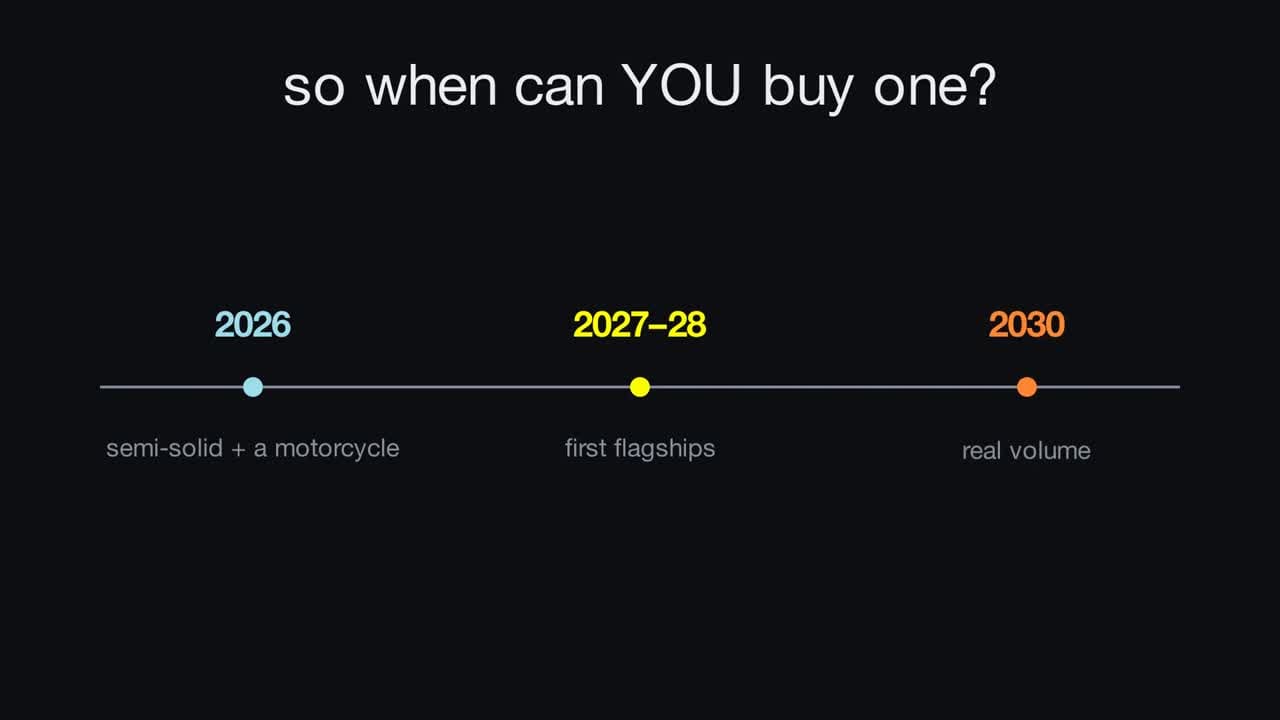
Honestly, near-term you will see semi-solid batteries in premium and niche vehicles. The first all-solid product may not even be a car: Ducati has already shown a motorcycle running QuantumScape cells, and an Estonian firm claims a 2026 launch. For a mainstream car, the credible window is 2027 for the first trickle in flagship models, and around 2030 for real volume.
Remember the track record before you circle a date on the calendar. Toyota alone has slipped this promise from 2020 to 2023 to 2026, and now to 2027–2028. The wall is no longer “can we make one” — it is “can we make millions cheaply and safely.”
The honest verdict
Solid-state is real, and the progress is real and measurable. If those numbers hold at scale, we get batteries that are safer, denser, and longer-lived. But in 2026 it is a premium promise on the horizon, not a finished product. Better, not magic. Coming, not here.
So the question for a US buyer is practical, not technological: do you wait for a 2027–2028 solid-state Toyota or BMW and pay a steep early premium, or do you buy a $108/kWh EV today and let someone else eat the learning curve? Which camp are you in — and would a 10-minute charge ever be worth paying several times more per kWh? Tell us in the comments.
Is any solid-state battery in a car I can buy in 2026?
No. As of 2026 there are zero true all-solid-state cells in any production car anywhere. What you can buy are semi-solid packs (like the MG4 and, briefly, NIO’s ET7) that still contain about 5% liquid electrolyte — an upgraded lithium-ion battery, not the all-solid breakthrough.
Why is solid-state safer but not fireproof?
Replacing the flammable liquid with a non-flammable solid separator removes one fire pathway. But 2025 research in the journal Joule showed solid-state cells can still overheat and burn in reactions measured up to 2,500°C. The chemistry is safer, not immune.
When will solid-state actually reach US showrooms?
The credible window is 2027–2028 for the first flagship models (Toyota/Lexus, BMW via Samsung SDI, VW via QuantumScape), with real volume and lower cost around 2030. Toyota has already pushed this promise back multiple times, so treat early dates as targets, not guarantees.
Related reading on EVCUBE