Tesla’s 2026 summer update proves the company still treats your car like a phone that gets better every few weeks — but it also quietly draws the line between the 4 million owners who got a real upgrade and the ones who got a consolation prize.
What actually shipped in the 2026.26 summer update
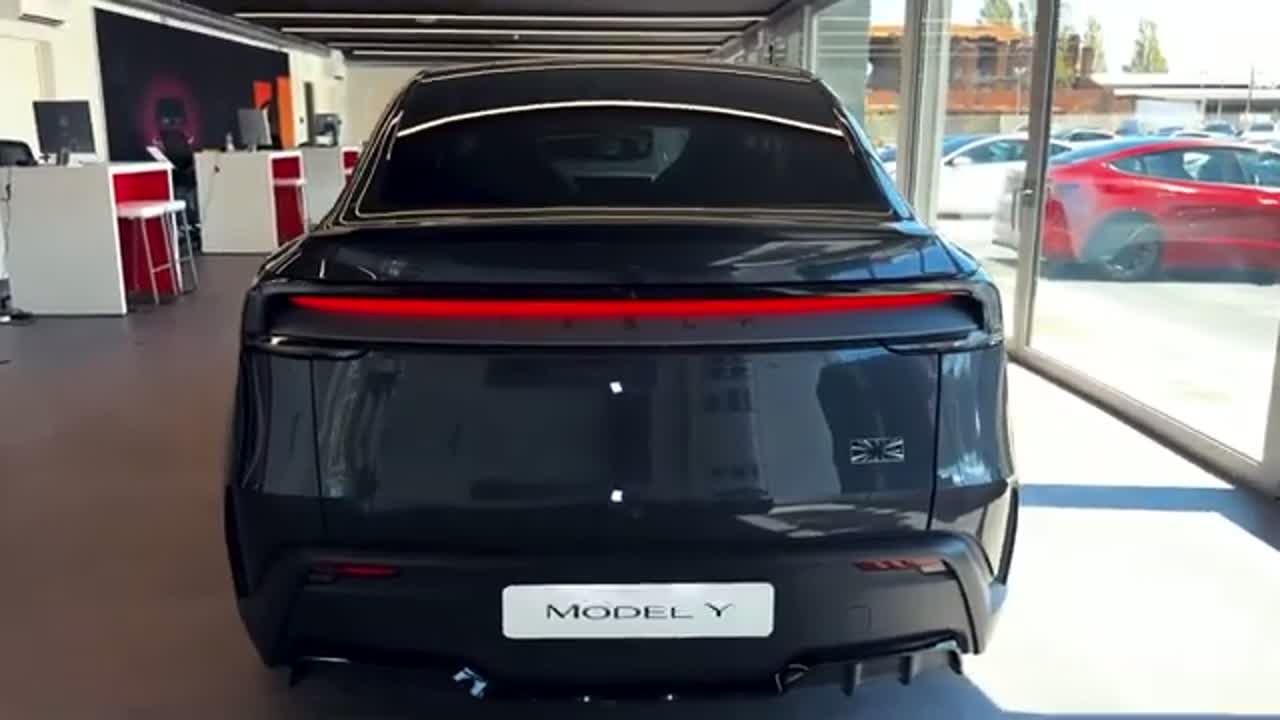
Tesla announced the 2026 summer update — firmware family 2026.26 — on July 22, 2026, and the headline is that Grok stopped being a chatbot and started being a co-pilot. The assistant can now place phone calls, search and play media, adjust the climate, and pop the glove box, all by voice. The same update seeds the refreshed Model Y and the 2024+ Model 3 with new intro animations, a small but deliberate signal that Tesla is leaning into the “car as a living product” story.

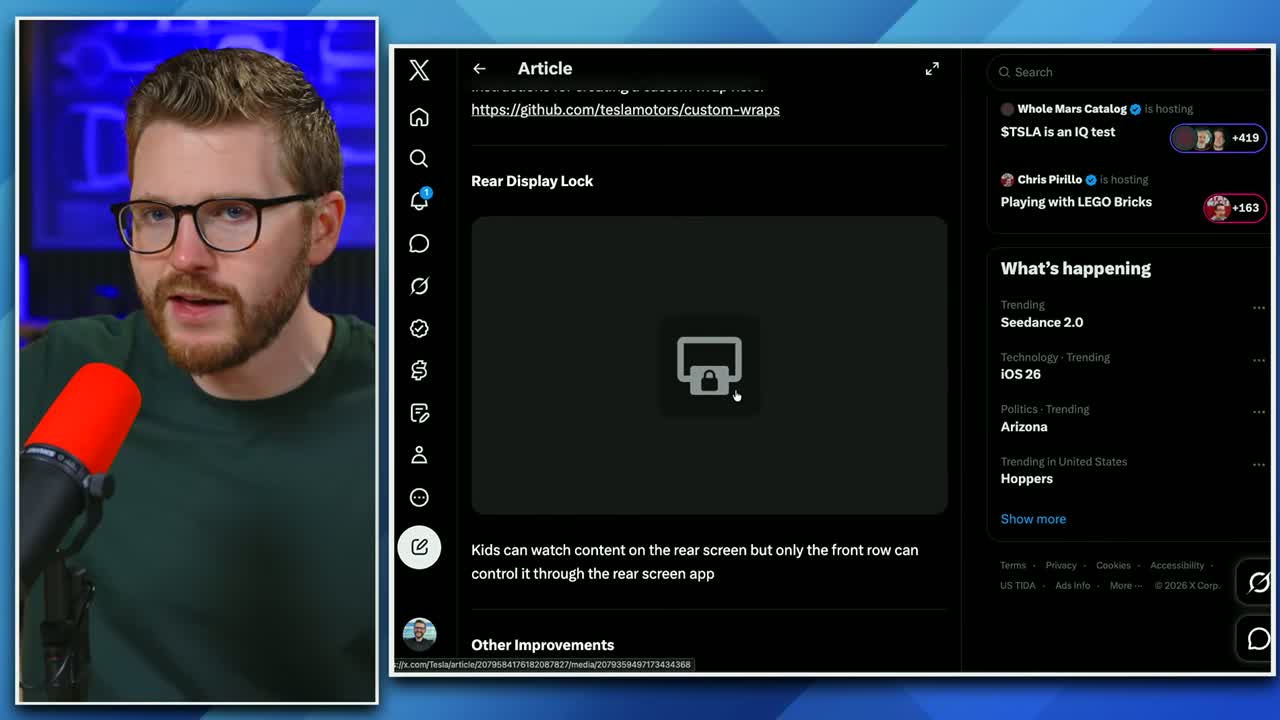
The rest of the drop is a mix of quality-of-life and app migration. Navigation now learns your habits and surfaces preferred routes instead of always defaulting to the fastest one. You can set a target arrival battery percentage from the app, upload a custom wrap from your phone (no USB stick), and lock the rear screen to video while blocking touch — a genuine win for parents. Superchargers are now searchable by name, Apple Music gets a proper queue from search and artist pages, and the in-car browser can finally use the cabin camera and mic for web calls on AMD-based units.
Karaoke got scoring, with high scores saved to your Tesla profile, and FSD visualization gained a user-set zoom level. None of this is revolutionary on its own. Stacked together, though, it is the clearest example yet of Tesla moving features off the car and onto the phone — and off the to-do list and into your driveway.
Grok: from answering questions to doing things
The leap is worth isolating because it maps a strategy. When Grok first appeared in Tesla cabins in the 2025 holiday update, it could only talk. The 2026 spring update added the “Hey Grok” wake word. This summer update hands it actuators. Here is the capability curve in one table:
| Capability | Pre-2026 | Summer 2026 |
|---|
| Answer car questions | Yes (chat only) | Yes |
| Voice wake word | No | Yes (“Hey Grok”, since spring) |
| Make phone calls | No | Yes |
| Search & play media | No | Yes |
| Adjust climate | No | Yes |
| Open glove box | No | Yes |
Tesla’s stated goal is to retire the old, limited voice-command tree entirely and let Grok own in-car control. For US owners that means fewer taps at 70 mph — but it also means more of your car’s personality now lives behind a server-side model that improves whether or not you bought a new vehicle.
FSD v14 Lite for HW3: a real win with a hard ceiling
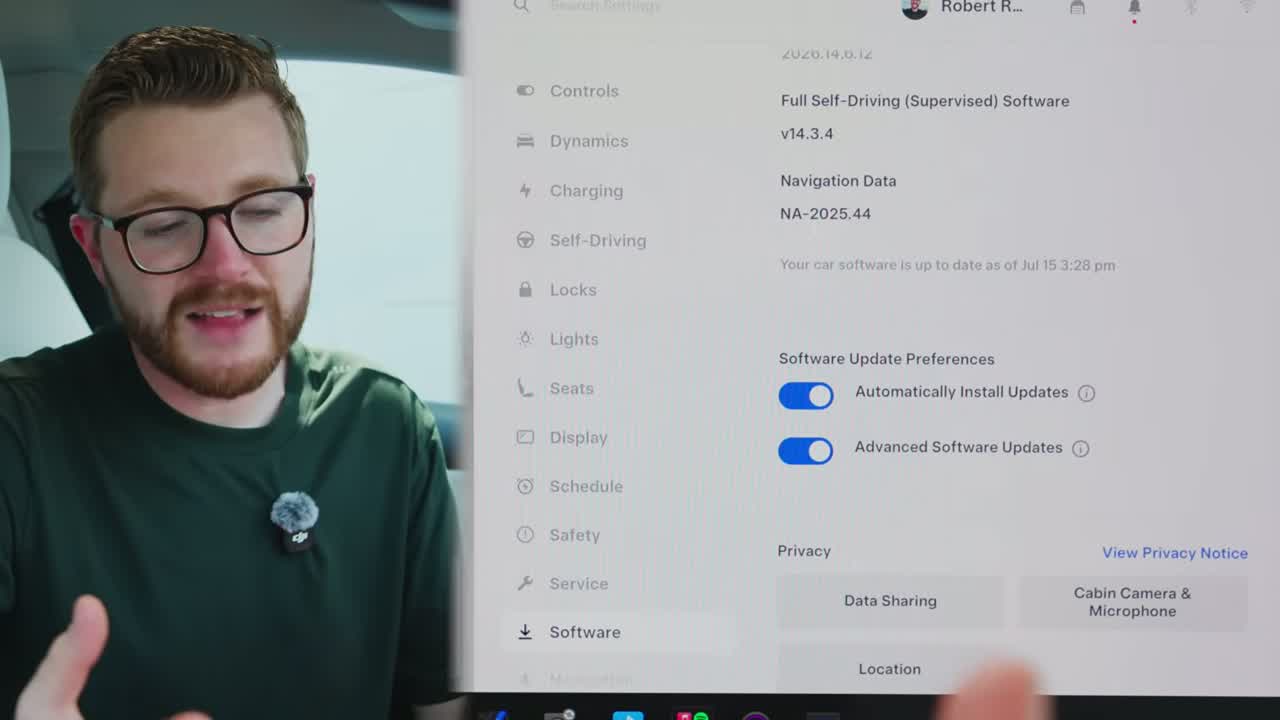
This is the part of the update that matters most to the largest slice of the fleet. On June 29, 2026, Tesla AI chief Ashok Elluswamy confirmed that FSD v14 “Lite” (build 2026.20.5.1) began rolling out to Hardware 3 cars — the first major Full Self-Driving update for an estimated 3.5 million to 4 million HW3 vehicles that had been frozen on v12.6 since February 2025, a roughly 16-month drought.
The engineering is legit. Tesla used knowledge distillation — teaching a smaller HW3 model to mimic the full HW4 v14 network — to recover features HW3 had never had: pull-out-from-park, arrival parking options, automatic Drive/Reverse shifting, and notably improved city-driving behavior. But the asterisk is the name itself: “FSD (Supervised) v14 Lite” is still a Level 2 system. You watch, hands ready, the whole time.
The reason is physics, not effort. HW3’s memory bandwidth runs around 48–68 GB/s on LPDDR4; HW4 uses GDDR6 at roughly 384 GB/s — about one-eighth the throughput, which Musk himself described as “~15% effective” versus HW4. That gap is baked into the silicon, which is why the full v14 model (needing ~12.5 GB of addressable memory) can’t run on HW3’s 8 GB. The “Lite” build is the ceiling, not a waystation.
| Spec | HW3 (AI3) | HW4 (AI4) |
|---|
| Memory bandwidth | ~48–68 GB/s (LPDDR4) | ~384 GB/s (GDDR6) |
| Relative to HW4 | ~1/8 (Musk: ~15% effective) | Baseline |
| FSD v14 | v14 “Lite” (distilled, supervised) | Full v14 |
| Unsupervised FSD | Not capable | Target platform |
It is worth remembering what HW3 owners paid for. Tesla collected up to $15,000 for FSD on the promise that “all hardware needed for full self-driving” was already in the car. On the April 2026 earnings call, Musk closed that door: HW3 “simply does not have the capability” for unsupervised FSD. The summer “Lite” drop is the company making good on the software while leaving the hardware promise permanently unmet.
Tesla’s OTA flywheel versus everyone else
The reason a summer update even registers as news is that Tesla updates its cars on a cadence no legacy automaker matches. Industry tracking puts Tesla at a major or minor release every 1 to 4 weeks, with public release notes, touching the full vehicle — ADAS, battery management, UI, and safety. Compare that to the rest of the field:
| Brand | Major OTA cadence | Scope | Standout |
|---|
| Tesla | Every 1–4 weeks | Full vehicle | Public release notes; ~480K Q2’26 deliveries |
| Hyundai / Kia | 2–4 per year | Full vehicle (Bluelink, 10-yr) | Ioniq 6 gained ’26 ADAS vs launch |
| Polestar / Volvo | ~Quarterly | Google OS + patches | Reliable, substantial |
| BMW | 3–4 per year | Infotainment + some ADAS | iDrive X SDV architecture |
| VW ID | 2–3 per year | Infotainment + Travel Assist | Install can block car 40 min–3 h |
| Rivian | Frequent | R1 platform, Driver+ | Closest Tesla rival in OTA |
That cadence is a compounding advantage, not a feature. Every cycle generates fleet data and owner feedback that feeds the next one, and it is the single biggest reason a 4-year-old Tesla still feels current — a real factor in resale value that competitors who update 2–4 times a year simply can’t replicate. Our owner-take comparison of the Ioniq 5 versus the Model Y digs into how that plays out day to day.
The rollout reality: “announced” is not “in your car”
Here is the frustration the video nails, and the data backs it up. Tesla ships in waves, and the gap between “we announced it” and “it’s on your car” can run 6 to 8 weeks — the spring update took that long to reach more than a sliver of the fleet. v14 Lite went first to the Early Access Program on June 29 and only then to a wider pull “over the next few weeks.” The initial summer wave covered less than 1% of vehicles.
Chance your car has the update on day one
Owner patience needed before wide rollout
Usefulness of the “Advanced” toggle (per owners)
The “Advanced software update” switch in your menu is, by the account of longtime owners, closer to a placebo than a fast pass — multiple owners report Standard cars pulling updates before Advanced ones. What actually helps: stay on strong Wi-Fi (the car needs it to download), let the software page poll every 24 hours, and consider a scroll-wheel reboot to force a check. The Early Access Program remains the only true shortcut, and it is still invite-only and opaque.
What it means for US buyers in 2026
Step back to the market, because the update lands in a specific moment. In Q2 2026 the US EV market totaled an estimated 247,226 battery-electric vehicles, and Tesla took 50.5% of it — about 124,800 units, with a year-to-date share of 52.3%. Globally Tesla delivered 480,126 vehicles in the quarter, up 25% year over year. The Model Y alone moved 84,863 units in the US, equal to 34.4% of every EV sold here.
But the US number carries a caveat that touches the update story directly: domestic Tesla deliveries were down roughly 20% after the federal $7,500 EV tax credit expired on September 30, 2025. So the summer software drop is also a retention play — a reason to stay in the ecosystem when the purchase incentive is gone. For a US buyer deciding today, the practical reading is simple: if you are on HW4 (Model Y Juniper, newer Model 3, 2024+ S/X, Cybertruck), this update and the ones after it are mostly upside. If you are shopping a used HW3 car, you now know exactly what the ceiling is — a better, safer, smarter Level 2, but never the unsupervised product that was originally sold.
Is the 2026 summer update available on every Tesla?
No. Feature availability depends on hardware generation, region, and purchased options. Grok controls and the app migrations target newer AMD-based units and connected accounts; FSD v14 Lite is HW3-and-up but remains a supervised Level 2 system; some graphics-heavy touches (intro animations) are limited to the refreshed Model Y and 2024+ Model 3. Tesla’s own release notes are the definitive per-VIN source.
How long until my car actually gets the update?
Expect waves. The spring update took 6–8 weeks to reach the broad fleet, and v14 Lite began with Early Access on June 29 before widening. Staying on strong Wi-Fi and letting the software page poll every 24 hours is the most reliable way to catch your turn; the “Advanced” toggle alone is not a proven accelerator.
Does FSD v14 Lite make my old Tesla drive itself?
No. It is “FSD (Supervised) v14 Lite” — a Level 2 driver-assistance system. The driver must remain attentive with hands ready. It adds genuine city-driving, parking, and pull-out improvements distilled from HW4’s full v14, but unsupervised capability stays on the HW4-and-later roadmap.
Related reading on EVCUBE