Tesla’s July 2026 Model Y update looks like a footnote — but on the best-selling EV in America, a $2,500 seat row is really a $2,500 window into how Tesla steers demand and margins without ever saying so.
Why a “small” Model Y change is never actually small
When the car in question is Tesla’s highest-volume product, scale turns a tiny tweak into a company-level event. In the second quarter of 2026, Tesla delivered 480,126 vehicles worldwide — a 25% jump over the same quarter a year earlier. Of that total, 467,762 were Model 3 and Model Y units, with 442,936 built in the same quarter. Put plainly: almost every Tesla delivered last quarter came from the same core family, and the rest of the lineup (Model S, Model X, Cybertruck) accounted for just 12,364 deliveries.
That concentration is the reason this update deserves attention even though it looks minor on the surface. When Tesla changes an option, a trim, or a price, it can move thousands of orders, shift factory mix, and reset resale expectations across multiple markets at once. The July 2026 Model Y update is the perfect example: small by design, loud in consequence.

What actually changed in the July 2026 update
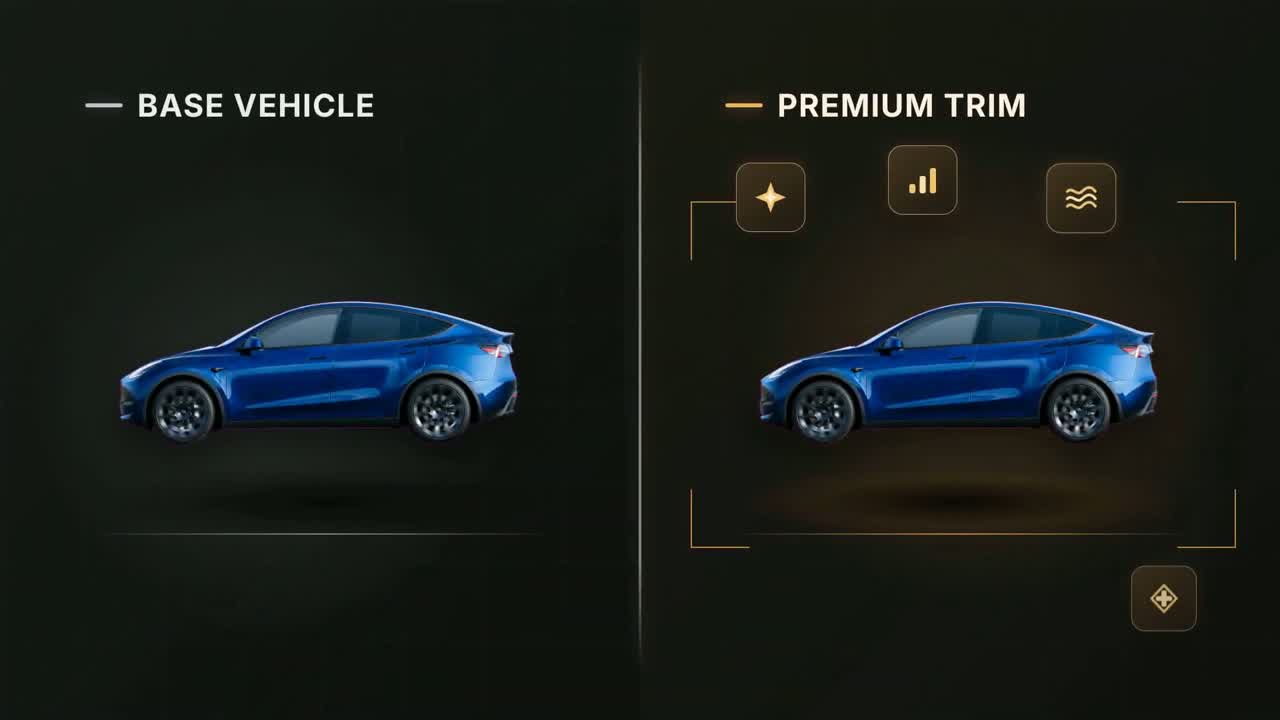
The clearest, verifiable change is the return of the seven-seat option for the U.S. Model Y — but only on the Premium all-wheel-drive long-range version, and only as a paid add-on. Tesla lists the seven-seat configuration at an extra $2,500. With the Premium AWD starting at $48,990, a seven-seat build lands at about $51,490 before options.
The rest of the update lives inside the Premium trim rather than reshaping the vehicle. Reported refinements include:
- A black headliner, replacing the lighter default cabin material
- Black exterior badging for a darker, “stealth” look
- Darker 20-inch Helix wheels (a $2,000 option)
- A higher-resolution 16-inch center screen, up from the prior 15.4-inch unit
One honest caveat: the reporting verifies the update’s substance around the July 2026 timeframe, but it does not prove the package launched on a single fixed date. The safest description is a targeted configuration change reported for summer 2026 — not a generational redesign.
The shadow it sits under: Juniper already did the heavy lifting
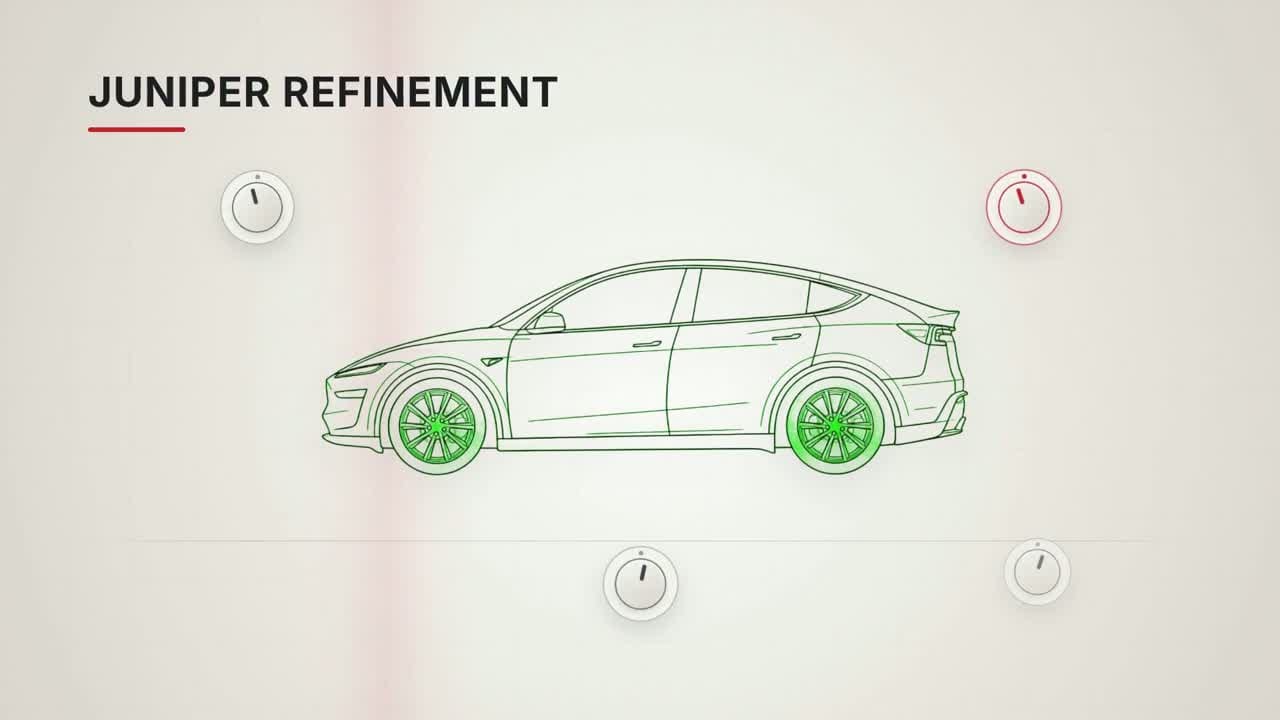
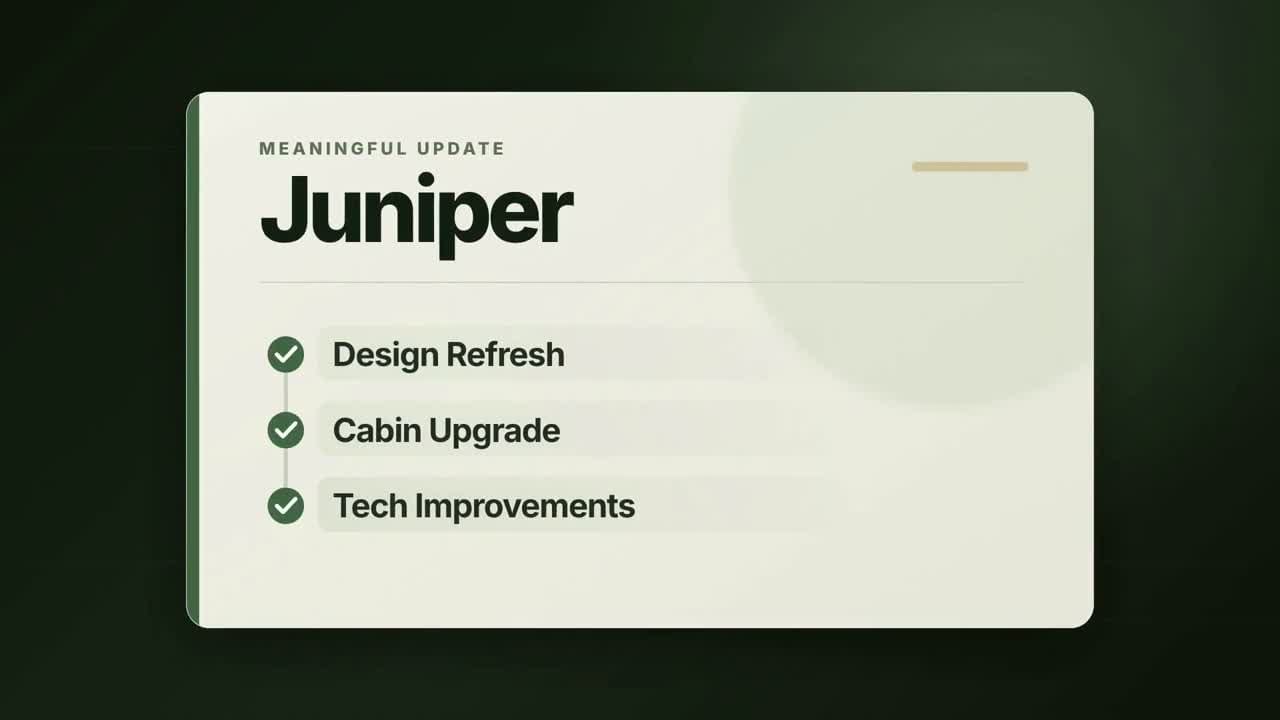
To understand why this looks small, put it next to “Juniper” — the real Model Y refresh that began in China and other Asia-Pacific markets before reaching global customers in February 2025. Juniper brought the changes people associate with a meaningful update: revised exterior styling, a quieter cabin, better range, and a more modern feel.
The numbers back that up. The 2026 Model Y Long Range AWD carries an EPA range of 327 miles from a roughly 75-kWh usable battery, with 0–60 mph in about 4.6 seconds and a 10–80% Supercharger charge in roughly 27 minutes. Tesla’s acoustic glass cuts road and wind noise by about 20% versus the outgoing model. So Juniper was the broad refresh; the July 2026 change is more of a correction pass that fills gaps left after the bigger update landed.
Juniper impact (cabin quietness)
July 2026 Model Y vs. the 2025 Juniper refresh vs. rivals
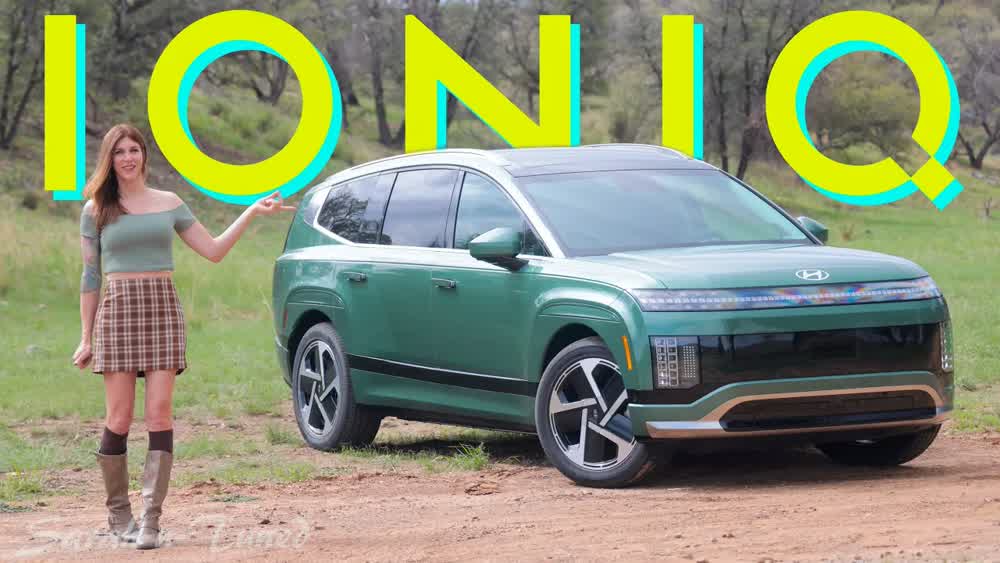
The seven-seat return makes the most sense as a competitive move. The 2026 Model Y Premium AWD now squares up against the Hyundai IONIQ 5 and Ford Mustang Mach-E — both of which have closed the gap on range and charging. Here is how the U.S. entries compare on the metrics buyers actually weigh:
| Vehicle (U.S., 2026) | Starting price | EPA range | Battery / DC charge | Standout |
|---|
| Tesla Model Y Premium AWD (+7-seat) | $51,490 | 327 mi | ~75 kWh / 250 kW | 7-seat returns; Supercharger access |
| Tesla Model Y Premium RWD | $45,990 | 357 mi | ~75 kWh / 250 kW | Best dollar-per-mile range |
| Hyundai IONIQ 5 SEL AWD | ~$49,995 | 250 mi | 77.4 kWh / 233 kW (800V) | Faster architecture, CarPlay |
| Ford Mustang Mach-E Extended Range AWD | ~$52,495 | 310 mi | 91 kWh / 150 kW | CarPlay, conventional controls |
The Model Y still leads on range-per-dollar and charging access, but the IONIQ 5’s 800-volt architecture and the Mach-E’s CarPlay-and-stalks cabin show where Tesla feels pressure. Notably, the seven-seat Model Y’s third row is best for children or short trips — it does not match the longer Chinese-market Model Y L, which adds about 150 mm of wheelbase. Elon Musk has suggested a stretched U.S. variant may not arrive until late 2026, if at all.
The complaints this update quietly answers
Car and Driver and other reviewers have praised the updated Model Y’s acceleration and range while flagging the same recurring gripes: too many basic functions buried in the touchscreen, a firm ride on rough pavement, and a design some call awkward from certain angles. Owner reports over the years have pointed to rattles, water leaks, infotainment glitches, and charging frustrations — not in every car, but enough to make a cautious buyer hesitate.
That is precisely why a small premium-trim update can matter more than it looks. Better materials, a quieter visual cabin treatment, and a sharper screen reassure people who already liked the Model Y but wanted fewer compromises. With Tesla, small changes are often how the company answers complaints without ever admitting there was one.
The business signal behind a $2,500 seat row
The timing is the tell. Tesla just posted its best-ever second quarter for deliveries, which made this update more important than it first looked. Strong volume told Wall Street demand was still there; the next question was whether those sales carried healthy profit. A seven-seat option or a premium reshuffle becomes a business signal: if Tesla can guide more buyers into higher-priced configurations, the average selling price improves without raising the base price. If the option helps clear slow inventory, a stuck configuration becomes a faster sale.
A $2,500 seat row is a $2,500 window into Tesla’s margin math — and on a car that ships nearly 468,000 units a quarter, even a small take-rate moves the bottom line.
For the buyer, the simpler question is whether the seven-seat Model Y solves a real family pain point, and whether the Premium trim finally feels complete after Juniper. The feature is small; the signal behind it may be much larger.
What to watch next
The practical test is simple: watch what changes outside the announcement cycle. Check Tesla’s configurator for new seat options, trim names, pricing gaps, and delivery estimates. Compare that with delivery-center photos, early owner reports, and any parts-catalog changes that reveal whether the update is cosmetic, regional, or tied to real production. With Tesla, the first clue is rarely a press release — it is a new menu option, a different interior part, or a changed delivery timeline.
How much this matters to a family buyer
Is the seven-seat Model Y worth it for most U.S. families?
If you need occasional third-row space for kids or short trips, the $2,500 option adds flexibility that the five-seat car lacks. If you regularly haul adults in the back, wait — the U.S. wheelbase is unchanged, so the third row stays tight. A used or rival three-row EV may serve you better for daily passenger duty.
Did the federal EV tax credit apply to this update?
No. The $7,500 federal new-EV tax credit expired on September 30, 2025, so 2026 Model Y buyers pay full sticker. Some state and utility incentives still apply depending on where you live, but the headline federal discount is gone.
The bottom line
Tesla didn’t make the Model Y bigger. It made the decision to buy one slightly more nuanced — and on its highest-volume product, that nuance is the strategy. The July 2026 update looks small because Tesla designed it to look small, yet it refines daily ownership, fills a Juniper gap, and quietly steers buyers toward higher-margin builds. The model that defined the modern EV is still evolving the way the iPhone does: one careful iteration at a time, never a revolution, always a signal.
Related reading on EVCUBE