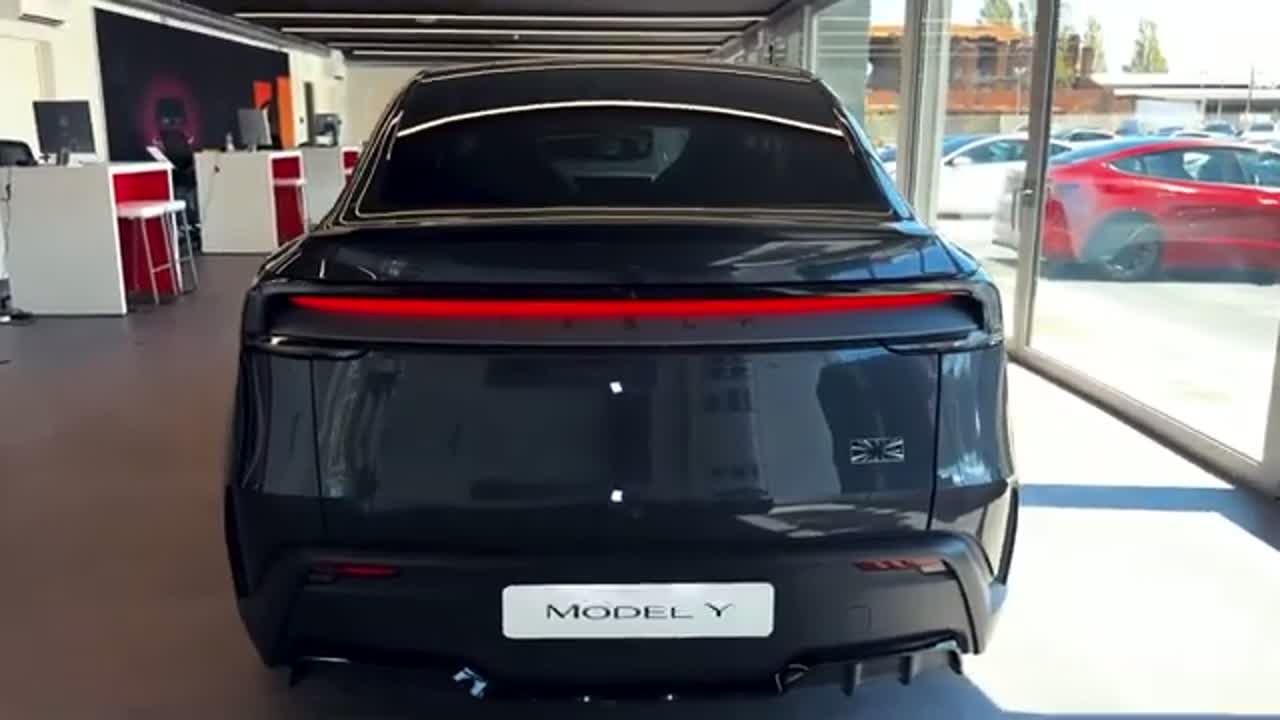
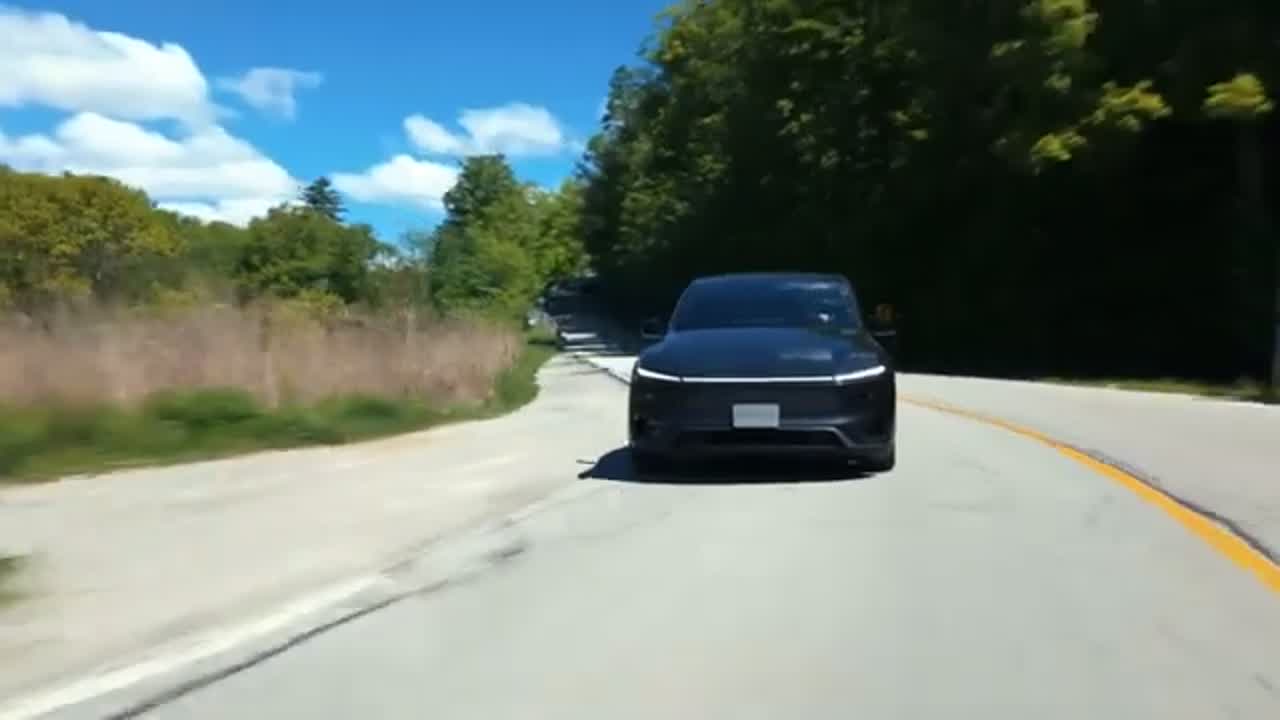
Tesla just built the quickest, most polished Model Y ever — but in a 2026 US market where the $7,500 federal credit is gone and rivals packed on horsepower, being the fastest no longer makes it the automatic benchmark.
The headline number — and the catch
The refreshed 2026 Model Y Performance is a genuine leap over what came before. Under the sheet metal sits a fourth-generation drive unit pushing 510 horsepower (461 kW) through all four wheels, rocketing from 0 to 60 mph in a brutal 3.3 seconds and on to a top speed of 155.3 mph with no power drop-off. A compact 79 kWh usable NMC pack returns an EPA-estimated 306 miles of range, and the chassis drops 15 mm on a true dual-mode adaptive suspension — the most competent electronic setup Tesla has put under $70,000.
But here is the part that reframes the whole story: the sticker reads $59,630 including destination. That is where the “undisputed king” narrative starts to bend. The 2026 Model Y Performance is faster and quieter than its predecessor, yet it arrives in a market that looks nothing like the one that crowned the original.

Against its own past
The most honest comparison isn’t with Hyundai or Ford — it’s with the car Tesla just replaced. Measured spec-for-spec, the 2026 model wins on paper. Measured wallet-for-wallet, the story flips.
| Spec | Outgoing 2024–25 Performance | 2026 Performance | Delta |
|---|
| Peak power | 456 hp | 510 hp | +54 hp |
| 0–60 mph | 3.5 s | 3.3 s | −0.2 s |
| EPA range | 303 mi | 306 mi | +3 mi |
| Starting price (incl. dest.) | $54,990 | $59,630 | +$4,640 |
| Federal tax credit | $7,500 | $0 (expired) | −$7,500 |
Add the math up and the real out-of-pocket jump is roughly $12,140 — the $4,640 list increase plus the $7,500 federal credit that died on September 30, 2025. You get a smoother cabin, a 16-inch 120 Hz OLED screen, ventilated and thigh-extending sport seats, and — for the first time on a US Model Y — bidirectional vehicle-to-load and vehicle-to-home (V2L/V2H) charging. That is real value. It is just not the same value proposition as before.
Against the field
This is where the “benchmark” question gets uncomfortable. The field did not stand still — it charged.
| Vehicle (US, 2026) | Price | Power | 0–60 mph | EPA range |
|---|
| Tesla Model Y Performance | $59,630 | 510 hp | 3.3 s | 306 mi |
| Ford Mustang Mach-E GT | $53,395 | 480 hp | 3.8 s | 280 mi |
| Hyundai IONIQ 5 Limited AWD | $48,975 | 320 hp | 4.5 s | 290 mi |
| Hyundai IONIQ 5 N | ~$66,000 | 641 hp | 3.4 s | 221 mi |
Two rivals deserve a closer look. The Mach-E GT trails by just 0.5 seconds to 60 yet undercuts the Tesla by $6,235 — and Ford’s GT packs 480 hp with available MagneRide damping. The IONIQ 5 N is the real sting: 641 hp, a 3.4-second 0–60 that essentially ties the Tesla, and a track-focused chassis, all for a few thousand more. Tesla no longer owns the performance-per-dollar corner of the segment.
Where Tesla still leads is breadth. The IONIQ 5 Limited AWD pairs 290 miles of range with a $48,975 sticker and a 10-year/100,000-mile powertrain warranty, and Hyundai cut 2026 pricing by up to $9,800 specifically to soften the lost tax credit. The Mach-E GT California Special adds heritage styling for $2,495. Against them, the Model Y Performance wins on straight-line speed and software — not on price, not on warranty, and not on raw power versus the N.
Straight-line speed
Price value vs rivals
Software & charging network
Warranty confidence
The market that changed underneath it
Specs live inside a market, and the US market in 2026 is a different animal. According to Cox Automotive and Kelley Blue Book, the US bought 216,399 new EVs in Q1 2026 — a 27% drop year over year and the sharpest contraction in the modern US EV era, triggered largely by the expiration of the $7,500 credit. EV share of new-vehicle sales settled at 5.8%, down from a 10.6% peak in Q3 2025.
And yet the Model Y didn’t just survive — it dominated. Tesla sold 78,591 Model Ys in Q1, meaning one in every three EVs registered in America was a Model Y, and Tesla’s brand share climbed to 54.2% from 43.2%. The Mach-E, by contrast, fell to 4,600 units (−60.4%), while the IONIQ 5 rose 13.7% to 9,790 on the back of those price cuts. The car that “lost the spec-sheet crown” is still the one Americans buy more than any other EV on the road.
Zoom out and the divergence is even sharper. The IEA estimates roughly 25% of all cars sold worldwide in 2025 were electric, with global sales accelerating even as the US cooled. In China the same Performance trim lands at ¥350,000–400,000, and in Australia it is priced around A$82,490 — reminders that “the Model Y” is a global volume play, not a US-only story.
So is it still the benchmark?
The honest answer is: it depends what “benchmark” means. If the word means fastest and most polished in its own lineup, yes — the 2026 Performance is the best Model Y Tesla has built. If it means best at everything, no — the IONIQ 5 N out-guns it, the Mach-E GT undercuts it, and the previous Performance was nearly as quick for far less money once incentives are counted.
Tesla’s real moat in 2026 isn’t a number on a spec sheet. It’s scale (78,591 US sales in a single quarter), the Supercharger and NACS network every rival now shares, a software ecosystem no legacy automaker has matched, and a brand that — credit or no credit — still converts shoppers at a rate no competitor can touch. The 2026 Model Y Performance traded raw spec-sheet dominance for polish, and bet that ecosystem beats horsepower. The early sales data says the bet is paying off.
Tesla didn’t lose the crown — it just stopped being the only one in the room. Speed is no longer the differentiator. Polish, software, and scale are.
Does the 2026 Model Y Performance qualify for the federal tax credit?
No. The $7,500 federal EV purchase credit expired on September 30, 2025, so a 2026 Model Y Performance purchased today carries its full $59,630 price with no federal incentive. Several rivals, including Hyundai, responded by cutting 2026 MSRP by up to $9,800 to offset the loss.
What do V2L and V2H actually do on this car?
Vehicle-to-Load (V2L) lets the car power appliances and gear from its battery — handy for camping or outages. Vehicle-to-Home (V2H) lets it feed energy back into your house, turning the 79 kWh pack into a backup battery. The 2026 Performance is the first US-market Model Y (aside from the China-built Model Y L) to offer bidirectional charging.
Is the Hyundai IONIQ 5 N actually faster than the Model Y Performance?
On power, clearly: the IONIQ 5 N makes 641 hp versus the Tesla’s 510 hp. On the drag strip they are nearly even — the N hits 60 in about 3.4 seconds against the Tesla’s 3.3. The trade-off is range: the N’s track-focused battery returns around 221 EPA miles versus 306 for the Tesla.
Related reading on EVCUBE