China’s car companies took global market share while losing billions of dollars per quarter — and that paradox is exactly why the 100% U.S. tariff will not make the threat disappear.
The earnings bloodbath nobody in the West is talking about
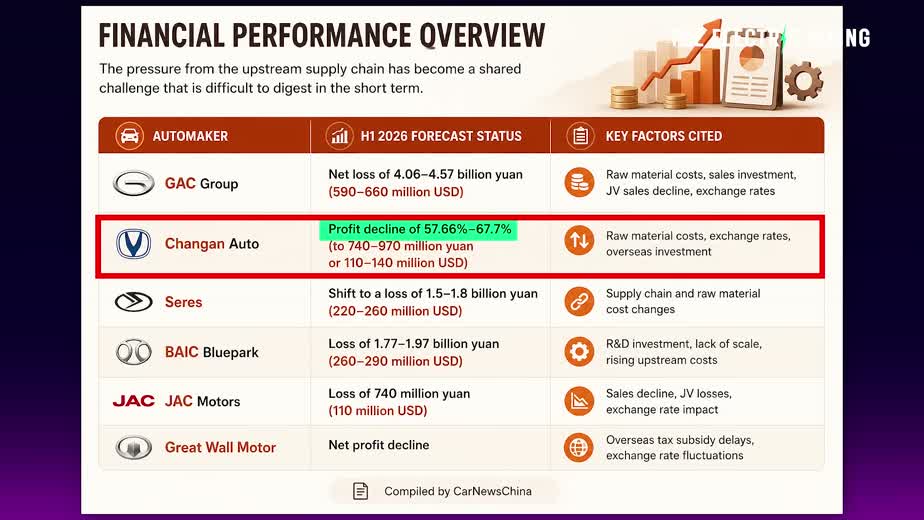
The story Americans hear is simple: Chinese automakers are unstoppable, they are printing money, and they are about to flood the world. The first-half 2026 earnings from China’s six largest listed carmakers say the opposite. Four of the six are guiding to steep losses. The two that are still profitable watched their net income collapse by roughly 60% or more.
Here is what the filings actually show, converted to U.S. dollars at roughly 7.1 yuan to the dollar:
- GAC Group (the maker of the Aion brand) — a net loss of about $660 million for the first half, wider than last year’s deficit.
- Seres (the Huawei-backed AITO brand) — swung from a profit to a loss of roughly $210–250 million.
- BAIC BluePark — a loss of about $250–275 million, narrowing but still deep in the red.
- JAC Motors — a loss of about $104 million, roughly flat with a year ago.
- Changan — still profitable, but net income fell as much as 68%, down to roughly $104–137 million.
- Great Wall Motor — still profitable, but guiding to a 59%–63% drop in net income.

The combined first-half loss of just the four money-losing names tops $1.2 billion. This is not a startup burn rate — these are decades-old industrial groups with scale, dealer networks, and state backing. If you only read the export headlines, you would never see it.
Why the losses are real — and why “raw materials” is not the excuse
Every one of these companies points to the same official explanation: rising input costs. Lithium carbonate, copper, aluminum, and especially automotive storage chips. Mature storage-chip contract prices more than doubled in the first half of 2026, with another 60%–70% increase expected in the second half as chipmakers route capacity toward AI and data-center customers.
Per-vehicle material costs are estimated to be up $550–$970 across the industry, and as much as $1,400 on luxury models. That is real money. But it does not explain a $660 million half-year loss.
A thousand dollars of extra cost per vehicle does not turn a healthy business into one losing $660 million in six months. The raw materials didn’t create the problem — they exposed it.

The real story sits one line deeper in the numbers: demand in China is shrinking, and the only way to hold market share is to cut prices faster than costs fall.
The 20% demand collapse and the 3.6-models-a-day war
China’s domestic retail passenger-vehicle sales fell 20% in the first half of 2026. That is the single most important number in this entire story, and almost no one in the West is reporting it. When the total pie shrinks by a fifth, every brand is fighting over fewer buyers.
They are fighting by launching cars. Chinese automakers rolled out 82 new passenger-vehicle models in the first six months of 2026 — an average of about 3.6 new models every single day across the first five months. You cannot keep up with that cadence, and neither can consumers. It is not a healthy market; it is a race to the bottom.
The margin data proves it. The China Association of Automobile Manufacturers puts the average profit rate in the vehicle-manufacturing segment at just 1.5% for the first half — a near-decade low. The China Passenger Car Association’s broader industry measure fell to 3.4% in the first five months, with profits down 20% even as revenue barely grew.
China vehicle-making profit margin (H1 2026)
When you sell at razor-thin or negative margins, even a modest cost increase pushes you deep into the red. That is the trap the West keeps missing.
The subsidies that keep the lights on
So how do companies lose this much money and keep building cars? Part of the answer is policy. China’s 2026 consumer trade-in program front-loaded 62.5 billion yuan (about $8.9 billion) in ultra-long special treasury-bond funding, and Everbright Securities estimates total central support for the year will reach 250 billion yuan, down from 300 billion yuan in 2025.
The scale of the demand the program engineered is staggering:
- Across 2024–2025, the trade-in scheme reached 494 million consumers and generated 3.92 trillion yuan ($549 billion) in sales.
- 18.3 million vehicles were traded in, with new-energy models making up nearly 60% of new purchases.
- In the first quarter of 2026 alone, 1.41 million auto trade-in subsidy applications drove 228.69 billion yuan in new-vehicle sales.
- A scrapped car replaced by a qualifying NEV earns up to 20,000 yuan (about $2,845) per buyer.
Subsidies pulled demand forward and masked the underlying weakness — which is why, when the program’s pull-ahead effect faded, the 2026 first-half sales drop hit so hard.
The export surge that hides the pain
Here is the number that fuels the “unstoppable” narrative, and it is real. In the first half of 2026, China sold 7.446 million new energy vehicles, up 7.3% year on year, on 7.438 million produced. New-energy vehicles hit 67.2% of domestic passenger-car sales in June alone.
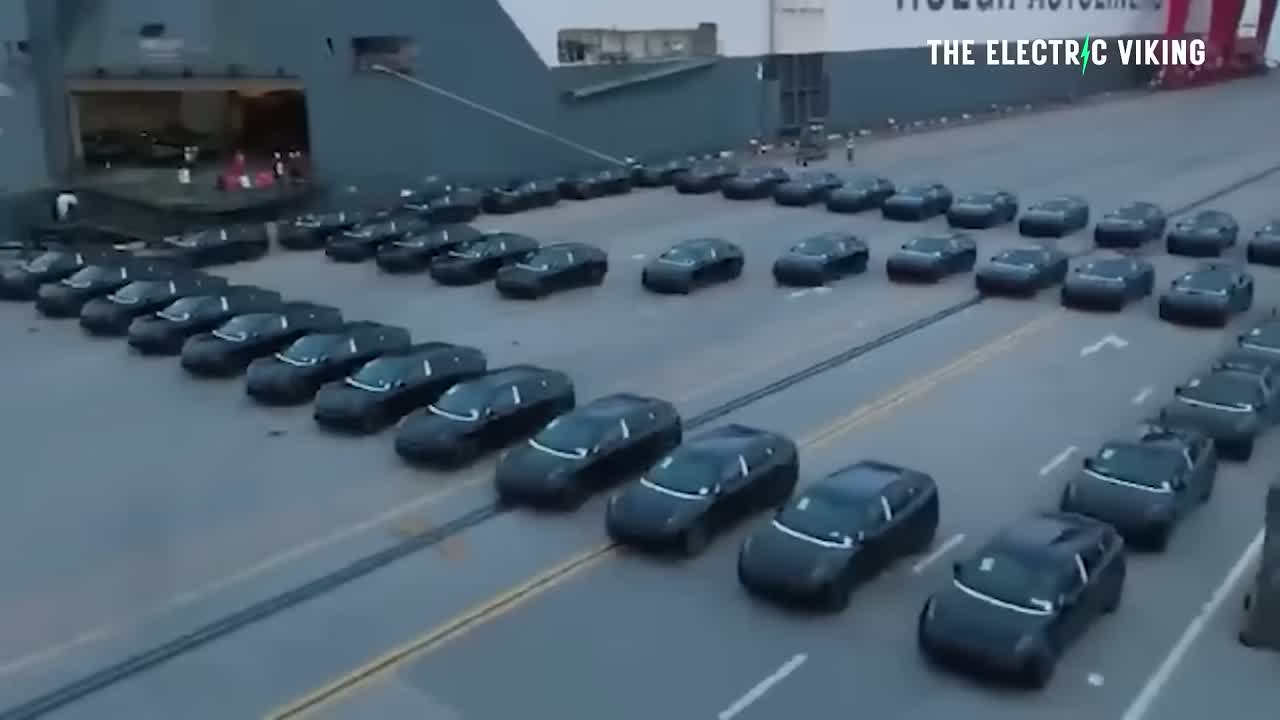
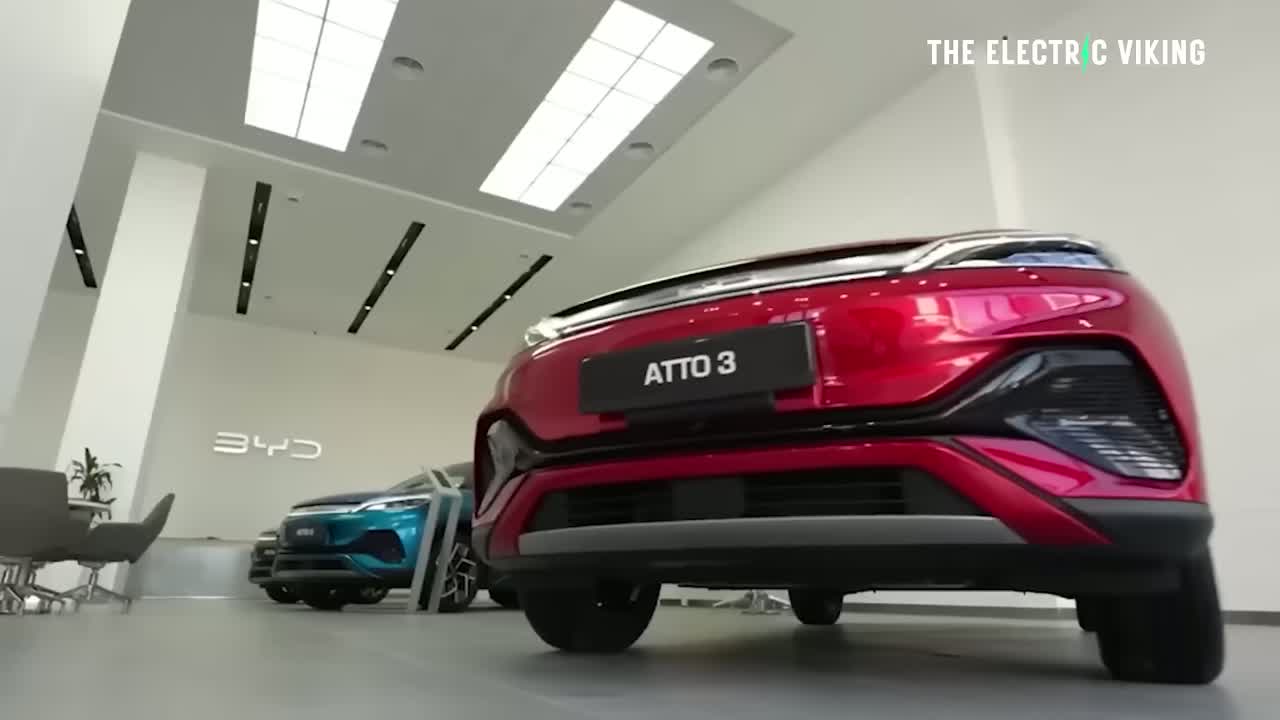
Exports are the headline act. China shipped 2.355 million NEVs in the first half, up about 120% year on year, including 523,000 in June — a 160% jump. Total auto exports reached 5.096 million units, up 65.3%, with NEVs now well over 46% of the total. BYD, the one player with genuine scale, overtook Tesla in annual sales in 2025 to become the world’s largest EV maker.
The table below lays the paradox side by side — record volumes, collapsing margins:
| Metric (H1 2026) | China auto industry | What it means |
|---|
| NEV sales | 7.446 million units (+7.3% YoY) | Volume still growing |
| NEV exports | 2.355 million units (+120% YoY) | Overflow pushed overseas |
| Domestic retail PV sales | −20% YoY | Home market shrinking |
| Vehicle-making profit margin | 1.5% (decade low) | Price war destroyed pricing power |
| Major listed makers guiding to loss | 4 of 6 | Most are not profitable |
| New models launched | 82 in 6 months (~3.6/day) | Fragmentation, not focus |
The tariff walls — and why they are working
For American buyers, the most important fact is this: you almost cannot buy these cars, and the numbers show why the policy is deliberate. The U.S. levies a 100% Section 301 tariff on Chinese-made EVs — a base 2.5% duty plus the 100% surcharge, an effective 102.5% rate that closes the direct-import door. The European Union responds with a 27.4% anti-subsidy tariff on Chinese EVs. Mexico, by contrast, now draws roughly one-quarter of its car sales from Chinese brands, and Canada is opening the door to tens of thousands of affordable Chinese EVs.
The tariffs work precisely because the price gap is enormous. The average new car in the U.S. cost about $51,456 in early 2026, while China has 200+ battery-electric models priced under $25,000 and several best-sellers under $12,000. Even after a 100% tariff, a $12,000 car lands near $24,000 — still competitive. That is why roughly 30% of U.S. buyers told Strategic Vision they would consider a Chinese brand.
What it means for U.S. and European rivals
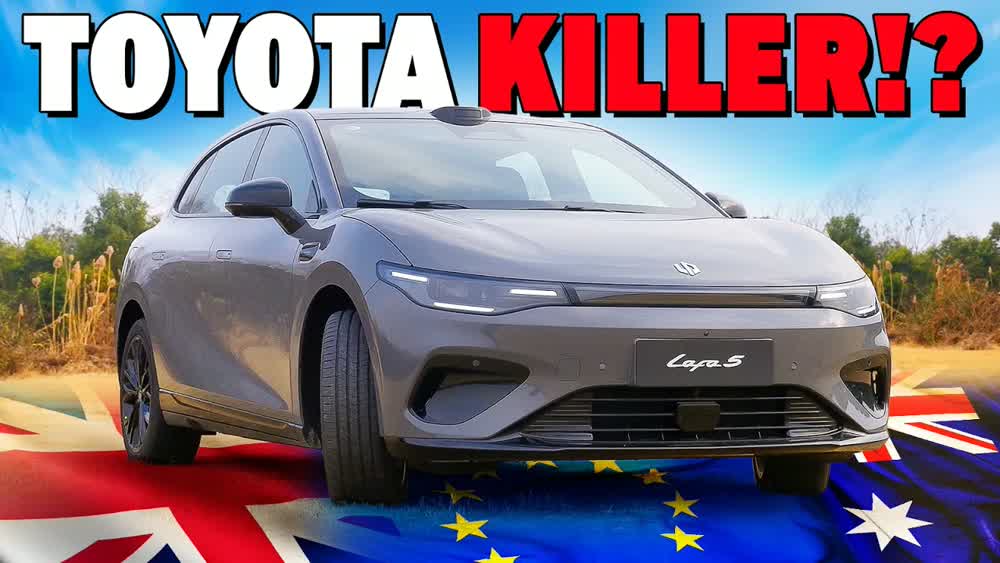
The threat to Detroit and Wolfsburg is not that Chinese companies are profitable — most are not. The threat is that they can absorb losses longer than Western rivals can tolerate, and they own the cheap end of the market that legacy automakers abandoned years ago. The U.S. “Detroit Three” walked away from sub-$20,000 cars in favor of high-margin SUVs and trucks; Chinese brands fill exactly that gap.
But consolidation is coming. Xiaopeng He, CEO of Xpeng, predicts only about 7 car companies will survive out of more than 100 EV brands in China today — meaning at least 90 will disappear or merge. S&P Global agrees: players with scale, premium mixes, and stable overseas operations will absorb the pressure, while small, low-margin brands face a precarious future. BYD is the obvious survivor; many of the names in the loss column are not.
For U.S. and European makers, the right read is not “they are weak, so we are safe.” It is “they are weak at home but still gaining share abroad on price and scale.” Tariffs buy time; they do not close the capability gap.
The bottom line
China’s car industry is not the unstoppable profit machine the headlines imply, and it is not a house of cards either. It is something more uncomfortable: a sector losing billions while still taking global share, subsidized at the margin, consolidated by force, and shielded from the U.S. by a 100% wall that may not hold forever.
China isn’t winning because it’s profitable. It’s winning because it can afford to be unprofitable longer than its rivals can survive.
The next time someone tells you Chinese automakers are crushing it, show them the four-of-six loss ratio and the 1.5% margin. Then ask the harder question: if they are this strong while bleeding cash, what happens when the consolidation ends and only the survivors are left?
FAQ: Will Chinese cars ever reach U.S. showrooms directly?
Not under current law. The 100% Section 301 tariff plus a separate ban on Chinese-connected-vehicle software effectively block direct imports and even Mexico-built Chinese models from U.S. registration. The realistic paths in are local manufacturing through joint ventures or a future policy shift — neither is imminent.
FAQ: If they lose money, why export at all?
Exports absorb the massive domestic overcapacity and keep factories running at volume, which protects per-unit fixed costs. Overseas sales also build brands ahead of the inevitable consolidation, so the survivors enter a smaller field with global scale.
FAQ: Which brands are most likely to survive the shakeout?
Analysts point to BYD (scale and battery integration), plus Geely and Chery (broad global footprints), and premium-focused players like Li Auto and Xpeng. The loss-making state-backed joint-venture makers and tiny low-margin brands face the highest extinction risk.
Related reading on EVCUBE