The 2026 Silverado EV Trail Boss promises up to 478 miles of range and a 2-inch lift with 35-inch rubber — but after a full week of off-road, towing, and real highway miles, the honest verdict is that this is a road-and-trail truck that bosses the pavement, not the rocks.
A week of living with the biggest battery Chevy sells
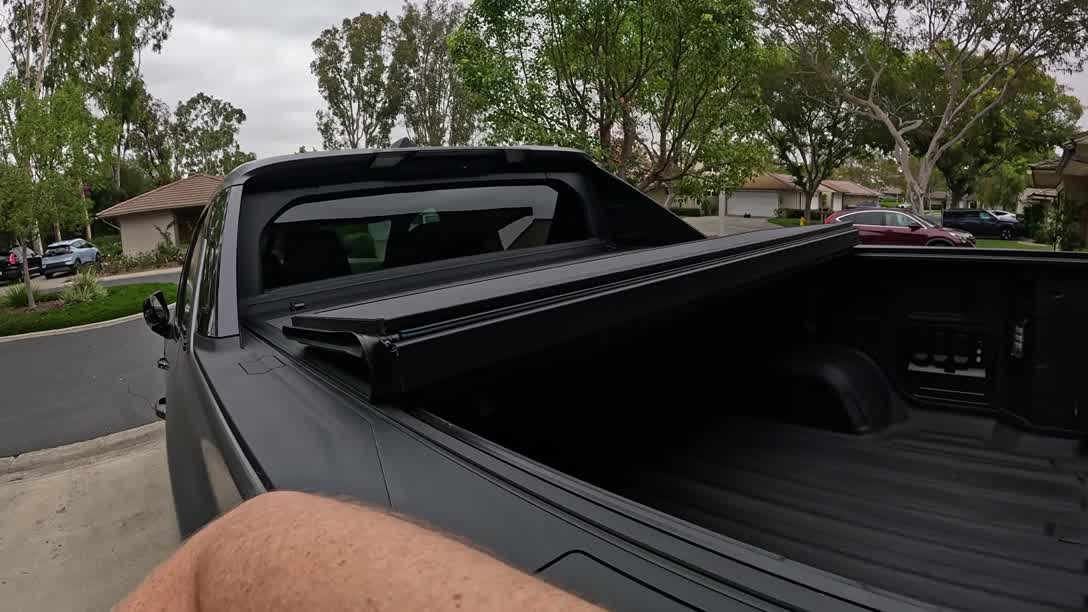
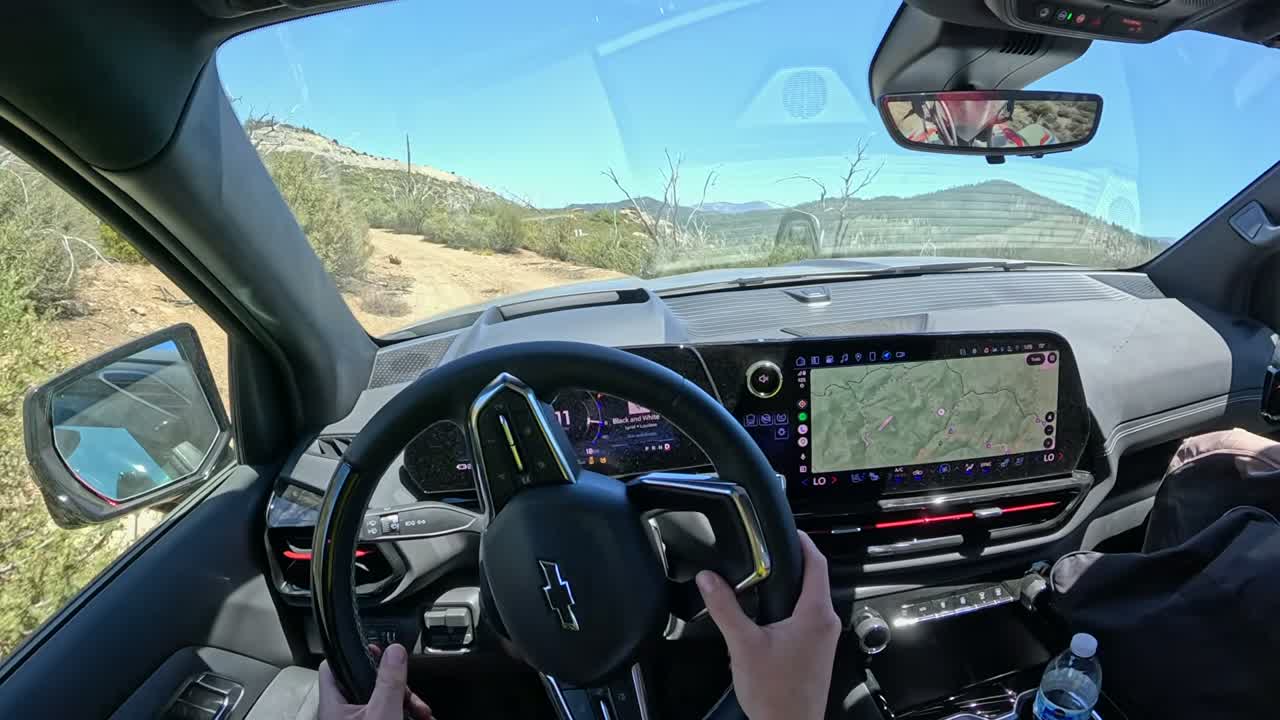
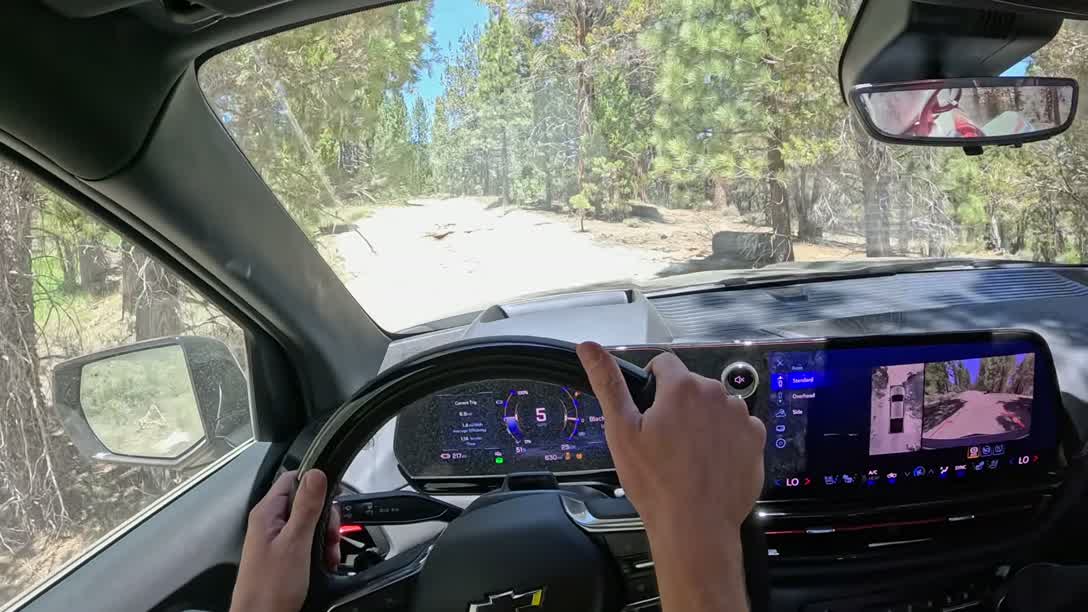
Charlie from Daily Motor did something most spec-sheet reviews skip: he took the Max Range Silverado EV Trail Boss and actually lived with it for seven days — hauling a Honda TRX 250X in the bed, camping in a national forest, crawling blue-square OHV trails, and racking up 233 miles of mixed driving on a single charge. The as-tested truck wore a $4,000 matte paint option and stickered near $97,000, though Charlie sensibly “calls it $94,000” once you discount paint nobody needs on a truck they plan to scratch.
What makes the Trail Boss worth a dedicated living-with review is exactly what buyers are nervous about: an electric full-size pickup is a 9,000-pound bet on battery chemistry. So the only honest question is whether the day-to-day reality matches the brochure. It mostly does — and where it doesn’t, the gaps are instructive.

Real-world range: 478 miles survives contact with reality
Chevy’s headline number is a GM-estimated 478 miles for the Max battery (the WT hits an EPA-confirmed 493). Car and Driver’s own testing is more sobering but still class-leading: an RST managed 400 miles in their 75-mph highway test, and the LT returned 310. The Trail Boss, with taller 35-inch all-terrains and a 2-inch lift, posted 395 miles in a similar road-trip test — only 6 miles behind the street-tire RST.
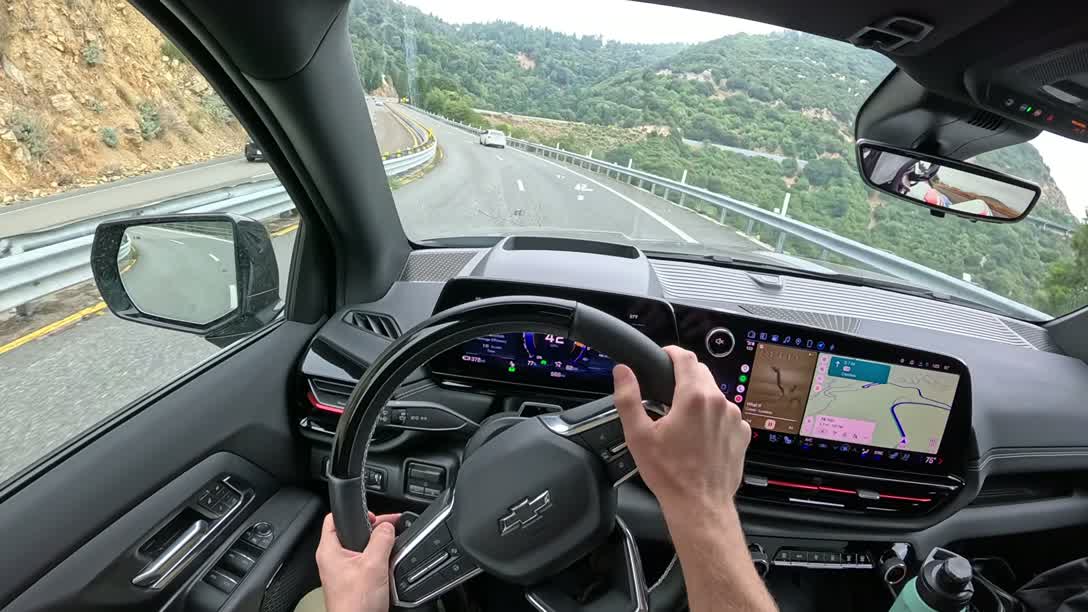
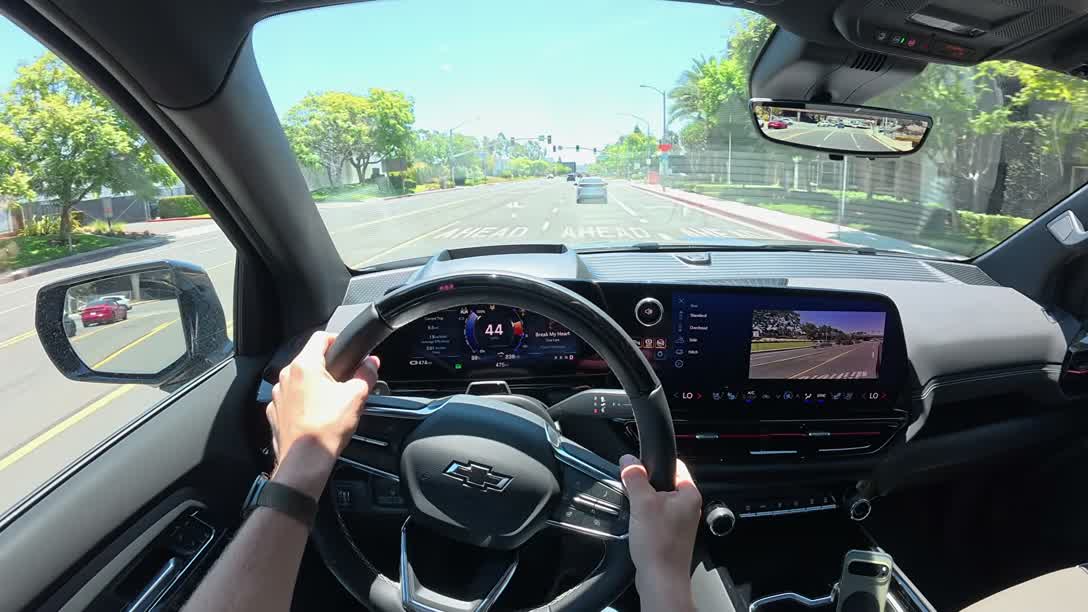
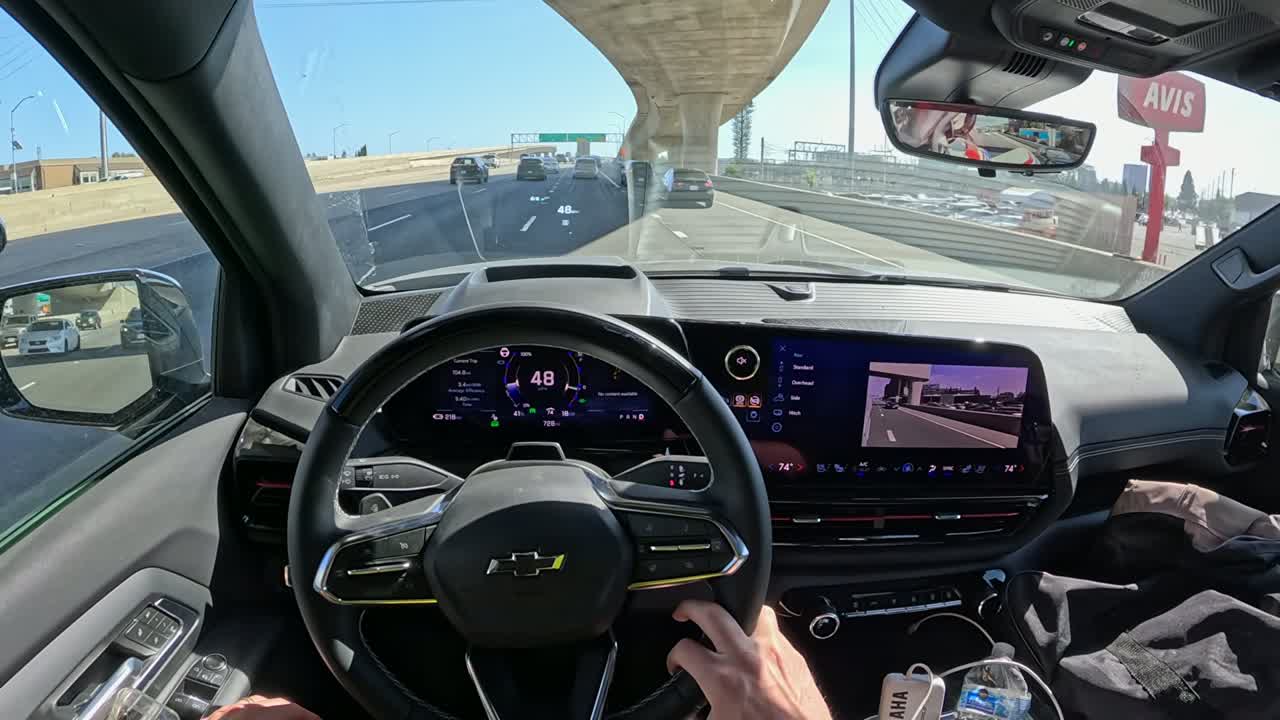
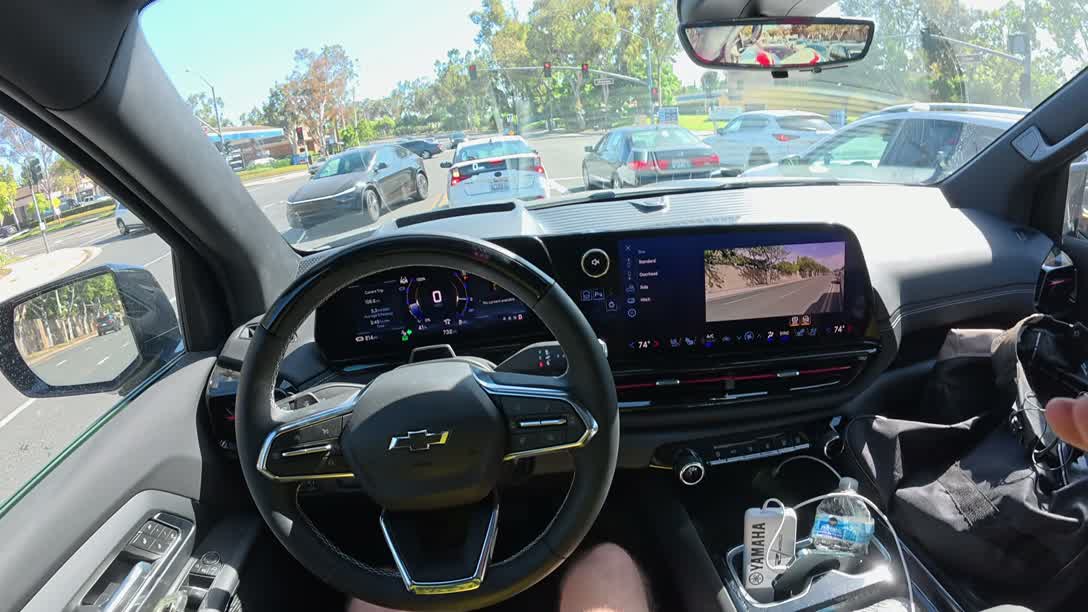
Here is the part that matters to buyers: in Charlie’s real week, running 70 mph on the highway with a 400-pound quad and camping gear aboard, he saw about 1.8 mi/kWh — within 0.2 kWh of the truck’s 70-mph figure and only about 4 kWh off the EPA combined estimate. That is genuinely impressive for a truck this size. Coming down a mountain, regen recovered over 50 miles of estimated range and peaked at 212 kW of energy recovery.
Highway efficiency confidence
Claimed range vs. real highway

The Max battery trade-off: you pack range, you pay with payload
This is the single most important buying decision, and almost nobody talks about it. The Trail Boss is offered with an Extended (170 kWh) or Max (205 kWh) pack. The bigger pack buys you range — but it also adds roughly 1,000+ pounds, and that weight comes straight out of towing capacity.
- Extended Range Trail Boss: up to 12,500 lb max towing, 410 miles of range.
- Max Range Trail Boss (the video truck): 10,200 lb max towing, 478 miles GM-estimated.
- Both share 725 hp and 775 lb-ft with Wide Open Watts, and about 1,800 lb of payload.
Charlie’s verdict is the rational one: unless you road-trip hard, tow often, or live where winters knock 20–30% off range, the Extended pack is the smarter buy — lighter, a bit more efficient, and thousands cheaper. As he put it, “410 versus 480-ish miles… really not that different here in the real world.”
Off-road: a Trail Middle Manager
Multiple outlets agree the Trail Boss is more “Trail Boss” in looks than in capability. Car and Driver called it a truck that “goes light on the off-roading,” and testing showed it scraping its skid plate and failing climbs that rivals with street tires completed. Charlie’s own read, using the Trails Offroad 1–10 scale, is that he’s comfortable up to a 4, a 5 is doable with care, and anything above that gets “dicey.”
The hardware is real, though: a 2-inch lift, 35-inch Goodyear Wrangler Territory tires, 31.6° approach / 19.2° breakover / 25.1° departure angles, four-wheel steer with Sidewinder diagonal mode, and a Terrain mode that mimics a crawl gear with one-pedal control. The trail manners are held back less by the tires than by the independent rear suspension and the massive battery’s articulation limits — it regularly lifts a wheel and drops back down hard. Charlie’s line is the one to remember: “most of what most people are going to go do is entirely capable here.”
Off-road vs. Rivian R1T / Hummer EV
How it stacks up against the competition
The electric-truck field in 2026 is small but sharp. Here is the Trail Boss against the three trucks buyers cross-shop most, using confirmed 2026 figures:
| Truck | Starting price (2026) | Max range | Max towing | Payload | 0–60 mph | Peak charge |
|---|
| Chevy Silverado EV Trail Boss | $72,095 (Ext) / $88,695 (Max) | 478 mi (GM-est) | 10,200–12,500 lb | ~1,800 lb | 4.4 sec | 350 kW |
| Ford F-150 Lightning | $52,375 (2025; ended) | 320 mi | 10,000 lb | 2,000 lb | 4.2 sec | 150 kW |
| Rivian R1T | $74,885 | 420 mi (Max) | 11,000 lb | ~1,760 lb | 3.0 sec (Quad) | 220 kW |
| Tesla Cybertruck | $72,235 | 325 mi | 11,000 lb* | 7,500 lb | 2.6 sec (Beast) | 250 kW |
*Cybertruck’s 11,000-lb rating applies to the Premium AWD and Cyberbeast; the base dual-motor is rated at 7,500 lb. Two things jump out. First, the Silverado’s 350 kW peak charge is the fastest in the group — adding roughly 133 miles in 15 minutes and 220 miles in 30 in testing. Second, no rival combines this much range with this much towing; the Rivian and Cybertruck beat it on raw off-road talent and 0–60, but neither can match 478 miles.
The money math: a $15,000 premium that can pay for itself
Charlie’s comparison to a gas Silverado 1500 Trail Boss is the gut check: the EV runs about $12,000–$15,000 more than a comparably equipped V8 version. But the offset is real if you charge at home. At his Southern California rates and roughly 10,000 miles a year, the electric truck saves about $2,000 annually versus gasoline — meaning the premium washes out over about a decade of ownership.
One caveat that did not exist a year ago: the federal $7,500 EV tax credit expired on September 30, 2025, killed by the One Big Beautiful Bill Act. Every truck in that table now sells at full price, with no point-of-sale credit. State incentives in California, Colorado, and New York (up to $7,500) are the only relief left. That makes the home-charging math — not a showroom rebate — the real case for the Silverado EV.
Market context: EV trucks in a post-incentive America
The timing matters. Cox Automotive’s Q1 2026 report shows US EV sales fell 27% year-over-year to 216,399 units, with EVs stuck at 5.8% of new-vehicle sales — down from a 10.6% peak in Q3 2025, right after federal incentives ended. The Cybertruck was still the best-selling electric pickup in Q1 with 3,519 units (down 45% YoY), while the Rivian R1T managed about 1,658. The Silverado EV’s volume rides on the cheaper Equinox and the fleet-oriented WT, not the $90K Trail Boss.
Globally the story is the opposite: the IEA’s Global EV Outlook 2026 reports EV adoption continuing to climb in China and Europe even as the US cools. For an American buyer, that means one thing — the leverage is with you. Discounts, incentives, and the slow march back to 10% share all point to a buyer’s market for exactly this kind of premium electric truck.
The honest verdict
The Trail Boss bosses the road, not the trail. It is the most well-rounded electric truck you can buy for living with every day — quiet, huge inside, genuinely long-range, and the fastest-charging of the bunch. It is not a hardcore crawler, and the Max pack quietly trades towing for miles. Buy the Extended pack unless you truly need the range, charge at home, and skip the $4,000 paint.
“Pack the range, pay with the payload — and most buyers should pack a little less than Chevy wants to sell them.”
Is the Max battery worth it over the Extended Range?
For most buyers, no. The Extended Range Trail Boss still delivers 410 miles, tows up to 12,500 lb (more than the Max’s 10,200 lb), costs thousands less, and is lighter and a touch more efficient. Choose the Max only if you do frequent long trips, tow often, or live in a cold climate where 20–30% of range disappears in winter.
How does the Trail Boss compare off-road to a Rivian R1T?
The R1T — especially with quad-motor and air suspension — is the more capable rock crawler and the smaller, nimbler package. Charlie rates the Silverado comfortable only up to Trails Offroad difficulty 4–5. But for fire roads, camp access, and “green” trails, the Trail Boss is entirely competent, and it carries far more gear and people.
Does the federal tax credit apply to the 2026 Silverado EV?
No. The $7,500 federal EV credit ended September 30, 2025. The Silverado EV now sells at full MSRP with no point-of-sale credit; only some state programs (California, Colorado, New York) still offer incentives up to $7,500.
Related reading on EVCUBE