The Kia EV5 may be the most sensible electric crossover Kia builds — a boxy, genuinely roomy family hauler on the same bones as the IONIQ 5 — yet as of mid-2026 you still cannot walk into a U.S. dealership and buy one. That gap between a great product and American availability is what makes it worth a close look.
A practical crossover almost nobody in America can buy yet
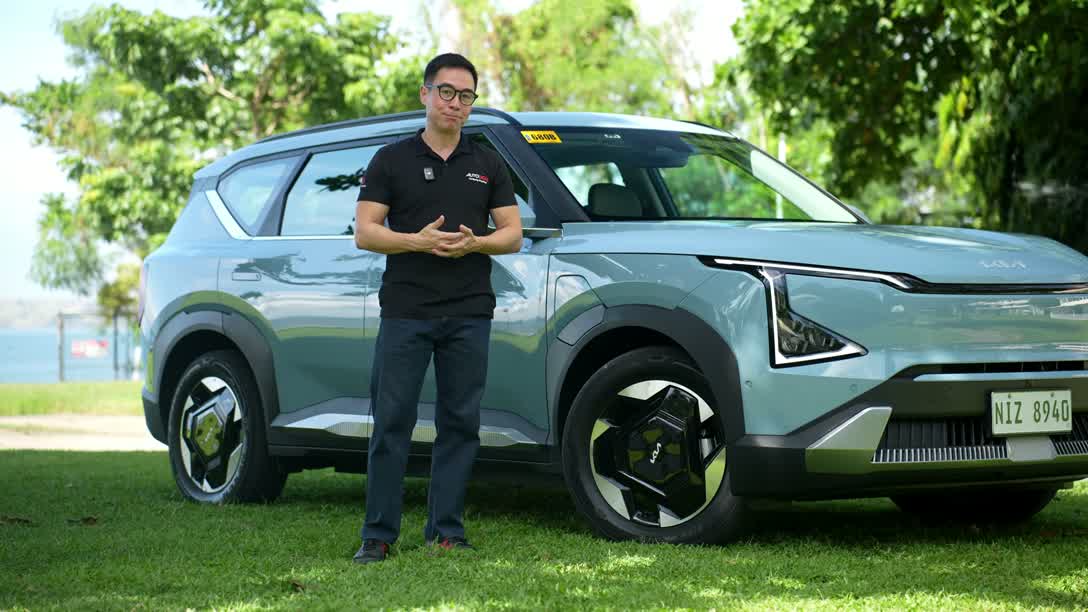
Kia’s EV5 first appeared in China in late 2023, then rolled into Korea, Europe, Thailand, Australia and Canada. In every market the pitch is the same: not the sportiest or flashiest EV, but the most usable. The reviewer drove the Philippine-spec top trim, the EV5 GLS, and spent his time marvelling at storage cubbies, flat-folding seats and rear-seat knee room rather than 0-to-60 times. That is the point of the car.
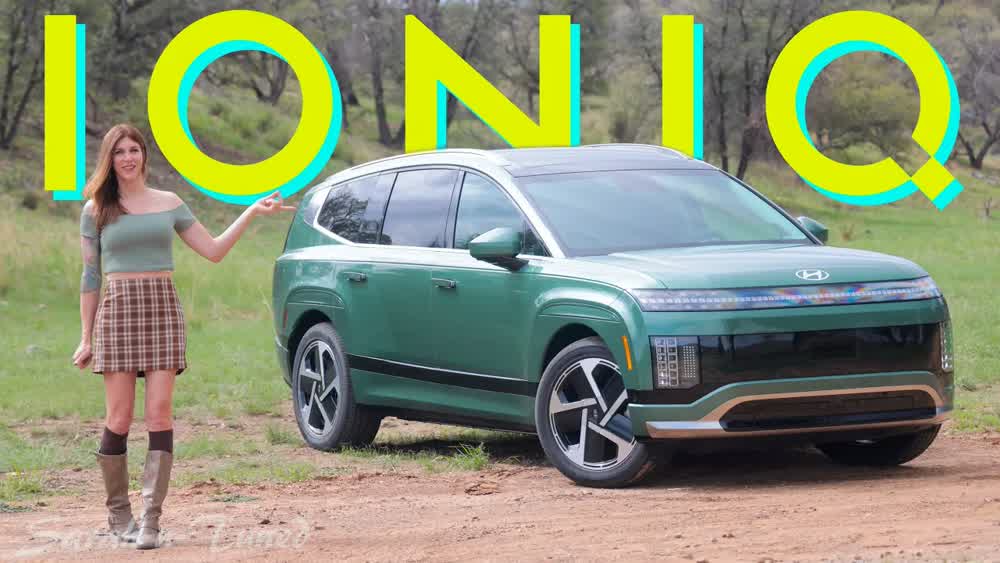
What makes the EV5 interesting for American readers is that it shares Hyundai Motor Group’s Electric-Global Modular Platform (E-GMP) with the Kona Electric’s smaller sibling and, more importantly, with the IONIQ 5 and the three-row EV9. It is the volume, value-oriented expression of that architecture — the one aimed squarely at families who would otherwise be shopping a Tesla Model Y.

The specs that actually matter
Two battery sizes are offered globally. The entry “Light” pack is a 64.2 kWh unit, while the Long Range models use an 88.1 kWh battery (lithium iron phosphate in most markets). In Long Range, front-wheel-drive form the EV5 is rated at up to about 540 km on the WLTP cycle — Kia’s Thai spec sheet lists 540 km, and Hong Kong’s lists 555 km — which works out to roughly 335 miles. Expect a lower EPA figure for the U.S. cycle, where the stricter test typically trims 10–20% off WLTP numbers.
The single front motor makes 215–218 hp (160 kW) and 310 Nm of torque, enough for a 0–100 km/h time of 8.9 seconds. A dual-motor all-wheel-drive version bumps output to 308 hp (230 kW) and 480 Nm, dropping the sprint to around 6 seconds. Charging runs on a 400-volt system: the 88.1 kWh pack goes from 10% to 80% in about 38 minutes on a 141 kW DC CCS2 connection.
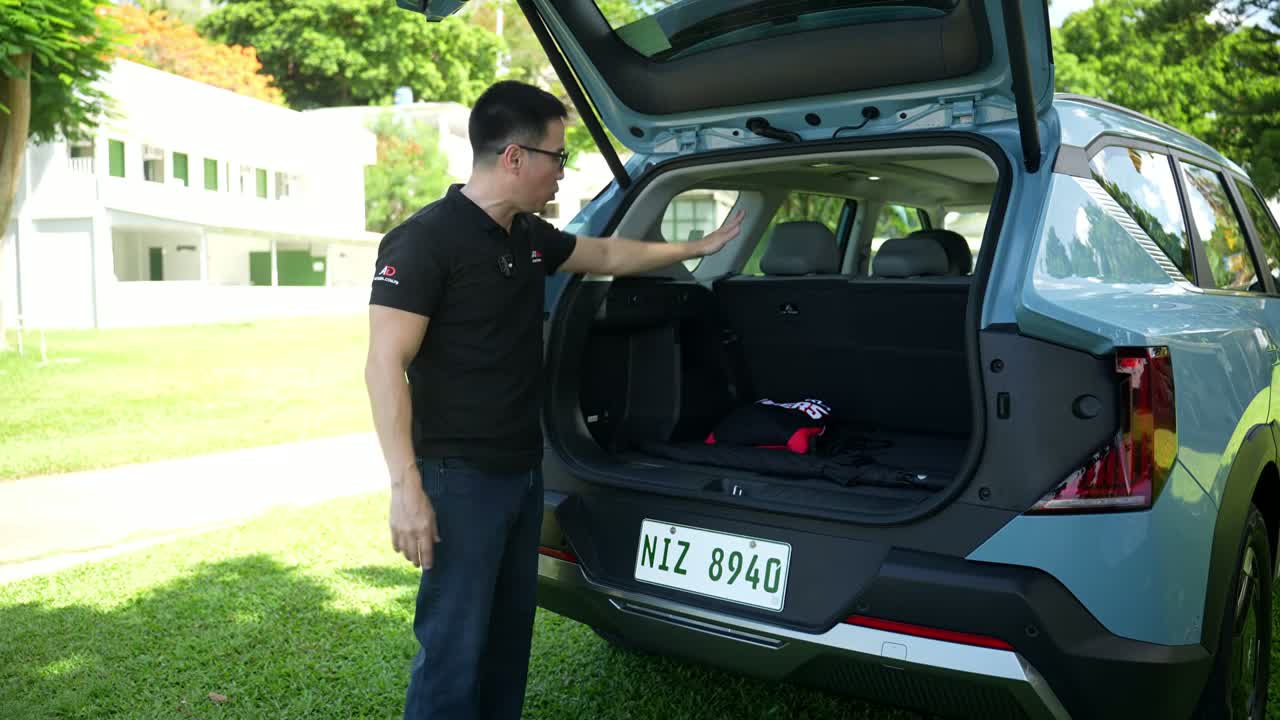
Dimensions tell the practicality story. The EV5 measures 4,615 mm long, 1,875 mm wide and 1,715 mm tall, on a 2,750 mm wheelbase, with 161 mm of ground clearance. Cargo space runs from roughly 513 liters behind the rear seats to 1,714 liters with them folded flat — and the seats fold completely flat, a detail the reviewer kept demonstrating on camera. Up front sit a pair of 12.3-inch screens, wireless Apple CarPlay and Android Auto, Vehicle-to-Load (V2L), and a panoramic roof on higher trims.

The E-GMP link — and why the EV5 drives differently from the IONIQ 5
Sharing a platform does not mean sharing a character. The IONIQ 5 is rear-wheel-drive by default, which is why it feels lively and avoids torque steer. The EV5 is front-wheel-drive in its core trims, and the source reviewer noted exactly that: floor the accelerator and you feel a slight tug through the steering wheel because the front wheels are doing both the steering and the pulling. It is brisk when you ask, but the EV5’s priority is smoothness and quiet, not playful handling.
There is also a charging-speed gap. The IONIQ 5 rides on E-GMP’s 800-volt hardware and can fill 10%–80% in about 20 minutes at a 350 kW charger. The EV5 uses 400-volt charging and needs roughly 38 minutes for the same window. Against a Model Y, which is also a 400-volt car, the Kia is broadly competitive on charging.
EV5 everyday practicality
EV5 US availability (today)
EV5 charging speed vs IONIQ 5
Is the EV5 coming to the US? The tariff reality
This is the section every American shopper needs to read carefully. As of mid-2026, Kia has not confirmed the EV5 for the United States. Multiple briefings — including from Kia’s own Canadian arm — describe the EV5 as a Canada-only model for North America, with Canadian pricing starting at C$43,495 (about $31,800). However, the EV5 has been repeatedly spotted testing on U.S. roads, most recently in May 2026 wearing amber front turn signals that meet U.S. lighting rules, which suggests a stateside launch has at least been prototyped.
The hesitation comes down to money and policy. The EV5 is built in both China and South Korea. A China-built unit would face the standard 27.5% U.S. tariff on imported Chinese vehicles (2.5% base plus the 25% Section 301 levy), which would wreck its value pitch. South Korea, by contrast, secured a U.S. trade deal with a lower 15% import tariff — and Korean production is the likely source if the EV5 ever reaches American showrooms. Even so, the business case is tighter than it was a year ago, because the federal $7,500 EV tax credit expired on September 30, 2025. Without that incentive, a Korean-built mid-size electric SUV have to be priced aggressively to take on the Model Y.
Kia has said it targeted a U.S. starting price below $50,000 for the EV5 — in line with where the IONIQ 5 and base Model Y already sit. If it lands, it would slot between the affordable Model Y and the refreshed Model 3 at the value end and Kia’s own EV6 above it.
EV5 vs IONIQ 5 vs Model Y
| Spec | Kia EV5 (global) | Hyundai IONIQ 5 (US 2026) | Tesla Model Y (US 2026) |
|---|
| Starting price | Target < $50,000 (not yet US-sold) | $35,000 (SE Std Range) | $39,990 (Standard RWD) |
| Battery | 64.2 / 88.1 kWh | 63 / 84 kWh | ~75 kWh (est.) |
| Max range | ~540 km WLTP (~335 mi) | 318 mi EPA | 357 mi EPA (Premium RWD) |
| Power (top) | 308 hp AWD | 320 hp AWD | ~384 hp Performance |
| 10–80% charge | ~38 min (400V) | ~20 min (800V) | ~25–36 min (400V) |
| Drive layout | FWD / AWD | RWD / AWD | RWD / AWD |
| Cargo (max) | 1,714 L | ~58 cu ft | ~76 cu ft |
The table makes the trade-offs clear. The IONIQ 5 undercuts the EV5’s likely price and charges in half the time on its 800-volt system. The Model Y leads on raw range and Supercharger access, and is the only one of the three you can buy in the U.S. today. The EV5’s counter is space and value: a more upright, boxier body than either rival, flat-folding seats, and a cabin engineered around storage.
Where the EV5 fits in a US buyer’s world
For Americans, the honest answer today is “wait and watch.” If Kia commits to a U.S. launch with Korean-built supply, the EV5 would be a compelling alternative to a Model Y for families who value interior flexibility over lap times — and it would round out Kia’s lineup beneath the EV6 and EV9. If it stays Canada-only, it remains a cautionary tale of how tariffs and expired tax credits reshape which global EVs actually reach U.S. driveways.
Either way, the EV5 proves Kia can build a sensible, spacious electric crossover that does not ask buyers to sacrifice practicality for the sake of being electric. Shoppers weighing a bigger electric vehicle purchase in 2026 should keep it on the radar — and check back once Kia makes its U.S. decision official.
Will the Kia EV5 be sold in the United States?
As of July 2026, Kia has not confirmed a U.S. launch. It is officially a Canada-only model for North America, though the EV5 has been photographed testing on U.S. roads with U.S.-compliant lighting. Korean production (subject to a 15% tariff under the U.S.–Korea trade deal) would likely supply any future American version.
How much will the Kia EV5 cost in the US?
Kia has publicly targeted a U.S. starting price below $50,000. For reference, the Canadian EV5 starts at C$43,495 (about $31,800), while the closely related IONIQ 5 starts at $35,000 and the Model Y at $39,990 in the U.S. No official U.S. pricing exists yet because the car is not on sale there.
Is the Kia EV5 the same as the Hyundai IONIQ 5?
They share Hyundai Motor Group’s E-GMP platform, but they are distinct vehicles. The IONIQ 5 is rear-wheel-drive based with 800-volt fast charging (10–80% in ~20 min), while the EV5 is front-wheel-drive based with 400-volt charging (~38 min). The EV5 is also boxier and more cargo-focused than the sleeker IONIQ 5.
Sources: Kia official spec sheets (Thailand, Hong Kong — 88.1 kWh / 64.2 kWh batteries, WLTP range, 10–80% in 38 min, 215–308 hp, 4,615×1,875×1,715 mm, 161 mm ground clearance); Auto-Data.net (EV5 88.1 kWh Long Range: 218 hp, 310 Nm, 8.9s 0–100, 555 km WLTP); CarBuzz and HotCars (US/Canada availability, China/Korea production, tariff context, sub-$50k target); Gasgoo/盖世汽车 spy-shot report (May 2026 US testing, Canada C$43,495 start); Hyundai USA and KBB (2026 IONIQ 5: $35,000 start, up to 318 mi EPA, 800V 20-min charge); Tesla.com and FuelEconomy.gov (2026 Model Y: $39,990 start, 294–357 mi EPA, native NACS); federal EV tax credit expiration dated September 30, 2025.