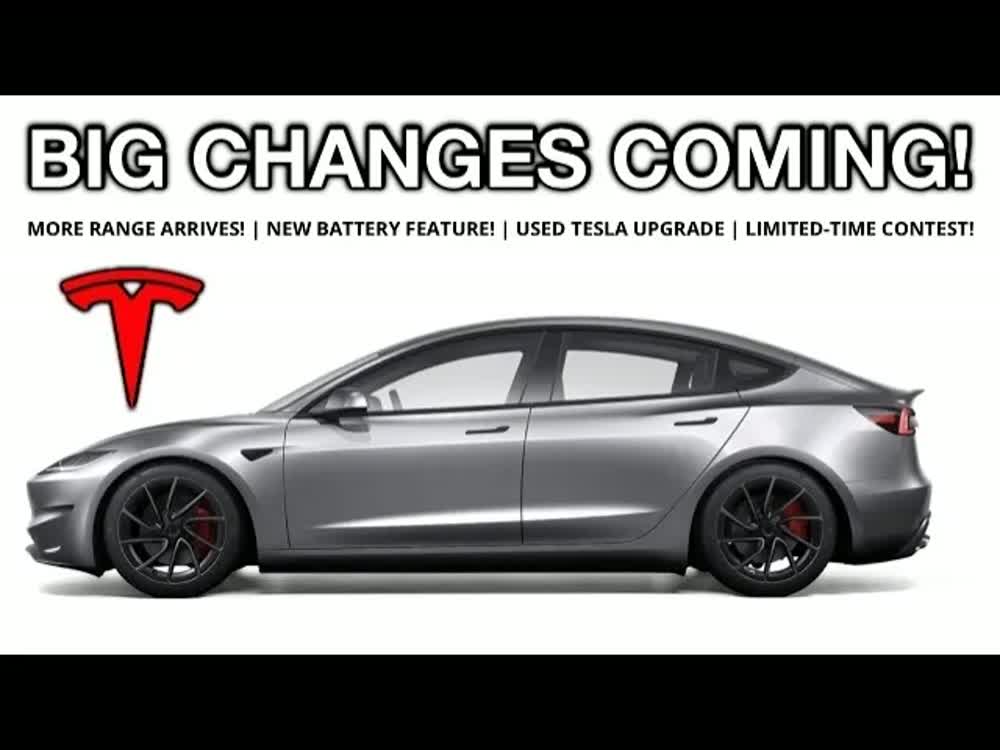
Tesla’s latest update wave promises to finally smooth out the rough edges owners complain about — but a closer look shows the most-hyped fixes are real, limited, or simply impossible on the hardware millions already paid for.
What Tesla is actually shipping
The summer 2026 feature wave centers on Full Self-Driving. The headline is FSD V14 “Lite,” a build that began reaching the roughly 4 million cars on Hardware 3 (Model 3 and Y built from about 2019 through 2023) at the end of June 2026. For those owners it ended a 16-month software freeze — they had been stuck on a 2024-era build while newer cars moved ahead. Alongside it, Tesla says FSD will start remembering how you drive: your parking habits, your lane choices, when you use the carpool lane. And the next big architecture, V15, is targeted for the end of 2026 or early 2027, running about 10 times more parameters than what’s in cars today.

On paper, that reads like the “we hear you” moment owners have waited for. In practice, the picture splits three ways — some of it genuinely useful, some of it marketing gloss, and a large chunk of owner frustration that no over-the-air update can ever reach.
What genuinely helps
Credit where it’s due: V14 Lite is a real engineering achievement for the oldest Teslas. Tesla’s team compressed the full V14 neural network — which needs about 12.5 GB of memory to run well — down to fit Hardware 3’s 8 GB of RAM using quantization and model distillation. The result brings HW3 owners features they simply didn’t have: Start FSD from Park, arrival options for where the car parks itself, automatic Drive/Reverse shifting, and speed profiles. Early testers reported smoother merges, fewer phantom slowdowns, and cleaner lane centering.
Parking is the clearest win. In Tesla’s own data, parking is the single most common reason owners take over from the system — so teaching the car your usual spot at work or how you pull into the garage directly removes daily annoyance. If you bought a 2020–2023 Model 3 or Y, this update makes the car feel newer. That part of the hype is earned.
Where the hype outruns reality
The “learns how you drive” story is narrower than it sounds. The examples given are parking and lane preferences — not safety-critical behavior. Veteran owners note that almost none of their disengagements are about the car doing something unsafe; they’re about the car doing something the owner wouldn’t have done. Personalization helps, but it doesn’t close the gap. And as of the week of this writing, V14 Lite was running on under a tenth of a percent of the fleet — “likely going wide,” in Tesla’s words, not actually wide.
The bigger overstatement is the one about older cars being “fixed.” On Tesla’s Q1 2026 earnings call (April 22), Elon Musk said plainly that Hardware 3 “simply does not have the capability to achieve unsupervised FSD.” The reason is physics, not software: HW3 has roughly one-eighth the effective memory bandwidth of Hardware 4. The promised computer retrofit for owners who paid for FSD doesn’t go into production until 2027 or later. So the people who paid as much as $15,000 for “Full Self-Driving” are getting a smarter supervised assistant — not the driverless car the name implied. Dutch owners have organized a 7,000-person lawsuit, and a group of Chinese owners has sued over false advertising. That is not a fix; it’s a consolation build with open legal exposure.
V15, the version that actually moves the needle on capability, runs only on Hardware 4 and the upcoming AI5. If you’re on HW3, the ceiling is already in the silicon.
The pain points software can’t touch
The recurring owner complaints — panel gaps, the removal of ultrasonic sensors (USS), software bugs, and service waits — are physical or organizational, so no feature drop addresses them. Here’s the honest scorecard:
| Owner complaint | What’s hyped | What’s real |
|---|
| Build quality / panel gaps | “Continuous OTA makes the car better over time” | Owners on Reddit and Tesla Motors Club still report misaligned panels and trunk leaks; Consumer Reports notes Tesla improved body panels and paint in 2026, but long-term used-car reliability still ranks last (score 31/100, 5–10 yr old models). |
| USS removal (pure vision parking) | “Cameras see better than sensors” | Owners report false “stop” warnings with half a meter to spare and missed low/ thin obstacles causing scrapes. A software fix can’t restore hardware that isn’t there. |
| Software / UI bugs | “The car is a computer on wheels” | Infotainment remains the single worst category in J.D. Power’s 2025 study at 42.6 problems per 100 vehicles; screen-only climate and steering-wheel turn-signal buttons frustrate many drivers. |
| Service experience | “Mobile service comes to you” | Tesla Motors Club threads cite 13-day appointment waits; a 2026 Nanjing consumer report placed Tesla in the top three complaint brands, with diagnostic locks limiting third-party repair and raising costs 40%+. A physical recall of about 20,000 cars this cycle underlines that not everything is fixable in-app. |
None of these are solved by a feature update. They’re the cost of buying a software-first car from a company that, by its own admission, is still learning high-volume manufacturing and service logistics.
Real, useful owner benefit (HW3 parking & smoothness)
“Fixes everything” claim vs. reality (HW3 autonomy, build, service)
A mixed brand signal underneath it all
The feature story sits on top of a wobbly base. Used Tesla prices are up almost 20% year-over-year on the same models (Model S +18.5%, Model X +17.5%, Model 3 +15%, Model Y +13.5%, averaging about $32,000 — roughly 11% above the average used car), even as the broader used-EV market is flat. That suggests demand is holding, but it also reflects Tesla raising new-car prices all year, which simply lifts the floor on two-year-old cars. Meanwhile Consumer Reports’ 2026 predicted-reliability ranking put Tesla 9th (score 50, up 8 spots), with the Model 3 and Y as the brand’s most trouble-free vehicles and the Cybertruck below average. The context matters: newer Teslas are clearly better than the “production hell” era, but the gap between the marketing and the ownership reality is exactly where skepticism earns its keep.
For buyers weighing the whole EV landscape, the feature race is only one axis. Our breakdown of what Tesla’s 2026 tech changes actually mean for EV buyers and the broader question of whether an electric car pencils out for US owners in 2026 both matter more than any single update. And the “EV demand is collapsing” narrative keeps colliding with solid US numbers, as we tracked in the collapsed “EV is dead” story.
Does FSD V14 Lite make my older Tesla drive itself?
No. It remains a Level 2 supervised system — you must watch it and keep your hands ready at all times. It improves parking, lane behavior, and smoothness on Hardware 3 cars, but it cannot and will not reach unsupervised driving on that hardware. Unsupervised capability requires Hardware 4 or later, and V15 (late 2026/early 2027) runs only on those newer computers.
If I paid $8,000–$15,000 for FSD on a 2019–2023 car, what do I get?
You get V14 Lite now and, Tesla says, a free computer retrofit later — but the retrofit isn’t in production until 2027 or later, and a physical swap means new cameras and rewiring, not a simple chip change. Until then, you have a much better supervised assistant than you had in 2024, not the driverless car originally advertised.
Are build quality and service problems actually getting better?
Partly. Consumer Reports’ 2026 data shows Tesla improved body panels, paint, and interior fit, and newer Model 3/Y scores are strong. But owner forums still report panel gaps and trunk leaks, USS-removal parking complaints persist, and service-wait frustration is widely documented. The trend is up; the pain points are not gone.
Sources: Ryan Shaw, “Tesla’s Newest Tech & EV News” (YouTube, upload 2026-07-21, video ID bNNHmWuNV1w); Tesla Q1 2026 earnings call (Apr 22, 2026) — Musk on HW3 capability; TechTimes (2026-06-30) on FSD V14 Lite rollout to ~4M HW3 cars; mindcron.com on V14 Lite features and retrofit scope; J.D. Power 2025 U.S. Initial Quality Study (Tesla 200 PP100, not officially ranked; infotainment 42.6 PP100); Consumer Reports 2026 brand reliability (Tesla 9th, score 50; used-car 5–10 yr reliability score 31/100); Electrek (2025-12-11) on used-Tesla dead-last ranking; CarGurus used-Tesla price data cited in source video; Tesla Motors Club and Reddit owner threads on panel gaps, USS removal, and service waits (2026).