A year ago, an EV road trip through Arkansas, Tennessee, and North Georgia meant memorizing PlugShare and praying the 50 kW unit at the truck stop actually worked. In the summer of 2026, the same 800-mile corridor is lined with 150–350 kW DC fast chargers — and most of them didn’t exist two years ago.
The corridor that wasn’t supposed to exist
The American South spent years as the country’s clearest “charging desert” — long highway gaps between metros, slow hardware, and reliability so poor that owners built entire spreadsheets to avoid dead stalls. That reputation is now out of date. The number that reframes the whole conversation comes from the U.S. Department of Energy’s Alternative Fuels Data Center: as of May 1, 2026, the United States had 72,514 public DC fast-charging ports across roughly 15,400 locations, up about 30% year-over-year. More than 1,000 new DC stalls came online in April 2026 alone.
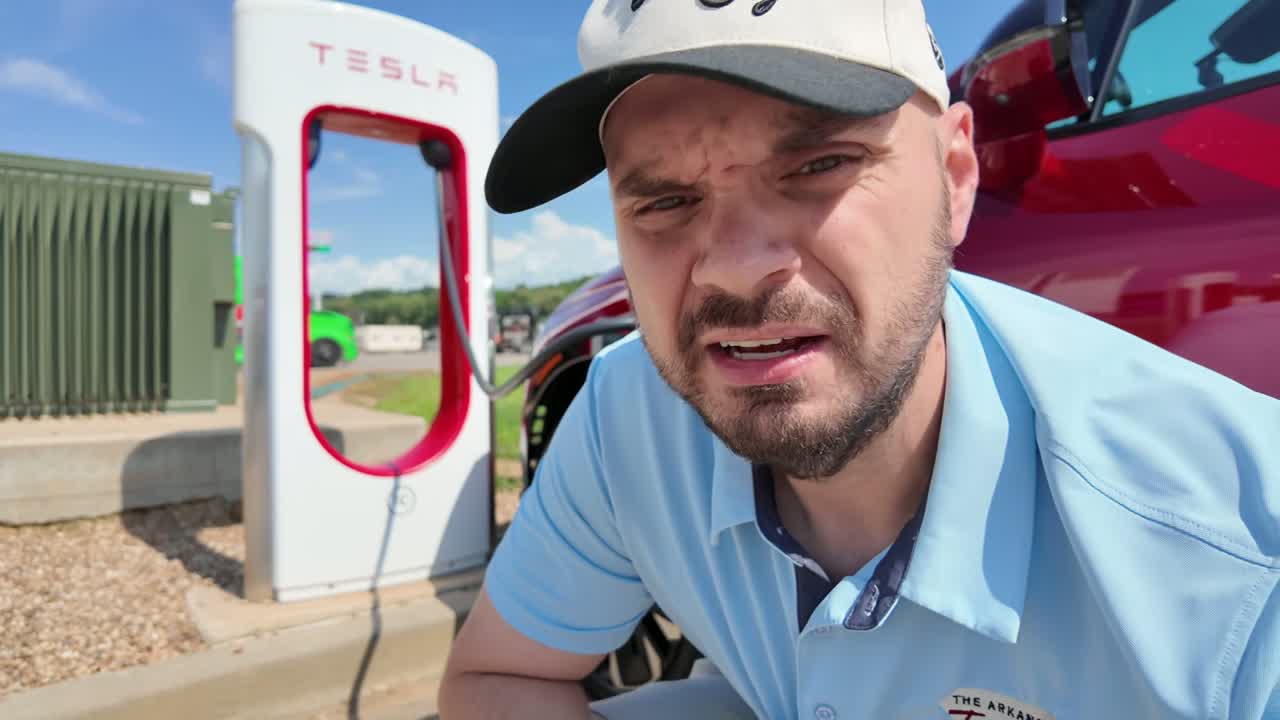
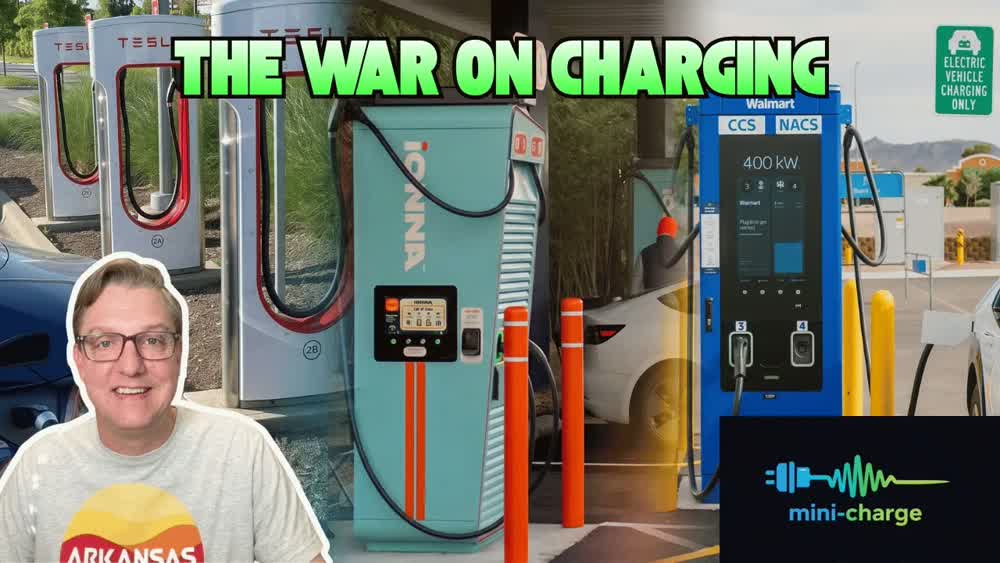
What changed the South specifically is not one company but four of them arriving at once: Tesla’s Supercharger network quietly opening to every brand, Electrify America’s 350 kW corridors, the automaker-backed IONNA joint venture, and travel-center operators like Pilot Flying J and Mercedes-Benz High-Power Charging planting 400 kW hardware at interstate exits. A recent on-the-ground drive from Bentonville, Arkansas to north Georgia — eight charging stops, four different networks — is a tidy illustration of a buildout that the data now confirms.

By the numbers: what the networks actually look like
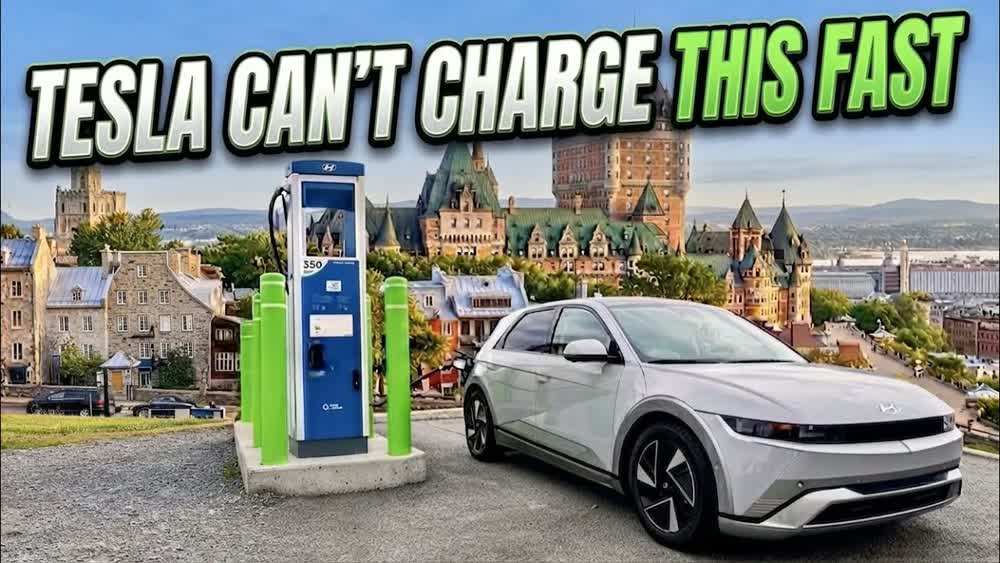
Size matters less than density and uptime, but the scale gap between the leader and everyone else is the single most important fact for a Southern road-tripper. Tesla operates 37,229 stalls — a 51.3% share of all U.S. DC fast-charging ports — and more than two-thirds of its North American stalls are now open to non-Tesla EVs. IONNA, the eight-automaker joint venture (BMW, GM, Honda, Hyundai, Kia, Mercedes-Benz, Stellantis, Toyota), crossed 1,000 stalls across 100+ locations in early 2026, with every stall rated to 400 kW and carrying both CCS and NACS plugs. Electrify America runs 5,593 ports at roughly 1,180 stations, the bulk of them 150–350 kW.
| Network | U.S. DC ports (May 2026) | Peak speed | Plug type | Southern footprint |
|---|
| Tesla Supercharger | 37,229 (51.3%) | 250 kW (V3) / up to 350 kW (V4) | NACS, open to all via Magic Dock | 83 sites / 1,100 stalls in GA alone |
| Electrify America | 5,593 (7.7%) | up to 350 kW | CCS1, NACS being added | 59 stations in FL, 47 in TX |
| IONNA | ~1,004 (1.5%) | 400 kW | CCS + NACS on every stall | GA live sites; Wawa rollout in FL |
| Mercedes-Benz HPC | — | 400 kW (Alpitronic) | CCS + NACS | 13 sites / 104 stalls in GA |
For the bigger picture on how these networks fit into the national rollout, see our 2026 EV charging landscape explained. The short version: one network is the backbone, one automaker coalition is scaling fastest per site, and a handful of open networks fill the gaps.
Four networks, one 800-mile test
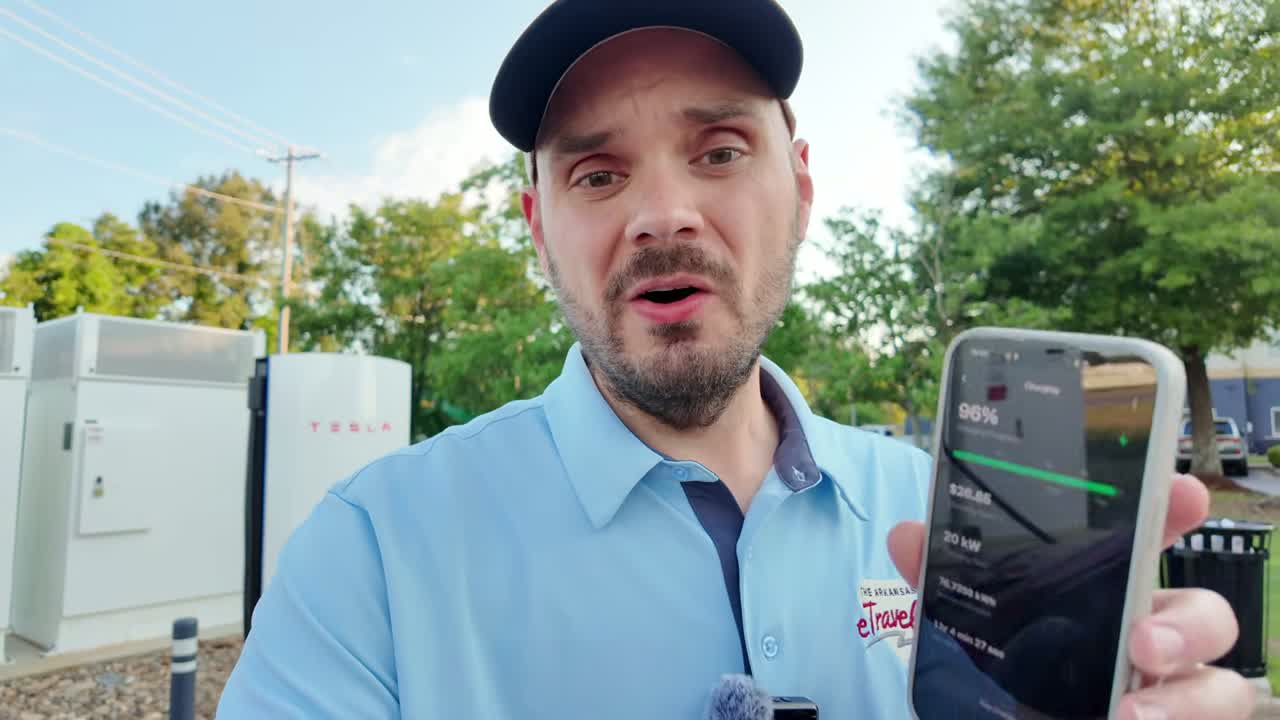
The road-trip data is useful precisely because it strips the marketing away. Across 800 miles and eight stops, the driver graded each site on payment, power, amenities, location, and availability — and the result was not “one winner.” It was “every network has a superpower and a gap.” Tesla nailed payment and location every time, with 16 stalls at a North Little Rock Cracker Barrel delivering a seamless sit-down dinner while the Blazer EV filled to 99%. Mercedes-Benz High-Power Charging hit a full 500 amps at its Alpitronic Hyperchargers but lost a point where the attached travel-center restroom was closed overnight. A small Electric Era site in Murfreesboro was cheap at 40¢/kWh but sat a mile off the interstate — great for the town, useless for a corridor fly-through.
That pattern — impressive hardware, uneven amenities, occasional downtime — shows up in the national reliability numbers too. Electrify America’s net stall growth actually went negative in April 2026 (-17 stalls) even as the network added 243 year-to-date, a reminder that uptime and maintenance, not just megawatts, decide whether you make your next exit.
How the four networks score on the things road-trippers care about:
Payment works first try
Full 150+ kW power delivery
Right off the interstate
24/7 restrooms / food
Stalls online (no queue)
Why the South turned first
The federal NEVI formula program — $5 billion nationwide over five years under the 2021 Infrastructure Investment and Jobs Act — is the quiet engine behind a lot of this. States get the money and decide where the stalls go, and Southern DOTs have been aggressive about interstates. Texas was allotted $323 million for fiscal years 2022–2026; by 2026 the Texas Department of Transportation had 14 NEVI stations built, 23 under construction, and 28 in planning, with a goal of about 300 charging locations live this year and ports reaching up to 400 kW. Georgia was allotted roughly $135 million and in November 2025 approved $24.4 million in round-two NEVI grants for 26 new DC fast-charging sites, each with four DCFC ports operating 24/7.
Private money moved in parallel. IONNA opened full “Rechargery” sites in Forest Park and West Point, Georgia and — through its July 2025 Wawa partnership — is building Rechargeries at Florida locations including Daytona Beach, Bradenton, Pensacola, and Orlando. A Dallas IONNA site with an Amazon Just Walk Out store is scheduled for Q2 2026. The combined effect is a corridor where a driver can hop Tesla → Mercedes-Benz HPC → Pilot/EVgo without leaving the highway.
The NACS effect nobody expected
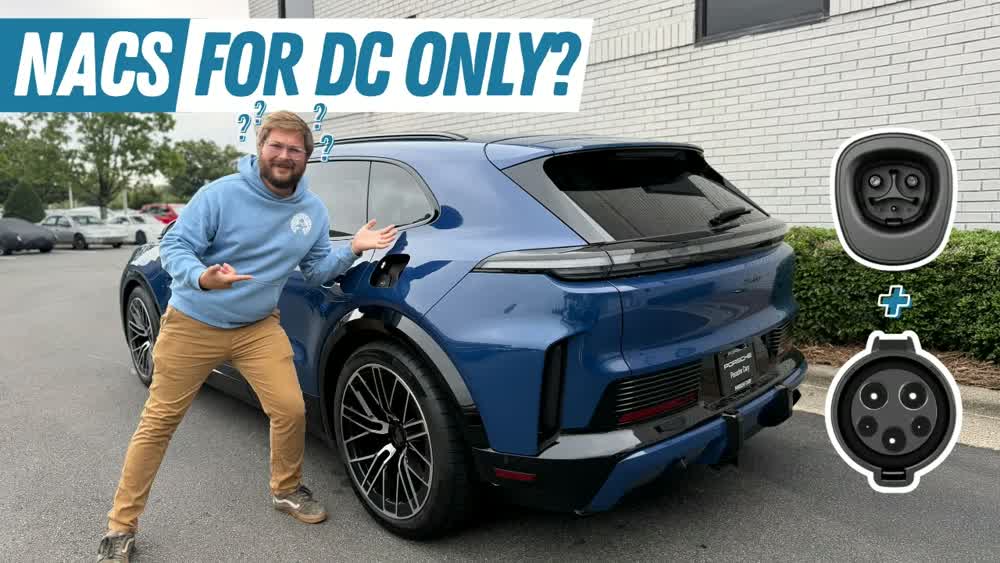
The biggest mindset shift is Tesla. More than 9,500 NACS-equipped Supercharger stalls are now open to non-Tesla EVs across all 50 states, either through NACS-partner roaming or built-in Magic Dock adapters that speak CCS1. On the Arkansas-to-Georgia run, the driver explicitly set out to avoid Tesla — and ended up plugging into a Supercharger three times, every one already on the route with zero detours. That is the whole point of the opening: the largest, most reliable network in the country stopped being a walled garden, and the South’s corridor math improved overnight because of it.
What road-trippers should actually expect
The honest caveat from the data: the buildout is real but uneven, and price varies wildly by network and time of day. On this single trip, per-kWh rates ran from about 35¢ on a Tesla membership, to 40¢ at Electric Era, 44¢ at Mercedes-Benz, 53¢ at a Pilot/Flying J N-site in Dalton, and 54¢ at a Pilot in Monteagle, Tennessee. Electrify America typically lands at $0.43–$0.60/kWh, with its Pass+ membership trimming roughly 10¢. A 15-minute splash-and-dash at the bottom of the battery curve — the strategy this driver used overnight with a sleeping toddler — can add meaningful range for pocket change if you precondition the pack and avoid sitting at a congested peak-rate site.
None of this erases the gaps. A Pilot location was partly out of service; a small municipal site was a mile off the interstate; not every travel center keeps restrooms open at 1 a.m. The South in 2026 is no longer a charging desert — but it is also not yet a place you drive blind. Plan two stops ahead, keep a backup network in the app, and the 800-mile trip that used to be a spreadsheet exercise becomes a normal road trip.
If you are weighing whether an EV even fits your life before you trust it on a Southern corridor, our 2026 U.S. owner math breakdown walks through the real numbers.
Frequently asked questions
Can any EV use a Tesla Supercharger in the South now?
More than 9,500 NACS Supercharger stalls across all 50 states are open to non-Tesla EVs, either through NACS partner roaming or Magic Dock adapters that support CCS1. Check the Tesla app or your car’s nav for “available to all” sites before you rely on one.
How fast are Southern DC chargers in 2026?
Most new corridor hardware runs 150–350 kW, with Tesla V4 reaching up to 350 kW and IONNA and Mercedes-Benz HPC rated to 400 kW. Real-world speed depends on your car’s peak (the Blazer EV in the source trip wanted about 155 kW) and battery temperature, so precondition the pack before you arrive.
Is Electrify America reliable on Southern interstates?
It runs 5,593 ports at ~1,180 U.S. stations, including 59 in Florida and 47 in Texas, mostly 150–350 kW. Reliability is good but not perfect — its net stall count dipped in April 2026 — so keep a backup network in your planner.
What does NEVI actually pay for?
The $5 billion federal NEVI program funds states to build corridor DCFC. Texas got $323M (FY2022–2026, ~300 locations planned) and Georgia ~$135M, with $24.4M awarded in late 2025 for 26 new 24/7 sites. NEVI covers up to 80% of eligible costs via public-private partners.
Sources:
U.S. DOE Alternative Fuels Data Center (AFDC) via evchargingstations.com “Largest DC Fast-Charging Networks in the US: May 2026” — 72,514 DC ports, network shares.
Texas Department of Transportation NEVI program page — $323M allocation, 14 built / 23 construction / 300 planned.
AASHTO / Georgia DOT — $24.4M round-two NEVI grants, 26 sites, 4 DCFC each, ~$135M state allocation.
IONNA / Destination Charged / Convenience.org — 100+ locations, ~1,004 stalls (Mar 2026), 400 kW, Wawa Florida partnership.
Electrify America network data (usevchargingstations.info) — 1,180 stations, 5,593 ports, FL 59 / TX 47.
IEVC hina / Tesla — 9,500+ NACS Supercharger stalls open to non-Tesla EVs, 50 states.
Source video: The Arkansas eTraveler, “800 miles… across the South in 2026” (YouTube, Jul 20, 2026).