Solid-state batteries promise the EV dream — a 600+ mile range, a 10-minute charge, and a pack that essentially can’t catch fire — but in 2026 not a single production car on Earth actually uses one. Here is who is genuinely close, and why “close” keeps slipping.
What a solid-state battery actually is — and why it matters to you
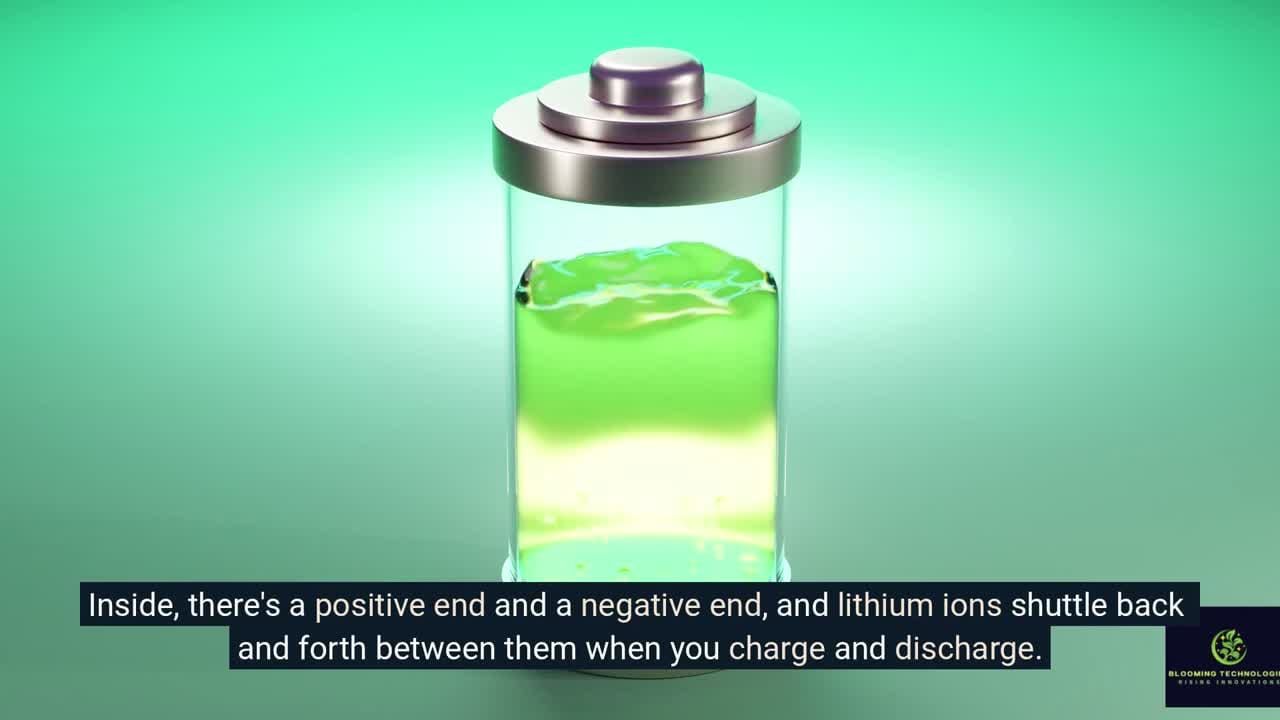
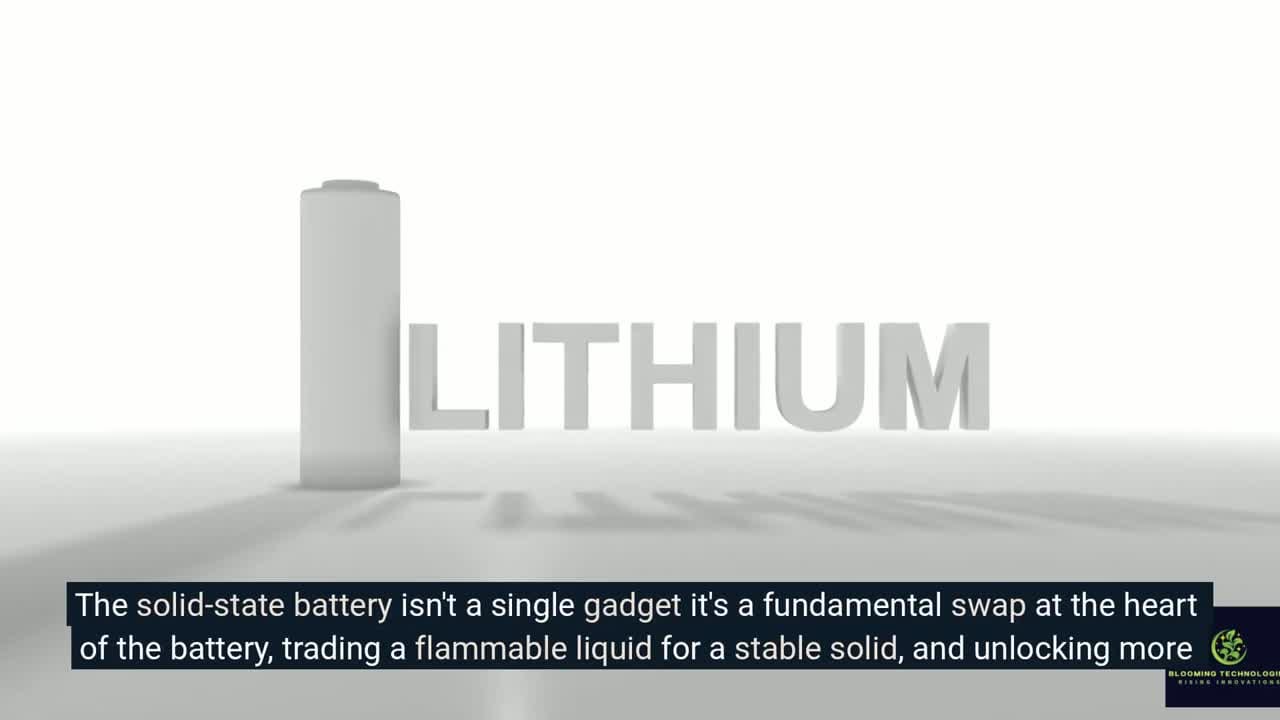
The battery in your phone, your laptop, and every EV on the road today is lithium-ion. Inside, lithium ions shuttle between two electrodes by swimming through a liquid electrolyte. That liquid is flammable — it is the reason a punctured EV pack can burn fiercely and is so hard to extinguish. To stay safe, manufacturers wrap cells in cooling loops, separators, and armor, all of which add weight and eat space that could otherwise hold energy.
Solid-state is the beautifully simple fix: swap the flammable liquid for a solid ceramic or sulfide electrolyte that lithium ions can still cross, but that does not burn or leak. The consequences are not small. The table below shows what that one swap changes for a US driver.

| Attribute | Today’s liquid Li-ion | Target solid-state |
|---|
| Cell energy density | 250–300 Wh/kg | 400–500 Wh/kg |
| Real-world range (EPA-class) | ~270–330 mi typical | ~620–745 mi (1,000–1,200 km) |
| 10–80% charge time | ~20–40 min on a fast DC charger | ~9–10 min claimed |
| Fire risk | Flammable liquid electrolyte | No flammable liquid |
| Pack cooling / armor | Heavy, mandatory | Greatly reduced |
That is roughly a 50–80% jump in energy per kilogram — the difference between an EV that needs a charged stop on a road trip and one that doesn’t. But a spec sheet is not a car you can buy, which is where the 2026 reality gets interesting.
The 2026 leaderboard: who is actually close to production
Four names dominate the race, and they are not startups with a slide deck — they are the largest, most conservative players in the industry. That is exactly why this cycle feels different from the “five years away” hype of the last decade. Here is where each one really stands.
| Developer | Stated energy density | Charge claim | Production timeline | True readiness in 2026 |
|---|
| Toyota | 450–500 Wh/kg | ~10 min to 80% | 2027–2028 (first in Lexus flagship) | Pilot line built; 1,300+ patents; $15B+ invested |
| Samsung SDI | ~450 Wh/kg (900 Wh/L) | 9 min (8→80%) | 2027 mass production | Pilot line since 2023; sampling |
| QuantumScape (US) | 844 Wh/L (QSE-5) | ~15 min (4C) | Eagle pilot live; cars ~2028 | Eagle Line inaugurated Feb 4, 2026 |
| CATL | ~500 Wh/kg lab target | Not yet quoted | Not before 2030 | TRL level 4 of 9 — lab only |
Read that last row twice. The world’s largest battery maker, CATL, publicly rates its own solid-state program at just level 4 on a 9-point scale — still laboratory validation and prototype demo. Chairman Robin Zeng says real commercial viability will not arrive before 2030, and CATL’s own chief scientist targets only level 7–8 by 2027, enough for pilot-scale validation, not mass production.
The “how close to your garage” signal bars tell the same story more bluntly:
Toyota
Samsung SDI
QuantumScape
CATL
These bars track proximity to scaled production, not laboratory bragging rights. A prototype that beats a record in a lab is a world away from a million identical cells rolling off a line at a price a family can pay.
The numbers that justify the hype
Solid-state is not vaporware. The chemistry numbers are real, and they come from named programs, not blog speculation:
- Toyota targets 1,000–1,200 km (about 621–746 miles) of range on a single charge, with a 10-minute charge to 80% — backed by more solid-state patents than any other company and a $15 billion+ R&D commitment, plus an ¥85.6 billion ($570M+) Japanese government subsidy.
- Samsung SDI’s ASB cell hits 900 Wh/L (≈450 Wh/kg) and recharges from 8% to 80% in 9 minutes, with a claimed 20-year lifespan.
- QuantumScape’s QSE-5 cell measures 844 Wh/L, and VW’s PowerCo validated over 1,000 charge cycles at >95% capacity retention — durability that beats most cells in today’s showroom EVs.
- CATL’s lab sample targets 500 Wh/kg, but the company says sulfide cells still cost 3–5× a conventional battery, and it has committed roughly 10 billion yuan ($1.4B) to the long game.
- Toyota’s own cost today is about $150–200/kWh — 1.25–1.67× a ternary lithium pack — with a goal to drop below $100/kWh by 2030 and reach 10 GWh of annual capacity.
The gap between a press release and a product is not a typo. It is the hardest problem in battery manufacturing.
Three hard problems nobody mentions
If everyone is this close, why can’t you buy one? Three engineering walls, not one:
- Manufacturing at scale. Making one flawless cell in a lab is trivial next to making millions of identical ones cheaply, without microscopic defects. That is the chasm between “we built it” and “we sell it.”
- Materials and dendrites. Solid electrolytes can crack, and lithium can grow needle-like dendrites that short the cell. CATL’s own headache is the solid-solid interface layer, where mismatched compaction at ~6,000 atmospheres of pressing raises internal resistance and accelerates wear.
- Cost. Early cells are brutally expensive, and until volume climbs, that premium lands in the sticker price. As CATL bluntly notes, true solid-state won’t reach the 1-million-vehicle scale that makes it viable until after 2030.
Why 2026 still has zero production cars
As of 2026, no production car on the road uses a fully solid-state battery. The closest thing you can actually buy is a semi-solid pack — like the 150 kWh unit in some NIO vehicles in China. It is a halfway step, not the real thing, and it is not sold in the US. China has also moved to set a national solid-state standard, with a clever definition: packs with 5–20% liquid electrolyte count as “hybrid,” while true solid-state must stay under 5%. That threshold alone shows how many “solid-state” claims are really hybrids in disguise.
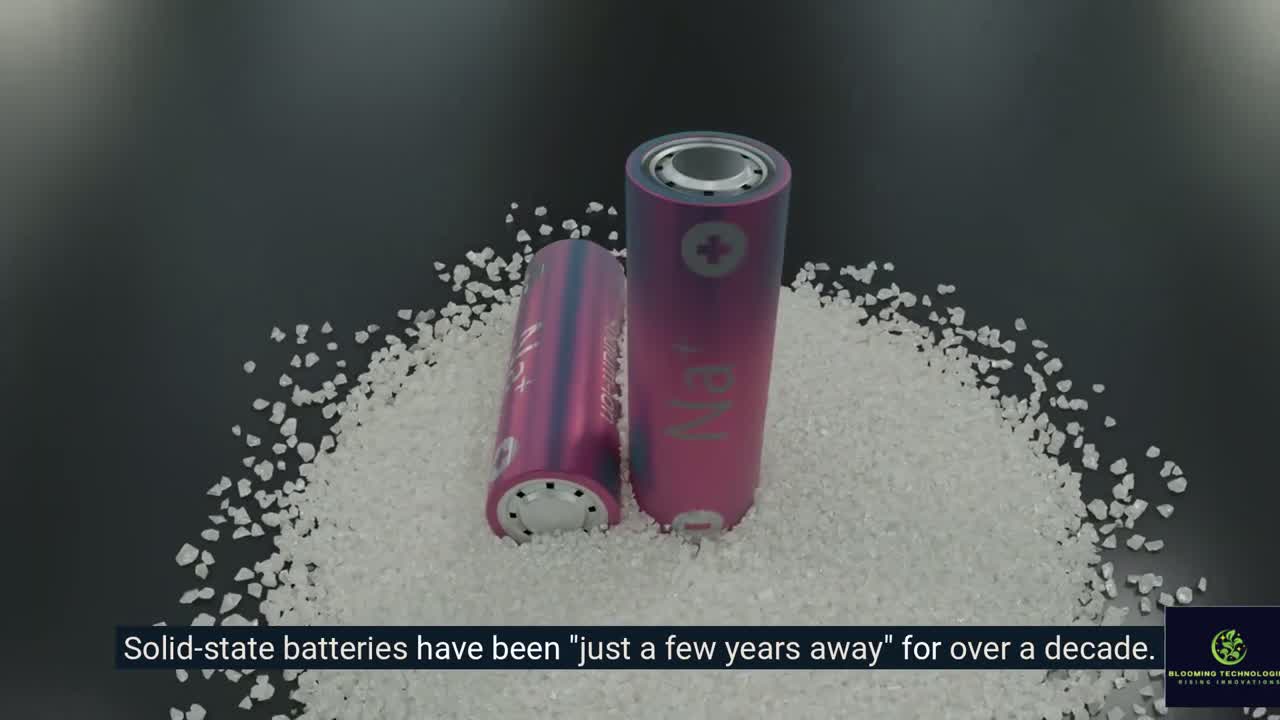
And keep the history in view: solid-state batteries have been “just a few years away” for over a decade. Every year the timeline slips a little. A healthy dose of skepticism is fair.
So why does this moment feel different?
Because it is no longer one ambitious startup making bold claims. It is Toyota, Samsung, QuantumScape, and an entire national industry in China — all converging on the same 2027–2028 window, all with real prototypes and real factories being built. When the most cautious automaker on the planet stakes $15 billion and its future on a chemistry, that is a signal worth taking seriously.
The first cars will not be cheap, and they will not be yours. Toyota plans to debut in high-end Lexus flagships, not the Corolla. The direction, though, is set: more range, faster charging, and real safety, all at once. And when it lands, it won’t just change EVs — the same leap could reshape your phone, your laptop, and how the grid stores renewable energy.
The bottom line for US buyers: don’t rewrite your 2026 or 2027 purchase plan around solid-state. The technology is real and the timeline is closer than ever — but the cars that arrive first will be six-figure flagships, and the mass-market version that actually changes your commute is a 2030 story, not a 2026 one.
FAQ: Will a solid-state EV really charge in 10 minutes?
The claims are real but conditional. Toyota targets a 10-minute charge to 80%, and Samsung SDI cites 9 minutes (8%→80%) for its ASB cell. Those are cell-level lab and pilot results; the public charger network, cable, and thermal limits in a real car will usually add time. Expect “coffee-stop” speed in the best case, not a guarantee at every plug.
FAQ: Is a solid-state battery actually safer?
Fundamentally yes. Removing the flammable liquid electrolyte eliminates the single biggest fire source in a lithium-ion pack, and Toyota cites a solid-state thermal-runaway threshold roughly 200°C higher than liquid cells. You still need battery management and crash protection, but the “basically can’t catch fire” claim is chemically sound.
FAQ: Should I wait to buy an EV until solid-state arrives?
For most US buyers, no. Today’s liquid Li-ion EVs already cover 270–330+ miles EPA and fast-charge in 20–40 minutes, and the federal $7,500 credit window closed on 2025-09-30, so incentives are thinner now. Solid-state’s first vehicles are 2027–2028 luxury models; affordable versions are a 2030-era story. Buy for the car you need now.
Related reading on EVCUBE