Tesla’s Q2 2026 results are a tale of two companies — one selling more cars than ever at thinner margins, the other building an energy and robotaxi business the market is betting its future on — and if you’re a US buyer or investor, the second one is what moves the stock.
The headline: record revenue, shrinking profit
Tesla grew total revenue 26% year over year to $28.24 billion in the second quarter of 2026 — the fastest top-line growth in three years and comfortably ahead of the consensus estimate. On the surface, that is a blowout. But the bottom line tells a different story: operating income collapsed 57% to $398 million, and operating margin fell to 1.4% from 4.1% a year earlier. The company posted its strongest sales momentum in ages and its thinnest profitability since the Model 3 ramp.
The gap between those two numbers is the whole thesis. Tesla is no longer a carmaker that happens to sell software — it is becoming an AI, energy, and mobility company that still happens to build cars. The cars fund the pivot; they no longer define it.

Q2 2026 vs Q2 2025: the scoreboard
| Metric | Q2 2026 | Q2 2025 | YoY |
|---|
| Total revenue | $28.24B | $22.50B | +26% |
| Automotive revenue | $20.52B | $16.66B | +23% |
| Energy generation & storage revenue | $3.14B | $2.79B | +13% |
| Services & other revenue | $4.58B | $3.05B | +50% |
| Total GAAP gross margin | 16.8% | 17.2% | -41 bp |
| Operating income | $398M | $923M | -57% |
| Operating margin | 1.4% | 4.1% | -269 bp |
| Net income (GAAP, to common) | $1.11B | $1.17B | -5% |
| Diluted EPS (GAAP) | $0.32 | $0.33 | -3% |
| Free cash flow | -$1.09B | +$146M | negative |
| Global deliveries | 480,126 | ~384,100 | +25% |
| Energy storage deployed | 13.5 GWh | 9.6 GWh* | +41% |
*Tesla Q2 2025 energy storage deployment of ~9.6 GWh is derived from the company’s reported +41% YoY growth to 13.5 GWh in Q2 2026.
Automotive: the margin squeeze is the real story
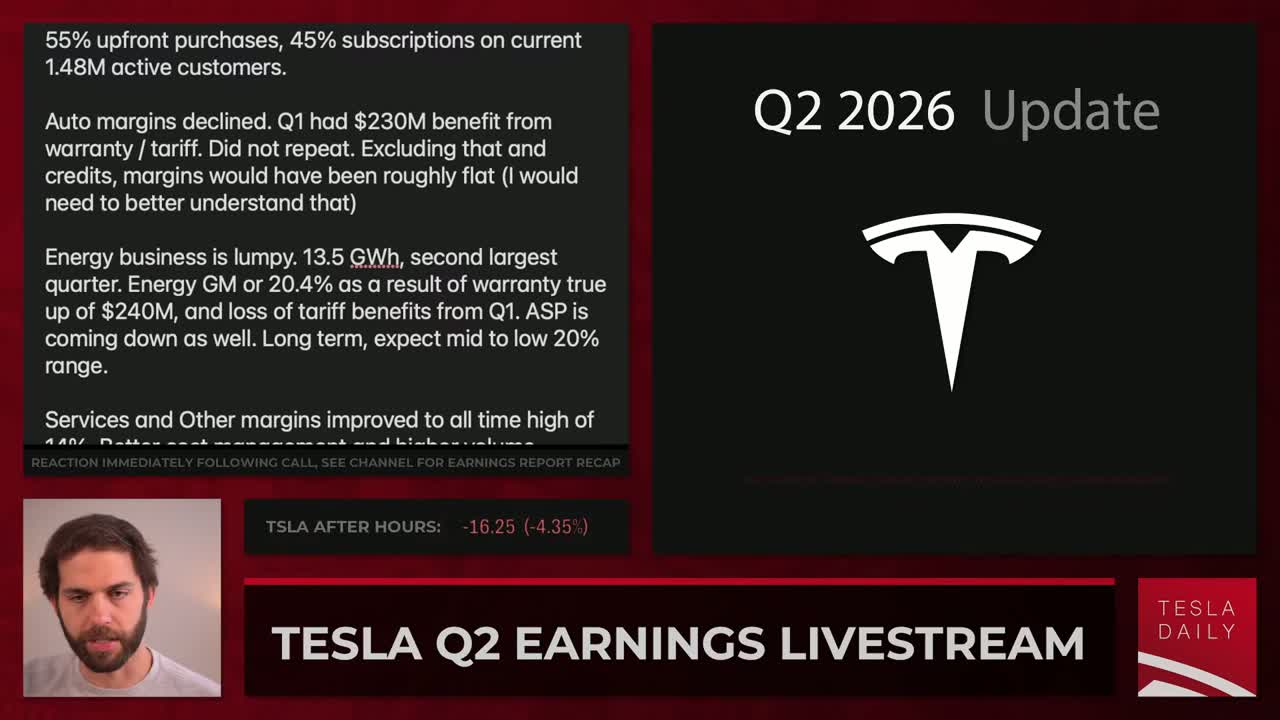
Automotive gross margin including regulatory credits came in at 16.9%. Strip out regulatory credits and the picture is sharper: margin fell to 16.3% in Q2 2026 from 19.2% in Q1 2026. That 290-basis-point sequential drop is not a rounding error — it is the compression that defines the quarter.
Two one-time tailwinds from Q1 did not repeat: a roughly $230 million warranty and tariff benefit in Q1, and a $200M+ tariff gain that flattered the prior quarter’s auto cost of goods. Management also flagged lower average selling prices, shrinking regulatory-credit income, and rising stock-based compensation as structural drags. The offsetting good news: manufacturing cost per vehicle has held near $35,000 for four to five years, and record Q2 deliveries with a 60% sequential jump in the Americas, 27% in APAC, and 12% in the AMIA region point to genuine demand recovery.
Auto GM excl. credits (Q2’26)
Auto GM excl. credits (Q1’26)
Energy storage: the quiet growth engine
While the auto line grabbed the headlines, energy storage deployed 13.5 GWh in Q2 2026 — up 53% sequentially and 41% year over year, the second-largest quarter in the business’s history. Revenue rose 13% to $3.14 billion. For a US buyer watching the grid, this is the part of Tesla that behaves like a compounding utility, not a cyclical carmaker.
One caveat: energy gross margin dropped from 39.5% to 20.4%, hammered by a ~$240 million warranty true-up tied to vendor cell issues in legacy deployments and the non-repeat of Q1 tariff benefits. Management expects the segment to normalize in the “mid-to-low 20%” range long term. The growth curve is intact; the profitability dip is a one-quarter cleanup, not a trend break.
The robotaxi and FSD story the Street is pricing
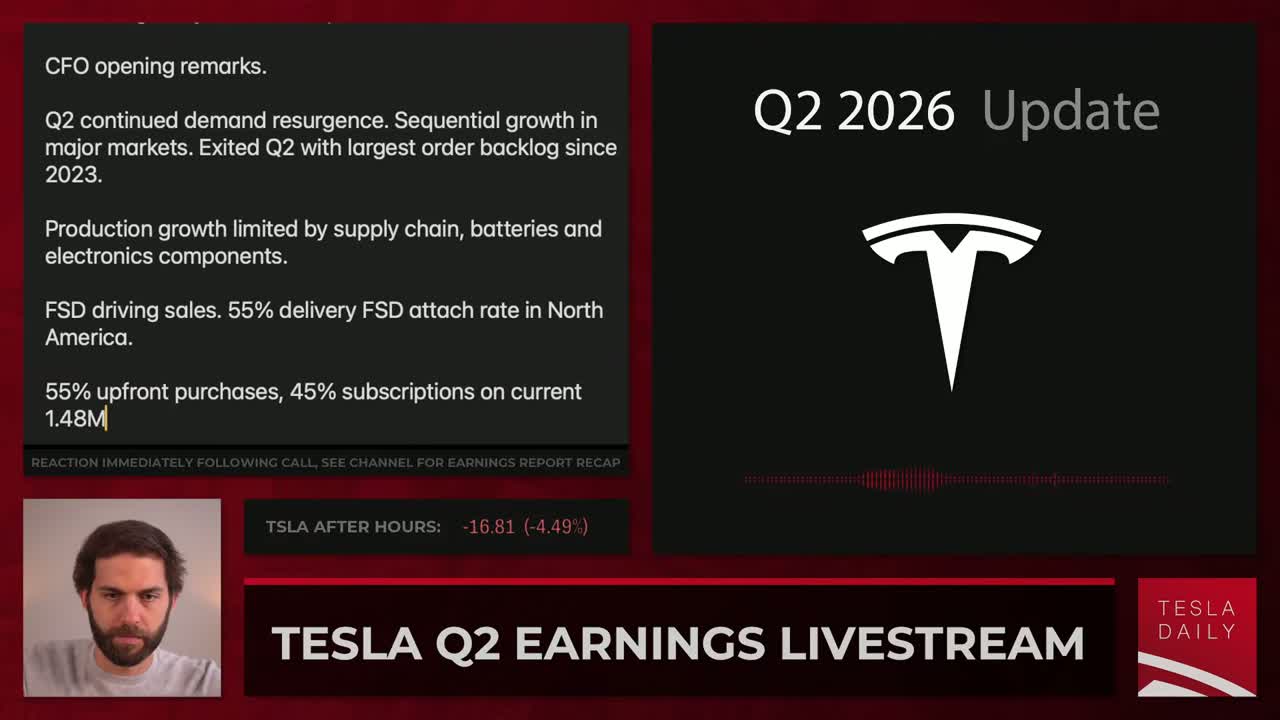
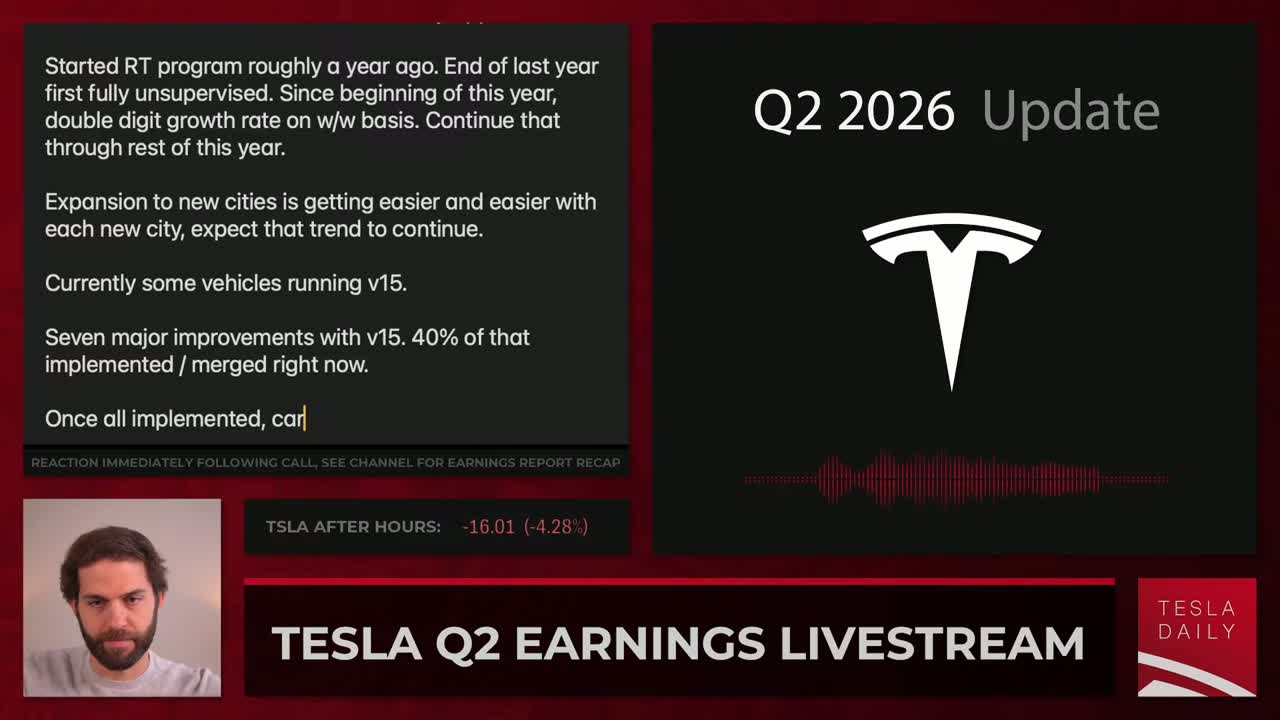
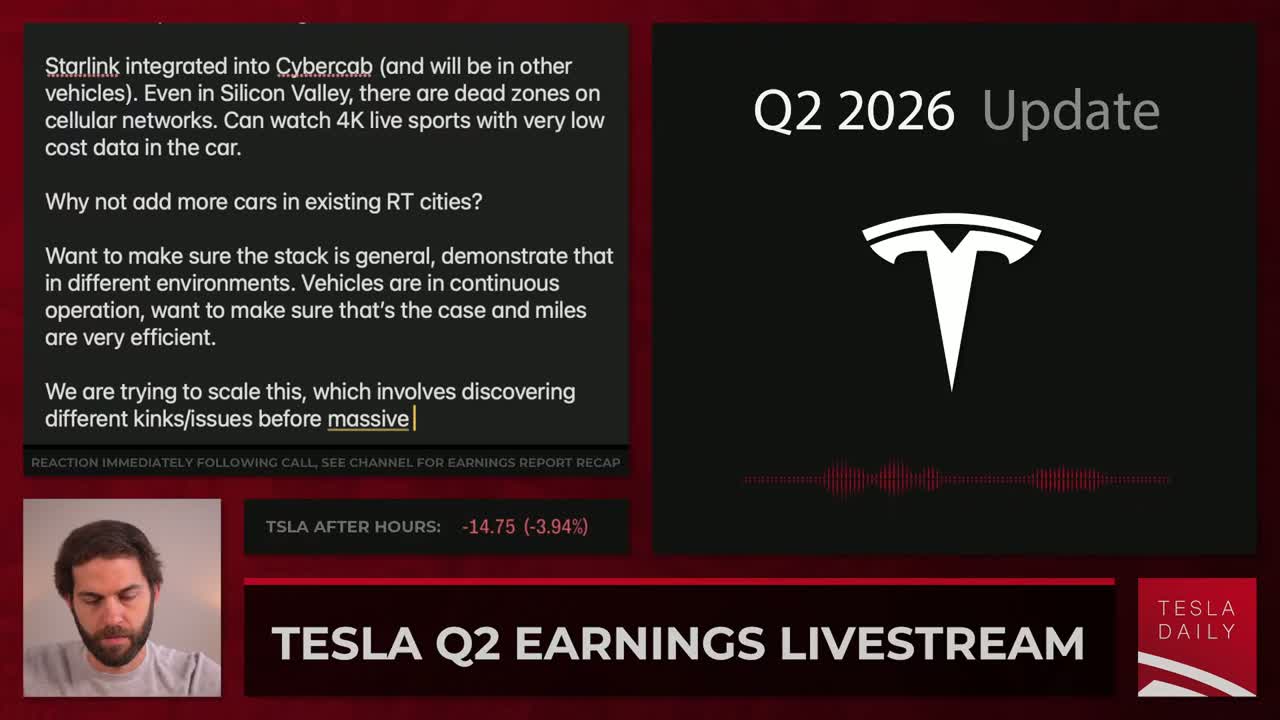
This is the part of the call that moves the multiple. Tesla’s robotaxi fleet has now driven 380,000+ unsupervised miles across roughly seven US metro areas in two states, with zero notable incidents. Early V15 FSD builds are already running in those vehicles, and about 40% of drive tracks have been merged. The June-quarter print also showed FSD paid subscribers reach nearly 1.48 million, up 56% year over year, with North American attach rates above 55% at the time of delivery.
None of that shows up as profit today. But it is exactly what the market is discounting: the option that a $35,000 cost-to-build car becomes a recurring software and mobility annuity. If you are a US buyer, the practical read is simple — the car you purchase is getting smarter every quarter, and Tesla is pouring the auto margin it sacrifices on price into exactly that software.
Cash: the pivot has a price tag
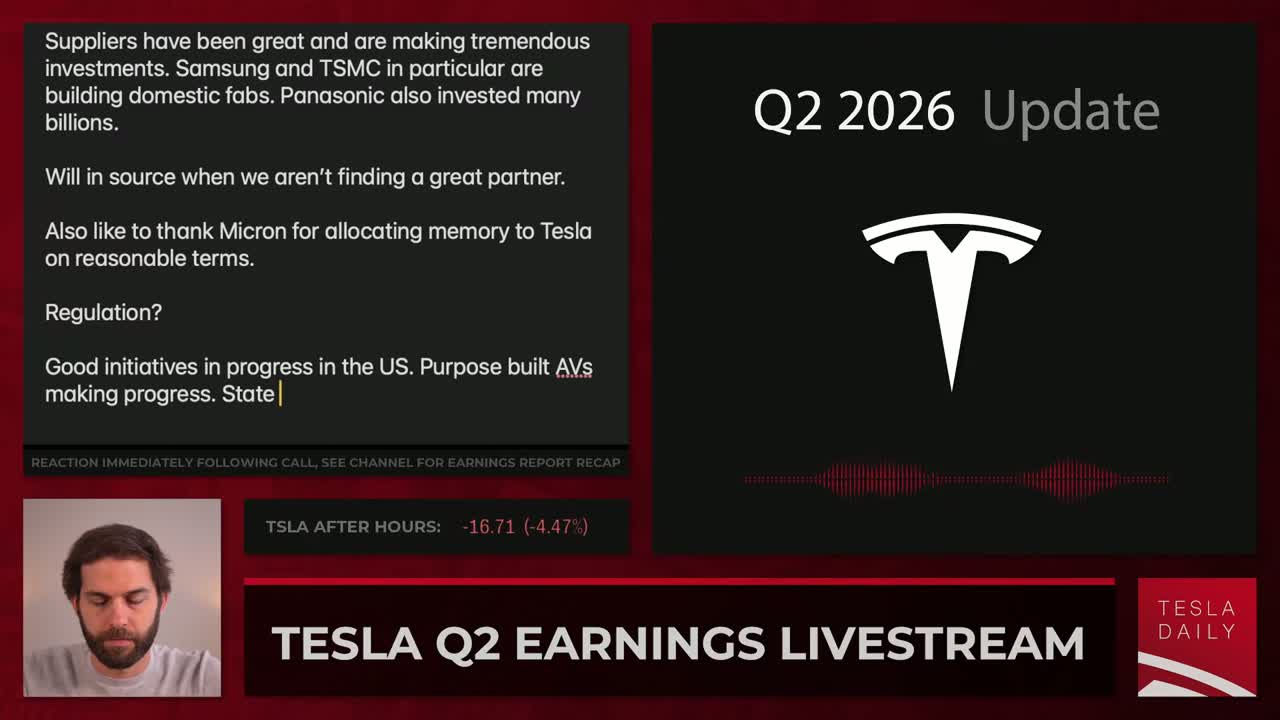
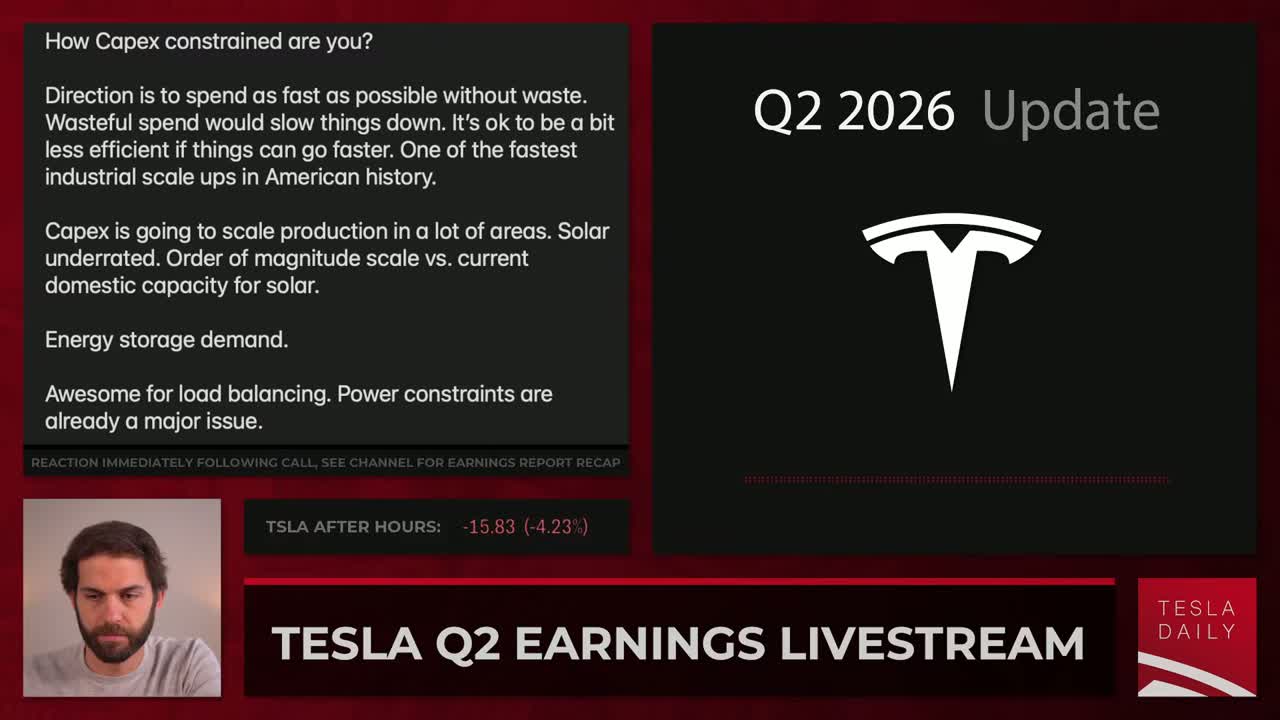
Free cash flow turned negative for the first time in more than two years, at -$1.09 billion, as capital expenditure surged 142% to $5.79 billion. Operating cash flow actually rose 85% to $4.70 billion — the problem is spend, not operations. Tesla guided full-year capex above $25 billion, roughly triple the prior year’s run rate, and said it expects that to keep climbing for the next two to three years, funded partly through debt facilities with capacity up to $30 billion. Cash and investments ended the quarter at $43.5 billion, so the balance sheet can absorb the burn — but the “largest, most exciting investment phase” is being paid for in margin today.
What the pivot really means
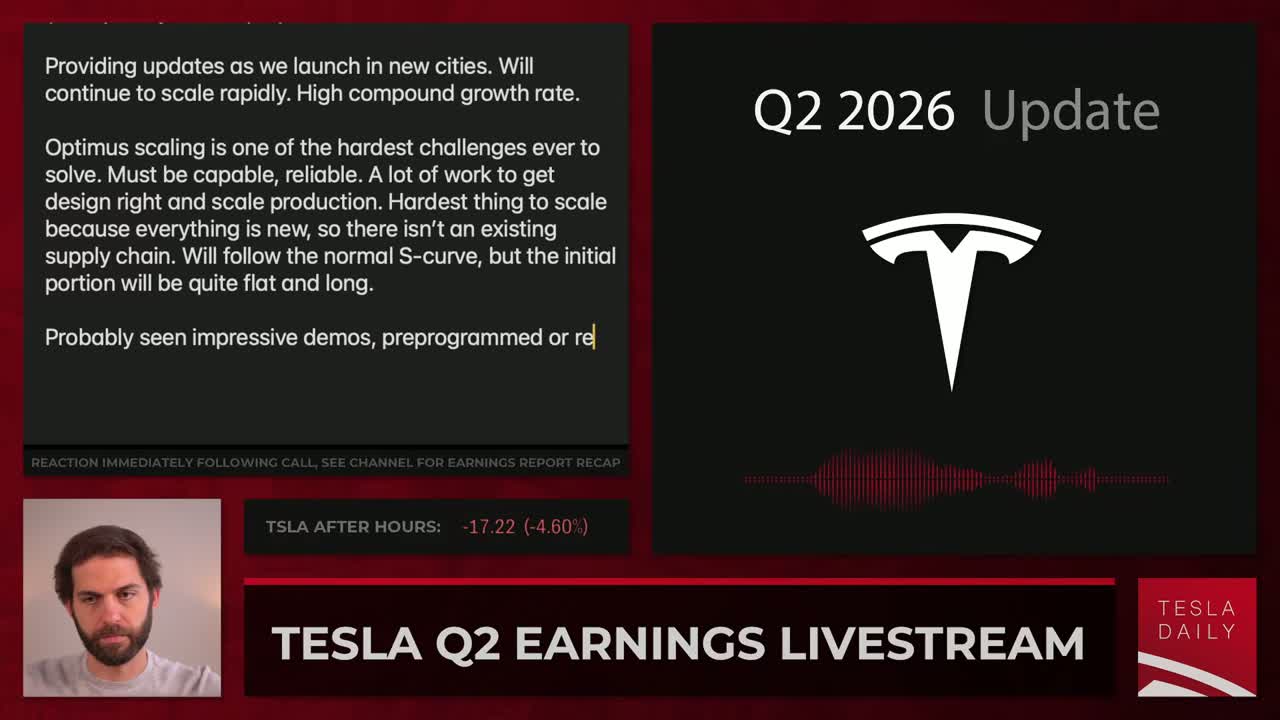
Put the segments side by side and the strategy is legible. Automotive is a high-volume, low-margin hardware business whose job is to seed the fleet and fund the build-out. Energy storage is a fast-growing, lower-volatility second act. Robotaxi and FSD are the leveraged option on top. The Q2 numbers do not prove the pivot works — they prove Tesla is committing to it with real cash, real deployment, and real (if thin) margins.
The cars still pay the bills; the megapacks and the software are writing the future. A 1.4% operating margin is the price of admission to that future, not the destination.
For US investors, the question is no longer “can Tesla sell cars?” — it sold 480,126 of them. It is “can the energy and autonomy bets compound fast enough to justify a multiple built on them?” The Q2 print gave the Street evidence on both sides: margin pressure is real, but so is the deployment.
FAQ: Did Tesla beat or miss in Q2 2026?
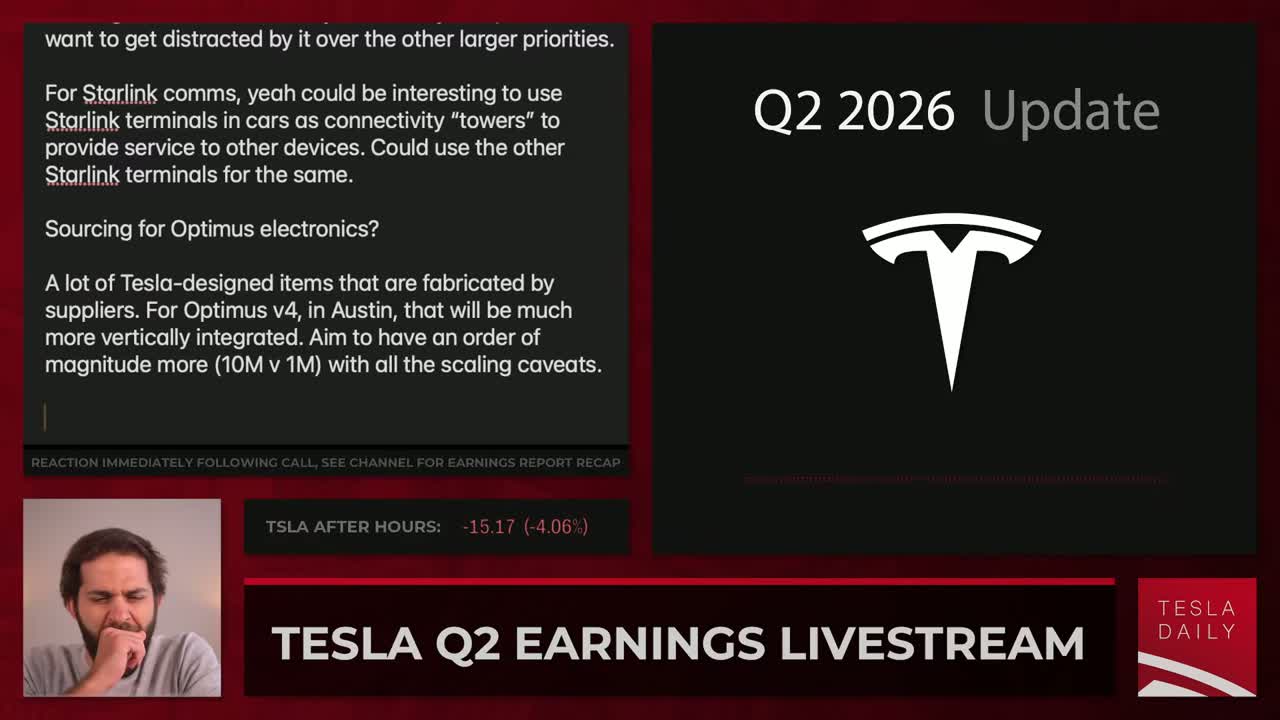
It beat on revenue and deliveries but missed badly on profit. Revenue of $28.24B beat consensus, yet operating income of $398M and a $0.32 GAAP EPS fell well short of expectations — the stock dipped roughly 4% after hours. The quarter was a classic “top-line beat, bottom-line miss.”
FAQ: Why did free cash flow go negative?
Capex more than doubled to $5.79B as Tesla accelerated spending on AI compute, the Cortex 2 training cluster, battery and semiconductor capacity, and robot/robotaxi production lines. Operating cash flow actually grew 85% to $4.70B; the negative free cash flow is a spend story, not an operations story.
FAQ: Is the energy business still growing if margin fell?
Yes. Deployment hit a record-adjacent 13.5 GWh (+53% QoQ, +41% YoY) and revenue rose 13%, but gross margin dropped to 20.4% on a one-time ~$240M warranty true-up and expired tariff benefits. Management expects normalization in the mid-to-low 20% range.
Related reading on EVCUBE