Tesla just posted the strangest quarter in its history: the highest revenue ever, a record number of deliveries — and a profit collapse of more than half, all at once.
The headline numbers
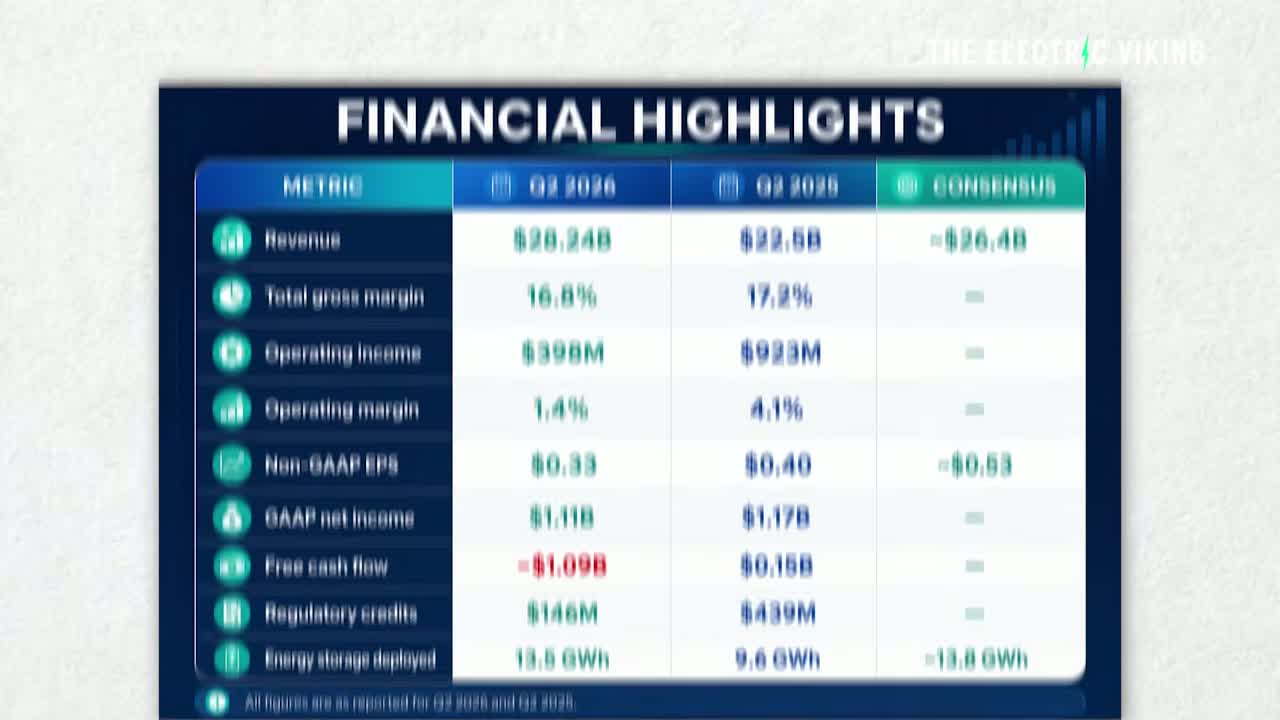
Tesla reported second-quarter 2026 revenue of $28.24 billion, up 26% year over year and comfortably ahead of Wall Street’s $26.4 billion estimate — a beat of nearly $2 billion. It was the company’s first real revenue growth in more than a year, and it pushed Tesla past $100 billion in trailing-twelve-month revenue for the first time ever.

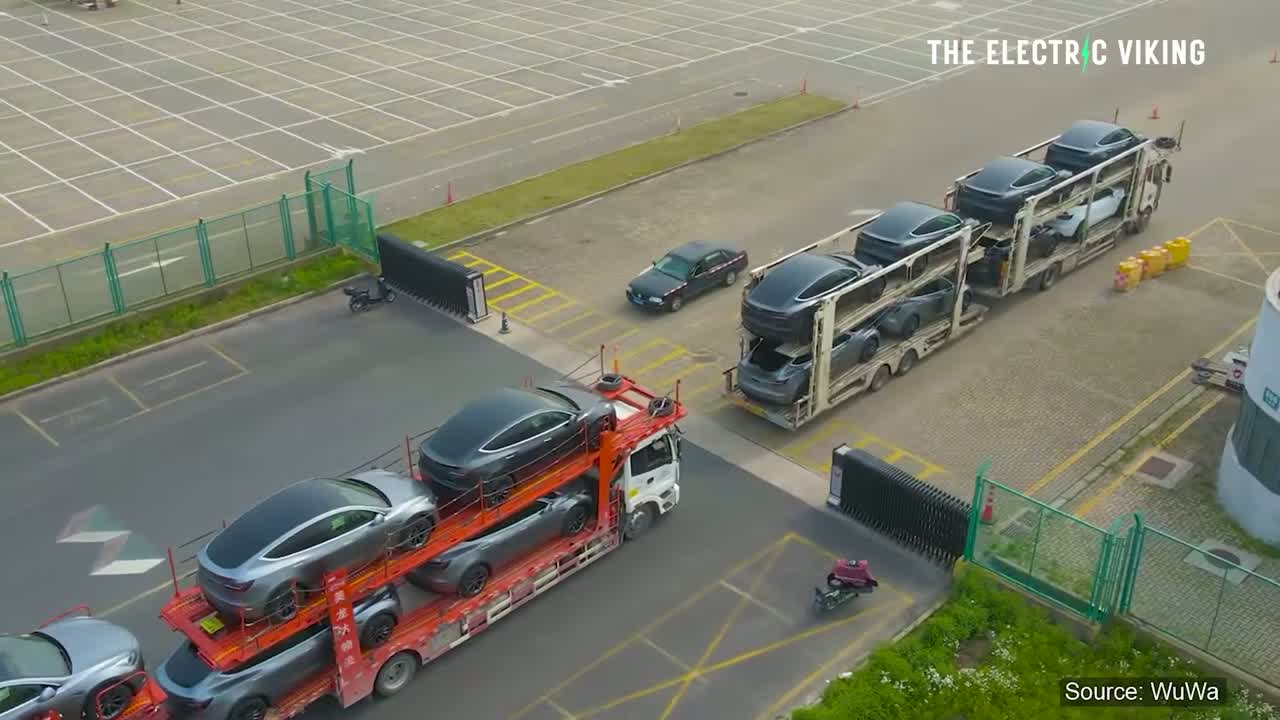
Deliveries were the brighter spot: roughly 480,000 vehicles, up 25% year over year and a record for a second quarter. Analysts expected around 400,000, so Tesla beat the delivery call by about 80,000. That’s the “good news” the company led with.
Then the profit floor dropped out
| Metric | Q2 2026 | YoY |
|---|
| Total revenue | $28.24 B | +26% |
| Operating income | $398 M | −57% |
| Operating margin | 1.4% | −2.7 pts |
| Net income (GAAP) | $1.11 B | −5% |
| Gross margin | 16.8% | −0.4 pts |
| Free cash flow | −$1.09 B | negative |
| Capital expenditure | $5.79 B | +142% |
Operating income fell 57% to $398 million, and the operating margin shrank to 1.4% — barely positive. Net income attributable to common shareholders dipped just 5% to $1.11 billion, but only because of non-operating items like equity gains and tax adjustments; strip those out and the core profit picture is far thinner. Free cash flow turned negative at −$1.09 billion as capital spending more than doubled.
Revenue growth
Delivery momentum
Operating profitability
Why the same quarter looks so split
The disconnect comes down to spending. Tesla is pouring money into AI, self-driving, the Cybercab, Optimus, and AI chips — management called this its “largest and most exciting investment phase.” Operating expenses jumped 47% as R&D rose, and capital expenditure surged 142% to $5.8 billion, with executives reaffirming capex above $25 billion for the year. On the revenue side, price cuts and a 67% drop in high-margin regulatory-credit revenue squeezed auto gross margin (excluding credits, it fell to ~16.3%).
One bright spot: Full Self-Driving subscriptions hit 1.48 million, up 56% in the quarter and the best add since FSD launched. Services and other revenue rose 50%. But those segments aren’t yet big enough to offset a car business selling more units for less profit per car.
What it means for the EV market
Tesla is no longer just a car company reporting car margins — it’s a bet on robotaxis, humanoid robots, and AI chips, and that bet is being funded by record sales volume. For buyers, the upshot is continued price pressure and rapid software iteration. For investors, the question is how long “record revenue, collapsing profit” can coexist before one side gives.
Our earlier deep dive on the Q2 numbers and the Cybercab upgrade breakdown cover the implications in more depth.
Is Tesla’s profit collapse a red flag?
Not necessarily a short-term alarm — revenue and deliveries are at record highs, and cash on hand is $43.5 billion. But the negative free cash flow and 1.4% operating margin show the company is funding its AI/robotaxi pivot by sacrificing near-term car profitability. That’s a calculated risk, not a crisis.
Related reading on EVCUBE