One reviewer flew to China and came back convinced: the pace of its EV ecosystem — 1,500 km batteries, five-minute charges, robot-built cars — has lapped the West. Here’s what that firsthand look reveals for US buyers.
A 1,500 km battery, announced overnight
The headline moment came when CATL — within 24 hours of the reviewer’s visit — unveiled a battery capable of 1,500 km on a single charge. That’s the Qilin Condensed Battery: an aviation-grade condensed electrolyte with 350 Wh/kg cell energy density and 760 Wh/L volume density, enough for a sedan to travel roughly London-to-Barcelona distances without plugging in. For context, that’s about three times the real-world range of a typical US EV. CATL’s third-generation Shenxing cell, also shown, charges from 10% to 80% in just 3 minutes 44 seconds — a full 10%–98% top-up in 6 minutes 27 seconds.

The reviewer’s broader point: range anxiety in China is being engineered out of existence, not just mitigated.
BYD’s flash charging, in person
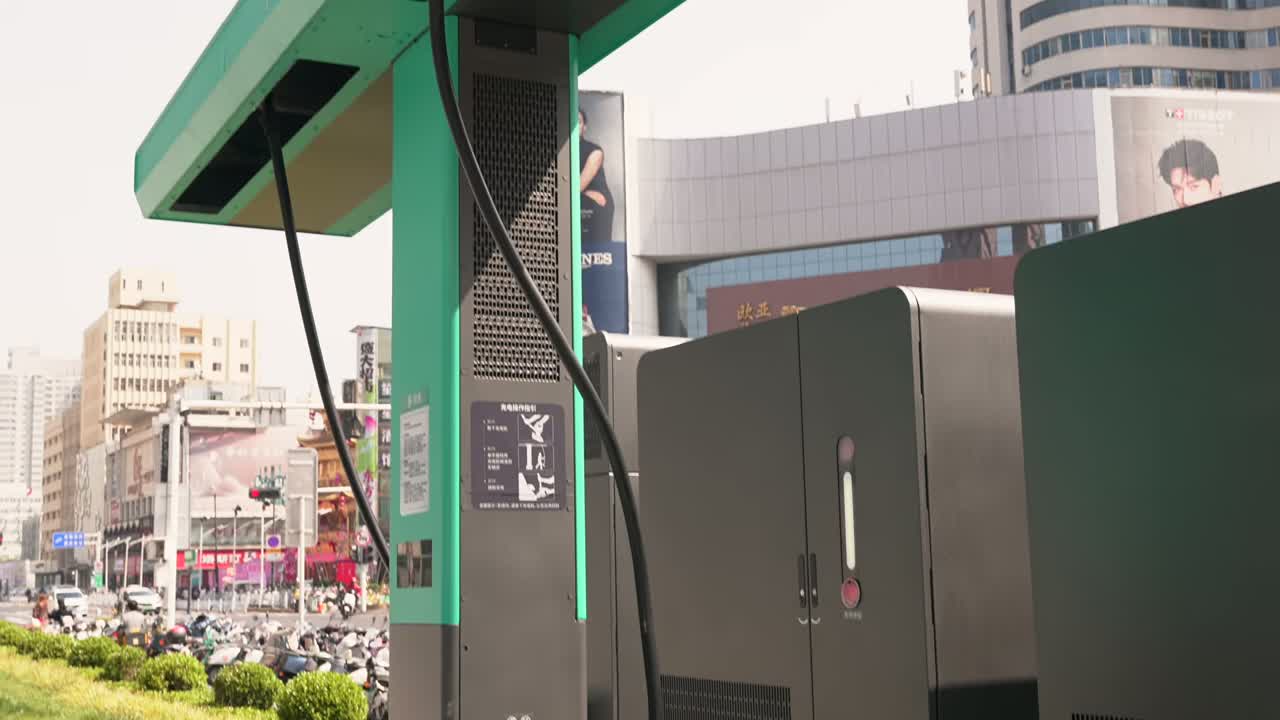
At BYD and Denza’s “D-space” experience center, the reviewer watched a Denza gain 366 km of range in just under 6 minutes — essentially the same time it takes to park at a gas pump, queue, and pay. BYD’s flash-charging system runs at up to 1,000 kW (1 MW), and the company plans to roll out 20,000 of these chargers across China within 12 months, with Europe and the UK/Ireland next. The chargers even include on-site energy storage (375 kWh) so they don’t strain the grid, and they’re open to other brands.
| Technology | Headline spec | US equivalent (typical) |
|---|
| CATL Qilin Condensed | 1,500 km range | ~300–500 km |
| BYD flash charge | ~366 km in 6 min | ~250 kW max public |
| CATL 3rd-gen Shenxing | 10–80% in 3m44s | 10–80% in 20–45 min |
| NIO battery swap | ~3–4 min | rare |
China charging speed advantage
Battery range gap vs. US norms
Robots, speed, and a floating car
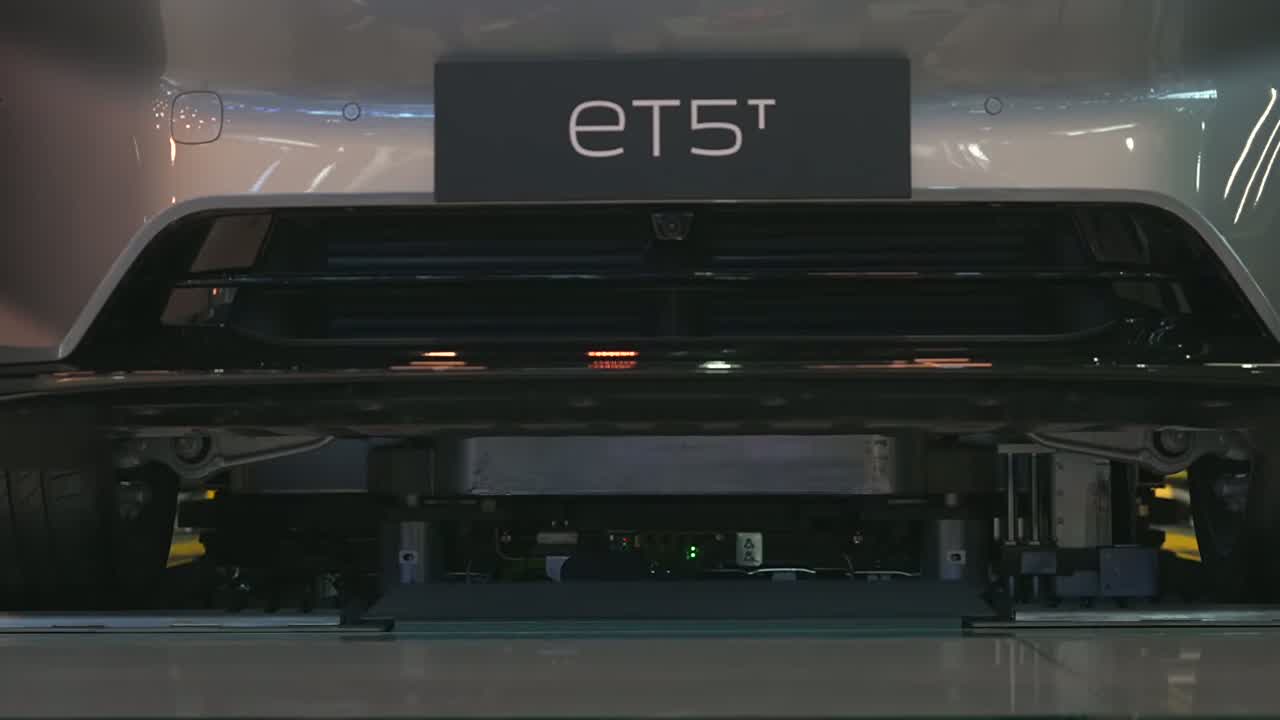
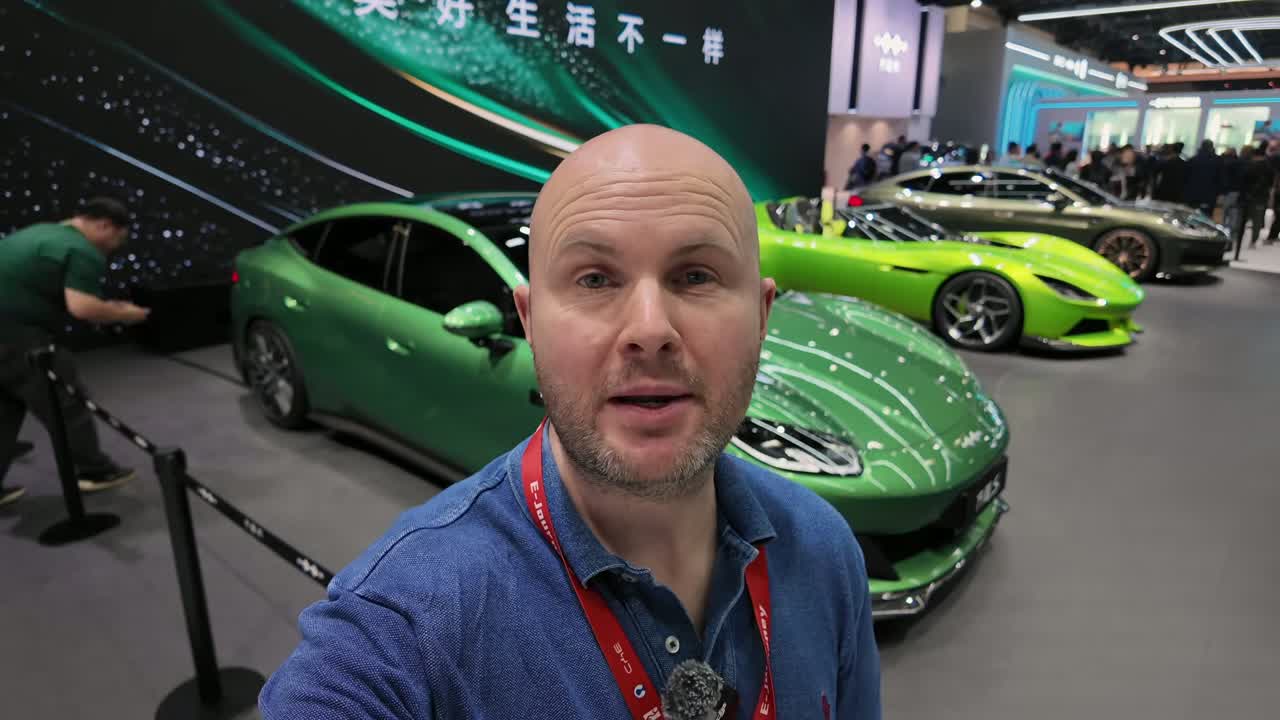
The factory tour underscored the “China speed” advantage: one plant builds a complete car every minute, with over 1,200 robots handling most critical assembly. At BYD’s test center, the reviewer rode in the Yangwang U8 — a vehicle that can float and escape floodwater for up to 30 minutes — and saw the Yangwang U9 hypercar hit 496 km/h. Denza’s Z9 GT, a Panamera-rival with more than 1,000 bhp and a 0–100 km/h time under 2 seconds, will get its global launch at Goodwood. Even crab-walking rear axles for tight parking appeared. The takeaway: these aren’t knockoffs — the materials and software in brands like Denza genuinely impress.
Xiaomi, just two years removed from selling phones and robot vacuums, now builds one of the quickest cars on the planet. The barrier to entry has collapsed because China’s supply chain can source any part domestically.
Why it should worry US automakers
The reviewer’s blunt conclusion: China “has left America so far behind in such a short space of time.” European and American brands are responding by racing to China’s speed rather than blocking it — Renault’s Shanghai lab, for example, builds EVs in about 20 months versus the old 36. BYD is even planning factories in Europe. For US consumers, the near-term signal is that competitive pressure will push better, cheaper, faster-charging EVs our way — but only if Western makers embrace the pace instead of defending the status quo. The deeper read is in how China dominates the global EV factory boom, and the budget-friendly wave arriving via Leapmotor’s B10 for North America.
If you’re weighing whether an EV makes financial sense amid all this churn, our 2026 US owner math breakdown cuts through the noise.
Are Chinese EVs actually coming to the US?
Not directly yet — high tariffs and policy barriers block most Chinese brands from the US market today. But brands like BYD and Leapmotor are expanding in Europe, Mexico, and beyond, and some (e.g., via partnerships or Mexican plants) could reach North American buyers within a few years.
Is a 1,500 km battery real or just a concept?
CATL has officially announced the Qilin Condensed Battery with 1,500 km capability and 350 Wh/kg density; it’s a announced production technology, not science fiction, though volume availability will ramp gradually through 2026–2027.
Should US buyers wait for Chinese-level charging?
The hardware is proven in China, and 800V platforms plus higher-power US chargers are closing the gap. You don’t need to wait for Chinese brands specifically — domestic and Korean EVs are adopting similar megawatt-class charging this decade.
Sources: Nobby On Cars (firsthand China EV market report, CATL 1,500 km battery, BYD flash charging 366 km / 6 min, Denza Z9 GT, Yangwang U9, factory automation); BYD (2nd-gen Blade Battery & FLASH Charging, 20,000 stations by end-2026, 1,500 kW chargers); CATL (Qilin Condensed Battery 350 Wh/kg / 1,500 km; 3rd-gen Shenxing 10–80% in 3m44s); BYD global (flash-charging rollout to Europe/UK).