The GMC Hummer EV spent years as the punchline of EV jokes — too heavy, too thirsty, too much. But the 2026 version is a genuinely better machine than the 2022 launch mess, and underneath the memes is one of the most capable electric vehicles you can buy.
The numbers that get the attention
The Hummer EV’s spec sheet reads like science fiction. The launch Edition 1 carries a 212.7 kWh Ultium battery pack and a tri-motor setup good for roughly 1,000 horsepower and a 0-60 mph run in about 3 seconds. GMC’s own figure for the Edition 1 Pickup is 329 miles of EPA range — more than many small EVs that weigh a third as much. For 2026, the range-topping Carbon Fiber Edition pushes that to 1,160 hp and a claimed 2.8-second 0-60 sprint.
Here is the part people miss: that 212.7 kWh pack alone weighs 2,923 pounds, according to EPA filings reported by Fox News — heavier than an entire Chevrolet Spark. The whole truck tips the scales at around 9,063 lb. The Hummer isn’t an EV with a truck attached; it’s a battery with a truck wrapped around it. That mass is exactly why the acceleration feels unearthly and why the efficiency story is, well, not great.

What the reviewer actually drove
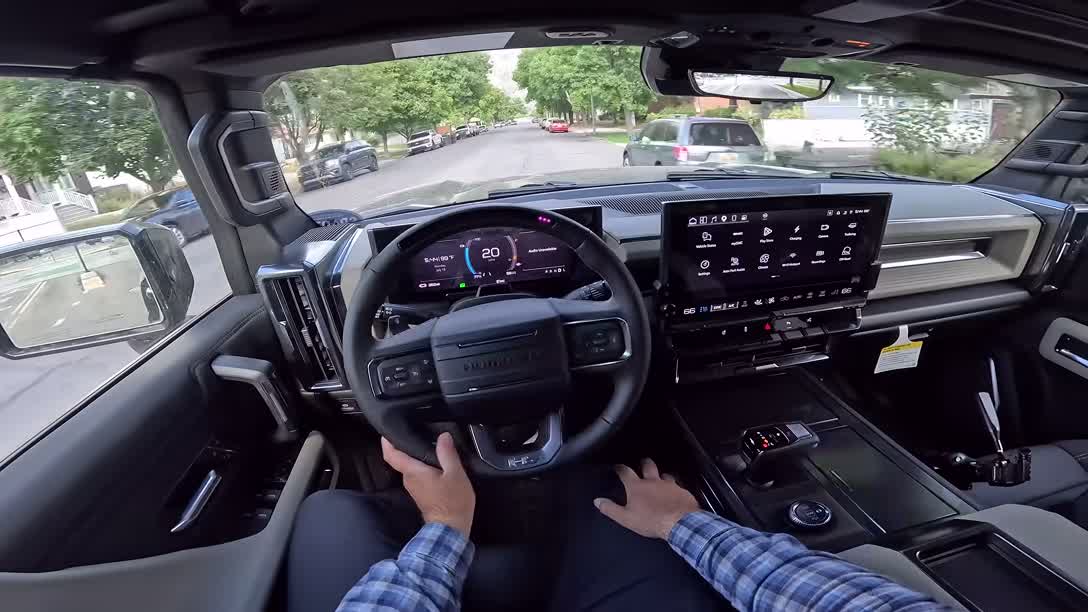
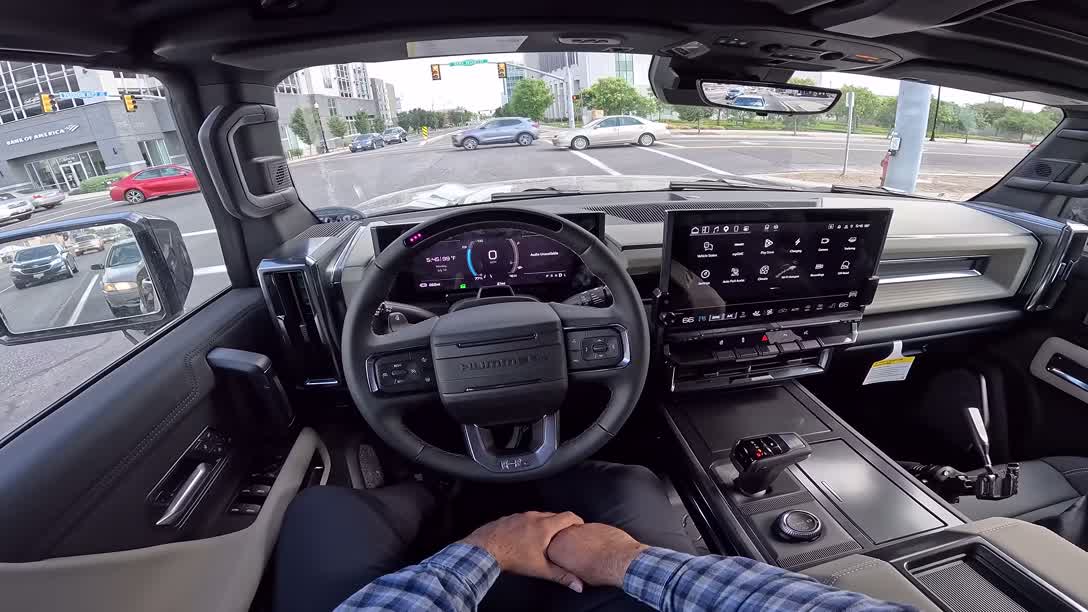
YouTuber Ben Hardy got behind the wheel of a 2X — the more sensible trim. The 2X uses a dual-motor layout making about 540-570 hp, with a 20-module battery he quoted at roughly 180 kWh usable and a real-world range around 300 miles. The window sticker read $100,390. His verdict matters because it cuts through the hype: this is a much better product than the 2022 launch.
“The 2022 was just garbage,” he says flatly. “It felt like they just got it out to get it out.” The 2026 model, by contrast, has a quicker infotainment system, far less glitchy software, and build quality that finally feels like a real vehicle. Four-corner air suspension, rear-wheel steering, and a 10,000 lb tow rating round out a machine that, in his words, “feels like a real product now.” The trade-off he keeps coming back to is noise: it’s a convertible with a removable glass roof, and at speed you hear every creak and every bit of road noise.

Charging: where it claws some of it back
For all its weight sins, the Hummer EV charges hard. The Ultium pack runs on an 800-volt architecture and is rated for up to 350 kW DC fast charging. GMC advertises that select trims can add about 100 miles of range in roughly 10 minutes on a healthy 350 kW charger. In the real world, owners report going from 10% to 60-70% in under 30 minutes in good conditions, before the pack tapers. A full 10-80% session lands near 45-49 minutes.
DC fast-charge speed (10-60% SOC)
The catch is infrastructure. The truck is happiest on modern 250-350 kW hardware, but plenty of highway stations still top out at 150 kW or share power between plugs. With NACS access through a GM-approved adapter, Supercharger reach helps, but you should plan routes around chargers every 150-220 miles on a big road-trip day. It’s a “charge while you pace yourself” vehicle, not a gas splash-and-go.

CrabWalk and Extract Mode are not gimmicks — mostly
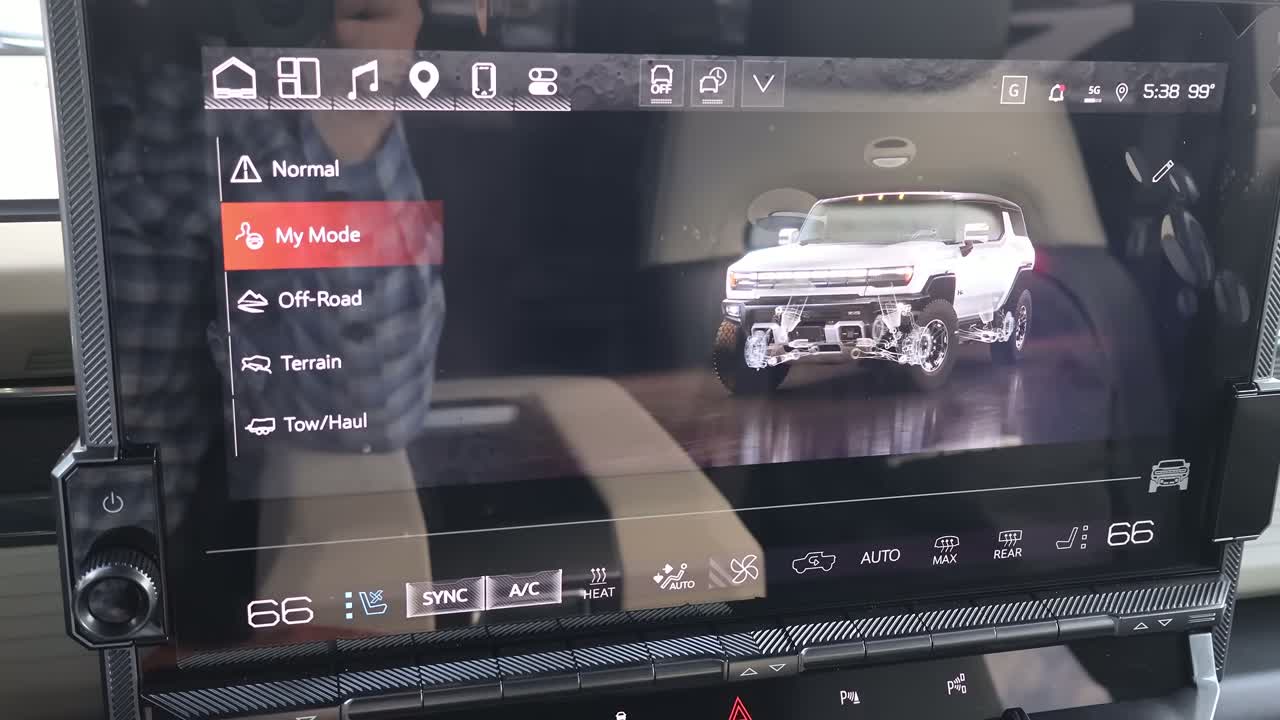
Two features define the Hummer’s off-road personality. CrabWalk turns the rear wheels in the opposite direction to the fronts at low speed, letting the truck move diagonally to slip around obstacles on a trail. Ben Hardy is honest about it: “It’s definitely a gimmick, but it’s a cool thing” — more of a “look at my car go sideways” party trick than a daily tool. Extract Mode, by contrast, is dead serious: it raises the air suspension about 6 inches to clear boulders or ford water.
For 2026, GMC added King Crab, which swings the rear wheels twice as far as the fronts for even tighter trail repositioning. Combined with available front and rear electronic lockers in the Extreme Off-Road Package, the Hummer can go places a normal electric truck simply cannot. The honest downside Hardy notes: air-suspension vehicles like this feel tippy and don’t articulate as well as a solid-axle Wrangler off-road.
The efficiency problem you can’t ignore
This is the section every Hummer owner secretly skips. On long highway runs, real-world owners report about 1.4-1.8 mi/kWh — EPA pegs it near 52 MPGe, or roughly 65 kWh per 100 miles. That is poor next to a normal EV. A Tesla Model Y, for context, sips around 3.5-4 mi/kWh. The Hummer consumes more than double the energy per mile.
Real-world efficiency (mi/kWh, higher = better)
Cold weather makes it worse: modeling from EV Range Tools shows the Edition 1 Pickup dropping from 329 EPA miles to about 222 miles at 30°F on the highway. If you do mostly city driving, you’ll beat the rating — the same model shows 407 miles in mild city conditions — but this is never going to be a frugal commuter.
Who is this actually for?
Honestly, almost nobody needs a Hummer EV. But “need” was never the point. The buyer is someone who wants the capability of a Wrangler or a Bronco with supercar acceleration, open-air freedom, and a conversation piece that turns heads at every Supercharger. If your priority is range-per-dollar or efficiency, you should be looking at our rundown of the best electric trucks worth buying in America for 2026 instead — the Hummer won’t win on math.
The truck also rewards a specific kind of owner: one with home charging (the 19.2 kW onboard AC charger does a full top-up overnight) and the patience to plan road trips around fast chargers. If that sounds like a hassle, the Hummer will frustrate you. If it sounds like an adventure, you’ll love it.
| Vehicle | Peak power | EPA range | Max DC charge | Start price (2026) |
|---|
| GMC Hummer EV 2X | 570 hp | ~316-319 mi | 350 kW | ~$97,200 |
| GMC Hummer EV 3X | 830-1,160 hp | ~310-363 mi | 350 kW | ~$107,995 |
| Rivian R1T | up to 1,025 hp | ~270-410 mi | ~220 kW | ~$74,885 |
| Ford F-150 Lightning | up to 580 hp | ~240-320 mi | ~150 kW | ~$52,375 |
| Chevy Silverado EV | up to 760 hp | ~390-460 mi | ~350 kW (est.) | ~$71,695 |
The Hummer’s edge is off-road tech and that unmistakable presence; its weakness is price and consumption. For a more conventional, budget-minded electric SUV take, our 2026 Kia EV5 US buyer’s guide is the polar opposite of this truck. And if you’re weighing whether any of this pencil out, our piece on whether electric cars are worth it in 2026 breaks down the ownership math without the hype.
Price tiers, briefly
The 2026 Hummer EV spans a wide band. The 2X starts around $97,200 (about $99,895 including destination), the 3X lands near $107,995-$117,990 depending on the 20- or 24-module battery, and the limited Carbon Fiber Edition runs from roughly $122,000 to $132,000. The original Edition 1 commanded about $110,000-$112,495 at launch. Note the federal $7,500 EV tax credit expired on September 30, 2025, so none of these prices benefit from it — every dollar is on you.
Is the GMC Hummer EV worth the money?
Only if you value capability and spectacle over value. You’re paying six figures for a truck that uses double the energy of a normal EV and can’t match a Rivian or Lightning on price or practicality. But for open-air off-roading with 1,000 hp and CrabWalk, nothing else exists. Test-drive one before you judge it — most skeptics come away surprised, like Ben Hardy did.
How long does a Hummer EV take to charge?
On a 350 kW charger, expect ~100 miles in about 10 minutes and a 10-80% charge in roughly 45-49 minutes. Real times depend on charger power, pack temperature, and how many cabinets a station shares. Plan around 25-35 minute stops every 150-220 miles on road trips.
What’s the real-world range in cold weather?
Modeling puts the Edition 1 Pickup at about 222 miles on the highway at 30°F, versus 329 EPA miles. City driving in mild weather can actually beat the EPA figure, reaching ~400 miles. Expect big swings with speed, temperature, and terrain.
Sources: GMC.com 2026 Hummer EV Pickup/SUV spec pages (range, hp, pricing, CrabWalk/Extract Mode/King Crab); Car and Driver 2026 Hummer EV (570 hp 2X / 1,000 hp 3X, 211-ft braking, pricing tiers); Fox News / EPA filings (Edition 1 329 mi EPA, 212.7 kWh / 2,923 lb pack, 9,063 lb curb weight, ~$112,495); EV Range Tools (Edition 1 Pickup & SUV 3X efficiency 65 kWh/100mi, cold-weather range, 350 kW / ~45 min 10-80%); evcompare.io & BEVDB (1.77 mi/kWh, 52 MPGe, 100 mi in 10-12 min, 250-350 kW hardware); Recharged road-trip review (1.4-1.8 mi/kWh real-world, NACS adapter, charger spacing); Cars Frenzy 2026 MSRP guide (trim pricing incl. DFC).