Porsche’s most powerful production Macan ever doesn’t have a turbo — and it doesn’t need one. The 2026 Macan Electric Turbo makes 630 hp from twin electric motors, hits 60 mph in 3.1 seconds, and has quietly become the anchor of Porsche’s record-breaking US sales year.
The quickest Macan Porsche has ever built
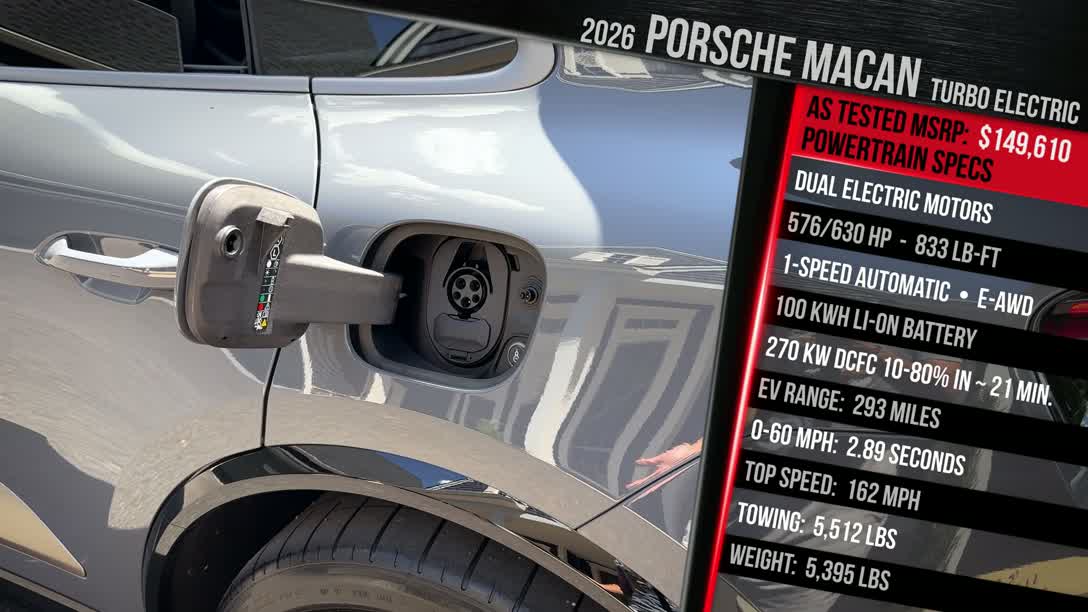
On paper the Macan Electric Turbo reads like a junior supercar. Its 100 kWh gross battery (about 95 kWh usable) feeds dual electric motors — one front, one rear — for all-wheel drive and a staggering 833 lb-ft of torque. Porsche quotes 576 hp in normal operation and 630 hp with launch control engaged, which is enough to make this the most powerful Macan the brand has ever sold. Top speed is a claimed 162 mph.
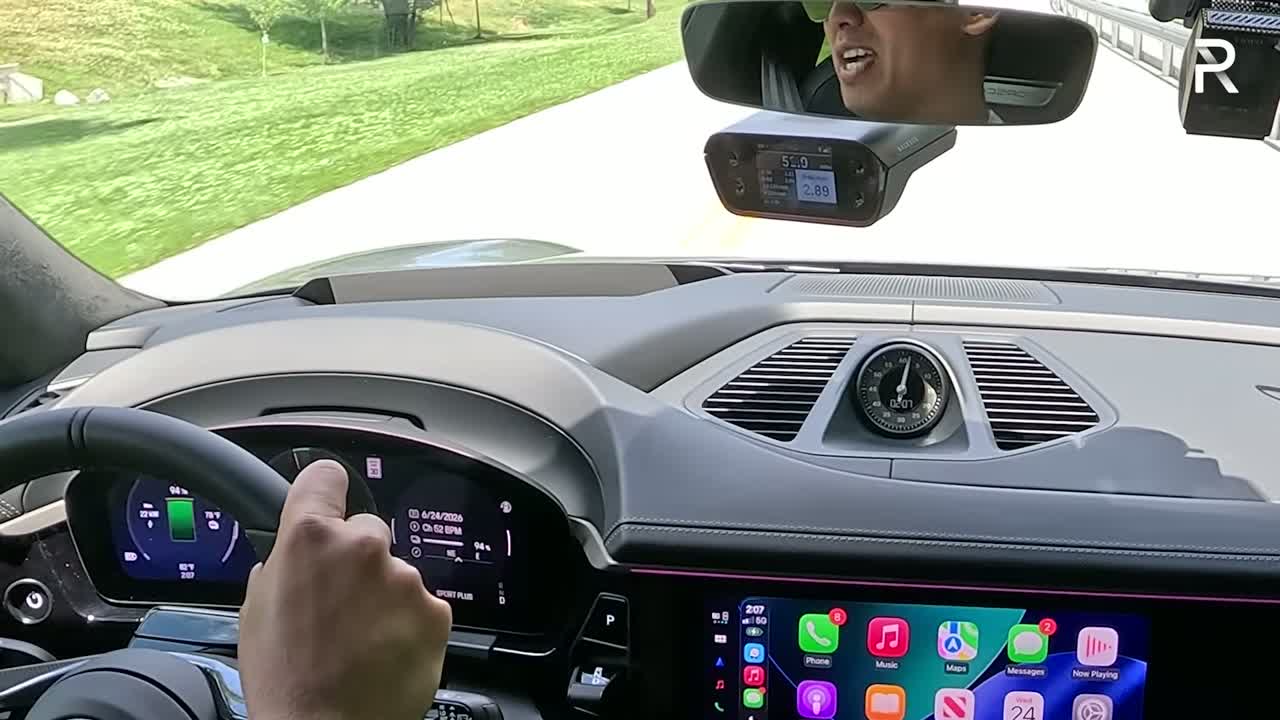
Those numbers aren’t just marketing. In Redline Reviews’ instrumented testing, the Turbo ran 0-60 mph in 2.89 seconds — about two tenths quicker than Porsche’s own 3.1-second claim and roughly two full seconds faster than the base rear-drive Macan tested a year earlier. Even without launch control, the car repeated low-3-second runs all day long. That is genuinely quicker than a refreshed 2026 Tesla Model Y Performance, which Tesla pegs at 3.3-3.5 seconds.

It also makes the outgoing gas Macan GTS look modest. The last combustion GTS offered 434 hp and a 4.3-second 0-60, so the electric Turbo arrives with nearly 200 more horsepower. The trade-off is weight: at 5,395 lb curb, the Turbo is about 1,000 lb heavier than the gas GTS. Porsche’s trick is hiding it — standard adaptive air suspension and rear-axle steering keep the mass in check.
Real-world range: 293 miles, but rivals aim higher
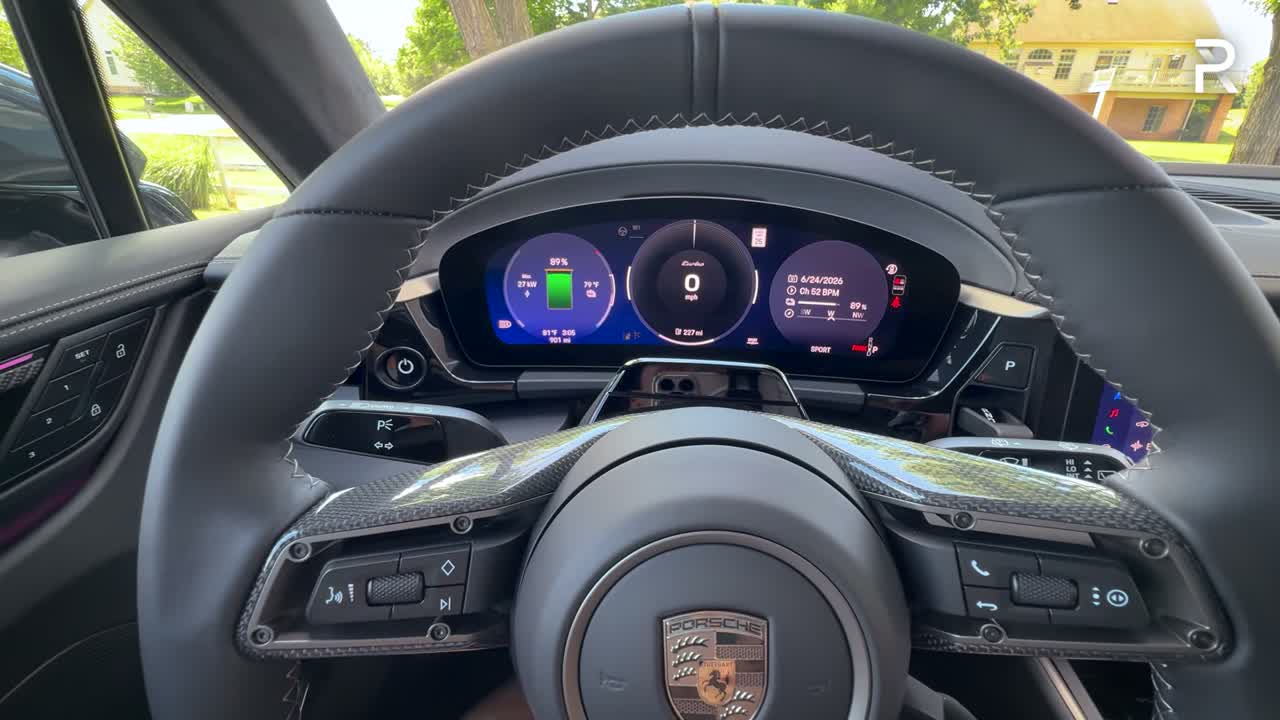
The Turbo’s EPA rating is 293 miles of range. Step down to the base rear-drive Macan and the figure climbs to 332 miles for 2026, up from 315 a year ago. In Redline’s own week of mixed driving with the air conditioning on and 22-inch summer tires fitted, the Turbo returned about 275 real-world miles — slightly under the EPA number, as performance-oriented EV trims tend to be.
The honest caveat is that 293 miles now sits at the lower end of the premium class. The Tesla Model Y reaches 357 miles in Long Range trim, Hyundai’s Ioniq 5 N manages 318, and German rivals such as the BMW iX3 and Volvo EX60 are being positioned around the 400-mile mark. Porsche improved the Macan’s range for 2026, but it still has catching up to do.
| Model | EPA range | 0-60 mph | Peak charge | Start price (US) |
|---|
| Macan Electric Turbo | 293 mi | 3.1 s | 270 kW | $112,700 |
| Tesla Model Y Performance | 306 mi | 3.3 s | 250 kW | $59,630 |
| Hyundai Ioniq 5 N | 318 mi | 3.1 s | 350 kW | ~$68,000 |
| Kia EV5 (value rival) | up to 329 mi | ~6 s | ~150 kW | ~$40,000* |
RANGE VS CLASS (Turbo at 293 mi)
Macan Turbo293 mi
Model Y LR357 mi
*Kia EV5 US pricing not yet confirmed at time of writing; figure is an estimate — see our 2026 Kia EV5 buyer’s guide.
800V charging: 10 to 80% in 21 minutes
Where the Macan Electric fights back is charging speed. Built on Porsche’s 800-volt PPE architecture, the Turbo accepts up to 270 kW of DC fast charging and goes from 10% to 80% in about 21 minutes. At home, the standard 11 kW onboard charger fills it from empty in roughly 10-11 hours on a Level 2 plug — a full overnight sit.
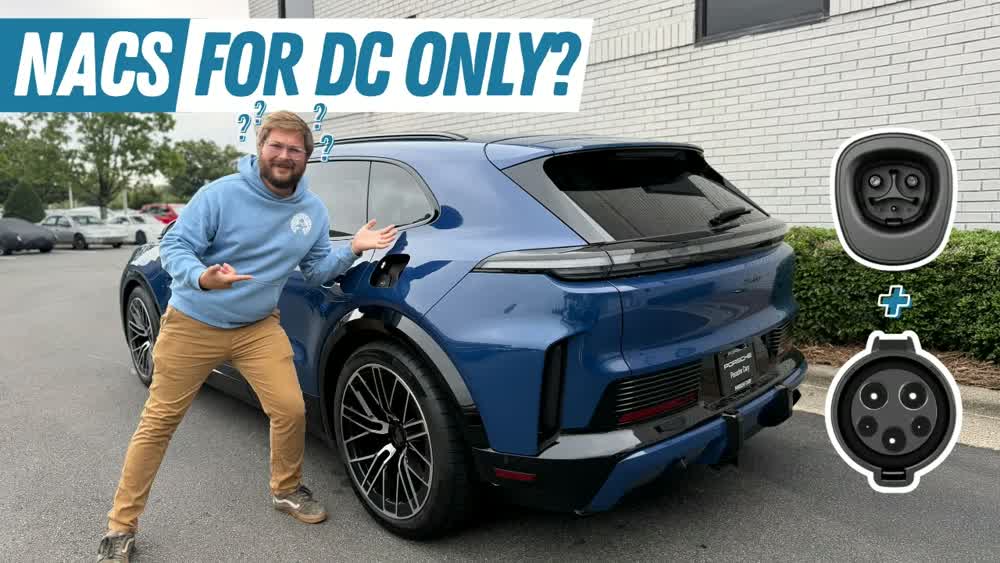
One quirk: despite the 800V architecture, the Macan uses a CCS Combo port with J1772, not the NACS connector now standard on most new EVs. A NACS adapter is included for Supercharger access, but it’s an extra step rival Hyundais and Kias no longer require. Against the Ioniq 5 N’s 350 kW and 18-minute curve, Porsche is fast but not class-leading.
DC FAST CHARGING SPEED (270 kW peak)
Macan Turbo270 kW
Ioniq 5 N350 kW
How it out-handles the gas Macan
Specs aside, the Turbo’s real talent is making 5,400 lb feel like a taller Taycan. The standard adaptive air suspension and available rear-axle steering scrub away the heft in corners, the steering is quick and direct, and the body stays flat when you push. Redline called it “one of the best-handling electric SUVs you’ll find in the segment” — and notably more composed than most heavy EVs, which tend to feel bouncy.

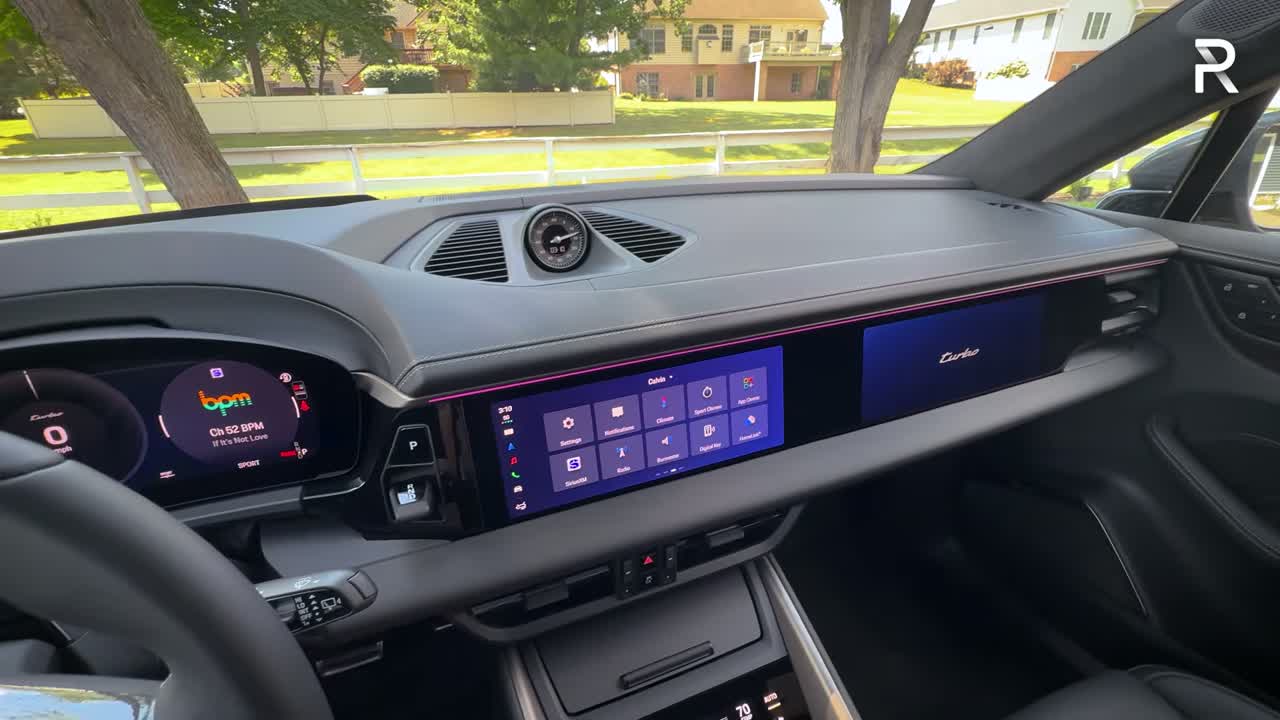
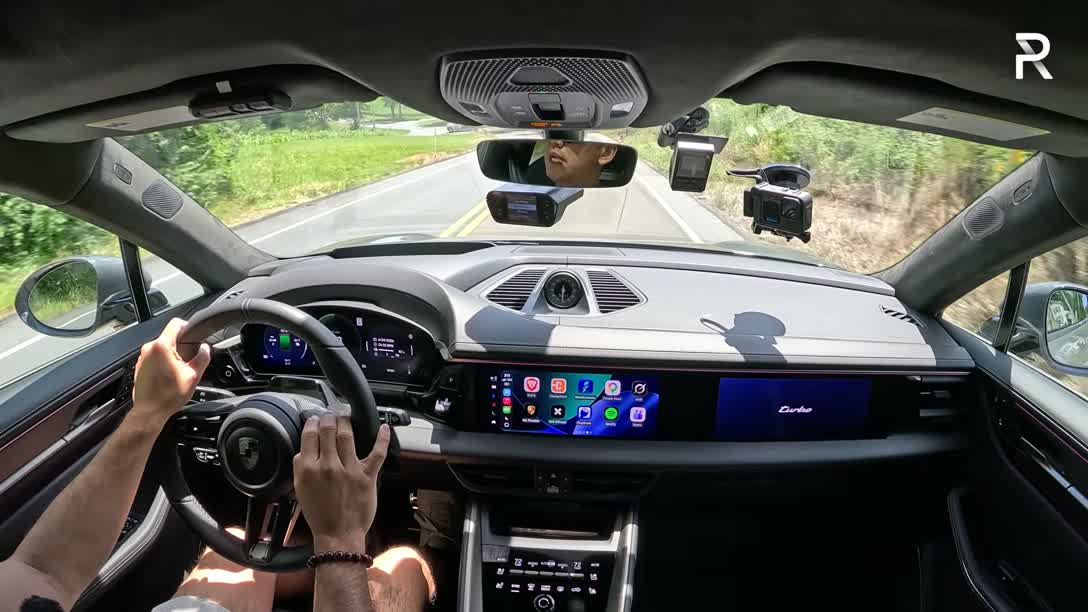
The one dynamic miss is regeneration. Like other Porsches, it lacks true one-pedal driving; you can toggle regen stronger or weaker on screen, but it won’t bring the car to a full stop. For buyers coming from a Tesla, that’s the biggest adjustment. Otherwise the cabin is every bit the modern Porsche — 10.9-inch center screen, optional passenger display, augmented-reality head-up display, and an opening panoramic sunroof you still can’t get on most rivals.
Pricing: the Porsche premium, in full
Here is where the argument gets difficult. The Macan Electric lineup for 2026 starts at $80,300 for the rear-drive base model — already about $20,000 more than most competitors. The 4 adds all-wheel drive at $84,000, the 4S makes 509 hp at $89,900, the new GTS lands at $105,300, and the Turbo tested here opens at $112,700 (plus a $2,350 delivery fee). A reasonably optioned Turbo, as tested, clears $140,000 and pushes toward $150,000.
For that same six-figure sum you could buy two well-equipped Model Y Performance SUVs and still have change. The federal $7,500 EV tax credit that once softened luxury-EV math expired on September 30, 2025, and the Macan was never eligible anyway thanks to the price cap — so there is no government relief here. We dig into the broader ownership equation in our 2026 US EV owner math guide. What you get for the premium is peerless handling, build quality, and the badge — not value per dollar.
Why it became Porsche’s best-seller
The Macan Electric’s success is best measured in company-wide numbers. Porsche Cars North America reported 76,219 US deliveries in 2025 — a new record, narrowly ahead of 2024’s 76,167. The Macan led every nameplate with 27,139 units, its best year ever and the brand’s single best-selling model, ahead of the Cayenne’s 20,314. Globally, Macan volume hit 84,328, of which 45,367 were electric — more than half.
Redline estimates roughly a third of US Macan sales are now electric, or about 9,000 units — a strong showing given softening EV demand overall. Porsche is even reversing course: having planned to kill the gas Macan after 2026, it will debut a second-generation combustion Macan (built on the Audi Q5 platform) for 2027. But the electric version is the one carrying the nameplate today, and it has earned that role.
Is the Macan Electric Turbo actually turbocharged?
No. On a Porsche, “Turbo” now marks the most powerful variant rather than a forced-induction engine. The Macan Electric Turbo has dual permanent-magnet electric motors and no turbocharger — just 630 hp on launch control and 833 lb-ft of instant torque.
How fast does it charge in the real world?
On an 800V DC fast charger it peaks at 270 kW and recovers 10-80% in about 21 minutes. A home Level 2 charger (11 kW) takes roughly 10-11 hours for a full fill, which is a normal overnight session.
Does it use NACS or CCS?
The Macan Electric uses a CCS Combo / J1772 port, not native NACS. A NACS adapter is included for Tesla Supercharger access, so you can charge on the network — just with an extra connector in hand.
Can I still get the federal $7,500 tax credit?
No. The federal clean-vehicle credit expired on September 30, 2025. The Macan Electric was never eligible regardless, because its price sits well above the $55,000 MSRP cap for SUVs.
Sources: Porsche USA configurator & model-start pages (specs, 630 hp overboost, 293 mi EPA, $80,300-$112,700 pricing, 270 kW / 21-min charging); Porsche Cars North America 2025 sales press release (76,219 US total, 27,139 Macan, 84,328 global with 45,367 electric); Car and Driver & EV Pulse 2026 Tesla Model Y data (357 mi, 3.3s, 250 kW); Hyundai Ioniq 5 N specifications (601 hp, 318 mi, 350 kW). Video source: Redline Reviews, “2026 Porsche Macan Electric Turbo” (4xfVviYvbY8).