Tesla just posted its best-ever second-quarter deliveries — 480,126 vehicles — yet shares slipped after the bell. The Q2 2026 report is a study in contrast: record volume and revenue on top, but a profit miss that has investors asking where the margin went.
A record quarter for volume
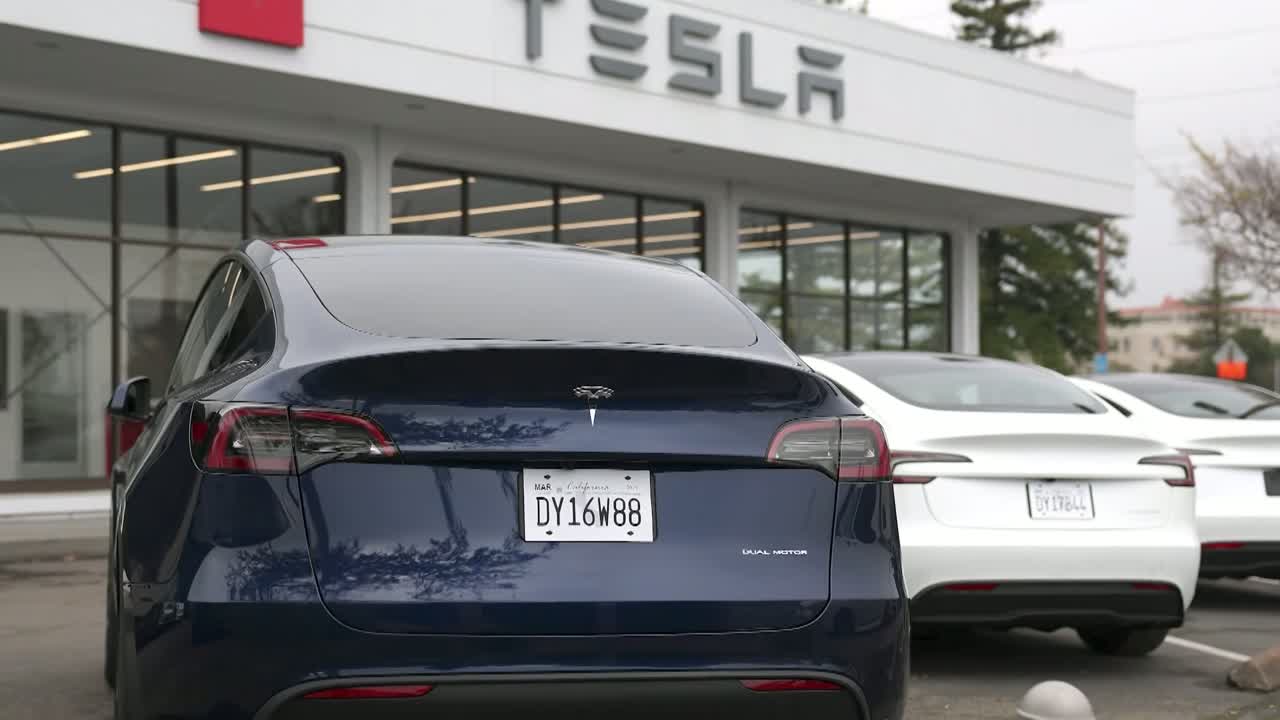
Tesla delivered 480,126 vehicles in Q2 2026, up 25% from 384,122 a year earlier and the strongest second quarter in the company’s history. Model 3 and Model Y carried the load at 467,762 deliveries (+25% year over year), while the “other models” category — now stripped of the discontinued Model S and Model X — came in at 12,364 (+19%). Production totaled 451,758, meaning Tesla delivered roughly 28,000 more cars than it built, drawing down the inventory that piled up in Q1. Global stock shrank to 15 days of supply, the leanest level in recent memory and a sharp reversal from 27 days three quarters earlier.

Tesla flagged record deliveries across more than a dozen markets — South Korea, Australia, Japan, Taiwan, Thailand, Portugal, Chile and others — and launched the six-seat Model YL in the US in July. China’s Shanghai plant shipped nearly 468,000 units in the first half. The breadth of the volume beat is genuine; the composition, less so, now that the pricier S and X are out of the lineup.
That volume beat was the easy part to like. The harder question is what it cost to get there, and whether the growth is self-funding or discount-fueled.
Revenue beat, profit didn’t
On the top line, Tesla reported total revenue of $28.24 billion, up 26% year over year and its first 20%-plus growth quarter in three years. Automotive revenue was $20.52B (+23%), services and other hit a record $4.58B (+50%), and energy generation and storage contributed $3.14B (+13%). Trailing-twelve-month revenue crossed $100B for the first time. As we laid out in our Q2 earnings preview, the setup was a classic “show me the margin” quarter — and the margin didn’t show.
The bottom line told a different story. Adjusted (non-GAAP) EPS came in at $0.33, down 18% from $0.40 a year ago and well below the roughly $0.51 analysts had modeled. GAAP operating income fell 57% to $398 million, and operating margin collapsed to 1.4% from 4.1%. Net income attributable to common stockholders was $1.11B on a GAAP basis (-5% YoY) and $1.15B non-GAAP (-17%). Tigress Financial’s Ivan Feinseth summed up the tension: Tesla set a record second-quarter sales pace, but “the market is more focused on the profit,” and the growth was “driven by significant discounting,” which squeezed margin.
The margin that actually matters
Headline GAAP gross margin was 16.8%, down 41 basis points from a year earlier. The figure car buyers and investors should watch is automotive gross margin excluding regulatory credits: 16.3%. That is an improvement from the depressed late-2025 levels, but it dropped from 19.2% in Q1 2026. Why the swing? Tesla leaned on price cuts and subsidized financing — APR incentives — to move metal, and the high-margin S and X are gone from the mix. Lower average selling prices, shrinking credit revenue, and a larger energy warranty reserve all weighed on profitability.
| Metric | Q2 2025 | Q1 2026 | Q2 2026 | YoY |
|---|
| Deliveries | 384,122 | 358,023 | 480,126 | +25% |
| Total revenue | $22.50B | $22.39B | $28.24B | +26% |
| Automotive gross margin ex-credits | ~14.6% | 19.2% | 16.3% | up vs ’25 |
| Operating margin | 4.1% | 4.2% | 1.4% | -269 bp |
| Adjusted EPS | $0.40 | $0.41 | $0.33 | -18% |
| Free cash flow | $0.15B | $1.44B | -$1.09B | negative |
Two signals summarize the quarter: volume is accelerating, margin is not.
Delivery growth (YoY)
Margin pressure (ex-credit GM vs Q1)
Cash burn and the capex wall
Free cash flow swung to negative $1.09B — Tesla’s first negative quarter in more than two years. The driver was capital expenditure of $5.79B, more than double the prior quarter. CFO Vaibhav Taneja reaffirmed that full-year 2026 capex will exceed $25 billion and keep growing for two to three years. Musk framed it plainly on the call: Tesla is in “its largest and most exciting period of investment,” and he wants to push spending “as fast as possible without waste” on AI, robotics, and battery capacity. At the current quarterly run rate, full-year capex lands closer to $17B — short of the $25B target, which itself signals how much heavier the back half of the year will be.
Energy storage: volume up, profit down
Energy storage deployed 13.5 GWh in the quarter, up 41% year over year and 53% sequentially — the second-best deployment quarter on record and a trailing-twelve-month high. Demand is real, fed by grid storage and a new wave of AI data-center power stabilization and peak-shaving contracts, and Megapack order backlog remains healthy. But the economics softened: storage gross margin fell from about 39.5% in Q1 to roughly 20.4%, hit by a $240M historical cell warranty reserve and the expiry of earlier tariff relief. It is a reminder that the “second growth curve” is not yet a profit engine, and management only offered a loose 20–25% long-term margin range with no near-term repair timeline.
Robotaxi, Cybercab and the long game
The AI narrative got concrete milestones. Robotaxi is now live in seven major US metros, with Miami, Orlando, and Tampa added in July. Active FSD (Supervised) subscriptions reached 1.48 million, up 56% year over year, with more than 55% of new North American vehicles taking the subscription at purchase. Cybercab began production at Gigafactory Texas, and Optimus lines are being installed at Fremont after the S/X lines were decommissioned, with initial builds targeted for late 2026.
But as we covered in our Giga Texas Cybercab rollout explainer, the commercial contribution from robotaxi and robotics remains years out. The base auto business still funds the future — and right now that base business is discounting to grow. Our summer update breakdown traced how software features are meant to offset hardware margin erosion, but Q2 shows the offset isn’t enough yet.
How the market took it
Shares fell roughly 3–4% in after-hours trading, with the drop widening past 5% during the call. The stock has been a tough hold in 2026, down about 17% year to date. The market wasn’t punishing the deliveries or the revenue — it was pricing the gap between a record top line and a profit profile that keeps deteriorating as Tesla spends its way toward autonomy. When volume growth depends on discounts, investors discount the growth.
What exactly did Tesla miss on earnings?
The miss was on profitability, not sales. Adjusted EPS of $0.33 came in about 35% below the ~$0.51 consensus, and operating income of $398M was under a third of what analysts expected. Revenue actually beat. So the story is margin compression from discounting and surging AI/robotics capex, not weak demand.
Is Tesla’s gross margin really falling?
On the auto side, ex-credit gross margin was 16.3% in Q2 2026, down from 19.2% in Q1 2026 but up from the low-teens range a year earlier. Total GAAP gross margin was 16.8%, down 41 bp year over year. The Q1 number was flattered by a one-time warranty reversal, so the underlying trend is closer to flat-to-soft rather than a steep new decline.
When does robotaxi actually matter to the numbers?
Not yet. Robotaxi is live in seven US metros but at small scale, and Cybercab volume production is targeted for later in 2026. Optimus is in line-installation now with first builds late this year. These are multi-year bets funded by the core auto business, which is why margin and cash flow are under the spotlight today.
Sources: Tesla Q2 2026 Update (Tesla IR / SEC Exhibit 99.1, July 22, 2026); Tesla Q2 2026 Vehicle Production & Deliveries 8-K (SEC); Tesla Q2 2026 Earnings Consensus (Tesla IR, July 17, 2026); Bloomberg Television earnings discussion (FJsrJnmxaxQ, July 22, 2026); Reuters / CnEVPost / Wall Street Journal coverage of Q2 2026 results and after-hours trading.