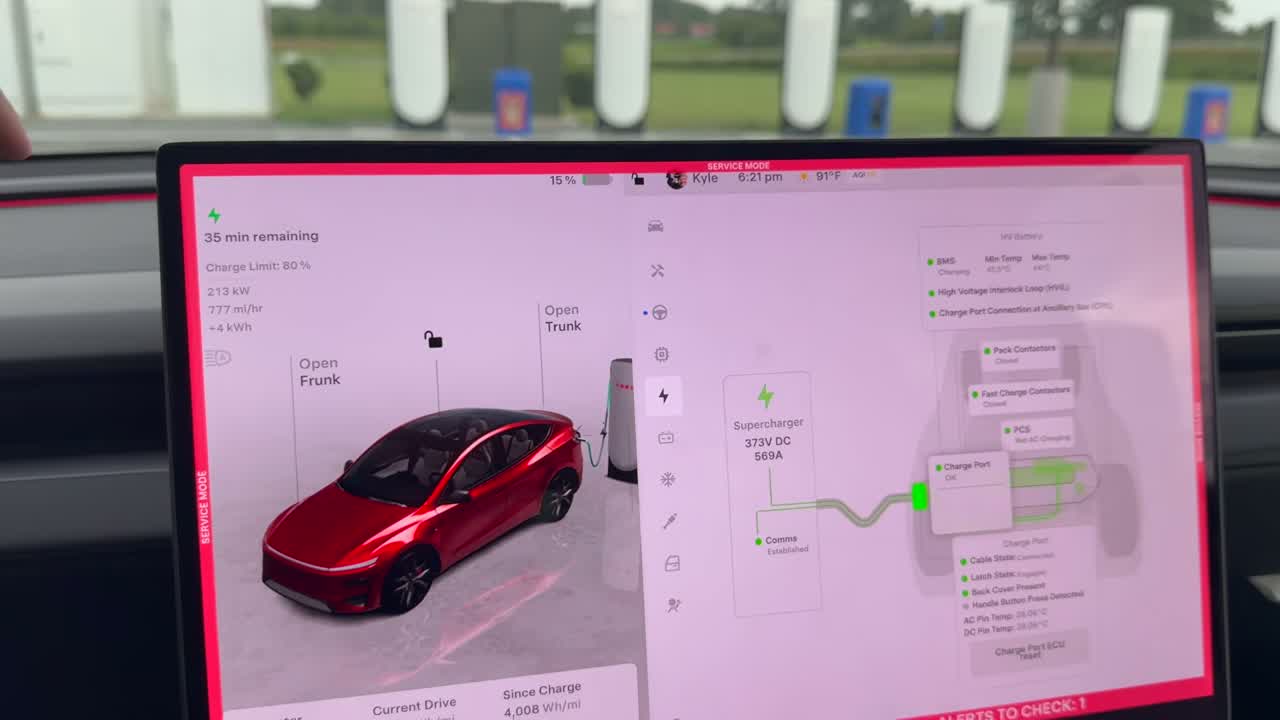
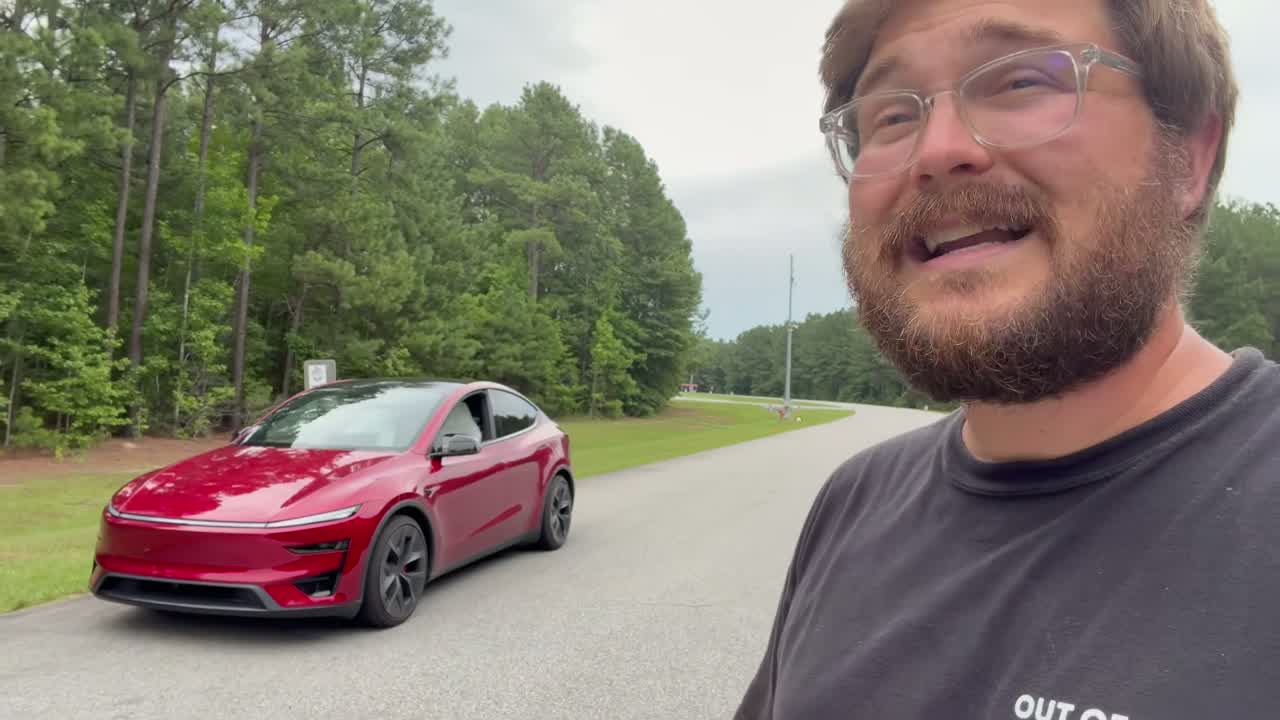
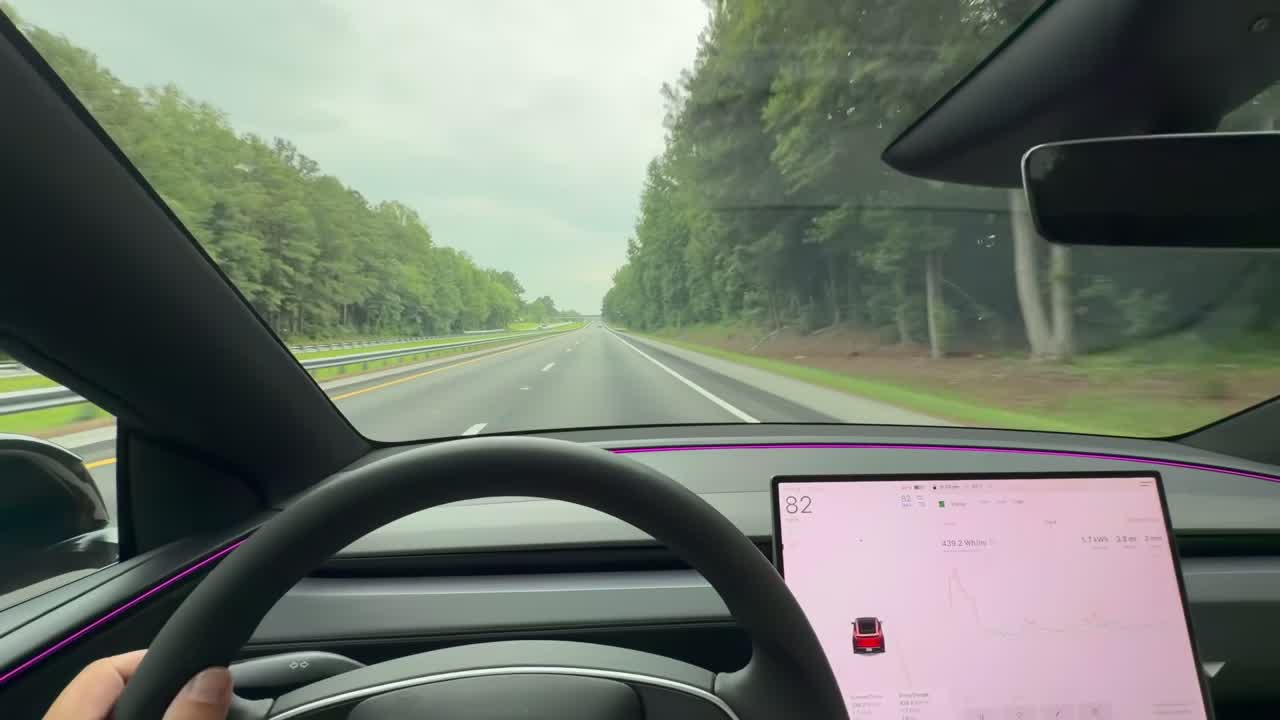
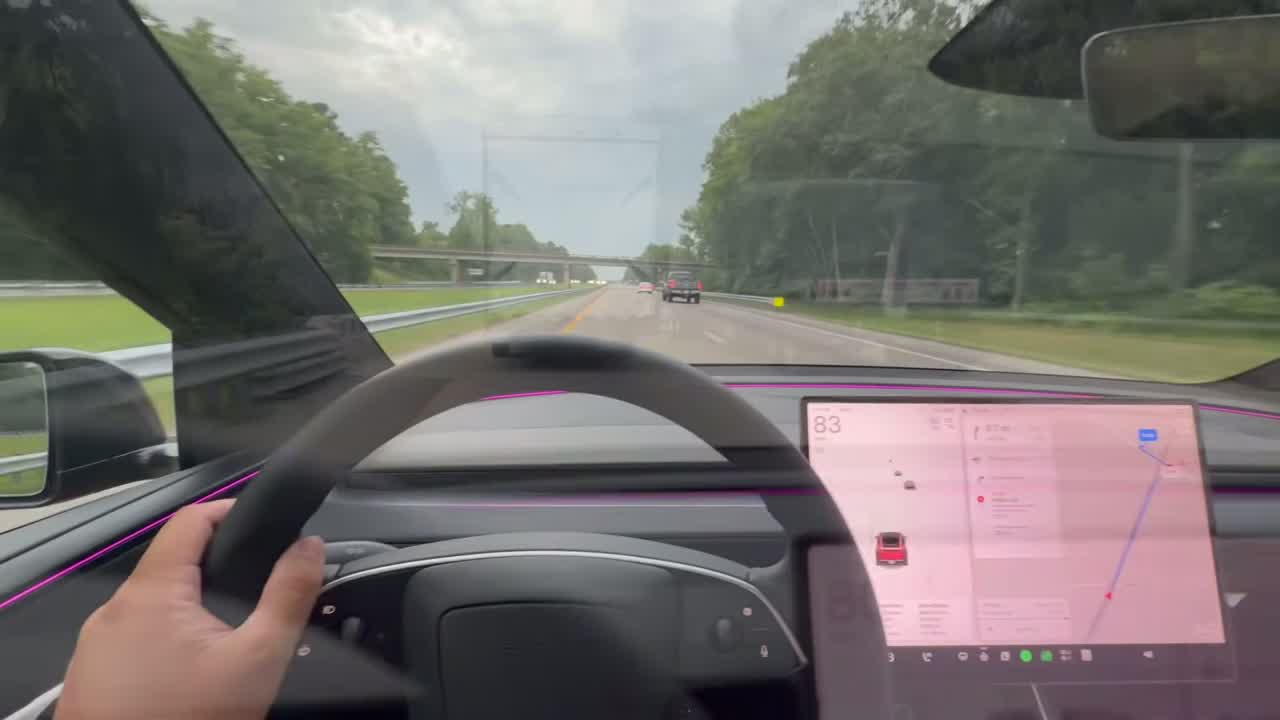
Out of Spec put the 2026 Tesla Model Y Performance through its “10% challenge” — a 15-minute Supercharger stop then an 80-mph highway run — and the result reframes Tesla’s efficiency story: 105.3 miles on a sliver of charge, at just 303.7 Wh/mi.
What the 10% challenge actually measures
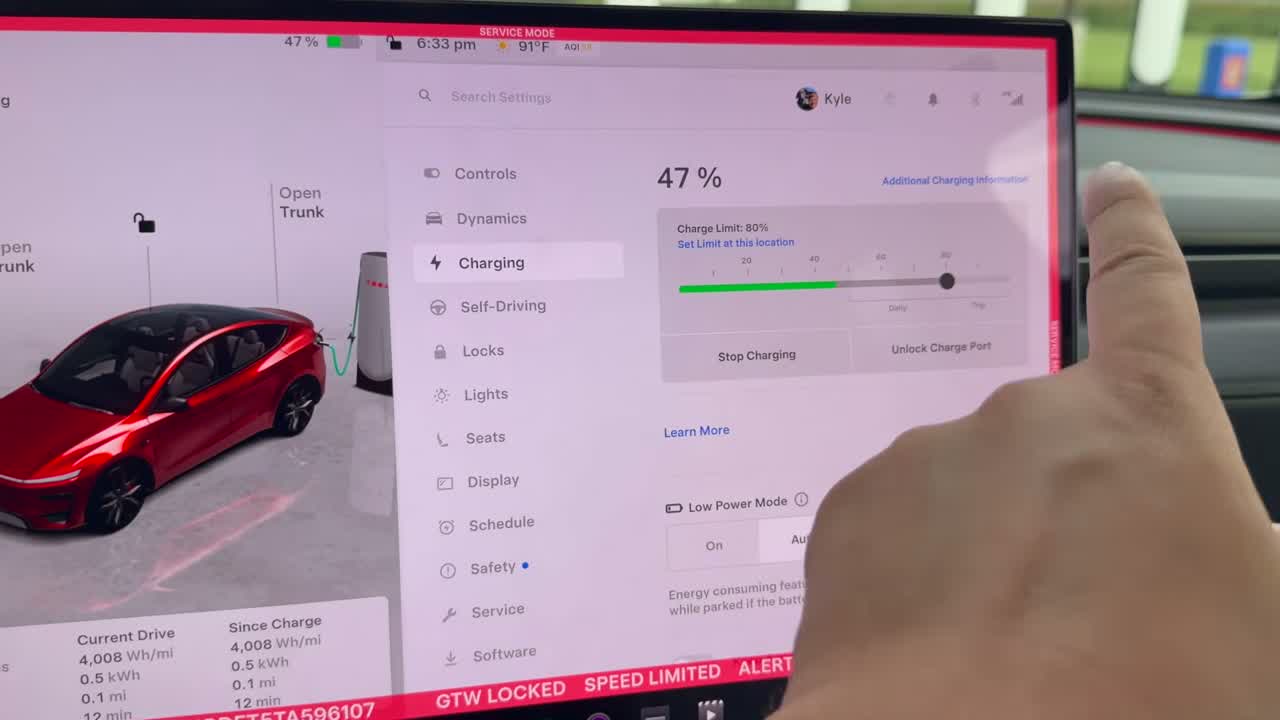
Range and charging speed are usually quoted as two separate numbers, but on a real road trip they collapse into one experience: you empty the battery, stop, refill partway, and keep going. Out of Spec’s 10% challenge distills that loop into a single comparable figure. The procedure is identical across every vehicle: arrive at a Supercharger near 11% state of charge, plug in the moment it hits 10%, run the climate and all cabin loads like a family would, charge for exactly 15 minutes, then drive a loop at a locked 80 mph GPS speed until the battery drops back to 10%. The distance covered is the score. The host grades it simply: under 75 miles is a car he would not road-trip, 75–100 is “okay,” 100-plus is a usable road-tripper, and 125-plus is great. It is not lab range — it is how far a 15-minute habit gets you down the interstate.

The Model Y Performance’s result: 105.3 miles
The 2026 Model Y Performance carries Tesla’s new ~85 kWh Panasonic NMC pack built in Kansas (about 82 kWh usable). After a 15-minute V4 Supercharger stop, it drove 105.3 miles back down to 10% SOC, burning 32 kWh from the battery (33 pulled from the charger). That works out to 303.7 Wh/mi at a steady 80 mph, about 3.3 miles per kWh.
That number surprised even the tester. Entering the run, his impression of the Performance variant’s efficiency was “significantly worse” — he had seen high-300s to low-400s Wh/mi when laying into the 550 horsepower with the climate blasting. But in the controlled 80-mph loop, the car nearly matched the efficiency of the rear-wheel-drive Model Y, the most frugal version of the lineup. He notes the comparison run was on a warmer day, so it is not perfectly like-for-like. Even so, a 3.5-second, 550-hp dual-motor SUV that matches a single-motor sibling on the highway is a genuine result.

Why a 550-hp SUV can be this efficient
Two things explain the number. The first is aerodynamics. The 2026 Performance drops its drag coefficient to about 0.235 thanks to a revised front fascia, liftgate spoiler, and a more aggressive rear diffuser — slipperier than the lesser trims. At a constant 80 mph, drag dominates consumption, so a low Cd pays off directly in Wh/mi. The second is tires. The Performance rides on Hankook Ion Evo AS SUV all-seasons, the only tire option offered, staggered 255 front / 275 rear, tuned for rolling resistance. The trade-off is some grip, but for range-focused buyers they are the right call.
Tesla can make up for poor charging with extremely efficient highway performance. — Out of Spec Reviews, on the Model Y Performance
How it stacks up against the rivals
Efficiency only means something in context. On the EPA cycle, the 2026 Model Y Performance is rated at 306 miles of range and consumes about 321 Wh/mi including charging losses — already among the thriftier all-wheel-drive performance crossovers. Put it next to the obvious Korean and American rivals and the picture sharpens. The figures below are EPA consumption converted from official MPGe ratings.
| Vehicle (AWD) | EPA range | EPA consumption |
|---|
| Tesla Model Y Performance (2026) | 306 mi | 321 Wh/mi |
| Hyundai Ioniq 5 Long Range AWD (2026) | 290 mi | ~334 Wh/mi |
| Kia EV6 Long Range AWD (2025) | 237 mi | ~318 Wh/mi |
| Ford Mustang Mach-E AWD Extended Range | 265 mi | ~362 Wh/mi |
| Chevrolet Blazer EV AWD | ~279 mi | ~321 Wh/mi |
The standout is the Mach-E: at roughly 362 Wh/mi, Ford’s extended-range AWD crossover sips about 13% more energy than the Tesla to cover the same ground. The Ioniq 5 lands close to the Model Y on paper, while the EV6 is marginally thriftier still. The differentiator is the Tesla’s 3.5-second 0–60 tune alongside that sipping — efficient for a performance car, not just an SUV.
The charging asterisk nobody should ignore
Efficiency is only half the road-trip equation, and here the Model Y Performance stumbles. On the same test it peaked at 250 kW around 12% but fell off almost immediately — by 13% it was already at 220 kW, and under 100 kW by the mid-40s percent. The tester notes this pack charges worse than the older Model Y battery and added 2–3 kWh less in the identical 15-minute window than the smaller long-range pack. He also estimates its 10–80% time is about 10 minutes longer than the incoming Rivian R2. At 90°F ambient with a warm battery, that is a real weakness, not a fluke.
Road-trip capability (105 mi / good tier)
DC fast-charging performance
The split is the whole story: Tesla masks a mediocre charging curve with class-leading efficiency. A rival with worse efficiency but faster charging might net a similar 15-minute restart. Tesla chose the opposite trade.
What this means for range anxiety
For a US buyer, the practical takeaway is reassuring. At a steady 80 mph, 303.7 Wh/mi implies roughly 270 miles of real highway range from the full usable pack — right in line with independent 75-mph highway tests near 270 miles. That is the number to budget a trip around, not the 306-mile EPA figure. On a typical I-95 or cross-country run you stop every 2.5 to 3 hours for a meal-and-charge, and a 15-minute V4 stop recovers about half the pack — call it 130 miles of highway range for the time it takes to grab a coffee.
Range anxiety in 2026 is less about total range and more about the predictability of that loop. The Model Y Performance proves the loop works even when one leg is weak: it scored 105.3 miles in the challenge, comfortably inside the “good road tripper” band, precisely because it sips power on the highway. Pair that with the dense Supercharger network and NACS access at nearly every other brand’s stalls, and the charging shortfall stings far less than the curve suggests.
If you want the fuller picture on where Tesla’s software and features fit into this story, our breakdown of the 2026 Tesla summer update covers what changed, and whether the newest features fix the old complaints looks at the ownership experience more broadly. For the bigger financial context behind these vehicles, see our Tesla Q2 2026 earnings preview.
Is the Model Y Performance good for road trips?
Yes — with one caveat. In Out of Spec’s 10% challenge it covered 105.3 miles on a 15-minute charge, which the tester rates as a “good” road-tripper (the bar for recommendation is 100 miles). Real-world highway range is about 270 miles at 80 mph. The caveat is charging speed: the new pack falls off 250 kW quickly and charges slower than the older Model Y battery, so plan for slightly longer stops than the efficiency alone would suggest.
What is the Model Y Performance’s real efficiency?
On the EPA cycle it consumes about 321 Wh/mi (306-mile range). In the controlled 80-mph highway loop it measured 303.7 Wh/mi — better than its EPA number because the warm test day and low-drag aero suited it. For planning, budget roughly 300–320 Wh/mi at highway speeds, which implies around 270 miles of real range from the ~82 kWh usable pack.
Is the Model Y Performance more efficient than rivals like the Ioniq 5 or Mach-E?
In combined EPA terms it is roughly tied with the Hyundai Ioniq 5 AWD and a bit behind the Kia EV6, but clearly ahead of the Ford Mustang Mach-E AWD (about 362 Wh/mi) and the Chevy Blazer EV. The differentiator is that the Tesla delivers that thrift with a 3.5-second 0–60 performance tune, where the others are either less powerful or less efficient.
Sources: Out of Spec Reviews — “Model Y Performance 10% Challenge” (YouTube, _i1ERlrs7eo, Jul 2026); EPA / fueleconomy.gov MPGe ratings via FuelEconomyHub and EVChargingStations.com (2026 Model Y lineup, 2025 Kia EV6 / Hyundai Ioniq 5 / Ford Mach-E); BEVDB and EVKX.net specs for the 2026 Model Y Performance (82 kWh usable, 250 kW peak, 0.235 Cd); Car and Driver / Worldcarsblog 2026 Model Y Performance road test (306-mi EPA, ~270-mi 75-mph highway range); MotorTrend 2026 EV SUV fuel-economy data (Blazer EV, Mach-E, Ioniq 5, EV6).